
You can effectively repel spiders using seven proven home solutions. Create a vinegar spray by mixing equal parts white vinegar and water, then apply to entry points. Use essential oils like peppermint or tea tree by mixing 10-15 drops with water. Sprinkle diatomaceous earth in corners and cracks. Make cinnamon oil spray with liquid soap and vinegar. Apply salt barriers across doorways. These natural methods disrupt spider habitat and prevent infestations when applied consistently throughout your home’s vulnerable areas.
Vinegar Solution for Spider Control
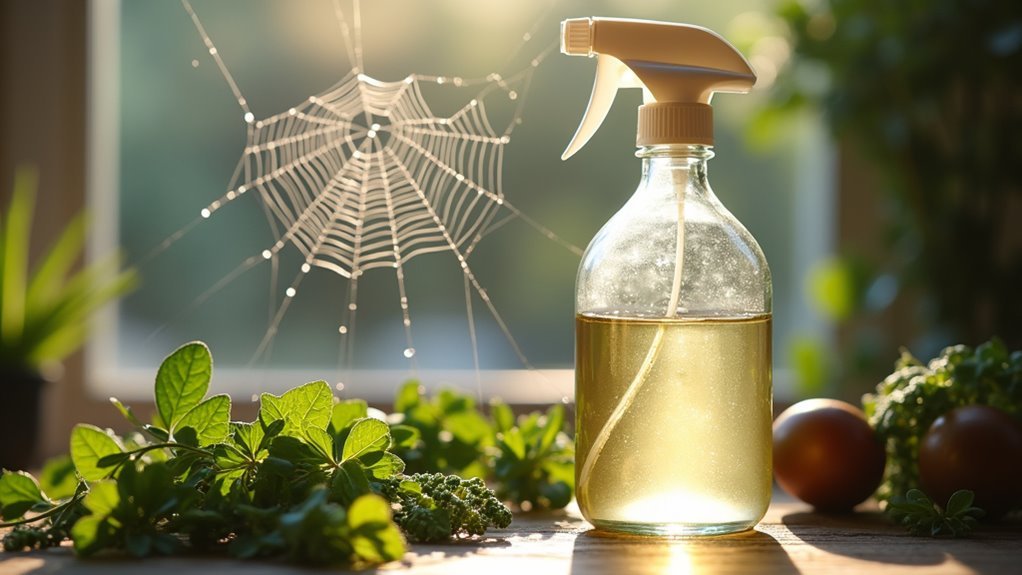
When spiders invade your home, white vinegar offers one of the most effective and accessible natural deterrents you can use. This spider control method works because vinegar’s high acidity creates an unpleasant environment that spiders actively avoid.
To make your spider-repelling spray, mix equal parts white vinegar and water in a spray bottle. Apply this solution to common spider entry points like windowsills, doorways, and cracks.
Related guide: Best Residual Spider Sprays for Perimeter Defense
Related guide: Best Top-Rated Vinegar-Based Cleaning Solutions That Bugs Absolutely Hate
The pungent vinegar smell acts as a powerful barrier, repelling spiders naturally. This non-toxic alternative to chemical repellents requires regular reapplication, especially after rain or cleaning.
Beyond immediate deterrence, vinegar disrupts spider egg cycles when sprayed in nesting areas, helping prevent future infestations effectively.
Essential Oil Spider Repellents
While chemical sprays may seem like the quickest solution, essential oils provide a safer and equally effective approach to spider control that won’t compromise your family’s health.
Peppermint essential oil, tea tree, and lavender work as powerful natural spider deterrents due to their intense scents that spiders find repulsive.
Create an effective spider repellent by mixing 10-15 drops of essential oils in a cup of water, then spray areas where spiders typically hide. You can also soak cotton balls in oils and place them along baseboards and corners to reduce spider activity.
Running diffusers continuously maintains protection throughout your living spaces. Combining essential oils with other natural spider repellent methods creates an all-encompassing defense system that’ll keep your home spider-free without toxic chemicals.
Diatomaceous Earth Application
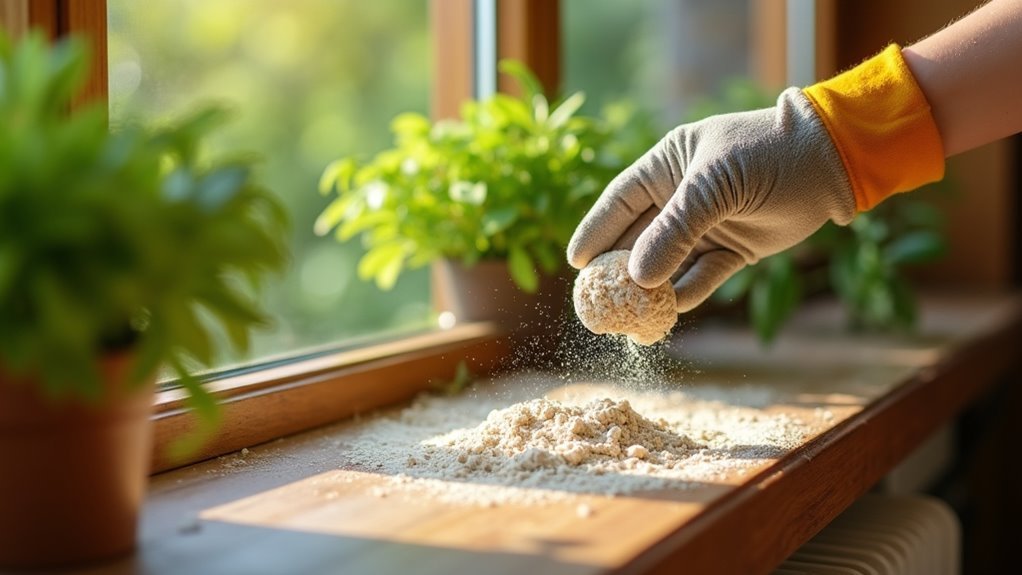
Beyond liquid repellents, diatomaceous earth offers another powerful natural weapon in your spider control arsenal. This natural pest control powder works by dehydrating spiders when they contact its microscopic sharp edges, making it highly effective for killing spiders.
| Application Area | Method | Frequency |
|---|---|---|
| Corners & cracks | Sprinkle it lightly | Weekly |
| Baseboards | Thin layer application | After cleaning |
| Entry points | Dust application | Monthly |
To apply DE effectively, target spider hiding spots and guarantee the powder stays dry. Food-grade diatomaceous earth remains safe for pets and humans. Always use it in well-ventilated areas to avoid respiratory irritation. Reapply regularly after moisture exposure for effective spider control, as wet DE loses its potency completely.
Homemade Cinnamon Oil Spray
Since cinnamon essential oil contains compounds that spiders naturally avoid, you can create a powerful homemade repellent spray that’s both effective and safe for your family.
This nontoxic solution works perfectly for indoor use, making it ideal when you’ve got children and pets around.
Here’s how to make your cinnamon oil spray:
- Mix 1/4 cup liquid soap in a 16-ounce glass spray bottle
- Fill with 2 cups distilled white vinegar
- Add 30 drops cinnamon essential oil and shake for 20 seconds
Apply this homemade repellent every few days for best results.
The spray doesn’t just deter spiders—it actually adheres to them when contacted, effectively disrupting their presence and eliminating egg sacs throughout your home.
Salt Barrier Methods
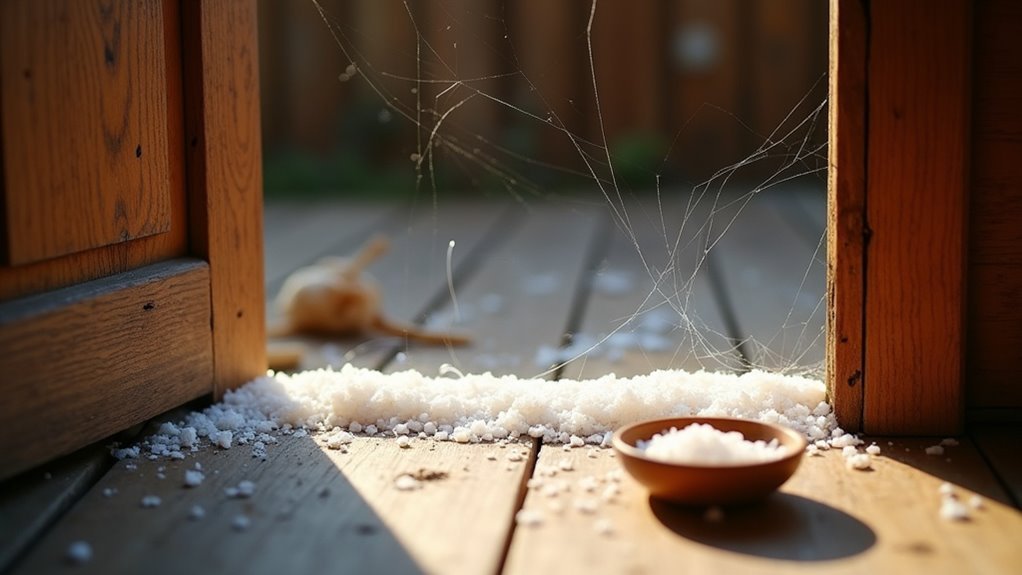
You can create effective spider barriers by sprinkling salt lines across doorways, windowsills, and other entry points where these pests typically enter your home.
Salt works by dehydrating spiders through direct contact, making treated areas uncomfortable and unwelcoming for them to cross.
However, you’ll need to take into account your home’s humidity levels since moisture can reduce salt’s effectiveness and require more frequent reapplication.
Salt Application Techniques
Three simple salt application techniques can transform your home’s entry points into effective spider barriers.
You’ll create an unwelcoming environment that deters spiders through salt’s natural dehydrating properties.
1. Doorway Defense: Sprinkle a thin, continuous line of salt across door thresholds, focusing on gaps where spiders typically enter.
Reapply weekly or after cleaning.
2. Window Perimeter Protection: Apply salt along windowsills and frame edges, avoiding areas exposed to rain or excessive moisture that’ll dissolve your barrier.
3. Crack Sealing Strategy: Target small cracks and crevices with precise salt placement, then combine with caulking for maximum effectiveness.
Dehydration Effect Mechanism
Understanding how salt creates these protective barriers requires examining its biological impact on spiders. When spiders contact salt, it acts as a dehydrating agent that draws moisture from their bodies. This process creates an inhospitable environment that they’ll actively avoid.
| Environmental Factor | Salt Effectiveness | Maintenance Required |
|---|---|---|
| Low Humidity | High deterrent power | Weekly revitalization |
| Moderate Humidity | Reduced effectiveness | Every 3-4 days |
| High Humidity | Minimal barrier function | Daily application |
The dehydrating properties work because spiders need to keep their body moisture balanced. Salt disrupts this balance, making them retreat from treated areas. You’ll need to regularly refresh your salt lines, especially after cleaning or moisture exposure, to maintain the deterrent effect against these unwanted visitors.
Humidity Considerations
While salt barriers can effectively repel spiders, their success heavily depends on your home’s humidity levels.
Salt absorbs moisture from humid air, which reduces its effectiveness as a spider repellent. You’ll need to monitor and control moisture to maintain an effective deterrent around entry points.
Here’s how to optimize salt barriers in different humidity conditions:
- Low humidity environments – Salt works best here, creating powerful dehydrating barriers that spiders avoid.
- High humidity areas – Reapply salt frequently as moisture reduces its potency.
- Moisture control – Use dehumidifiers and guarantee proper ventilation to enhance effectiveness.
Combining salt barriers with other preventive measures maximizes results.
Maintain a clean environment and keep spaces clutter-free to eliminate hiding spots. Regular monitoring guarantees your spider repellent strategy remains effective year-round.
Baking Soda Treatment
Among household staples, baking soda stands out as a surprisingly effective spider deterrent that works through its natural dehydrating properties.
Baking soda’s dehydrating properties make it an unexpectedly powerful weapon against household spiders seeking shelter in your home.
You’ll want to create a thick paste by mixing baking soda with water, then apply it directly to corners, cracks, and crevices where spiders typically hide. The abrasive texture damages spiders’ exoskeletons, causing fatal dehydration when they contact the treated surfaces.
This nontoxic approach makes it incredibly safe around children and pets, unlike harsh chemical pesticides.
You’ll need to refresh applications regularly since moisture reduces effectiveness over time. Focus on dark, secluded areas where spiders frequent most.
The simple yet powerful dehydration mechanism guarantees spiders won’t survive contact with properly applied baking soda treatments.
Commercial Spider Repellent Products
You’ll find commercial spider repellent products offer convenient, ready-to-use solutions when homemade treatments aren’t enough.
These products range from outdoor pesticide barriers that create protective perimeters around your home to electronic ultrasonic devices that emit sound waves spiders can’t tolerate.
Pre-made spray solutions provide immediate application for targeted areas where you’ve spotted spider activity.
Outdoor Pesticide Barriers
When spiders consistently invade your outdoor spaces, commercial pesticide barriers offer a powerful defense strategy that creates an invisible shield around your home’s perimeter.
These outdoor pesticide barriers contain pyrethroids or neonicotinoids that target spiders and other pests, providing residual protection for weeks to months.
For best results with your protective perimeter:
- Apply during calm weather in early spring and late summer to prevent drift and maximize effectiveness
- Choose ready-to-use commercial spider repellents in spray bottles for straightforward application, or mixing concentrates for extensive coverage
- Schedule regular reapplication especially after heavy rain or irrigation, as moisture washes away the barrier
Consistent application and reapplication guarantee your home maintains continuous protection against spider invasions throughout the seasons.
Electronic Ultrasonic Devices
Electronic ultrasonic devices represent a chemical-free approach to spider control that harnesses high-frequency sound waves to disrupt these pests’ communication and navigation systems.
You can’t hear these frequencies, but they effectively prevent deterring spiders from entering treated areas in your homes.
These pet-safe devices typically cover 1,200 to 1,500 square feet, making them ideal for garages and basements. Since they don’t use pesticides, you won’t worry about health risks to your family or pets.
Many models feature LED lights that create additional unwelcoming environments for spiders.
You’ll likely notice reduced spider sightings within weeks of consistent use. While effectiveness varies based on local climate and pest populations, electronic ultrasonic devices offer a convenient, ongoing solution for spider prevention.
Pre-Made Spray Solutions
While ultrasonic devices offer a hands-off approach, pre-made commercial spider repellent sprays provide immediate, targeted control for active infestations.
These spider repellent solutions contain active ingredients like pyrethrins that kill spiders on contact while creating protective barriers lasting weeks.
When selecting commercial products, consider these key factors:
- Multi-insect sprays that target spiders alongside other household pests for extensive protection
- Essential oils formulations offering eco-friendly alternatives to chemical-based options
- Residual properties that continue deterring spiders after initial application
You’ll need to follow manufacturer guidelines for proper application frequency to maximize effectiveness while protecting pets and children.
Pre-made spray solutions offer both immediate results and long-term prevention, making them versatile tools for spider control throughout your home.
Frequently Asked Questions
What Is the Best Homemade Spider Repellent?
You’ll want to mix 2 cups distilled white vinegar, 1/4 cup liquid soap, and 30 drops cinnamon essential oil in a spray bottle. It’s effective, nontoxic, and kills spiders on contact.
What Is the Best Deterrent for Spiders in the House?
You’ll find essential oils like peppermint most effective for deterring spiders indoors. Spray diluted oil around entry points, seal cracks with caulk, and keep spaces clean while adding mint plants for natural prevention.
What Repels Spiders the Most?
Peppermint oil repels spiders most effectively because it completely disrupts their sensory perception. You’ll find it works better than vinegar or diatomaceous earth when you spray diluted peppermint oil around entry points.
What Smell Do Spiders Absolutely Hate?
Spiders absolutely hate peppermint and eucalyptus scents most. You’ll find these essential oils create the strongest repellent effect. White vinegar’s pungent aroma also drives them away effectively when sprayed around entry points.
In Summary
You’ve now got seven effective tools to keep spiders away from your home. Start with what you’ve already got in your pantry like vinegar, salt, or baking soda for quick fixes. Don’t forget about essential oils and cinnamon sprays for longer-lasting protection. If these natural methods aren’t working, you can always turn to commercial products. Remember, consistency’s key—reapply these solutions regularly to maintain a spider-free environment.