You can create effective pest barriers using white vinegar from your kitchen pantry. Mix one part white vinegar with three parts water in a spray bottle, adding a few drops of dish soap for better adhesion. Apply this solution to doorways, window frames, and other entry points where pests commonly enter. The vinegar’s high acidity and pungent odor disrupts pest navigation while remaining safe for your family and pets. Reapply weekly for continuous protection, and you’ll discover additional enhancement techniques below.
Understanding Vinegar’s Pest-Repelling Properties
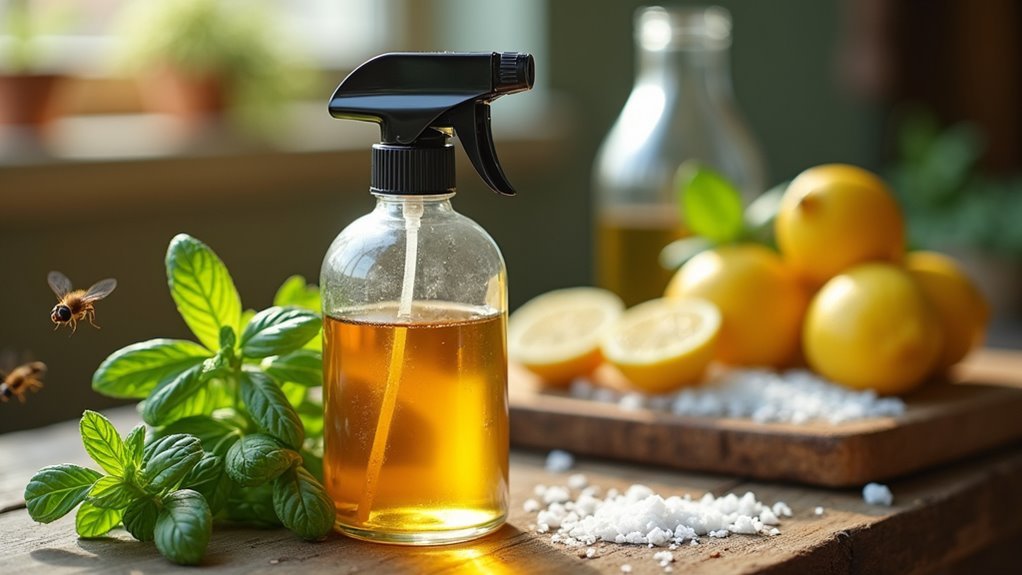
While commercial pest control products often contain harsh chemicals, vinegar offers a natural and effective alternative that’s already sitting in your kitchen cabinet. This common household ingredient works as a powerful natural repellent against various pests, including ants, fruit flies, and gnats.
Transform your pest control routine by swapping toxic chemicals for simple white vinegar, a safe and powerful natural alternative.
Its pungent odor disrupts their scent trails and feeding behavior, making navigation difficult. The high acidity in vinegar deters ants when applied directly to surfaces they frequent.
For fruit flies, you can create effective traps by adding a drop of dish soap to vinegar, which breaks surface tension and causes drowning upon contact.
Regular household use of vinegar helps maintain a pest-free environment while keeping your family safe from toxic chemicals.
Essential Supplies for Creating Vinegar Barriers
Creating effective vinegar barriers requires just a few simple items you likely already have at home.
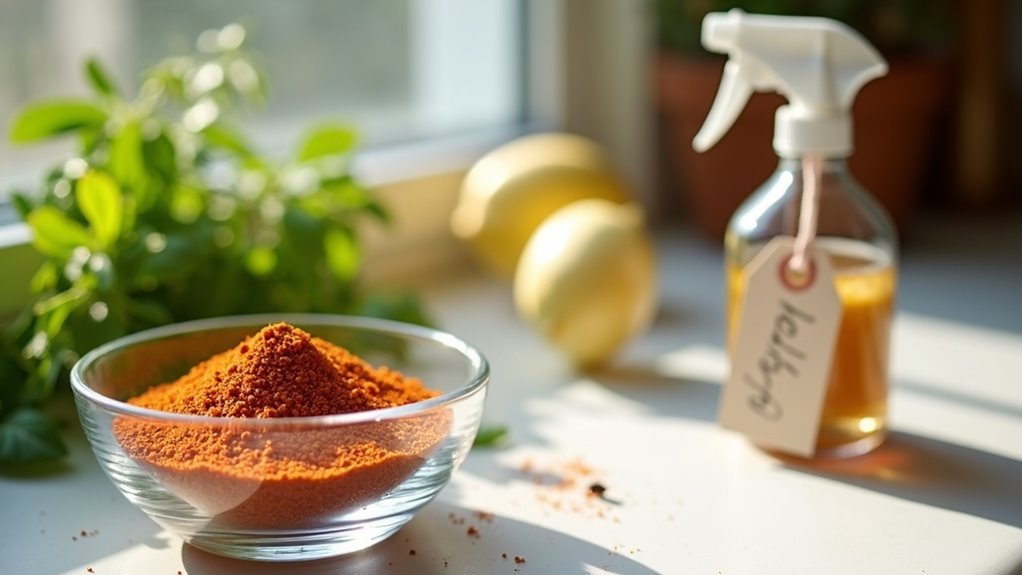
You’ll need white vinegar and equal parts water to create your vinegar spray foundation. A clean spray bottle is essential for proper application and storage of your natural deterrents. Adding a few drops of dish soap enhances the solution’s adhesion to surfaces around entry points.
These household ingredients represent one of the most eco-friendly pest control methods available. The combination creates an effective pest repellent that’s safe for your family and pets.
Unlike harsh chemicals, this natural approach uses common kitchen staples to protect your home. With these simple supplies, you’re ready to establish barriers against ants, fruit flies, and other unwanted visitors.
Basic Vinegar Solution Preparation Steps
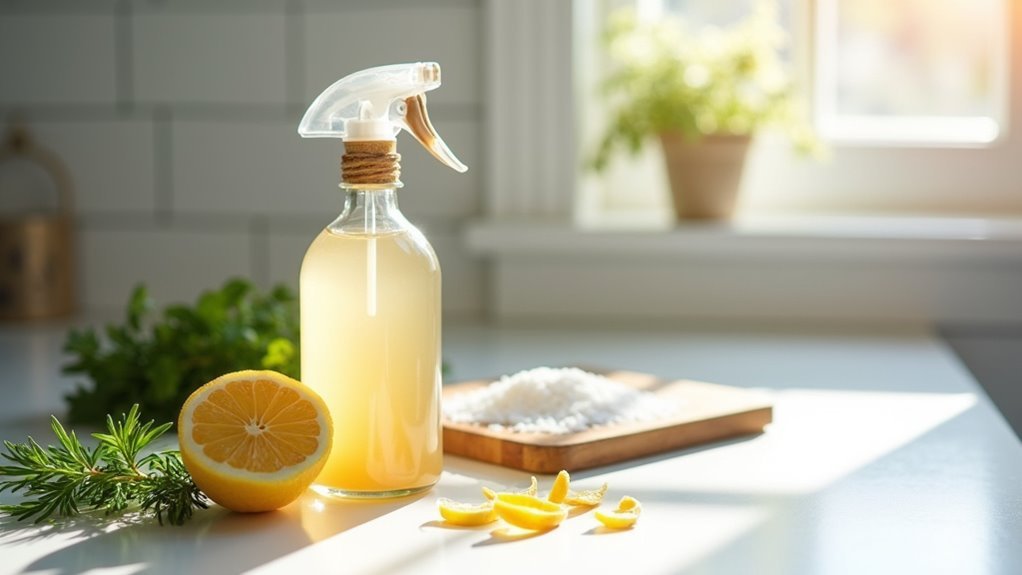
You’ll need to follow specific mixing ratios to create an effective vinegar pest barrier that actually works against unwanted insects.
The key is getting the proportions right and knowing when to apply your solution for peak impact.
Let’s explore the exact measurements and ideal timing that’ll make your homemade pest control solution successful.
Mixing Ratios Guide
When preparing an effective vinegar solution for pest control, you’ll need just two primary ingredients: white vinegar and water. This DIY approach uses common household ingredients to create one of the most reliable pest control recipes available.
Mix one part white vinegar with three parts water in your spray bottle for ideal results.
To boost your vinegar solution’s effectiveness, add several drops of liquid dish soap. This effective DIY enhancement helps the mixture stick to surfaces and pests longer.
You can spray directly onto affected areas where ants, fruit flies, or other pests gather. The strong odor disrupts their scent trails, keeping pests at bay.
Remember to reapply every week or after cleaning to maintain protection.
Application Timing Tips
Timing your vinegar solution application correctly can make the difference between success and wasted effort in your pest control strategy. You’ll achieve effective pest deterrence by spraying during early morning or late evening when cooler temperatures prevent plant damage. Focus your spray bottle application on entry points and areas with visible pest activity.
| Time Period | Temperature | Application Benefits |
|---|---|---|
| Early Morning | Cool | Prevents leaf burn, targets active pests |
| Midday | Hot | Avoid – causes plant damage |
| Late Evening | Cool | Safe for plants, effective coverage |
| Night | Cool | Limited visibility for targeting |
Reapply your kitchen ingredient solution every few days or after rainfall to maintain effectiveness. This consistent schedule guarantees your vinegar barrier remains potent against unwanted visitors.
Strategic Placement Around Entry Points
Five critical entry points around your home require immediate attention when establishing effective pest barriers.
Strategic placement transforms ordinary kitchen ingredients into powerful DIY pest control solutions. Focus your natural deterrent efforts where pests commonly infiltrate your space.
Target these key locations for maximum pest management effectiveness:
- Doorways and thresholds – Sprinkle diatomaceous earth in 2-inch bands while placing citrus peel strips directly at door frames.
- Window frames – Apply vinegar-water solutions to eliminate scent trails and create hostile surfaces.
- Foundation perimeters – Scatter crushed eggshells around outdoor entry points to deter soft-bodied invaders.
- Corner gaps and cracks – Position shallow dishes containing baking soda and sugar mixtures near these vulnerable areas.
Concentrate your efforts on these entry points rather than randomly distributing materials throughout your home.
Enhancing Effectiveness With Additional Ingredients
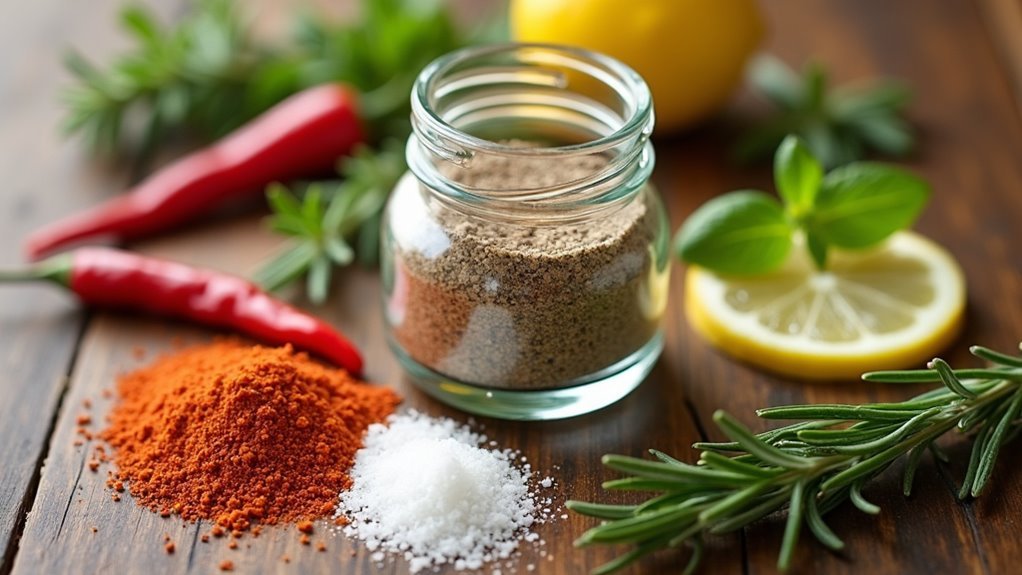
You can greatly boost your DIY pest barriers by combining multiple essential oils like peppermint and tea tree, which creates a more powerful repellent effect than using single oils alone.
Adding a few drops of dish soap to your homemade sprays helps the solution stick to surfaces much better, ensuring longer-lasting protection around entry points.
This soap addition acts as a natural adhesive that prevents your carefully applied barriers from washing away with the first rain or morning dew.
Combining Multiple Essential Oils
While single essential oils can effectively deter specific pests, combining multiple oils like peppermint, tea tree, and eucalyptus creates a powerhouse repellent that targets a broader spectrum of unwanted insects and rodents.
This multi-oil approach enhances pest deterrence while offering customizable scent preferences for your family-friendly pest control solution.
Here’s how to maximize your combination spray’s effectiveness:
- Mix 10-15 drops each of peppermint, tea tree, and eucalyptus oils with water in your spray bottle.
- Add liquid soap to help the solution adhere better to surfaces for longer-lasting protection.
- Test dilution ratios to guarantee safety around pets and children while maintaining potency.
- Schedule reapplying every 5-7 days or after rainfall to keep your barrier effective against various pests.
Adding Soap for Adhesion
When you add liquid dish soap to your essential oil pest barriers, you’re creating a solution that clings to surfaces far longer than water-based sprays alone.
This simple addition transforms your homemade pest deterrents into more powerful natural solutions by breaking down insects’ protective waxy coatings, making them vulnerable to your spray’s active ingredients.
Mix one teaspoon of liquid soap with one quart of water for ideal results.
The soap provides better coverage while emulsifying oil-based components for uniform distribution. This kitchen staples combination creates an effective way to protect your plants against unwanted visitors.
Remember to reapply your soap-enhanced pest spray after rain or watering, as moisture diminishes the soap’s adhesive properties and overall effectiveness.
Maintenance Schedule for Long-Term Protection
Creating effective DIY pest barriers requires consistent maintenance to guarantee they continue protecting your home from unwanted invaders.
Consistent maintenance is the cornerstone of successful DIY pest control, ensuring your natural barriers remain effective against household invaders.
These natural methods demand regular attention to maintain their effectiveness against various pests. You’ll need to monitor your barriers closely and reapply ingredients according to specific schedules for ideal long-term protection.
Follow this maintenance schedule for effective pest control:
- Solid barriers – Refresh diatomaceous earth and crushed eggshells every 2-4 weeks to maintain potency against crawling insects.
- Liquid sprays – Reapply vinegar or essential oil treatments every 5-7 days, especially after rainfall.
- Deterrent sprays – Apply garlic and hot pepper mixtures every 3-5 days during peak activity periods.
- Bait stations – Replace baking soda and sugar cockroach baits weekly, removing damp mixtures immediately.
Frequently Asked Questions
How Do You Make Homemade Pest Control?
You’ll mix vinegar with water for ant repellent, blend essential oils into spray bottles, create garlic solutions for mosquitoes, combine baking soda with sugar for roaches, and spread crushed eggshells around plants for natural barriers.
Can You Use Vinegar and Dawn as Insecticide?
You can definitely use vinegar and Dawn as an effective insecticide. Mix equal parts of both ingredients to break down pest exoskeletons on contact while repelling insects with vinegar’s acidity.
How to Create a Bug Barrier?
You’ll create an effective bug barrier by mixing equal parts water and vinegar, sprinkling diatomaceous earth around entry points, and applying crushed eggshells or salt lines around your garden beds.
What Is the Active Ingredient in Pest Control?
You’ll find various active ingredients in pest control, including synthetic chemicals like pyrethroids and organophosphates in commercial products, or natural compounds like essential oils, acetic acid, and diatomaceous earth in homemade solutions.
In Summary
You’ll find that vinegar barriers offer an affordable, chemical-free solution to common pest problems. Don’t skip the regular maintenance schedule – consistency’s key to keeping unwanted insects away. Remember to reapply your barriers after rain or heavy cleaning. With proper placement around entry points and strategic ingredient combinations, you’ll create an effective pest management system using items you’ve already got in your kitchen. Start implementing these simple barriers today for immediate protection.