You can create powerful roach repellents using common kitchen acids like white vinegar and lemon juice. Mix equal parts vinegar and water in a spray bottle to disrupt roaches’ respiratory systems and scramble their navigation abilities. Lemon juice mixed with water breaks down scent trails and creates inhospitable environments. Combining both acids amplifies effectiveness while remaining safe around children and pets. These eco-friendly solutions provide continuous protection when applied strategically in high-risk areas like kitchens and bathrooms, and there’s much more to discover about maximizing their potential.
Understanding How Kitchen Acids Affect Roach Behavior
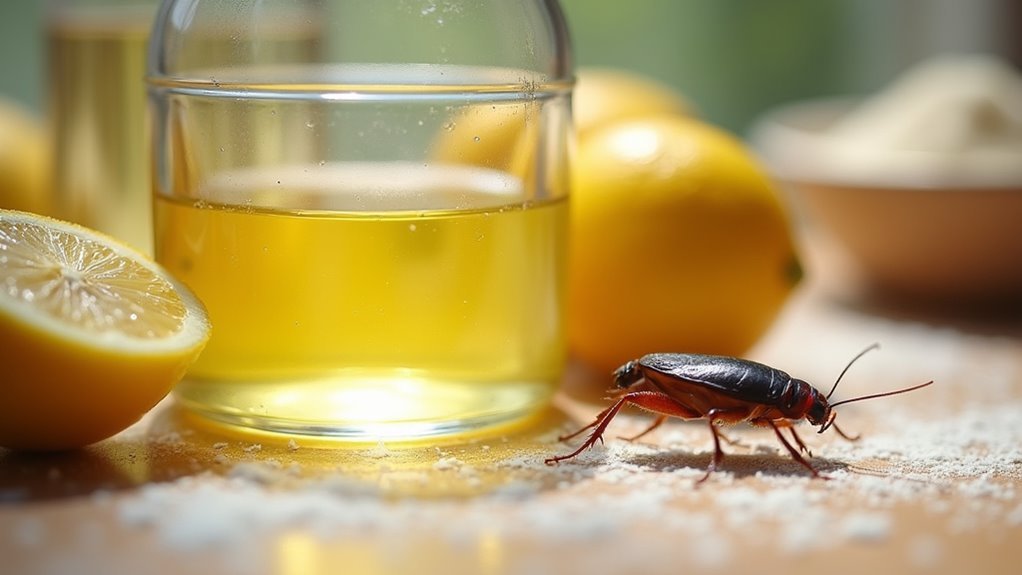
When you’re dealing with a roach problem, understanding how kitchen acids affect these persistent pests can transform your approach to elimination.
Kitchen acids like vinegar and citric acid directly impact roaches’ respiratory systems, disrupting their breathing and making them sluggish and vulnerable. This biological response weakens their ability to escape other pest control measures you might employ.
The strong, pungent odor of these acids masks the food scents that typically draw roaches to your kitchen. Without these attractive aromas, treated areas become far less appealing for roach habitation.
Kitchen acids create an invisible barrier by overwhelming roaches’ scent receptors, effectively hiding the food odors they rely on to navigate.
Additionally, roaches are highly sensitive to environmental changes, and introducing acidic substances creates an uncomfortable atmosphere that naturally deters them from returning to previously treated spaces, enhancing your overall elimination strategy.
Essential Vinegar Solutions for Maximum Roach Deterrence
You’ll find that creating the right vinegar solution is essential for effectively repelling roaches from your home.
The most potent mixture combines equal parts white vinegar and water, which you can easily prepare and apply using a standard spray bottle.
Knowing where and how often to spray this solution will determine whether you successfully disrupt roach behavior or simply waste your efforts.
White Vinegar Spray Recipe
One simple yet powerful solution stands out among natural roach deterrents: white vinegar spray. This natural roach repellent disrupts scent trails that roaches depend on for navigation and food source location. You’ll create an effective deterrent by mixing equal parts water and white vinegar in a spray bottle.
Here’s why this solution works so effectively:
- Disrupts their survival instincts – The high acidity scrambles their natural navigation system.
- Protects your family – Quick evaporation leaves no harmful residue around children and pets.
- Saves the environment – You’re choosing eco-friendly pest control over toxic chemicals.
Spray regularly in kitchens and bathrooms where roach activity’s highest. The strong vinegar odor repels roaches while maintaining a safe, chemical-free home environment.
Application Areas and Frequency
Knowing where and how often to apply your vinegar spray determines its success in keeping roaches away.
Target key application areas where roaches typically gather: kitchens, bathrooms, and spaces behind appliances. Focus on hotspots like under sinks, inside cupboards, and dark corners where these pests hide.
Spray directly onto surfaces where you’ve spotted roaches or suspect their presence.
Don’t forget baseboards, cracks, and crevices that serve as entry points.
For best results, maintain a weekly frequency schedule.
Reapply your vinegar solution every seven days to preserve the deterrent effect and prevent roaches from returning to treated areas.
This consistent application timeline guarantees the strong scent remains potent enough to keep pests away while maintaining your home’s pest-free environment.
Lemon Juice Applications and Preparation Techniques
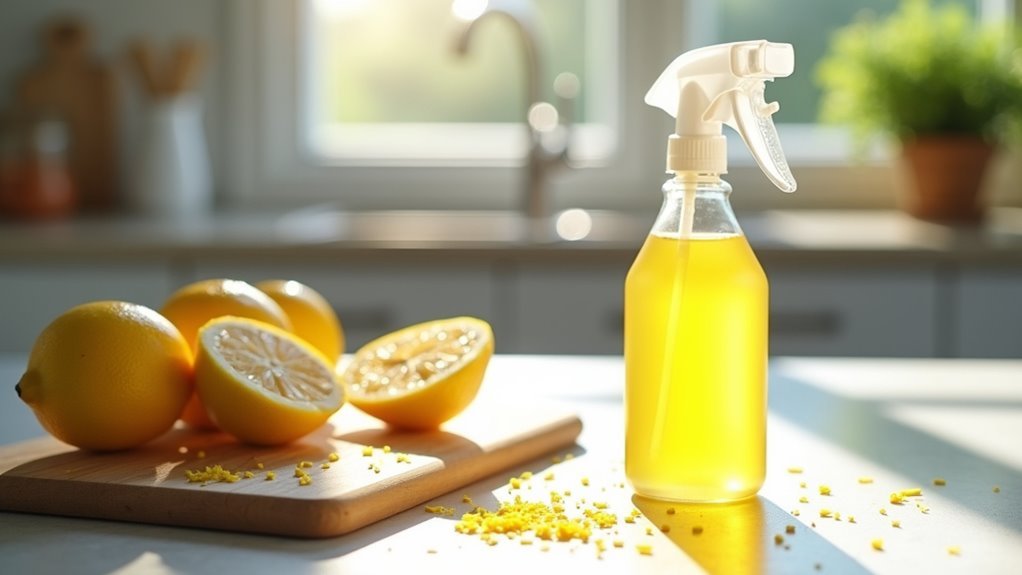
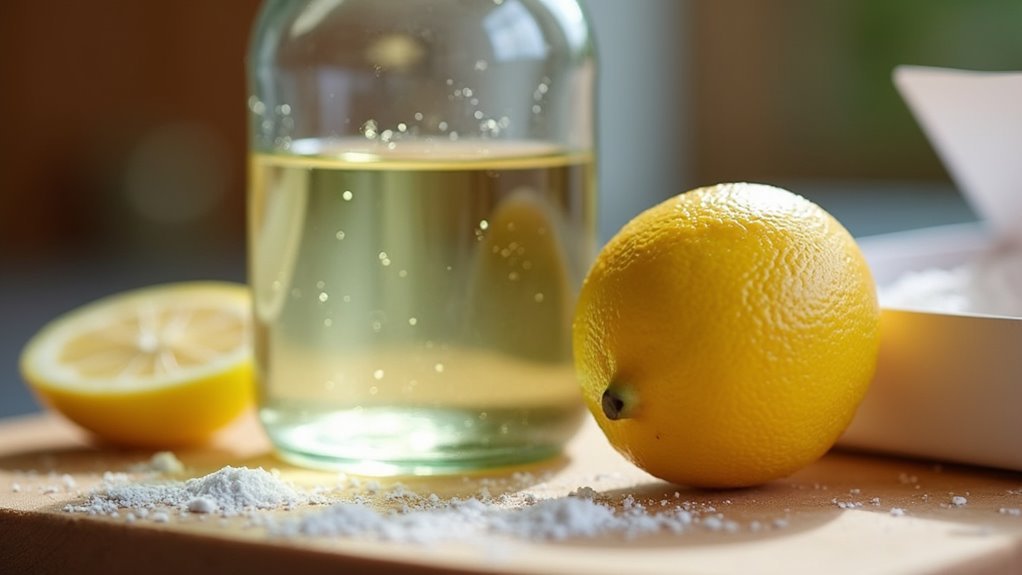
When you’re dealing with a roach problem, lemon juice offers a simple yet effective solution that harnesses the power of natural citric acid. The high acidity disrupts cockroaches’ scent trails while creating an inhospitable environment they’ll avoid.
To prepare your lemon juice repellent, mix equal parts lemon juice and water in a spray bottle. This dilution maintains effectiveness while ensuring easy application throughout your home. Focus on problem areas like kitchens and bathrooms where roaches commonly appear.
Here’s what makes this solution emotionally satisfying:
- Peace of mind knowing you’re protecting your family with safe, natural ingredients
- Confidence from reclaiming your clean, roach-free sanctuary
- Relief from eliminating the stress of unwanted pest invasions
For enhanced potency, combine lemon juice with peppermint essential oil, creating a powerful yet pet-safe deterrent.
Combining Multiple Acids for Enhanced Effectiveness
While lemon juice creates an effective barrier against roaches, you’ll achieve superior results by combining multiple kitchen acids into a powerhouse repellent.
Mix equal parts vinegar and lemon juice to create a potent solution that disrupts roaches’ natural habitat through increased acidity and enhanced odor deterrence. The acetic acid in vinegar cleans surfaces while removing pheromone trails that draw roaches back, and citric acid from lemon juice amplifies the mixture’s effectiveness.
Spray this combination in areas where you’ve spotted roaches to create an inhospitable environment.
For maximum impact, add essential oils to your kitchen acids blend, creating a multi-faceted approach that repels pests without harmful chemicals while maintaining a clean, fresh-smelling home.
Strategic Application Areas and Timing
To maximize your acid-based repellent’s effectiveness, focus your application efforts on high-traffic roach areas where moisture and food sources naturally attract these pests.
Target kitchens, bathrooms, and spaces behind appliances where roaches frequently hide and breed.
Apply your boric acid mixtures during peak activity periods—typically at night or early morning—when roaches venture out to feed.
Position treatments in high humidity zones under sinks and around water sources, as moisture draws these unwanted invaders.
For consistent protection, remember these critical strategies:
- Cover at least 130 square feet to guarantee extensive treatment zones
- Rotate placement every few weeks to prevent roaches from adapting to your defenses
- Maintain treatments for 90-day cycles to ensure long-lasting effectiveness against persistent infestations
Safety Considerations When Using Acidic Repellents
When you’re using acidic repellents around your home, you’ll need to prioritize safety for your family and pets who could accidentally come into contact with these solutions.
You must handle and apply these kitchen acids properly to prevent skin irritation, respiratory issues, or damage to household surfaces.
Safe storage practices aren’t optional—they’re essential for preventing accidental exposure and maintaining the effectiveness of your homemade repellents.
Pet and Child Safety
Pet and child safety requires careful attention when using acidic repellents like vinegar or lemon juice throughout your home.
You’ll need to take specific precautions to protect your family and furry friends from potential harm.
Follow these essential safety measures:
- Store repellents in child-proof containers and place them completely out of reach – accidental ingestion can cause serious harm to curious little ones and pets.
- Always dilute acidic substances with water to prevent painful skin irritation or damage to sensitive mucous membranes.
- Test small areas first for allergic reactions, as some pets may have unexpected sensitivities to natural ingredients.
Monitor treated areas closely, especially high-traffic zones where children and pets frequently play.
Label containers clearly to avoid dangerous confusion with food products.
Proper Application Methods
Although acidic repellents offer a natural solution for roach control, you’ll need to follow specific application techniques to maximize effectiveness while protecting yourself and your surroundings.
Always wear protective gloves and safety goggles when handling acidic repellents like vinegar or lemon juice to prevent skin and eye irritation. Open windows and doors to guarantee adequate ventilation, preventing you from inhaling strong fumes.
Before widespread application, test acidic repellents on a small, hidden surface area to check for potential damage or discoloration. Store these solutions securely away from children and pets after use.
If spills occur, clean them immediately to prevent slipping hazards and eliminate odors that might attract more roaches to the treated area.
Handling and Storage
Proper handling and storage of acidic repellents requires careful attention to safety protocols that protect both you and your household members.
You’ll need proper ventilation to avoid inhaling strong fumes that can irritate your respiratory system. Always wear gloves and protective eyewear when handling these substances to prevent skin and eye irritation.
Your storage strategy should prioritize safety:
- Secure containers away from children – Store in tightly sealed, clearly labeled containers to prevent tragic accidental ingestion.
- Separate from food areas – Keep repellents away from kitchens and food preparation zones to avoid contamination.
- Proper disposal matters – Follow local hazardous waste guidelines when discarding unused or expired products.
These handling and storage practices guarantee effective pest control while maintaining household safety.
Maintaining Long-Term Protection With Regular Treatments
While kitchen acids can effectively repel roaches initially, you’ll need consistent reapplication to maintain their protective barrier. Apply fresh acid treatments every 90 days to guarantee continuous protection throughout your home.
Focus particularly on high-risk areas like kitchens and bathrooms where moisture and food sources naturally attract these pests.
Create a multi-faceted approach by combining kitchen acids with other repellents and traps for enhanced effectiveness. Your acid-based solutions are effective at deterring roaches, but they work best as part of a thorough strategy.
Conduct routine inspections in areas where you’ve spotted roaches previously, and reapply treatments immediately to prevent re-infestation.
Integrate these eco-friendly acid treatments into your regular cleaning routine to maintain long-term protection while keeping your home safe for family and pets.
Frequently Asked Questions
What Is the Best Acid to Kill Cockroaches?
You’ll find boric acid’s the most effective for killing cockroaches since it disrupts their digestive systems, causing dehydration and death. While vinegar and citric acid repel them, they won’t kill roaches outright.
What Is the Most Effective Cockroach Repellent?
You’ll find peppermint and cedarwood oil combinations most effective for repelling cockroaches. Natural formulations with 2.5% peppermint and 2% cedarwood oil provide lasting protection while staying safe around children and pets.
What Can I Mix With Boric Acid to Kill Roaches?
You can mix boric acid with sugar, honey, or Karo syrup to attract roaches. Combine it with flour to create a paste that’s easy to place in roach-infested areas.
What Is the Most Effective Homemade Cockroach Killer?
You’ll find boric acid mixed with equal parts sugar creates the most effective homemade cockroach killer. The sugar attracts roaches while boric acid poisons them, making this combination deadlier than other DIY options.
In Summary
You’ve now got the tools to create effective roach repellents using common kitchen acids. Don’t forget to reapply your vinegar and lemon solutions regularly for consistent protection. Target entry points, dark corners, and moisture-prone areas where roaches typically hide. Always test solutions on small surfaces first and guarantee proper ventilation when applying. With consistent treatment and strategic placement, you’ll maintain a roach-free environment using these natural, affordable methods.