
You can create effective pest control solutions using common household ingredients like white vinegar, dish soap, and baking soda. Mix equal parts white vinegar and water to repel ants and spiders, or use apple cider vinegar with a drop of dish soap to trap fruit flies. For outdoor areas, spray diluted vinegar around entry points and gardens to deter crawling insects. These budget-friendly remedies work as well as commercial pesticides while keeping your home safe from harsh chemicals, and there’s much more you can accomplish with these simple ingredients.
White Vinegar Ant Barrier Spray for Kitchen Counters
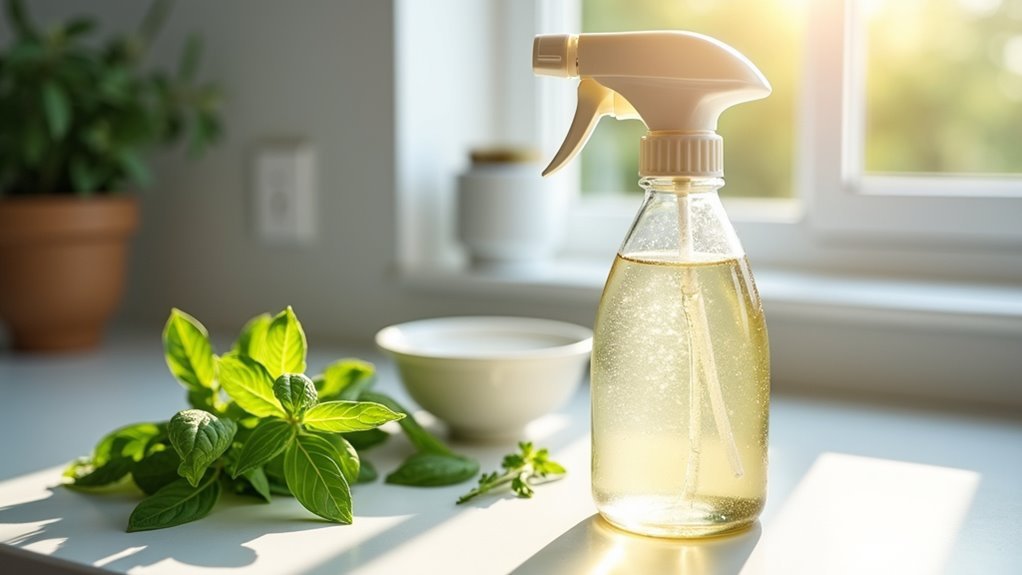
When ants invade your kitchen counters, a simple white vinegar spray can effectively disrupt their communication system and send them packing.
Mix 1/4 cup of white vinegar with 2 cups of water in a spray bottle for this effective pest management solution. The acetic acid acts as a natural repellent, making surfaces less attractive to ants while disrupting their pheromone trails used for navigation.
Related guide: Best Eucalyptus-Based Pest Solutions That Double as Aromatherapy
You can safely spray this mixture on kitchen counters and food preparation areas without worrying about harmful residues.
For enhanced effectiveness, add a few drops of peppermint or tea tree essential oils, which provide additional deterrent properties and pleasant scents.
Regular application maintains an ant-free kitchen environment while doubling as a natural disinfectant for your surfaces.
Apple Cider Vinegar Fruit Fly Elimination Trap
Those tiny fruit flies buzzing around your kitchen can be eliminated with a simple apple cider vinegar trap that exploits their natural attraction to fermented scents.
This homemade pest trap uses common household items to create an effective solution that’ll drastically reduce their population.
Here’s how to build your fruit fly elimination system:
- Pour apple cider vinegar into a small dish – The fermented scent acts as an irresistible lure for these pests.
- Add one drop of liquid dish soap – This breaks surface tension, causing flies to drown when they land.
- Cover with plastic wrap, leaving one edge slightly lifted – Creates an entry point while preventing escape.
Place your trap near fruit bowls or trash cans where fruit flies congregate.
Check and replace the solution regularly to maintain effectiveness.
Vinegar and Dawn Dish Soap Spider Deterrent
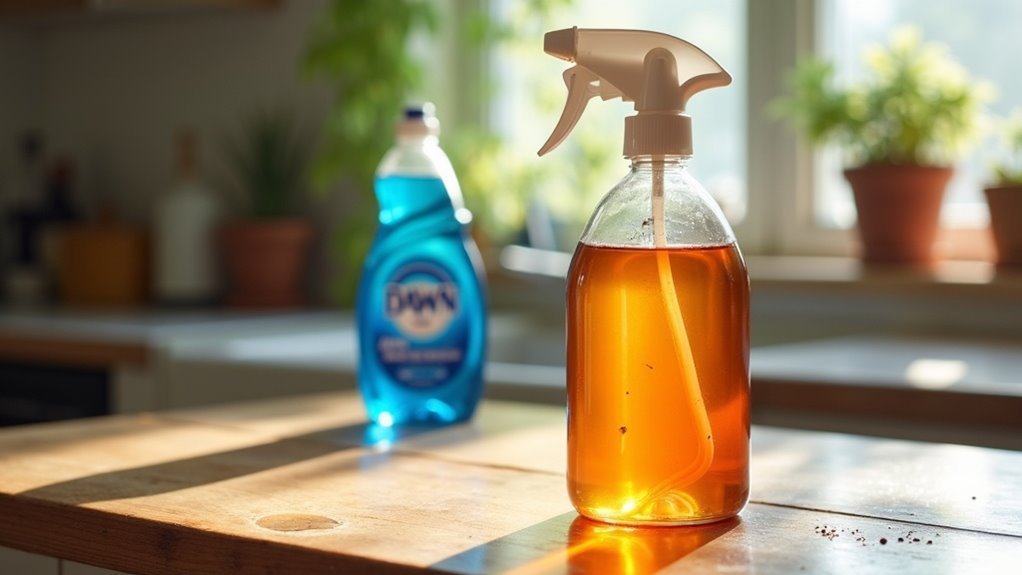
While fruit flies prefer sweet, fermented scents, spiders avoid strong acidic odors altogether, making vinegar an excellent foundation for spider control. You’ll find this vinegar and Dawn dish soap combination creates a powerful deterrent that breaks down spiders’ protective coating while suffocating them on contact.
| Ingredient | Amount | Purpose |
|---|---|---|
| White vinegar | 1 cup | Natural repellent |
| Dawn dish soap | 1 cup | Breaks down coating |
| Spray bottle | 1 | Application method |
| Target areas | Multiple | Treatment zones |
| Application frequency | Weekly | Maintenance schedule |
Mix equal parts vinegar and dish soap in your spray bottle, then apply directly to spider-prone areas like corners, windowsills, and door frames. This non-toxic solution effectively eliminates pests while remaining safe for indoor family use.
Budget Vinegar Weed Killer for Driveways and Walkways
Since commercial weed killers can strain your budget and expose your family to harsh chemicals, this simple vinegar solution offers an economical alternative that costs pennies per application.
This natural pest control solutions approach transforms common household vinegar into an effective weapon against unwanted vegetation in your driveways and walkways.
Mix equal parts white vinegar and water in a spray bottle, then apply directly to target weeds on sunny days. The acetic acid acts as a desiccant, drawing moisture from leaves and killing the pest plants within hours.
Application Tips:
- Target young, actively growing weeds for maximum effectiveness
- Apply during sunny weather to amplify the drying effect
- Repeat applications may be necessary for established weeds
This eco-friendly solution remains safe around children and pets.
Vinegar-Based Outdoor Perimeter Defense Against Crawling Insects
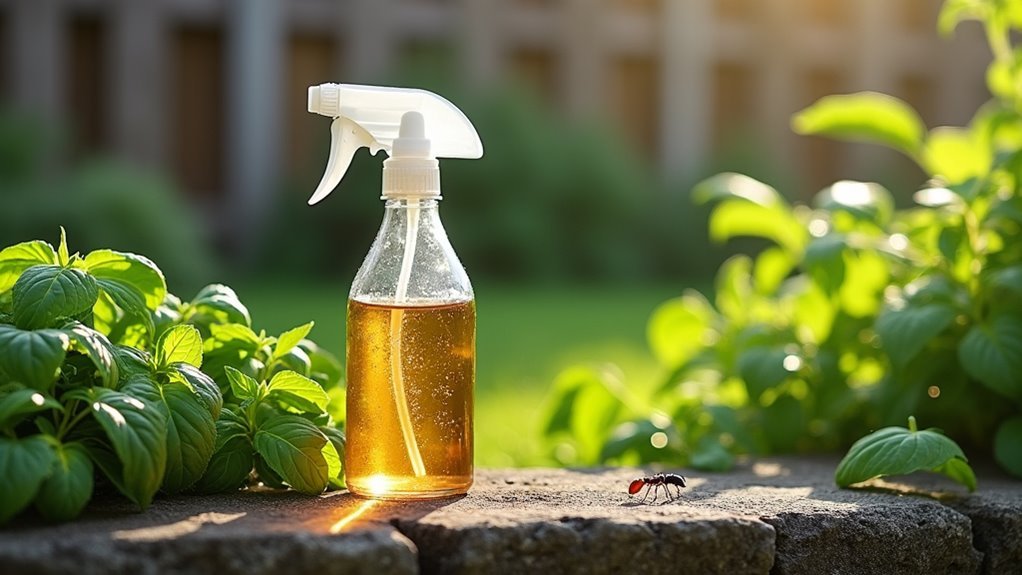
You’ll want to mix equal parts white vinegar and water to create an effective barrier solution that disrupts insect scent trails around your home’s perimeter.
Apply this mixture during dry weather conditions, preferably in the early morning or evening when temperatures are cooler to maximize adhesion and effectiveness.
Reapply the solution after rainfall or every two weeks to maintain a consistent protective barrier against ants and other crawling pests.
Vinegar Concentration Methods
When creating an effective vinegar-based perimeter defense, you’ll need to understand that concentration levels directly impact your success against crawling insects.
The standard equal parts vinegar and water mixture provides ideal results without wasting resources or reducing effectiveness.
Here are three proven concentration methods for your insect repellent:
- Standard Defense (1:1 ratio) – Mix equal parts vinegar and water for general crawling insect control around entry points.
- Heavy Infestation (2:1 ratio) – Use two parts vinegar to one part water for stubborn pest problems requiring stronger intervention.
- Maintenance Spray (1:2 ratio) – Combine one part vinegar with two parts water for regular reapplication between treatments.
You’ll achieve maximum effectiveness by matching concentration levels to your specific pest pressure situation.
Application Timing Tips
The effectiveness of your vinegar perimeter defense depends heavily on when you apply it throughout the day and season. For ideal application timing tips, target early morning or late afternoon when temperatures are cooler. This prevents rapid evaporation and maximizes the solution’s ability to keep pests away.
You’ll need to reapply after rainfall or heavy watering since the vinegar barrier washes away easily. During peak pest seasons, refresh your perimeter treatment every few weeks to maintain protection against regular insects like ants and spiders.
Combine strategic timing with consistent maintenance for best results. The cooler temperatures during morning and evening hours allow the vinegar solution to penetrate surfaces better, creating a more durable deterrent that crawling insects will avoid.
Apple Cider Vinegar and Salt Slug Repellent for Gardens
Slugs can quickly devastate your garden plants, but apple cider vinegar offers a natural solution that’ll send these slimy pests packing. This effective slug repellent works because slugs find the strong scent and acidity extremely unappealing, making them avoid treated areas entirely.
Creating this homemade barrier is simple:
- Mix equal parts apple cider vinegar and water in a spray bottle.
- Add a pinch of salt to enhance the solution’s effectiveness and create dehydration on contact.
- Spray around vulnerable plants and reapply after rain to maintain protection.
Focus your application on plants most susceptible to slug damage. The salt provides an additional protective layer by dehydrating slugs immediately upon contact, while the vinegar creates a lasting deterrent barrier around your precious garden plants.
White Vinegar Window and Door Frame Pest Prevention
You’ll create an effective pest barrier by mixing equal parts white vinegar and water in a spray bottle, then applying this solution directly to window and door frames.
Focus on spraying areas where pests commonly enter your home, including cracks, crevices, and the bottom edges of doors where ants and crawling insects typically gain access.
This targeted application method disrupts pheromone trails that guide pests while cleaning surfaces that might otherwise attract them.
Vinegar Barrier Application Method
Creating an effective pest barrier requires just two simple ingredients you likely already have in your kitchen.
Mix 1/4 cup white vinegar with 2 cups water in a spray bottle to create your homemade deterrent. The acetic acid disrupts ant pheromone trails while keeping pests away from entry points.
Apply this solution strategically around your home’s vulnerable areas:
- Door thresholds – Spray generously along the bottom of door frames where insects typically enter.
- Window sills – Coat interior and exterior sill surfaces to keep bugs from crawling through gaps.
- Frame cracks – Target any visible cracks or crevices where pests might squeeze through.
Reapply after rain or weekly cleaning to maintain effectiveness.
This eco-friendly method costs pennies compared to commercial repellents while avoiding harsh chemicals.
Target Pest Entry Points
Since pests typically infiltrate homes through predictable access points, you’ll achieve better results by concentrating your vinegar applications on these high-traffic areas.
Focus on window frames, door thresholds, and baseboards where ants and spiders commonly enter. Apply your 1/4 cup vinegar and 2 cups water solution directly to these pest entry points using a spray bottle or cloth.
Pay special attention to cracks, gaps, and weather stripping around doors and windows. For enhanced protection, add several drops of essential oils like peppermint or tea tree oil to your mixture.
The acetic acid creates an effective barrier that disrupts ant communication trails while repelling various insects. Reapply after rain or weekly cleaning to keep pests from establishing new invasion routes into your home.
Vinegar and Essential Oil Mosquito Repelling Spray
One simple recipe transforms basic household ingredients into an effective mosquito deterrent that rivals commercial repellents.
You’ll create this mosquito-repelling spray by combining equal parts water and white vinegar in a spray bottle, then adding 10-20 drops of essential oils like lemongrass or eucalyptus.
The vinegar’s strong scent masks carbon dioxide emissions that typically attract mosquitoes to you. Essential oils enhance the spray’s repelling power while adding a pleasant fragrance.
This chemical-free alternative protects both your family and the environment from harmful synthetic ingredients.
- Mix ingredients: Combine 1 cup water, 1 cup white vinegar, and 10-20 drops essential oils
- Shake thoroughly: Blend ingredients before each application
- Apply liberally: Spray directly on skin and clothing for maximum protection
Vinegar Garbage Can Deodorizer and Fly Deterrent
You’ll find that creating an effective vinegar garbage can deodorizer requires mixing equal parts water and white vinegar for maximum odor-fighting power.
Apply this solution by thoroughly washing your garbage cans inside and out, allowing the acetic acid to neutralize smells and disrupt fly breeding environments.
Maintain the system by cleaning regularly with your vinegar mixture and sprinkling baking soda at the bottom before adding trash to absorb moisture and enhance deodorizing effects.
Vinegar Solution Preparation
When dealing with persistent garbage can odors and pesky flies, a simple vinegar solution offers an effective, natural remedy that tackles both problems simultaneously.
This powerful cleaning solution harnesses vinegar’s acetic acid properties to neutralize unpleasant smells while disrupting the scent trails that attract flying pests.
Creating your vinegar solution requires minimal ingredients and effort:
- Mix equal parts – Combine 1 part white vinegar with 1 part water in a standard spray bottle.
- Add essential oils – Include a few drops of lemon or eucalyptus oil for enhanced scent and effectiveness.
- Apply regularly – Spray inside and outside your garbage can to repel flies and maintain freshness.
This natural approach eliminates the need for harsh chemicals while providing consistent protection against odors and pest infestations.
Application and Maintenance
Apply your vinegar solution strategically to maximize its deodorizing and pest-deterrent effects throughout your garbage disposal routine. Spray the mixture thoroughly inside your garbage can, covering all surfaces where odors accumulate.
Focus on areas where food residue typically clings, as these spots attract bugs most aggressively. After spraying, sprinkle baking soda across the bottom to enhance odor absorption and keep flies away from your waste area.
Establish a weekly cleaning schedule to maintain effectiveness. This consistent routine will keep pests away while preventing smell buildup.
Between deep cleans, apply the vinegar solution around the garbage area whenever you notice increased fly activity. The natural acids break down odor-causing bacteria while creating an environment that bugs find inhospitable, ensuring your waste disposal area remains pest-free.
Vinegar and Baking Soda Drain Treatment for Gnats
Although gnats often seem impossible to eliminate once they’ve established themselves in your drains, a simple combination of vinegar and baking soda creates a powerful treatment that targets these pests at their source.
This fizzing reaction breaks down organic matter where gnats breed and lay eggs.
Here’s how to apply this effective treatment:
- Pour ingredients sequentially – Add 1 cup of baking soda down the drain, immediately followed by 1 cup of vinegar.
- Allow proper contact time – Let the mixture sit for 30 minutes to break down debris and gnat eggs.
- Flush thoroughly – Rinse with hot water to dislodge remaining particles.
This treatment doesn’t just eliminate gnats; it’ll clean and deodorize your drains simultaneously.
Repeat weekly to maintain long-term results and prevent future infestations.
Frequently Asked Questions
What Is the Best Homemade Pest Killer?
You’ll find the vinegar-water solution works best as an all-purpose homemade pest killer. It’s effective against ants, disrupts their trails, and deters various other pests with its strong scent and acidity.
What Is the Best Home Remedy to Get Rid of Bugs?
You’ll find equal parts water and vinegar works best for most bugs. It cleans surfaces, deters ants, and leaves everything smelling fresh while being completely safe around your family.
Can You Use Vinegar and Dawn as Insecticide?
Yes, you can mix vinegar and Dawn soap as an effective insecticide. Combine equal parts of each with water, then spray directly on soft-bodied insects like aphids and spider mites.
How to Fumigate a House Naturally?
You’ll start with essential oils like eucaleus or tea tree in diffusers. Mix vinegar, water, and essential oils to spray throughout rooms. Sprinkle food-grade diatomaceous earth in cracks and steam clean carpets.
In Summary
You’ll save serious money while keeping your home pest-free with these vinegar-based solutions. They’re safer than harsh chemicals, won’t harm your family or pets, and use ingredients you’ve probably got in your pantry right now. Don’t let expensive commercial pest control drain your wallet when these DIY remedies deliver real results. Start mixing up these natural alternatives today and watch those unwanted critters disappear without breaking your budget.