Homemade acid sprays repel pests by disrupting their sensory receptors and creating an inhospitable environment with pH levels below 4. You’re fundamentally interfering with insects’ ability to detect food sources, navigate, and communicate through pheromones when you apply these acidic solutions. The strong odors mask attractive scents while the low pH damages soft-bodied insects’ exoskeletons, causing dehydration. Acetic and citric acids also alter plant surface chemistry, creating protective barriers that make feeding difficult for common garden pests like aphids and whiteflies. Understanding the specific mechanisms behind this natural defense system will help you maximize your pest control success.
How Acidity Disrupts Insect Sensory Systems
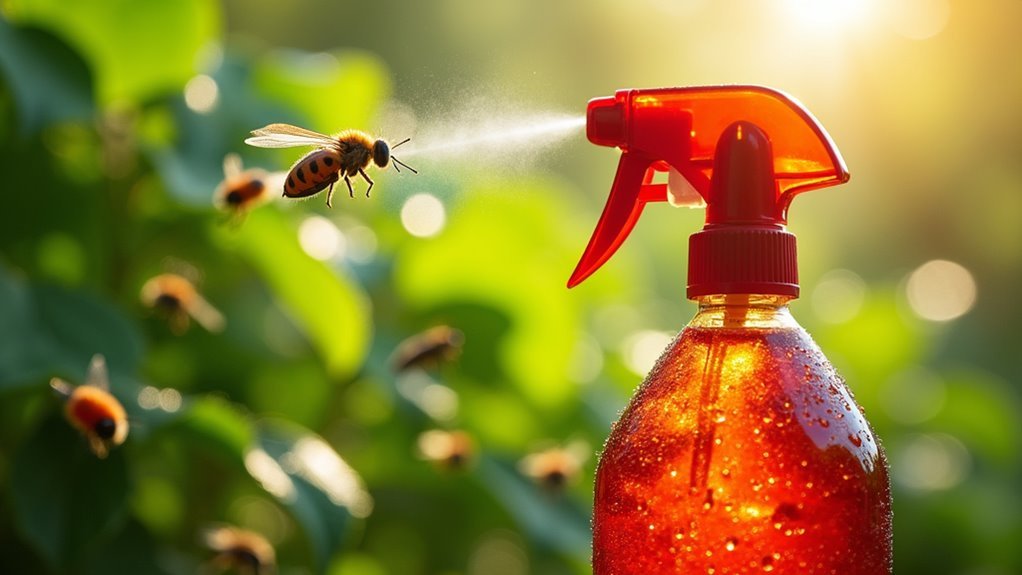
The acidity in homemade sprays directly attacks insects’ sensory systems, disrupting their ability to navigate and survive in treated areas.
When you apply acidic solutions like vinegar, the high acidity levels overwhelm insect sensory receptors and chemoreceptors that they rely on for detecting food sources and mates. This pH alteration creates an unwelcoming environment that causes immediate discomfort and irritation to their sensory organs.
The strong odor from these acidic sprays masks attractive scents that normally draw insects to specific locations.
Acidic sprays create olfactory barriers that overwhelm insects’ scent-detection abilities, effectively concealing the attractants that typically lure pests to treated areas.
You’ll notice decreased insect activity because the acids interfere with their environmental assessment capabilities. This sensory disruption effectively reduces their comfort levels, making treated areas less appealing and successfully repelling pests from your targeted spaces.
The Science Behind Vinegar’s Pest-Deterrent Properties
When you spray vinegar on surfaces where pests roam, the acetic acid immediately disrupts their sensory receptors, making it nearly impossible for them to detect food sources or navigate effectively.
You’re also altering the pH levels of the treated area, creating an environment that’s toxic to many insects while remaining safe for your plants when used in proper concentrations.
This dual action means you’re not just masking scents—you’re fundamentally changing how pests interact with their surroundings.
Acetic Acid Disrupts Insects
While vinegar sits in nearly every kitchen pantry, its primary component—acetic acid—functions as a powerful biological disruptor against insects.
When you apply vinegar directly to pests, the acetic acid attacks their cellular structure with devastating effectiveness.
Here’s how acetic acid works to repel and eliminate insects:
- Cell membrane destruction – The acid breaks down protective barriers around insect cells, causing immediate structural damage.
- Rapid dehydration – Once membranes rupture, insects lose essential moisture and die from water loss.
- Soft-bodied vulnerability – Aphids and fruit flies suffer the most damage due to their delicate exteriors.
- Contact elimination – Direct application guarantees maximum impact as a deterrent.
This biological disruption makes vinegar an effective, natural solution for controlling various household pests through immediate contact damage.
Ph Levels Repel Pests
Beyond its direct cellular attack on insects, vinegar’s remarkable pest-control effectiveness stems from its extreme acidity. With pH levels around 2.5, vinegar creates an acidic environment that’s fundamentally hostile to most household pests.
You’ll find that insects are incredibly sensitive to these dramatic pH shifts, causing them to actively avoid treated areas.
The strong odor doesn’t just repel pests through unpleasant scent alone—it actually disrupts their essential navigation and communication systems.
When you spray vinegar, you’re masking the pheromones insects rely on for finding food sources and coordinating with their colonies. This interference with insect physiology creates confusion and discomfort, making your treated spaces uninhabitable.
The acidic conditions alter their microenvironment so profoundly that pests simply can’t function normally.
Ph Levels That Make Plants Inhospitable to Insects

You’ll want to target pH levels below 4 to effectively repel common garden pests like aphids and spider mites, since these insects can’t tolerate highly acidic conditions.
Most garden insects thrive in neutral to slightly acidic environments between pH 6-7, so creating an acidic barrier disrupts their metabolism and survival mechanisms.
Understanding these pH sensitivity factors helps you determine the right acid concentration for your homemade sprays without harming your plants.
Optimal Acidic Ph Ranges
Most insects thrive in neutral to slightly alkaline conditions with pH levels between 6.5 and 7.5, but you can disrupt their comfort zone by creating acidic environments that range from 4.0 to 6.0 pH.
These ideal acidic pH levels effectively repel pests through several mechanisms:
- Digestive disruption – Insects struggle to metabolize nutrients in highly acidic conditions, reducing their feeding and reproduction rates.
- Cuticle damage – The acidity breaks down protective waxy layers on soft-bodied insects, making them vulnerable to dehydration.
- Environmental hostility – Homemade acid sprays containing vinegar create inhospitable conditions that force pests to relocate.
- Sustained protection – Regular applications maintain lower pH levels around plant leaves and soil.
You’ll find that vinegar-based solutions work particularly well against aphids and spider mites while promoting healthier plant growth.
Insect Ph Sensitivity Factors
While insects demonstrate remarkable adaptability across diverse environments, their pH sensitivity creates a critical vulnerability you can exploit with targeted acid applications. Most insects thrive within neutral to slightly acidic ranges (pH 6-7), making highly acidic solutions effective pest deterrents.
When you apply acidic solutions like vinegar sprays, you’ll disrupt soft-bodied insects’ exoskeletons, causing rapid dehydration and mortality. These treatments also alter plant surface pH, creating inhospitable conditions for insect larvae development.
| pH Range | Insect Tolerance | Spray Effectiveness |
|---|---|---|
| 6.0-7.0 | ideal survival | Low deterrent |
| 4.0-5.9 | Stress conditions | Moderate repelling |
| 2.0-3.9 | Lethal environment | High mortality |
| Below 2.0 | Immediate death | Maximum control |
Maintaining ideal pH levels enhances plant health while simultaneously creating environments that repel pests naturally, giving you dual protection benefits.
Citric Acid Vs Acetic Acid for Pest Control
When choosing between citric acid and acetic acid for pest control, you’re selecting between two powerful natural options with distinct strengths.
Citric acid serves as a natural repellent through its strong odor and acidity, effectively deterring ants and aphids while being gentler on plants.
Citric acid’s natural acidity and pungent scent make it an effective, plant-safe deterrent against common garden pests like ants and aphids.
Acetic acid offers superior insecticidal properties, killing soft-bodied pests on contact and proving particularly effective against fruit flies.
Consider these key differences when creating homemade sprays:
- Application safety: Citric acid requires less careful dilution than acetic acid
- Target pests: Acetic acid excels against soft-bodied insects, while citric acid deters various species
- Plant compatibility: Citric acid poses minimal foliage damage risk
- Enhancement potential: Both acids benefit from soap additions for improved effectiveness
Why Strong Odors Create Effective Insect Barriers
Strong odors work as natural pest deterrents because they overwhelm insects’ highly sensitive olfactory systems, disrupting their ability to navigate and locate essential resources.
When you create homemade insect repellents using garlic or hot peppers, you’re leveraging powerful compounds like sulfur and capsaicin that produce intense scents. These strong odors effectively mask the smells that typically attract pests to your garden or home.
You’ll find that the pungent smell of vinegar also creates an effective barrier by disrupting insects’ feeding behaviors and reproductive cycles.
Aphids and mosquitoes become disoriented when exposed to these overwhelming scents, making it difficult for them to find hosts or breeding sites.
This natural and environmentally friendly approach protects your space from pests without synthetic chemicals.
Testing Different Acid Concentrations for Maximum Effectiveness
Although vinegar’s pungent smell creates an effective pest barrier, you’ll need to fine-tune the acid concentration to achieve maximum results without damaging your plants.
Start with a 50/50 water-to-vinegar mixture as your baseline for testing acid sprays. Research shows 5-10% acetic acid concentration effectively deters insects like ants and aphids while maintaining pest repellent properties.
A balanced 50/50 vinegar solution provides the optimal starting point for safe yet effective garden pest control.
When testing different concentrations, consider these key factors:
- Monitor effectiveness against specific pest species in your garden
- Observe plants for signs of phytotoxicity after application
- Test during cooler parts of the day to prevent foliage damage
- Adjust concentrations based on environmental conditions
This systematic approach allows you to optimize your pest management strategy by finding the sweet spot between maximum effectiveness and plant safety.
Target Pests Most Affected by Acidic Sprays
Soft-bodied insects like aphids, whiteflies, and mealybugs represent your prime targets when using acidic sprays, as the acidity disrupts their delicate exoskeletons and protective waxy coatings. These pests can’t withstand the harsh pH changes that vinegar and citrus-based solutions create.
| Pest Type | Vulnerability Level | Best Acid Solution |
|---|---|---|
| Aphids | High | Vinegar spray |
| Whiteflies | Very High | Citrus juice mix |
| Mealybugs | High | Vinegar concentrate |
| Ants | Medium | Citrus-vinegar blend |
You’ll also find success against ants and spiders, though they’re more resilient than soft-bodied insects. Regular application serves as an effective preventive measure, considerably reducing pest populations before they establish colonies. Focus your efforts on areas where these vulnerable species congregate for maximum impact.
How Acid Sprays Alter Plant Surface Chemistry
When you apply homemade acid sprays to your plants, you’re fundamentally changing the chemical environment on leaf and stem surfaces by dramatically lowering the pH levels.
This acidic transformation creates an invisible protective barrier that makes your plants considerably less attractive to pests seeking food and breeding sites.
You’ll find that this altered surface chemistry not only repels existing insects but also prevents pest eggs and larvae from properly adhering to treated plant surfaces.
Ph Level Changes
The chemistry of your plant’s leaf surface undergoes significant changes when you apply homemade acid sprays like vinegar solutions. These pH level changes create an acidic environment that fundamentally alters how pests interact with your plant leaves.
When you lower the surface pH, several mechanisms work together to repel pests:
- Disrupted feeding mechanisms – The acidic environment interferes with how insects process and digest plant material.
- Enhanced volatile organic compounds – Lower pH triggers increased VOC release, which naturally repel pests while attracting beneficial insects.
- Pathogen inhibition – Reduced pH creates hostile conditions for plant pathogens that pests often rely on.
- Physical deterrent barrier – The altered surface chemistry makes landing and feeding less appealing, helping deter insects effectively.
Surface Barrier Creation
Invisible shields form across your plant’s leaf surfaces when acid sprays create complex chemical barriers that actively repel unwanted insects. These homemade solutions establish a low pH environment that transforms your plant surfaces into hostile territories for pests. The acidic coating interferes with insects’ sensory receptors, causing confusion and steering them away from treated areas.
| Barrier Component | Effect on Pests | Duration |
|---|---|---|
| pH Alteration | Disrupts insect cuticles | 3-7 days |
| Volatile Compounds | Confuses navigation | 2-5 days |
| Surface Chemistry | Blocks feeding signals | 4-6 days |
Your acid sprays enhance the release of natural volatile compounds that create an additional repellent barrier. This multi-layered defense system prevents pest infestations by maintaining consistent chemical protection that makes your plants uninhabitable for harmful insects.
Duration and Reapplication Needs for Acid-Based Repellents
Although homemade acid sprays offer an effective natural solution for pest control, they don’t provide long-lasting protection like commercial alternatives. The acetic acid functions as a contact insecticide without residual action, requiring frequent reapplication to maintain effectiveness.
You’ll need to reapply these acid sprays regularly because:
- Short duration – Effectiveness diminishes quickly due to evaporation and environmental exposure
- Weather dependency – Rain or watering washes away the protective barrier, necessitating immediate reapplication
- Peak activity periods – Every few days during high pest activity ensures ideal results
- Environmental factors – Temperature and humidity affect longevity, requiring you to monitor conditions
To maximize your homemade spray’s pest-repelling properties, you must establish a consistent reapplication schedule and adjust frequency based on weather patterns and pest pressure.
Safety Considerations When Using Homemade Acid Treatments
While establishing a consistent reapplication schedule maximizes effectiveness, you must prioritize safety when preparing and applying homemade acid treatments.
Always wear gloves and protective eyewear when handling acidic solutions to prevent skin irritation or eye damage. These safety considerations become essential as you prepare homemade acid treatments to repel pests effectively.
Test homemade sprays on small plant areas first, as vinegar’s acetic acid can cause phytotoxicity and leaf burn.
Apply during cooler evening hours rather than hot, sunny conditions to minimize plant damage. Though generally safe for humans and pets, these treatments affect beneficial insects, so avoid spraying when pollinators are active.
Remember that direct contact kills pests, but frequent reapplication remains necessary after rain or watering.
Comparing Natural Acids to Commercial Pesticide Performance
When you’re deciding between homemade acid sprays and commercial pesticides, you’ll find that natural acids offer several distinct advantages despite their different performance characteristics.
Homemade acid sprays made from vinegar effectively repel pests like ants and aphids while being completely biodegradable and safer around your family. However, they require more frequent reapplication compared to commercial pesticides that provide longer-lasting protection.
Vinegar-based sprays safely target garden pests and decompose naturally, though they need more frequent applications than synthetic alternatives.
Here’s how they compare:
- Safety: Natural acids won’t leave harmful residues, making them ideal for organic gardening.
- Effectiveness: Both options successfully deter common garden pests when applied correctly.
- Environmental impact: Homemade solutions break down naturally without ecosystem damage.
- Convenience: Commercial pesticides last longer but lack the eco-friendly benefits of acid sprays.
Your choice depends on prioritizing safety versus convenience.
Frequently Asked Questions
What Is the Active Ingredient in Bug Spray That Keeps Them Repelled?
You’ll find DEET, picaridin, or permethrin as common active ingredients in commercial bug sprays. However, in homemade acid sprays, you’re using acetic acid from vinegar and citric acid from citrus juices.
What Homemade Spray Keeps Bugs Away?
You can make effective bug repellent by mixing one cup white vinegar with three cups water, adding dish soap for better adherence. Citrus juice sprays also work well against insects.
What Is a Chemical Preparation That Repels Insects?
You can use insect repellent, which is a chemical preparation designed to deter bugs. Common types include DEET-based sprays, permethrin treatments, and natural options like citronella or peppermint oil formulations.
What Scent Repels Most Insects?
You’ll find peppermint oil repels most insects effectively. Its intense aroma disrupts their sensory perception and masks pheromones they rely on for navigation. Citronella and eucalyptus oils work similarly, making them excellent natural deterrents.
In Summary
You’ll find homemade acid sprays work by overwhelming insects’ sensory systems and creating hostile surface conditions on your plants. When you apply vinegar or citric acid solutions, you’re disrupting pests’ ability to navigate and feed while altering the pH environment they need to thrive. You’ll need to reapply these treatments regularly since they break down quickly, but they’re safer alternatives that won’t harm beneficial insects when used properly.