

Essential oils drive spiders away fast because they overwhelm the arachnids’ sensitive chemical receptors located on their legs. Since spiders don’t have noses, they rely on these leg-based sensors to detect scents, and strong essential oil compounds create an unbearable sensory assault that triggers immediate avoidance behaviors. Peppermint, lavender, and tea tree oils are particularly effective at creating aromatic barriers that most spider species will actively avoid. You’ll discover the most potent application methods below.
How Spider Sensory Systems Detect Essential Oil Compounds

Since spiders don’t have noses like humans, they’ve evolved a unique way to detect scents through specialized sensory receptors located on their legs.
These receptors allow spiders to sense chemical compounds in their environment, including volatile organic compounds found in essential oils. When you apply peppermint or eucalyptus oils, the strong scents overwhelm their sensory system, creating a repellent effect that triggers avoidance behaviors.
Strong essential oil scents overwhelm spider sensory receptors, creating an effective repellent that triggers natural avoidance behaviors in most species.
Spiders rely heavily on these olfactory cues for communication and habitat selection, making essential oils particularly effective deterrents.
Different species respond variably to oils due to their unique ecological adaptations, so you’ll need to experiment with different scents to find what works best for repelling spiders in your space.
Most Effective Essential Oils for Immediate Spider Deterrence
Now that you understand how spiders detect scents through their leg receptors, you can choose the most potent oils to overwhelm their sensory systems and create immediate repellent effects.
Peppermint oil stands as the most proven option for repelling spiders, with research confirming its effectiveness against specific species.
You’ll find lavender oil creates strong aromatic barriers that reduce spider activity, while tea tree oil delivers potent scent compounds that spiders avoid.
For enhanced results, you can combine citrus oils with primary repellents to strengthen your natural solutions.
These essential oils work immediately upon application, making them ideal for immediate deterrence when you need quick results.
Focus on oils with the strongest scents to maximize their repelling power against unwanted arachnid visitors.
Creating Potent DIY Essential Oil Spider Repellent Mixtures

While store-bought repellents offer convenience, you’ll achieve better results and save money by creating your own potent essential oil mixtures that target spiders’ sensitive scent receptors.
For maximum effectiveness, combine 15 drops of peppermint oil with 10 drops of lavender oil in one cup of water, adding one teaspoon of dish soap to help the oils disperse properly.
This DIY spider repellent creates powerful aromas that spiders find overwhelming. Apply the mixture weekly around entry points like windows, doors, and corners where spiders frequently appear.
Shake well before each use to maintain potency.
Enhance your repellent strategy by soaking cotton balls in essential oils and placing them in strategic locations. This concentrated approach provides continuous scent barriers that effectively deter spiders from establishing territory in your home.
Strategic Application Methods for Maximum Spider Repulsion
Although creating effective essential oil mixtures forms the foundation of spider control, your application strategy determines whether spiders will actually avoid your home. These natural remedies require precise application methods to repel spiders effectively.
| Application Method | Location | Frequency |
|---|---|---|
| Diluted essential oil spray | Entry points, doors, windows | Every 2-3 days outdoors |
| Cotton balls with peppermint oil | Corners, spider-prone areas | Weekly replacement |
| Diffusers | High-traffic areas, living spaces | Daily continuous use |
| Concentrated drops | Cracks, crevices, baseboards | Bi-weekly application |
Create your spider repellent using 10-15 drops per ounce of water with dish soap as a dispersing agent. Monitor spider activity regularly to adjust application frequency and methods, ensuring your essential oil strategy adapts to changing spider populations throughout your home.
Maintaining Long-Term Effectiveness Through Proper Reapplication
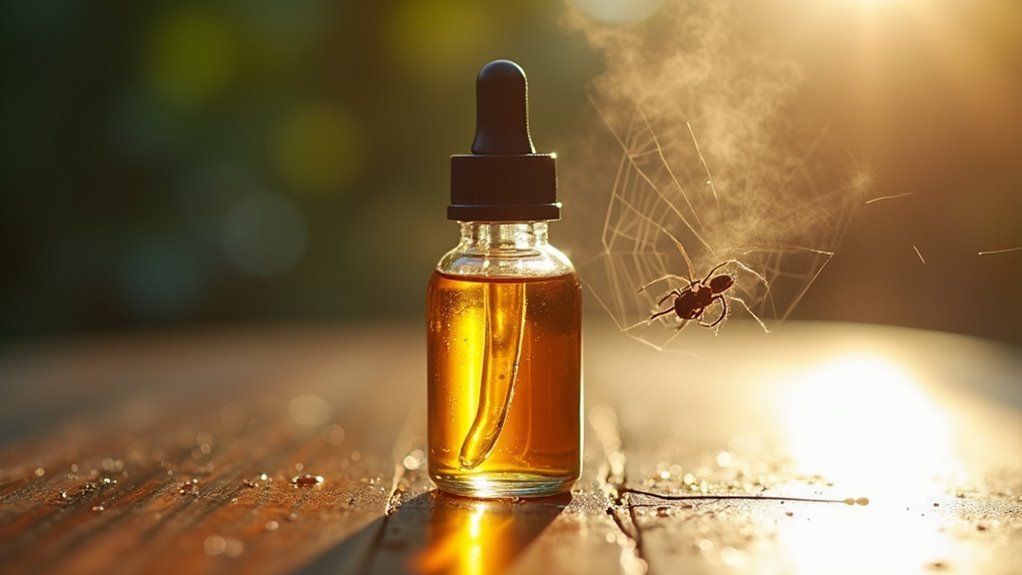
Since essential oils naturally evaporate and lose potency over time, you’ll need to establish a consistent reapplication schedule to maintain their spider-repelling effectiveness.
For minor spider activity, apply peppermint oil weekly to keep spiders from entering your home. Severe infestations require more frequent applications to sustain the repellent effect.
Environmental factors like rain greatly reduce outdoor essential oil potency, so reapply every two to three days after heavy rainfall.
Monitor spider activity and identify their common hangout spots for targeted treatment. This focused approach optimizes your spider repelling efforts while conserving oil.
Consistent reapplication creates a long-term barrier that reinforces the oils’ strength.
Frequently Asked Questions
Do Essential Oils Really Repel Spiders?
Yes, essential oils can repel spiders effectively. You’ll find peppermint oil works best since spiders detect strong scents through their legs and avoid these aromatic barriers, though you’ll need regular reapplication.
What’s the Fastest Way to Get Rid of Spiders?
You’ll get fastest results by spraying a DIY mixture of 15 drops peppermint oil, 10 drops lavender oil, and one cup water around entry points weekly for immediate spider deterrence.
What Smell Do Spiders Hate the Most?
Spiders hate peppermint oil’s smell most, as it’s scientifically proven to repel multiple species effectively. You’ll also find citrus, lavender, eucalyptus, and tea tree oils work well, though they’re less research-backed than peppermint.
How Long Does Peppermint Oil Really Repel Spiders?
You’ll find peppermint oil effectively repels spiders for about one week before needing reapplication. However, humidity and outdoor exposure can reduce this timeframe, so you’ll need more frequent applications in wet conditions.
In Summary
You’ll find that essential oils work fast against spiders because they disrupt their sensitive chemoreceptors and overwhelm their navigation systems. By choosing potent oils like peppermint, tea tree, and eucalyptus, then mixing them strategically, you’re creating an effective barrier spiders can’t tolerate. Apply your blends to entry points and spider-prone areas, then reapply every few days to maintain protection. You’ve got a natural, immediate solution that keeps working.