You can eliminate fleas from your dog using safe, natural methods that won’t harm your pet’s health. Apply diluted essential oils like lavender or cedarwood, spray apple cider vinegar mixed with water to adjust skin pH, and use food-grade diatomaceous earth on carpets to dehydrate flea eggs. Regular grooming with flea combs removes adults and larvae, while coconut oil rubbed into the coat repels fleas naturally. These proven techniques will transform your flea-fighting approach completely.
Understanding Natural Flea Control for Your Dog
When fleas invade your dog’s coat, you don’t need to reach for harsh chemical treatments to solve the problem.
Natural flea remedies offer safe, effective alternatives that protect both your pet and your family from toxic exposure. Essential oils like lavender and neem create unwelcoming environments for fleas while being gentle on your dog’s skin.
Natural flea solutions protect your family and pets from harmful chemicals while effectively eliminating parasites through gentle, earth-friendly methods.
Regular grooming with a flea comb removes adult fleas and eggs before they multiply. Apple cider vinegar works by adjusting your dog’s skin pH, making it less hospitable to these parasites.
Food-grade diatomaceous earth dehydrates flea eggs and larvae naturally. These methods prove effective against fleas without compromising your dog’s health or contaminating your living space.
Essential Oils That Repel Fleas Safely
You’ll find that certain essential oils create a powerful, natural barrier against fleas when you use them correctly on your dog.
The key lies in choosing proven flea-repelling oils like lavender, cedarwood, and citronella, then diluting them to safe concentrations that won’t harm your pet.
Proper application techniques guarantee you’re maximizing protection while keeping your dog comfortable and healthy.
Safe Oil Dilution Ratios
Although essential oils offer a natural solution for repelling fleas, you must dilute them properly to protect your dog’s health.
Safe oil dilution ratios range from 0.1% to 1% when mixing essential oils with carrier oil or water. For direct application, combine 1 drop of essential oil with 1 teaspoon of carrier oil like coconut or sweet almond oil.
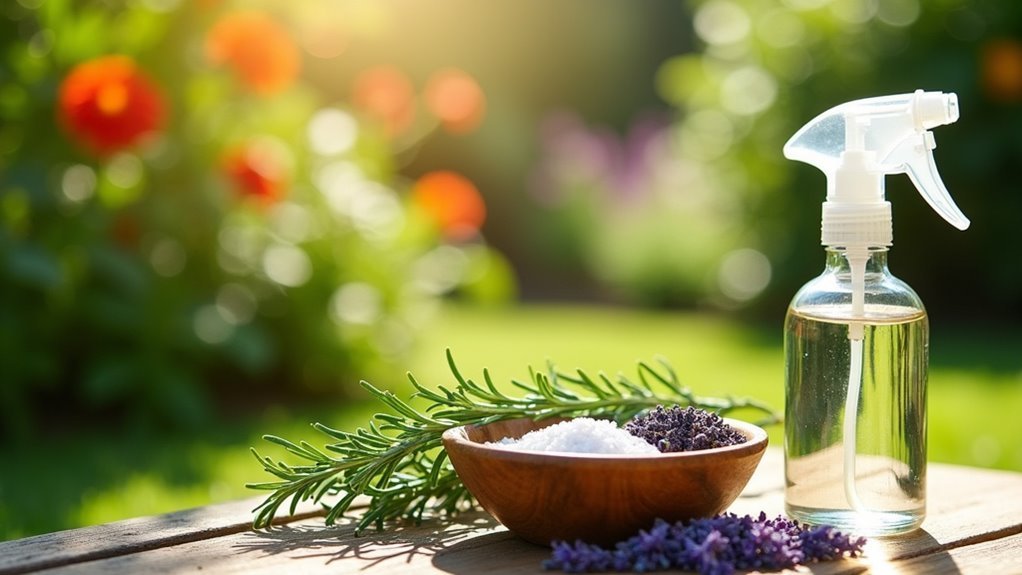
When creating a flea-repelling spray, add 10-15 drops of lavender, rosemary, or citronella to 300ml-400ml of water.
Avoid high concentrations of tea tree, eucalyptus, and peppermint oils, as they’re toxic to dogs when undiluted. Always perform a patch test on a small skin area before full application.
These natural remedies provide effective flea control while maintaining your pet’s safety.
Top Flea-Repelling Oils
Several essential oils naturally repel fleas while remaining safe for your dog when properly diluted.
Lavender, peppermint, and cedarwood are among the most effective essential oils for disrupting flea life cycles and preventing infestations. These oils work as a natural flea treatment when applied correctly to your dog’s coat.
Neem oil stands out as an excellent insect repellent that you can incorporate into homemade flea sprays for enhanced effectiveness.
Lemongrass oil offers dual benefits—it’ll repel fleas while providing a pleasant, fresh scent that makes application more enjoyable.
When using diluted essential oils for flea prevention, consistency matters. Regular application maintains their protective properties, but you’ll need proper guidance.
Always consult your veterinarian before starting any essential oil regimen to ascertain safe dosage recommendations specific to your dog’s size and health needs.
Proper Application Methods
When applying essential oils to repel fleas, proper dilution guarantees your dog’s safety while maintaining effectiveness. Follow dilution rates between 0.1% and 1% when mixing essential oils with carrier oils or water.
For homemade flea sprays, combine 300-400ml water with just a few drops of lavender, cedarwood, or peppermint oil. Always test application methods on a small skin area first to prevent skin irritation or allergic reactions.
Create effective flea repellents by mixing half a cup of lemon juice with two cups of water and pet-friendly soap.
Apply diluted neem oil directly to your dog’s coat for ongoing protection. These natural products work best when applied to bedding or used in homemade flea collars for continuous defense against infestations.
Apple Cider Vinegar as a Natural Flea Deterrent
Since fleas thrive in specific pH environments, apple cider vinegar works as a powerful natural deterrent by altering your dog’s skin chemistry to make it less inviting for these parasites.
Mix six cups of apple cider vinegar with four cups of water and spray directly onto your dog’s coat, carefully avoiding the eyes. The strong vinegar smell effectively helps repel fleas when applied regularly.
Apply this vinegar solution directly to your dog’s coat while avoiding the eyes to effectively repel fleas naturally.
You can also add small amounts to your pet’s drinking water, though use caution with sensitive dogs to prevent adverse reactions.
Beyond flea control, consistent apple cider vinegar use promotes better coat health and condition. This natural deterrent balances pH levels on your dog’s skin, creating an unwelcome environment for fleas while supporting overall coat wellness.
Diatomaceous Earth for Chemical-Free Flea Elimination
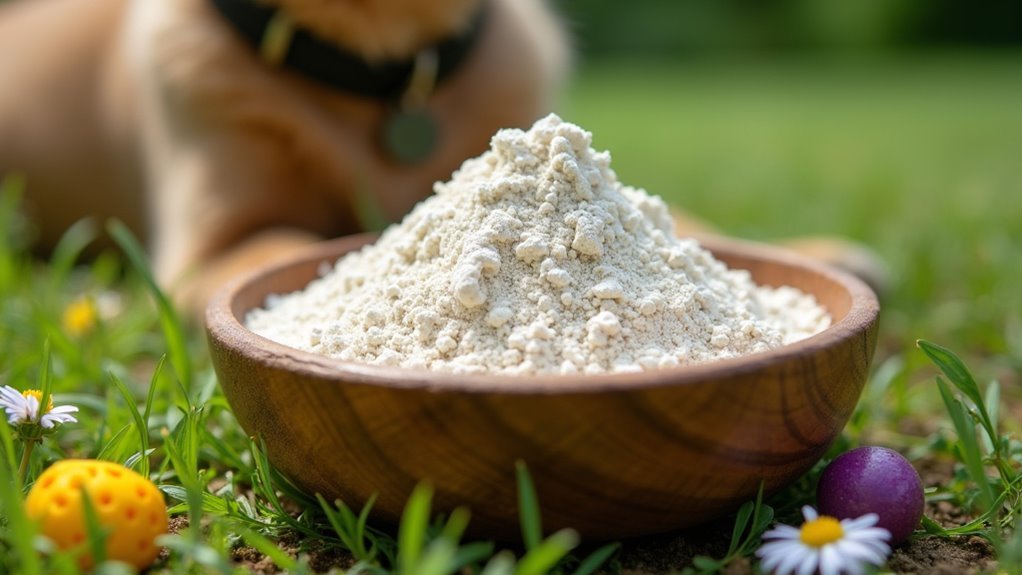
Food-grade diatomaceous earth offers one of nature’s most effective weapons against fleas, working as a microscopic razor that cuts through flea exoskeletons and dehydrates these parasites on contact.
You’ll want to apply a thin layer to your dog’s bedding, carpets, and other affected areas where fleas congregate. This powder is safe for pets, making it ideal for households with multiple animals.
Let the diatomaceous earth sit for 48 hours before vacuuming to maximize its effectiveness against flea eggs and larvae.
Never use pool-grade versions, as they’re unsafe and ineffective. Regular application combined with thorough vacuuming greatly reduces flea infestations throughout your home environment, providing long-term relief without harsh chemicals.
Natural Flea Shampoos and Bathing Methods
You can tackle flea problems with gentle organic soap options that won’t irritate your dog’s sensitive skin while effectively removing these persistent pests.
Natural flea shampoos containing essential oils and herbal extracts provide a chemical-free alternative that’s both safe and effective for regular use.
For a simple homemade solution, you’ll find that combining half a cup of lemon juice with two cups of water creates an excellent flea-repellent bath treatment when mixed with pet-friendly soap.
Organic Soap Options
When dealing with fleas on your dog, organic soap options provide a gentle yet effective alternative to harsh chemical treatments. Organic soaps like peppermint or rose varieties contain natural ingredients that safely eliminate fleas while protecting your pet’s skin.
These chemical-free solutions help maintain a flea-free coat without exposing your dog to harmful substances.
You can enhance your bathing routine by letting the lather sit for several minutes before rinsing thoroughly.
Consider creating a rosemary dip by steeping rosemary leaves in boiling water, then applying the cooled mixture as a natural repellent.
Alternatively, try lemon baths by mixing lemon juice with water and pet-friendly soap for a revitalizing, safe flea treatment that leaves your dog smelling clean and fresh.
Lemon Bath Treatment
Since lemons contain natural acids that fleas find repulsive, creating a lemon bath treatment offers an effective and aromatic solution for eliminating these pests from your dog’s coat.
Mix half a cup of lemon juice with two cups of water and a squeeze of pet-friendly soap to create this natural flea-fighting solution. The acidic properties don’t just repel fleas—they’ll also cleanse your dog’s fur safely when properly diluted.
For enhanced results, dip your flea comb in fresh lemon juice to dislodge fleas during grooming. Always avoid your dog’s eyes and rinse thoroughly afterward to prevent skin irritation.
Regular bathing with this lemon-based treatment maintains a flea-free coat while promoting healthier skin.
Herbal Remedies and Plant-Based Solutions
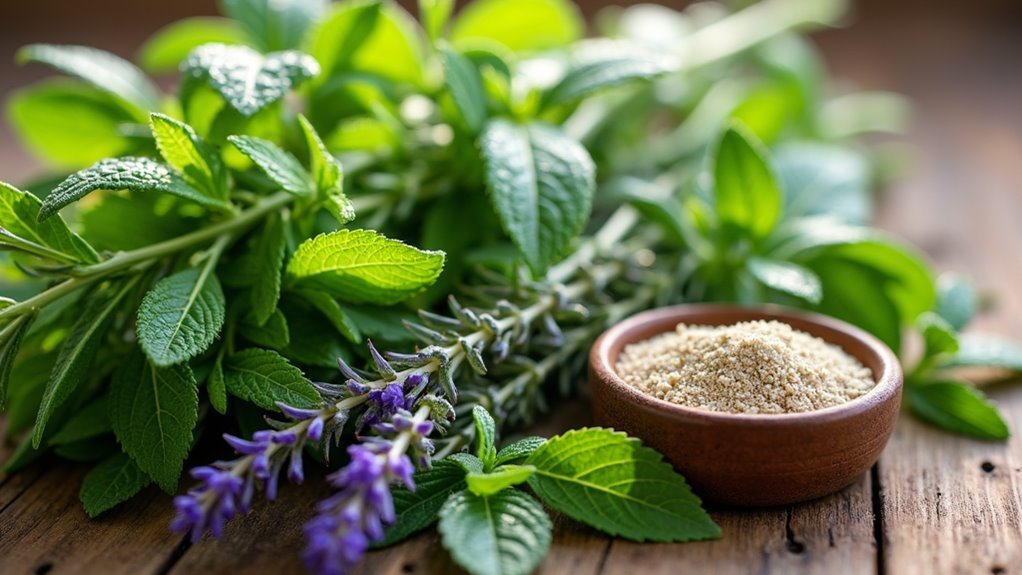
Nature’s pharmacy offers powerful allies in your battle against fleas, with many common herbs and plants providing effective, gentle alternatives to harsh chemicals.
Herbal remedies like rosemary, lavender, and neem oil repel fleas while soothing irritated skin when properly diluted for safe regular use.
Essential oils including citronella, eucalyptus, and peppermint work as natural flea repellents, but you must dilute them to 0.1%-1% to prevent pet toxicity.
Create effective sprays by mixing apple cider vinegar with water to balance your dog’s skin pH, making it inhospitable for fleas while improving coat condition.
Make homemade flea collars using diluted lavender oil on fabric for continuous protection.
Plant beneficial plants like lemongrass and spearmint in your yard to naturally deter fleas while enhancing your pet’s outdoor environment.
Creating Homemade Flea Sprays and Treatments
Although commercial flea treatments dominate store shelves, you can create equally effective solutions right in your kitchen using simple, safe ingredients.
Mix apple cider vinegar with water to create homemade flea sprays that balance your dog’s skin pH, making it inhospitable for fleas.
Essential oils like citronella, eucalyptus, and lavender work excellently when diluted to 0.1%-1% concentration for safe application.
Combine lemon juice with water and pet-friendly soap for a rejuvenating flea bath.
Coconut oil serves dual purposes—rub it into your dog’s coat or add it to their diet for internal benefits.
Steep fresh rosemary leaves in boiling water, then dilute the mixture for a soothing dip.
These natural ingredients offer effective flea remedies for dogs without harsh chemicals.
Regular Grooming Techniques for Flea Prevention
Beyond creating homemade treatments, consistent grooming practices form your strongest defense against flea infestations.
You’ll want to use flea combs regularly to physically remove fleas and their eggs from your dog’s coat. This natural approach considerably reduces populations before they multiply.
Frequent brushing helps dislodge fleas while allowing you to inspect your dog’s skin for irritation signs.
Regular brushing removes fleas naturally while helping you spot skin problems and irritation early.
When bathing your pet, choose organic shampoos that kill existing fleas and promote a healthy coat without harsh chemicals.
During grooming sessions, spray a mixture of water and apple cider vinegar to maintain your dog’s skin pH and naturally deter fleas.
Establishing this consistent routine strengthens your bond while keeping your pet’s coat clean and flea-free.
Environmental Controls to Reduce Flea Populations
You can’t effectively control fleas on your dog without addressing their breeding grounds in your home and yard.
Your cleaning routine and outdoor maintenance practices play vital roles in breaking the flea life cycle before these pests can jump onto your pet.
Let’s explore how strategic home cleaning and proper yard care will create an environment where fleas simply can’t thrive.
Home Cleaning Strategies
While treating your dog directly addresses part of the flea problem, targeting the environment where these pests live and reproduce is equally important for complete elimination.
Effective home cleaning strategies create an inhospitable environment for fleas at every life stage.
- Regular cleaning through vacuuming carpets, furniture, and pet bedding removes fleas and eggs. Dispose of vacuum bags outside immediately to prevent reinfestation.
- Steam cleaning carpets and upholstery kills fleas on contact, especially in hard-to-reach areas where other methods aren’t practical.
- Diatomaceous earth sprinkled in carpets dehydrates flea eggs. Leave for 48 hours before vacuuming for maximum effectiveness.
- Flea traps using soapy water near light sources attract and capture adult fleas overnight, reducing populations while you maintain a clean yard.
Yard Maintenance Practices
Indoor cleaning efforts work hand-in-hand with outdoor flea control, as your yard can harbor millions of developing fleas that’ll eventually find their way back to your pet.
Effective yard maintenance practices start with keeping your lawn short and well-maintained, allowing sunlight to penetrate areas where fleas typically hide. You’ll need to eliminate potential flea habitats by regularly clearing dead plants and weeds that create ideal breeding grounds.
Consider introducing beneficial nematodes like Steinernema carpocapsae, which naturally control flea larvae without harming your pets or plants.
Plant flea-repellent plants such as lavender and lemongrass around your yard’s perimeter. Maintain a consistent routine of raking leaves and mowing grass to reduce flea populations and create a healthier outdoor environment for your family.
Safe Household Items That Combat Fleas
Many common household items sitting in your kitchen pantry can effectively combat fleas without exposing your dog to harsh chemicals.
These natural flea repellent solutions offer safe alternatives that you can implement immediately.
- Apple cider vinegar – Mix with water to create a spray that balances your dog’s pH levels, making them less appealing to fleas.
- Lemon juice – Combine with water for an acidic flea remedy that works as both a bath and spray treatment.
- Coconut oil – Rub into your dog’s coat as a safe, ingestible natural flea repellent that adds shine.
- Diatomaceous earth – Sprinkle in carpets and bedding to dehydrate flea eggs and larvae.
Rosemary works excellently as a dip or powder for additional protection.
Yard Maintenance for Natural Flea Management
Since fleas spend most of their lifecycle in your yard rather than on your dog, controlling the outdoor environment becomes essential for long-term flea management.
Effective yard maintenance starts with mowing your lawn shorter to expose flea habitats to sunlight, as fleas can’t tolerate bright conditions. Clear away organic material like dead plants, weeds, and debris that create breeding grounds.
Plant flea-repellent plants such as lavender, spearmint, and lemongrass around your outdoor areas for natural deterrence. Introduce beneficial nematodes like Steinernema carpocapsae to kill flea larvae safely without harming pets or plants.
Regular raking and ensuring proper drainage prevents flea infestations by eliminating the moisture and shelter fleas need to thrive.
Monitoring Your Dog’s Health During Natural Treatment
While natural flea treatments offer safer alternatives to chemical solutions, you’ll need to carefully monitor your dog’s health throughout the process to confirm both safety and effectiveness.
Watch for these key indicators during natural treatment:
- Skin condition – Check for signs of irritation, redness, or dryness that may result from ingredients like apple cider vinegar.
- Scratching behavior – Track changes in itching frequency and intensity, as excessive scratching indicates ineffective treatments.
- Overall wellness – Monitor appetite and energy levels, since flea infestations can cause anemia or discomfort.
- Unusual symptoms – Note any vomiting or lethargy that could signal flea-related illness or adverse reactions.
Regular observation helps you identify when treatments aren’t working or when complications arise.
Consistent monitoring allows you to detect treatment failures and potential health issues before they become serious problems.
Don’t hesitate to consult with your veterinarian to evaluate progress and guarantee your dog’s health remains ideal throughout the natural flea elimination process.
Frequently Asked Questions
What Kills Fleas on Dogs Instantly?
You can kill fleas on dogs instantly by giving them a Dawn dish soap bath for ten minutes, which drowns the fleas, or by spraying lemon juice mixture directly onto their coat.
Is It Possible to Get Rid of Fleas Without Chemicals?
Yes, you can eliminate fleas without chemicals using natural methods. Try apple cider vinegar sprays, regular flea combing, diluted essential oils, food-grade diatomaceous earth, and thorough home cleaning to effectively control infestations.
How Do You Get Rid of Fleas on Dogs Naturally?
You can bathe your dog with Dawn dish soap for ten minutes to drown fleas, spray apple cider vinegar mixed with water, use flea combs regularly, and apply food-grade diatomaceous earth.
Can I Put Baking Soda on My Dog to Kill Fleas?
You shouldn’t put baking soda directly on your dog’s skin as it can cause irritation and dryness. Instead, sprinkle it on carpets and bedding where fleas live, then vacuum thoroughly.
In Summary
You’ve got powerful chemical-free options to protect your dog from fleas. Start with essential oils and apple cider vinegar for immediate relief, then incorporate diatomaceous earth and natural shampoos into your routine. Don’t forget your environment—maintain your yard and use safe household items strategically. Monitor your dog’s response throughout treatment and stay consistent with your approach. With patience and dedication, you’ll successfully eliminate fleas naturally while keeping your furry friend healthy and comfortable.