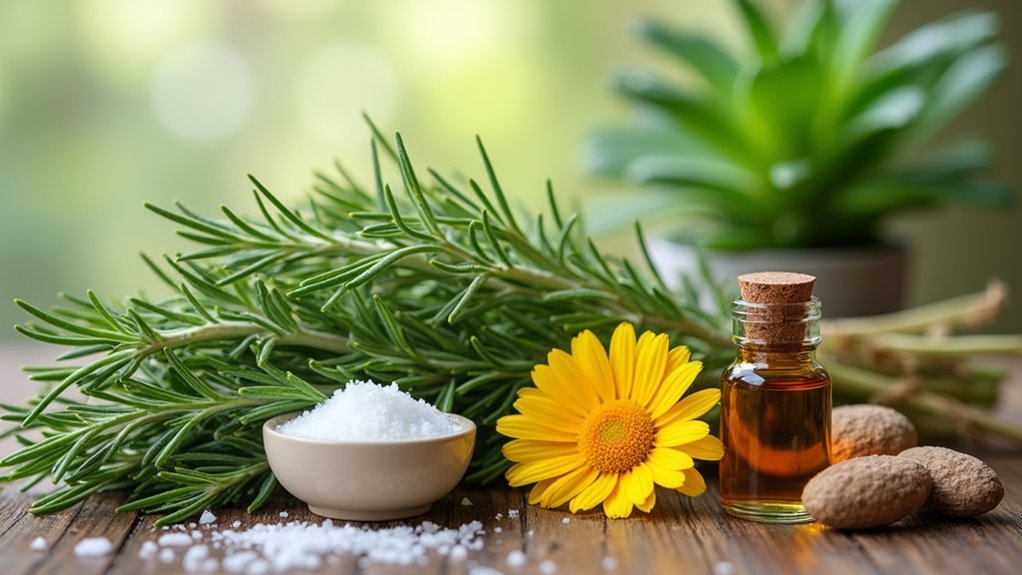
You can effectively repel fleas using natural remedies like diluted essential oils (lavender, lemongrass, rosemary), apple cider vinegar sprays, and coconut oil applications. Sprinkle food-grade diatomaceous earth on carpets and pet bedding to dehydrate flea eggs, then vacuum after 48 hours. Regular lemon water baths soothe itching while removing existing fleas. Always test small areas first and consult your veterinarian before trying new treatments. These thorough strategies will transform your home into a flea-free sanctuary for your beloved companions.
Understanding Flea Infestations and Their Impact on Pet Health
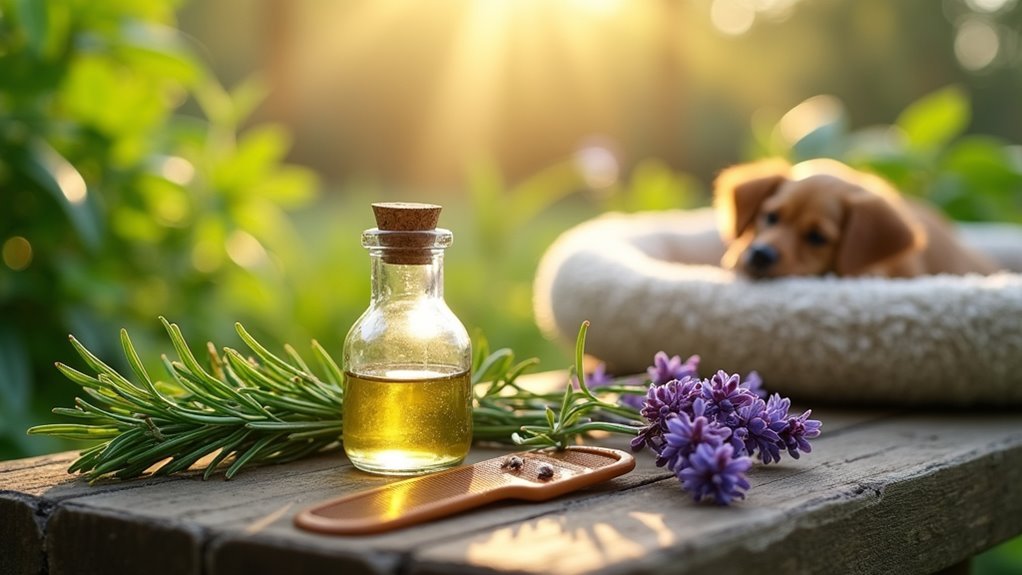
While fleas might seem like minor nuisances, these tiny parasites can release serious health consequences on your beloved pets.
Flea infestations develop rapidly since each flea lays up to 2,000 eggs during its lifetime. You’ll notice flea bites causing intense itching and scratching, which damages your pet’s skin. This constant irritation often leads to flea allergy dermatitis and secondary infections.
Young or elderly pets face heightened risks from severe infestations. Blood loss from multiple bites can cause anemia in vulnerable animals.
You can’t rely on seeing fleas directly, as they hide in carpets and furniture between feedings.
Environmental factors greatly influence flea populations. Hot, humid climates accelerate reproduction, while indoor heating allows year-round survival.
Understanding these impacts helps you recognize when your pet’s health requires immediate attention.
Essential Oils and Natural Repellents for Flea Prevention
You can harness the power of essential oils like lavender, lemongrass, and rosemary to create effective natural flea repellents for your pets.
These oils work best when you understand which types are safe for your specific pet and how to properly dilute them with carrier oils.
Getting the application method right guarantees you’ll maximize their repelling properties while keeping your furry friend safe and comfortable.
Safe Essential Oil Types
Several essential oils offer pet-safe alternatives to chemical flea treatments when you dilute them properly with carrier oils. Among the most effective safe essential oil types are lavender, rose geranium, lemongrass, and cedarwood, which naturally repel fleas without harsh chemicals.
Dog owners should always mix these essential oils with a carrier oil before applying them topically to their pets’ fur.
Neem oil stands out among natural flea remedies for its dual action—it repels fleas while reducing itchiness from existing bites. However, its strong odor may discourage some pets.
Coconut oil serves as both an effective flea deterrent and coat conditioner, making it particularly appealing.
Before using any essential oils, test a small area on your pet and consult your veterinarian for safety guidance.
Proper Dilution and Application
Three critical steps guarantee safe and effective use of essential oils as natural repellents for your pet.
Proper dilution is essential for safe use. Mix 1-2 drops of essential oils like lavender or lemongrass with one tablespoon of carrier oil.
Never apply undiluted oils directly to your pet’s skin, as this can cause adverse reactions.
Always perform a patch test before full application. Apply a small amount of diluted oil to a tiny area of your pet’s skin and wait 24 hours to check for sensitivity.
- Create homemade flea spray: Combine 1 cup water with 10-15 drops of diluted essential oil
- Use apple cider vinegar alternative: Mix equal parts vinegar and water for acidic flea deterrent
- Consult your veterinarian: Get professional guidance before using any natural repellents on pets
Apple Cider Vinegar and Lemon-Based Flea Treatments

When searching for gentle yet effective flea treatments, apple cider vinegar and lemon-based solutions offer natural alternatives that work by creating an acidic environment fleas can’t tolerate.
Apple cider vinegar serves as an effective natural remedy when mixed with water and sprayed directly onto your dog’s coat. This treatment helps repel fleas while soothing skin irritation. You can also add diluted ACV to your pet’s drinking water to deter fleas internally.
Lemon juice creates another powerful natural flea treatment. Prepare a warm lemon water bath to remove existing fleas and provide itch relief.
| Treatment Type | Application Method | Benefits |
|---|---|---|
| ACV Spray | Mix with water, spray on coat | Repels fleas, soothes skin |
| ACV Internal | Add to drinking water (1:3 ratio) | Internal flea deterrent |
| Lemon Bath | Warm lemon water soak | Removes fleas, relieves itching |
| Regular Use | Weekly applications | Maintains flea-free environment |
| Safety Check | Test skin sensitivity first | Prevents adverse reactions |
Diatomaceous Earth and Coconut Oil Applications
Beyond liquid-based treatments, two powerful dry remedies offer exceptional flea control through completely different mechanisms.
Diatomaceous earth works by dehydrating fleas and disrupting their exoskeleton. Sprinkle food-grade DE on pet bedding, carpets, and upholstery, letting it sit for 48 hours before vacuuming. This natural remedy provides effective treatment without harsh chemicals.
Coconut oil suffocates fleas on contact while moisturizing your pet’s skin. Gently warm the oil and rub it evenly throughout your pet’s coat, reapplying regularly for ongoing protection.
Both natural remedies are completely safe for pets, making them ideal alternatives to chemical treatments:
These gentle, pet-safe alternatives deliver effective flea control without exposing your furry companions to harsh chemical ingredients.
- Non-toxic formulations protect sensitive animals from harmful side effects
- Dual-action benefits combine flea control with skin/coat health improvements
- Cost-effective solutions provide long-lasting protection affordably
Herbal Baths and Rosemary Dips for Soothing Relief

While topical applications provide direct flea control, herbal baths offer a gentler approach that combines pest management with therapeutic skin care. You can create effective herbal baths using lemon juice or apple cider vinegar to establish an acidic environment that repels fleas while soothing your dog’s skin.
For a rosemary dip, boil rosemary leaves, let the mixture cool, then bathe or mist your pet with this flea-repellent solution.
These natural remedies promote healthier skin and shinier coats beyond just pest control. However, monitor your dog’s reaction carefully, as some pets may develop irritation or allergies.
For best results, combine these treatments with regular grooming and environmental cleaning as part of your thorough flea management strategy.
Home Environment Cleaning With Natural Methods
You’ll need to tackle flea infestations beyond your pet’s coat by implementing natural cleaning methods throughout your home environment.
Your daily vacuuming routine becomes a powerful weapon when you focus on carpets, upholstery, and pet areas where fleas hide and reproduce.
Steam cleaning and natural carpet treatments can eliminate remaining eggs and larvae that regular cleaning might miss.
Daily Vacuuming Techniques
The vacuum cleaner becomes your most powerful weapon against fleas when you use it strategically every single day.
Daily vacuuming disrupts the flea life cycle by eliminating adult fleas, eggs, and larvae from your home environment. Focus on high-traffic areas where your pets spend most of their time, including carpets, furniture, and pet bedding.
For enhanced flea control, consider these natural techniques:
- Pre-treat surfaces – Sprinkle diatomaceous earth or baking soda on carpets before vacuuming to naturally dehydrate fleas.
- Use HEPA filtration – Choose vacuums with HEPA filters to capture microscopic flea particles and allergens effectively.
- Dispose immediately – Remove vacuum bags or empty canisters outside your home to prevent reinfestation.
These natural substances combined with consistent vacuuming will help remove fleas without harmful chemicals.
Natural Carpet Treatments
Beyond regular vacuuming, natural carpet treatments provide powerful organic solutions that eliminate fleas at every stage of their development.
Food-grade diatomaceous earth works exceptionally well by dehydrating flea eggs and larvae. Sprinkle it generously across your carpets, leave for 48 hours, then vacuum thoroughly.
A baking soda and salt mixture offers another effective approach—the combination dehydrates fleas and their eggs naturally. Apply this mixture, let it sit for several hours, then vacuum completely.
Steam cleaning delivers thorough results by drowning adult fleas, flea eggs, and larvae while sanitizing your carpets. The high temperatures eliminate all life stages effectively.
These natural carpet treatments, combined with regular cleaning routines and consistent vacuuming, create an inhospitable environment for fleas without exposing your pets to harsh chemicals.
Steam Cleaning Benefits
Steam cleaning offers five distinct advantages that make it one of the most effective organic flea elimination methods for your home environment.
This powerful technique uses high temperatures reaching 200°F to eliminate fleas, larvae, and eggs from carpets and upholstery without harsh chemicals, making it completely safe for pets and family members.
Steam cleaning provides superior results through:
- Deep fiber penetration – Unlike vacuuming, steam reaches hidden areas where fleas hide and breed.
- Life cycle disruption – High temperatures destroy all flea development stages while removing organic debris they feed on.
- Prevention benefits – Regular treatments create an inhospitable environment for reinfestation.
This environmentally friendly approach requires only water, making it ideal for pet owners seeking chemical-free solutions.
Yard Maintenance and Outdoor Flea Control Strategies
When fleas establish themselves in your yard, they create a constant source of reinfestation that can undermine even the most diligent indoor treatment efforts.
Regular yard maintenance, including mowing and removing dead plants, exposes shaded areas to sunlight where fleas can’t survive. You’ll want to incorporate flea-repellent plants like lavender, spearmint, and lemongrass as natural deterrents throughout your landscaping.
Regular yard maintenance and strategic planting of lavender, spearmint, and lemongrass create natural barriers that eliminate flea-friendly environments.
Beneficial nematodes offer an effective biological solution that kills fleas without harming your plants or pets.
You can also apply diatomaceous earth to dehydrate flea eggs, though use it carefully around pets and humans.
Don’t forget to regularly clean outdoor pet areas, including dog houses and bedding, since these spots often harbor flea infestations that’ll quickly spread throughout your yard.
Safety Considerations When Using Natural Flea Remedies
While natural flea remedies offer a gentler approach to pest control, they’re not automatically safe for every pet. Essential oils can be toxic without proper dilution, and apple cider vinegar may cause skin irritation. Never use garlic as it’s poisonous to dogs and cats. Always consult your veterinarian before trying new treatments.
Key safety considerations include:
- Monitor for allergic reactions – Watch closely when introducing homemade herbal collars or sprays, as pets can develop sensitivities to natural ingredients.
- Use only food-grade diatomaceous earth – This guarantees safety for both you and your pet while avoiding respiratory irritation from inhalation.
- Test small areas first – Apply any topical remedy to a small skin patch before full application to check for adverse reactions.
Your pet’s safety should always come before convenience.
Frequently Asked Questions
What Naturally Kills Fleas on Pets?
You can naturally kill fleas on pets using diatomaceous earth, which dehydrates them, or coconut oil that suffocates them. Apple cider vinegar, neem oil, and lemon baths also repel fleas effectively.
What Do Holistic Vets Recommend for Flea and Tick Prevention?
You’ll find holistic vets recommend regular flea combing, essential oil repellents like lavender and cedarwood, omega-3 supplements for healthier skin, frequent vacuuming, and natural remedies like apple cider vinegar sprays.
What Is an Instant Homemade Flea Killer?
You can create an instant homemade flea killer by mixing equal parts dish soap and water in a spray bottle. Spray it directly onto fleas to trap and suffocate them immediately.
Can I Spray Apple Cider Vinegar on My Dog to Prevent Fleas?
You can spray diluted apple cider vinegar on your dog to help repel fleas. Mix equal parts ACV and water, test on a small skin area first, then spray focusing on belly, legs, and tail areas.
In Summary
You’ve got powerful organic tools at your disposal to tackle flea infestations naturally. By combining essential oils, apple cider vinegar treatments, and diatomaceous earth applications with thorough home cleaning and yard maintenance, you’ll create an environment where fleas can’t thrive. Remember to monitor your pet’s reactions carefully and consult your veterinarian before starting any new treatment. With consistency and patience, you’ll achieve effective flea control while keeping your furry friend safe and comfortable.