You can effectively repel fleas using citrus peels thanks to their natural compounds like limonene and linalool, which disrupt flea nervous systems and break down their exoskeletons. Simply simmer sliced lemon with fresh thyme in water, strain the mixture, and add apple cider vinegar to create a powerful spray. Apply this solution to your pet’s fur 2-3 times weekly while avoiding eyes and sensitive areas. This detailed guide will show you exactly how to maximize citrus’s flea-fighting potential.
Understanding How Citrus Peels Combat Fleas
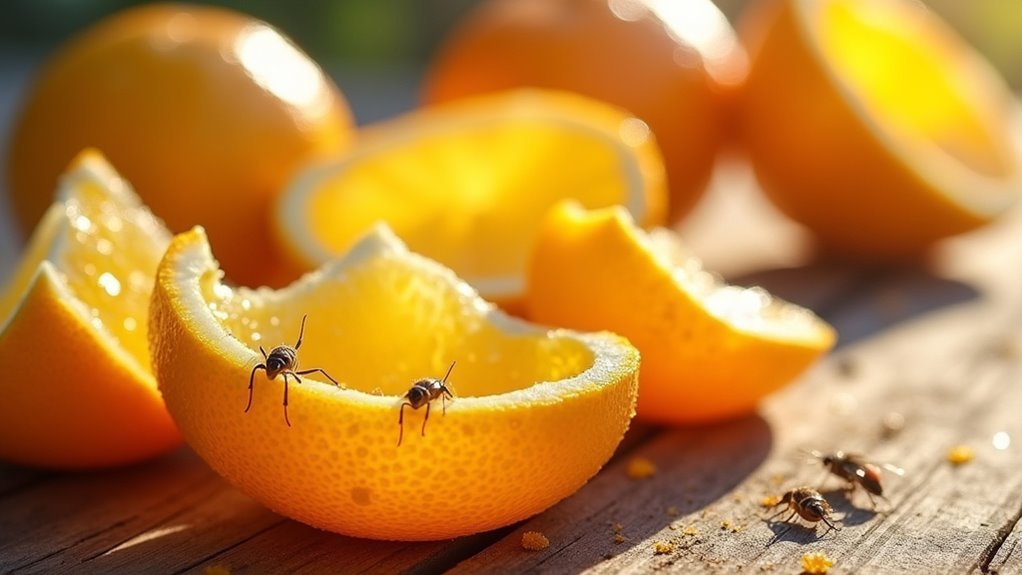
When fleas invade your home, citrus peels offer a powerful natural defense through their unique chemical composition. The secret weapon lies in linalool, a compound found naturally in citrus peels that’s toxic to fleas while remaining completely safe for you and your pets. This makes citrus peels an excellent alternative to harsh chemical treatments.
The thick white layer inside citrus peels contains additional compounds that dissolve flea exoskeletons, helping kill fleas effectively.
When you use citrus peels strategically, you’re deploying a dual-action approach that both repels and eliminates these persistent pests. The natural oils work by disrupting flea nervous systems, causing paralysis and death. This biological mechanism makes citrus peels a scientifically-backed solution for flea control.
Essential Compounds That Make Citrus Effective Against Pests
You’ll find that limonene stands as the primary weapon in citrus peels’ arsenal against fleas, actively disrupting their nervous systems and repelling them with its potent scent.
This essential oil works alongside other natural toxic compounds found in the peel’s thick white layer, which break down flea exoskeletons on contact.
These compounds don’t just mask odors—they actively interfere with flea energy production, making citrus peels a powerful natural pest control solution.
Limonene’s Flea-Fighting Properties
Because limonene concentrates heavily in citrus peels, this powerful compound delivers a double punch against fleas by both repelling and killing them.
When you use citrus peel extracts, limonene disrupts fleas’ exoskeletons, causing dehydration and death. This essential oil targets multiple stages of the flea lifecycle, eliminating both adults and larvae effectively.
You’ll appreciate that limonene works as a non-toxic alternative to harsh chemical pesticides, making it safer for your pets and family. The compound’s pleasant citrus scent creates an additional barrier, deterring fleas from infesting treated areas.
Research confirms limonene’s dual action makes it particularly effective for natural pest control. By concentrating on citrus peels from lemons, oranges, and grapefruits, you’re harnessing nature’s most potent flea-fighting weapon.
Natural Toxic Compounds
While limonene takes center stage in the flea-fighting arsenal, citrus peels pack several other naturally toxic compounds that create a formidable defense system against these persistent pests.
Linalool stands out as a particularly effective compound that’s toxic to fleas while remaining safe for you and your pets when used in small amounts. This natural chemical disrupts flea nervous systems, making citrus peels deadly weapons against infestations.
The thick white layer beneath citrus peel surfaces contains compounds that dissolve flea exoskeletons, leaving them vulnerable to dehydration.
When you use citrus peels to repel fleas, you’re deploying multiple toxic compounds simultaneously. This multi-pronged approach overwhelms fleas’ natural defenses, making escape nearly impossible and ensuring your pest control efforts deliver maximum impact.
Gathering and Preparing Your Citrus Peels

You’ll want to start by selecting fresh oranges, lemons, or grapefruits that haven’t been treated with pesticides or wax coatings.
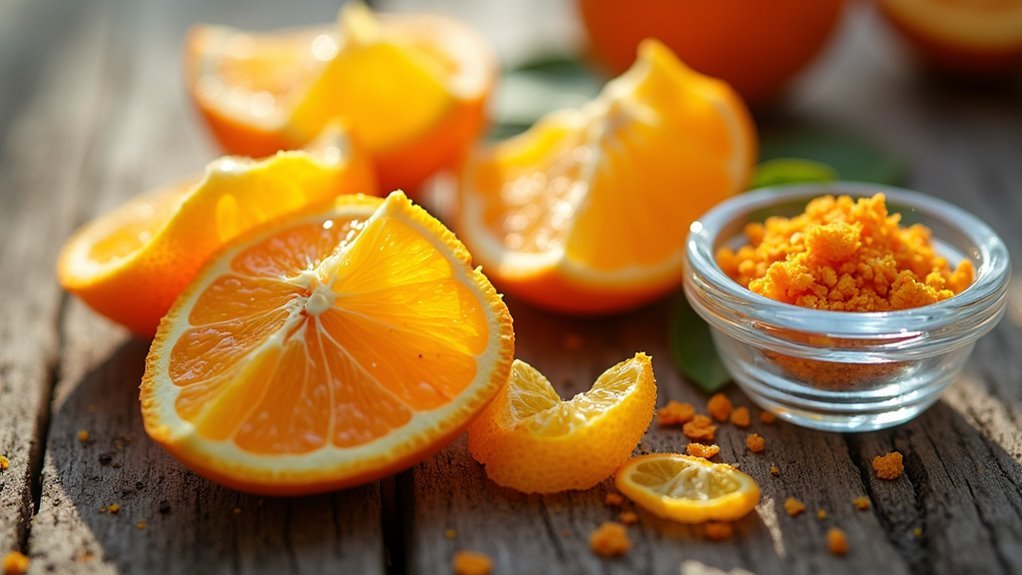
Remove the peels carefully using a vegetable peeler or sharp knife, ensuring you capture the outermost layer where the essential oils are most concentrated.
Cut these peels into small pieces to maximize the surface area and help release more of the natural compounds that fleas find repulsive.
Selecting Fresh Citrus Fruits
Why settle for expensive commercial flea repellents when nature’s most effective solution sits in your fruit bowl?
You’ll want to select ripe oranges, lemons, or grapefruits since their peels contain the highest concentrations of limonene and other essential oils that effectively repel fleas. Choose fresh, firm fruits that feel heavy for their size and have vibrant, unblemished skin.
Avoid any citrus with soft spots, wrinkled areas, or mold, as these indicate deteriorating quality that’ll reduce the potency of your natural repellent.
Opt for organic varieties whenever possible to avoid pesticides that could harm your pets or family.
Don’t waste the citrus juice inside – save the fruit for eating or cooking while using the nutrient-rich peels for your flea-fighting solution.
Proper Peel Extraction Methods
Once you’ve gathered your premium citrus fruits, it’s time to extract maximum flea-fighting power from those peels.
You’ll transform ordinary citrus peels into a potent natural weapon that’ll protect your pet bedding and living spaces from unwanted flea invasions.
Your extraction process involves three essential steps:
- Peel and preserve – Carefully remove the outer skin while saving the delicious fruit flesh for snacking.
- Boil and simmer – Combine peels with pulp and juice in water, then boil and simmer for 20 minutes to release powerful oils.
- Blend and strain – Process the cooled mixture into thick pulp, then strain to capture the concentrated liquid for your flea-fighting spray bottles.
Creating a Potent Citrus Flea Spray
Creating an effective citrus flea spray requires just a few simple ingredients and straightforward preparation. You’ll start by slicing one whole lemon into thin rounds and simmering it with chopped fresh thyme and water for 20 minutes until the mixture reduces to two cups. Strain the liquid to remove solids, then add two tablespoons of apple cider vinegar for enhanced repellent properties.
| Ingredient | Amount |
|---|---|
| Whole lemon (sliced) | 1 |
| Fresh thyme (chopped) | As needed |
| Water | To make 2 cups |
| Apple cider vinegar | 2 tablespoons |
Store your Natural Flea spray in a glass bottle in a cool, dry place. Apply this flea spray lightly to your pet’s fur two to three times weekly, avoiding eyes and mucous membranes.
Proper Application Methods for Maximum Results
While brewing your citrus flea spray correctly sets the foundation, applying it properly determines whether you’ll achieve maximum flea-repelling results.
Proper application technique is just as crucial as the perfect citrus spray formula for effective flea control.
You’ll want to mist the spray lightly on your pet’s fur two to three times weekly, carefully avoiding their eyes and mucous membranes to prevent irritation.
Essential Application Steps:
- Distribute evenly – Use a flea comb to work the citrus mixture through your pet’s coat, ensuring every strand gets covered.
- Target problem areas – Focus on your pet’s neck, behind ears, and base of tail where fleas typically congregate.
- Maintain consistency – Stick to your twice-weekly schedule to create an ongoing barrier that keeps these persistent pests away.
This methodical approach transforms your homemade spray into a powerful flea-fighting weapon.
Safety Considerations When Using Citrus Around Pets
How can you guarantee your citrus flea repellent remains safe for your furry companions?
While citrus peels contain linalool that’s toxic to fleas but safe for pets and humans, you’ll need to monitor your cats carefully. Cats generally dislike citrus scents, which can cause discomfort and distress.
Never use essential oils derived from citrus around cats, as these concentrated forms are toxic to them.
When applying citrus peels for flea control, watch for signs of irritation or discomfort in your pets. Always avoid areas near your cat’s eyes and mucous membranes to prevent adverse reactions.
Although rubbing orange peel on cats is considered safe, the scent may still cause stress, so observe your pet’s behavior closely after application.
Combining Citrus With Other Natural Flea Deterrents
Beyond ensuring safety with citrus applications, you can amplify your flea-fighting power by pairing citrus peels with other natural deterrents. The limonene in citrus peels disrupts flea exoskeletons, but combining them with complementary ingredients creates a more formidable defense against these persistent pests.
Here are three powerful combinations to enhance your citrus-based flea control:
- Citrus peels + fresh thyme – The essential oils from thyme work synergistically with limonene for superior repellent properties.
- Citrus spray + apple cider vinegar – This mixture improves effectiveness while addressing yeast issues on your pet’s skin.
- Regular application schedule – Spraying this combined solution two to three times weekly creates a consistent barrier that prevents flea infestation.
Maintaining Your Home Environment to Prevent Reinfestation
Once you’ve established an effective citrus-based flea deterrent system, you’ll need to focus on environmental maintenance to guarantee these pests don’t return.
Regular vacuuming disrupts the flea lifecycle and prevents new eggs from hatching across all surfaces, including carpets, furniture, and pet bedding.
Wash pet fabrics at 120°F or higher to kill fleas, while non-washable items need high-heat drying for 10-20 minutes.
Maintaining a clean environment through frequent cleaning greatly reduces flea habitats and lowers reinfestation risk.
Steam cleaning carpets and crevices effectively eliminates fleas and eggs.
Dispose of vacuum bags immediately or wash canisters with hot, soapy water to help keep collected materials from reintroducing fleas into your home environment.
Evaluating the Effectiveness of Your Citrus Treatment
When should you assess whether your citrus flea treatment is working effectively?
You’ll want to evaluate your progress after one to two weeks of consistent application. Since citrus peels contain limonene that works to repel fleas rather than kill them directly, patience is essential for seeing results.
Patience is key when using citrus flea treatments – allow one to two weeks for limonene to effectively repel fleas.
Monitor these key indicators:
- Reduced flea activity – You should notice fewer fleas jumping on your pet or crawling in carpeted areas.
- Pet comfort levels – Watch for decreased scratching and biting behaviors in your furry companion.
- Environmental changes – Check bedding and furniture for fewer flea droppings or eggs.
Remember that citrus treatments require regular reapplication to maintain effectiveness.
If you don’t see improvement after three weeks, consider combining your citrus approach with other flea control methods.
Frequently Asked Questions
Does Citrus Repel Fleas?
Yes, citrus can repel fleas due to linalool, a compound they dislike. You’ll find it works as a deterrent, but it won’t kill existing fleas, so you’ll need additional treatments for complete control.
How Do You Make Citrus Flea Spray?
You’ll slice one lemon into thin rounds, add two tablespoons fresh thyme, simmer with three cups water for twenty minutes, strain, add apple cider vinegar, then store in spray bottle.
What Smell Do Fleas Absolutely Hate?
You’ll find that fleas absolutely hate citrus scents, especially from lemons, oranges, and grapefruits. The limonene in citrus peels creates an overwhelming aroma that drives fleas away from your home and pets effectively.
What Is the Best Homemade Flea Repellent?
You’ll find lemon-thyme spray works best. Simmer sliced lemon with fresh thyme in water for twenty minutes, strain, then add apple cider vinegar. Apply this mixture to pets twice weekly, avoiding eyes completely.
In Summary
You’ve now mastered using citrus peels as a natural flea deterrent. Remember, consistency’s key – you’ll need to reapply your citrus treatments regularly for lasting results. Don’t forget to combine this method with thorough cleaning and other natural repellents you’ve learned about. Monitor your pets closely for any reactions, and adjust your approach as needed. With patience and persistence, you’ll create a flea-free environment using nothing but nature’s powerful citrus arsenal.