You can create effective pest control solutions using white vinegar mixed with water in a 50/50 ratio. This mixture disrupts ant pheromone trails, kills spiders on contact, and repels mosquitoes with its pungent odor. Apply the solution around entry points like windows and doorways, but reapply frequently since vinegar evaporates quickly. While white vinegar works best due to its 5-8% acetic acid content, you’ll discover additional enhancement techniques that boost effectiveness considerably.
What Pests Does Vinegar Effectively Repel?
When household pests invade your space, vinegar emerges as a surprisingly versatile weapon in your natural pest control arsenal. This common kitchen staple proves remarkably effective against multiple pest types through different mechanisms.
White vinegar excels at disrupting ant pheromone trails, making it an excellent choice to repel ants while simultaneously confusing their navigation systems. The acidic solution also functions as a contact insecticide against spiders, killing them instantly upon direct application.
White vinegar disrupts ant trails and acts as a contact killer for spiders through its acidic properties.
Mosquitoes find vinegar’s pungent odor particularly offensive, making it valuable for outdoor pest management during warmer seasons.
Apple cider vinegar creates deadly traps for fruit flies, luring them with its sweet aroma before drowning them.
However, remember that using vinegar for pest control requires strategic application, as it may attract certain insects while repelling others.
Types of Vinegar and Their Pest Control Properties
While white vinegar stands as the most potent option for pest control, different vinegar types offer varying levels of effectiveness based on their acidity and composition.
White vinegar delivers maximum pest-repelling power with its 5-8% acetic acid content. You’ll find it particularly effective against ants, spiders, and mosquitoes when mixed in a 50/50 water solution.
It’s your best choice for light-colored surfaces.
Apple cider vinegar provides a gentler alternative that’s safer around children and pets while maintaining pest control effectiveness. Though milder, it disrupts ant pheromone trails just as efficiently as white vinegar.
Consider these key differences between types of vinegar:
- White vinegar offers highest acidity for maximum effectiveness
- Apple cider vinegar provides child and pet-friendly pest control
- Balsamic vinegar proves less effective due to sugar content
- All vinegar types disrupt ant navigation systems
How to Prepare and Apply Vinegar Solutions

You’ll achieve the best pest control results when you mix your vinegar solution using the correct ratios and apply it strategically.
The key is creating a balanced mixture that’s strong enough to repel pests but won’t damage your home or plants.
Proper application techniques guarantee you’re targeting the right areas where pests enter and congregate.
Mixing Ratios Correctly
Creating an effective vinegar pest repellent starts with getting the mixing ratio right.
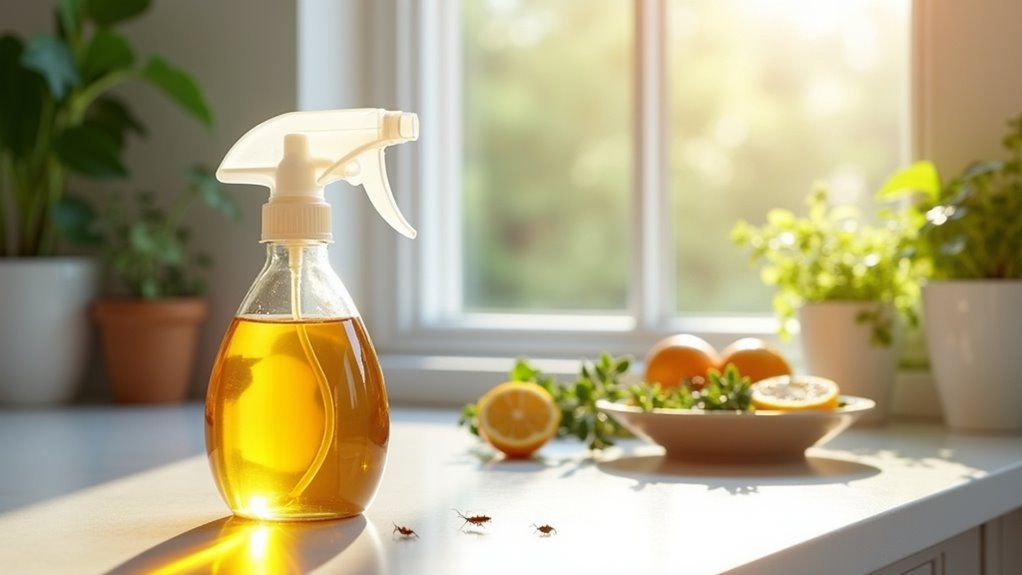
You’ll want to mix it with water at a 50/50 ratio in a spray bottle to create the perfect DIY pest solution. This balanced dilution protects your surfaces and plants while maintaining effectiveness against common pests.
Before applying, shake the bottle thoroughly to guarantee proper mixing. This step’s essential for maximizing your solution’s pest-fighting power.
- Use equal parts white vinegar and water for ideal balance
- Shake well before each application to combine ingredients properly
- Apply during peak pest seasons for repelling ants and spiders
- Reapply every few hours since vinegar evaporates quickly
This simple ratio delivers consistent results without risking damage to your home or garden.
Application Techniques Guide
Once you’ve got your 50/50 vinegar solution mixed, proper application makes all the difference in keeping pests away.
Apply the vinegar solution around window frames, doorways, and other entry points where insects commonly gather. Spray during dusk when pests are most active for maximum effectiveness. Always guarantee good ventilation to avoid overwhelming odors.
Vinegar can be used safely on most surfaces, but exercise caution around plants and fabrics. Undiluted vinegar may damage plants, so stick to your diluted mixture.
The solution won’t irritate the skin at this concentration, but avoid direct contact. Reapply regularly during peak pest seasons since evaporation reduces effectiveness over time.
Focus on consistent coverage rather than heavy saturation for best results.
Vinegar’s Impact on Specific Pest Behaviors
Although vinegar affects different pests in various ways, understanding these specific behavioral responses helps you target your pest control efforts more effectively.
When you use vinegar as a pest control method, you’re leveraging its unique properties to disrupt different pest behaviors.
Here’s how vinegar impacts specific pests:
- Ants – The strong odor disrupts their pheromone trails, preventing navigation and communication, helping you deter ants naturally.
- Spiders – The acetic acid in vinegar kills them on contact, providing immediate elimination.
- Fruit flies – They’re attracted to apple cider vinegar, making it perfect bait for traps.
- Mosquitoes – The pungent smell repels them, creating a Good Bug-free outdoor environment.
Remember that while vinegar repels some pests, it attracts others like aphids, requiring strategic application.
Safety Precautions When Using Vinegar for Pest Control
While vinegar offers an effective natural pest control solution, you’ll need to follow essential safety precautions to protect yourself, your family, and your property during application.
Always dilute vinegar with water in a 50/50 ratio, as undiluted solutions can damage plants and surfaces. Wear gloves and goggles to shield your skin and eyes from acid irritation.
Dilute vinegar properly and wear protective gear to prevent skin irritation and surface damage during pest control application.
Work in a well-ventilated area to prevent sinus discomfort from strong odors. Test your solution on an inconspicuous spot first to check for material reactions.
Never mix vinegar with bleach or other cleaning products, which creates dangerous chlorine gas. Following these guidelines guarantees safe, effective pest control without compromising your health or home.
Limitations and Drawbacks of Vinegar-Based Methods
While vinegar offers a natural pest control option, you’ll find its effects only last temporarily and require constant reapplication to maintain any repellent properties.
You risk damaging your plants and fabrics when using undiluted vinegar in higher concentrations around your home.
Surprisingly, you might actually attract certain pests like fruit flies and aphids that are drawn to vinegar’s acidic scent.
Temporary Effects Only
Despite vinegar’s appeal as a natural pest control method, you’ll find its effects fade quickly and require constant maintenance. Unlike commercial insecticide or repellent products, vinegar’s temporary effects mean you’re constantly reapplying to maintain any level of control. The repellent properties evaporate within hours, leaving your home vulnerable again.
This short-lived protection creates several challenges:
- Frequent reapplication needed – You’ll spray multiple times daily to maintain effectiveness
- Quick evaporation – Repellent properties disappear within hours of application
- Inconsistent coverage – Missed areas become pest entry points between treatments
- Time-consuming maintenance – Constant monitoring and respraying becomes tedious
You’ll discover that vinegar’s temporary nature makes it impractical for serious infestations, requiring more reliable long-term solutions.
Plant Damage Risk
Although vinegar offers a natural alternative to chemical pesticides, its acidic properties pose considerable risks to your plants and garden areas. High concentrations of vinegar can cause immediate leaf burn and wilting, damaging foliage you’re trying to protect.
The plant damage risk increases notably when you apply undiluted solutions near delicate vegetation or flowers. Continuous exposure to vinegar disrupts soil pH levels, creating an acidic environment that stunts plant growth and affects nutrient absorption.
Since vinegar’s pest-repelling effects are temporary, you’ll need frequent reapplications, which compounds the damage over time. Vinegar can damage fabrics, surfaces, and garden materials, making it unsuitable for use around outdoor furniture or decorative elements.
You’ll also face skin and eye irritation risks during application.
Attracts Some Pests
Ironically, vinegar’s fruity aroma can backfire by attracting the very pests you’re trying to eliminate. While vinegar makes an effective deterrent bugs like ants and spiders avoid, it simultaneously draws fruit flies and aphids that mistake the scent for overripe fruit.
This creates a frustrating cycle where using vinegar solves one problem while creating another.
The vinegar attracts some pests more aggressively than it repels others, making it essential to understand which insects you’re dealing with before application:
- Fruit flies swarm toward vinegar-treated areas, requiring trap methods instead
- Aphids mistake vinegar’s smell for fermenting fruit sources
- Sweet-seeking insects may increase around vinegar applications
- Some flying pests become more active near vinegar-scented locations
Enhancing Vinegar Solutions With Natural Additives
While vinegar alone proves effective against many household pests, you can greatly boost its repellent power by incorporating natural additives that target specific insects and improve the overall experience.
Mixing essential oils like peppermint, lavender, or tea tree with vinegar creates a more pleasant scent while enhancing pest control effectiveness. You’ll find that adding dish soap to your vinegar solutions helps trap fruit flies by breaking surface tension, making drowning more likely when they contact the mixture.
For fruit fly control specifically, combine apple cider vinegar with sugar to create irresistible bait that guarantees they can’t escape.
Consider incorporating garlic oil for additional repellent properties against mosquitoes and ants. Using vinegar as an insecticide becomes even more powerful when you create equal-part mixtures with water and eucalyptus oil for thorough pest control.
Frequently Asked Questions
What Is the Best Vinegar for Pest Control?
You’ll find white vinegar works best for pest control due to its high 5-8% acetic acid content. It effectively repels ants, spiders, and mosquitoes while breaking ant pheromone trails when diluted fifty-fifty with water.
How Do You Mix Vinegar to Keep Bugs Away?
You’ll mix equal parts white vinegar and water in a spray bottle for effective pest control. Apply this 50/50 solution around entry points, window frames, and areas where you’ve spotted insects like ants or spiders.
Why Spray Vinegar on Your Porch?
You’ll spray vinegar on your porch to disrupt ant trails, deter mosquitoes with its strong odor, repel spiders safely, create temporary pest barriers, and maintain an eco-friendly outdoor space.
How to Make Vinegar Insecticide?
Mix equal parts white vinegar and water in a spray bottle. You can add dish soap drops for fruit flies. Apply undiluted vinegar directly on spiders for immediate kills, but reapply regularly since effects fade.
In Summary
You’ve discovered that vinegar’s a powerful, natural weapon against common household pests. Whether you’re targeting ants, flies, or rodents, the right vinegar solution can effectively deter unwanted visitors without harsh chemicals. Remember to test concentrations carefully, reapply regularly, and combine with other natural repellents for maximum effectiveness. While vinegar won’t solve every pest problem, it’s an excellent first line of defense that’s safe, affordable, and environmentally friendly.