

You’ll maintain a rodent-free home by implementing seasonal strategies that target their migration patterns. Conduct spring inspections to seal entry points with steel wool, perform summer yard maintenance by trimming branches and removing debris, prepare your home’s exterior in fall with structural reinforcement, and focus on winter food storage in airtight containers. Schedule quarterly vulnerability assessments, monitor weather-driven activity peaks, manage seasonal clutter with plastic containers, and establish year-round maintenance routines. These thorough approaches will reveal additional protective measures for your property.
Spring Cleaning and Entry Point Inspection
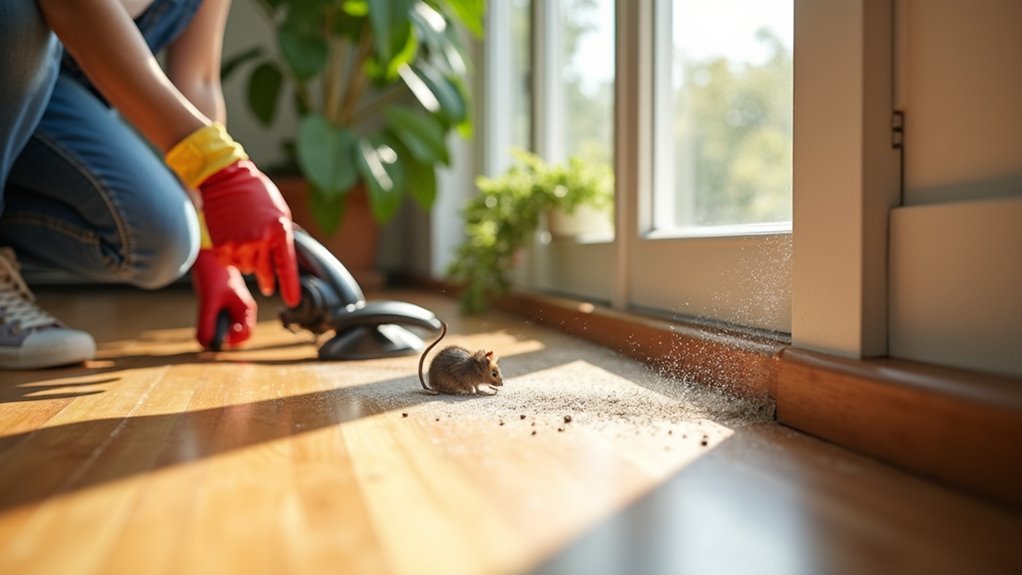
As warmer weather arrives, spring presents the perfect opportunity to conduct a thorough inspection of your home’s vulnerabilities to rodent intrusion.
During spring cleaning, systematically inspect both exterior and interior areas for potential entry points. Focus on gaps around doors, windows, and utility pipes where rodents commonly enter. Seal any cracks or holes using caulk or steel wool to prevent access.
Check and maintain roofing, siding, and foundation walls to identify structural vulnerabilities.
Clear clutter from basements, attics, and storage areas since reduced clutter eliminates nesting sites for rodents. Make sure food storage areas remain sealed and trash is properly secured to remove attractants.
This all-encompassing approach transforms your spring cleaning routine into an effective rodent prevention strategy.
Summer Yard Maintenance and Outdoor Prevention
During summer months, you’ll need to focus your rodent prevention efforts on controlling vegetation around your property and eliminating outdoor food sources that attract unwanted pests.
Proper yard maintenance creates an environment that’s less hospitable to rodents while reducing their access points to your home.
Let’s examine effective vegetation control methods and strategies for managing outdoor food sources that can make your property a rodent magnet.
Vegetation Control Methods
When summer arrives with its lush growth, your yard’s vegetation can become a highway system for rodents seeking access to your home. Effective vegetation control methods start with trimming overhanging tree branches that create pathways to your roof and windows. Keep your grass manicured to eliminate potential nesting sites, as dense foliage provides perfect rodent shelter.
| Vegetation Control Action | Implementation | Benefit |
|---|---|---|
| Trim overhanging tree branches | Cut back 6+ feet from home | Eliminates roof access routes |
| Remove organic materials | Clear leaf/debris piles | Reduces nesting materials |
| Elevate firewood storage | 18+ inches off ground | Prevents woodpile nesting |
Remove organic materials like leaf piles and debris that attract nesting rodents. Implement rodent-proof landscaping by placing gravel barriers around your foundation and maintaining proper firewood storage away from your home’s perimeter.
Outdoor Food Sources
Your summer yard becomes an all-you-can-eat buffet for rodents if you don’t actively manage outdoor food sources. Start by establishing a routine to clean up fallen fruits, nuts, and seeds immediately, as these attract hungry pests.
Store firewood at least 18 inches off the ground and away from your home to eliminate potential nesting sites near food sources.
Maintain a well-trimmed yard by cutting back overgrown vegetation that provides shelter close to food supplies. Secure compost bins with tight-fitting lids to prevent access to decomposing scraps.
Don’t leave pet food outside overnight, and store outdoor pet supplies in sealed containers.
These proactive steps in preventing rodents will greatly reduce their motivation to establish territories around your property during peak summer activity.
Fall Preparation and Structural Reinforcement

As temperatures drop, you’ll need to focus on three critical areas to prevent rodents from invading your home during fall and winter months.
Start by sealing entry points around your home’s exterior, then reinforce vulnerable structural areas that could provide access.
Finally, weatherproof your external barriers to guarantee they’ll withstand harsh conditions while keeping unwanted pests outside.
Seal Entry Points
Before rodents seek shelter in your home during colder months, you’ll need to conduct a thorough inspection of your property’s exterior to identify potential entry points.
When you inspect your home, focus on areas around doors, windows, utility pipes, and the foundation since rodents can squeeze through openings as small as a dime.
Your rodent-proofing efforts should include using steel wool, caulk, or hardware cloth to seal entry points effectively.
Cover vents with wire mesh while maintaining proper ventilation, and guarantee doors and windows close tightly without gaps.
These prevention strategies form the cornerstone of effective pest management and rodent control, creating an impenetrable barrier against unwanted winter guests.
Reinforce Vulnerable Areas
Once you’ve sealed the obvious entry points, focus your attention on reinforcing the structural areas that become increasingly vulnerable as temperatures drop.
Inspect your roofing, siding, and foundation walls thoroughly, as these areas often develop seasonal weaknesses that rodents exploit. Pay special attention to where different materials meet, checking for gaps that weren’t visible during warmer months.
Install steel wool or hardware cloth at identified vulnerable areas to create permanent barriers.
Don’t forget to inspect attics, basements, and garages before winter arrives. Clear any potential nesting materials like old newspapers, fabric scraps, or stored cardboard boxes.
Reinforce structural weaknesses around utility pipes and examine window screens for tears.
These proactive measures will greatly reduce your home’s appeal to rodents seeking winter shelter.
Weatherproof External Barriers
While autumn’s cooler temperatures signal the approach of winter, they also trigger increased rodent activity as these pests desperately search for warm shelter.
Taking a proactive approach during these colder months is essential to protect your property.
Seal entry points around doors, windows, and utility pipes using caulk or steel wool, since rodents squeeze through openings as small as a dime.
Reinforce your home by installing mesh over vents and ensuring tight door fits to eliminate potential rodent access routes.
Don’t overlook roofing, siding, and foundation maintenance—repair any cracks or holes that compromise structural integrity.
These pest control tips create weatherproof external barriers that effectively block unwanted intruders throughout winter.
Winter Indoor Protection and Food Storage

As temperatures drop and food sources become scarce outdoors, rodents increasingly view your home as an attractive winter refuge.
Keep food, including pet food, in airtight containers to eliminate accessible sources that attract unwanted visitors. Prevention is always better than dealing with an established rodent problem later.
Inspect and seal cracks around windows, doors, and utility pipes to block rodent entry points.
Clean countertops and floors regularly, removing crumbs and spills that signal available food. Use tightly sealed trash bins and dispose of garbage frequently to deter foraging behavior.
Maintain clutter-free storage areas to minimize potential nesting sites.
If you notice signs of infestation despite these winter indoor protection measures, contact pest control services immediately for professional intervention.
Seasonal Sealing of Gaps and Cracks
Before winter arrives, you’ll need to conduct a thorough exterior inspection of your home to identify potential rodent entry points. Focus on areas around doors, windows, and utility pipes where seasonal sealing is most critical.
Rodents can squeeze through openings as small as a dime, making detailed inspections crucial for effective preventive measures.
Use steel wool, caulk, or hardware cloth to seal discovered cracks and gaps. Don’t overlook garages and attics, where structural vulnerabilities often exist.
Fall represents the ideal time for proactive sealing efforts, as rodents actively seek indoor shelter before cold weather sets in.
Regular seasonal sealing of entry points creates a strong barrier against infestations. Continuous vigilance throughout the year guarantees your preventive measures remain effective against persistent rodent intrusion attempts.
Temperature-Based Rodent Behavior Patterns
You’ll notice rodents follow predictable migration patterns as temperatures drop, moving from outdoor habitats to your warm home’s interior spaces.
Their activity levels peak during specific temperature ranges, typically becoming most active when outdoor temperatures fall below 50°F but before reaching freezing points.
Understanding these temperature thresholds helps you anticipate when rodents will search for entry points and time your prevention efforts accordingly.
Cold Weather Migration Patterns
When temperatures plummet below 50°F, rodents shift into survival mode and begin their determined migration toward the warmth of your home.
As cold weather sets in, rodent behavior becomes increasingly aggressive in their search for shelter and food resources. These ectothermic creatures can’t regulate their body temperature internally, making your heated home an irresistible target.
Population surges from earlier breeding cycles now drive massive numbers indoors through potential entry points as small as a dime.
You’ll notice increased activity around foundations, attics, and basements as rodents establish winter nests. The risks associated with delayed prevention multiply exponentially once migration begins.
Expert pest control professionals recommend sealing all gaps before temperatures consistently drop below 32°F, when rodents become most desperate for warmth.
Seasonal Activity Peak Times
Understanding these migration patterns helps you anticipate when rodents will be most active throughout the year. Rodent activity intensifies during seasonal shifts, with fall bringing urgent searches for warmth and shelter. Winter forces aggressive indoor shelter-seeking behavior, while spring and summer increase outdoor foraging for food sources and nesting materials.
| Season | Activity Level | Primary Behavior |
|---|---|---|
| Fall | Peak | Urgent shelter/food searching |
| Winter | High Indoor | Aggressive indoor nesting |
| Spring/Summer | High Outdoor | Active foraging/reproduction |
Temperature fluctuations directly influence reproductive cycles and population growth. You’ll need continuous monitoring during these shifts, focusing on proactive sealing of entry points. Without protective measures, warmer months create ideal conditions for infestations due to abundant food sources and increased breeding activity.
Temperature Threshold Entry Points
Temperature acts as the primary trigger that drives rodents to breach your home’s defenses, with the vital 50°F (10°C) threshold marking when mice and rats abandon outdoor territories for indoor warmth.
As temperatures drop, these persistent invaders desperately search for entry points around doors, windows, and pipes that expand and contract with weather changes. You’ll notice increased rodent activity during temperature fluctuations as they seek food and nesting materials inside your home.
Proactive inspections become essential before winter arrives. You must seal even the smallest gaps because temperature changes can widen existing openings.
Don’t wait until you spot evidence of intrusion – conduct thorough perimeter checks when temperatures consistently approach that vital 50-degree mark, ensuring your home remains impenetrable against cold-driven rodent invasions.
Quarterly Home Vulnerability Assessments
Since rodents can squeeze through openings as small as a dime, you’ll want to conduct thorough quarterly home vulnerability assessments to identify and seal potential entry points before these unwelcome guests find their way inside.
During these inspections, carefully examine cracks around doors, windows, and utility pipes, sealing them with caulk or steel wool.
Focus on sealing cracks around doors, windows, and pipes using caulk or steel wool during your quarterly inspections.
You’ll need to inspect for early signs of rodent activity like droppings, gnaw marks, and nesting materials.
Don’t overlook your food storage areas—accessible food sources attract rodents and fuel infestations. Maintain cleanliness in pantries and cabinets during assessments.
Consider engaging professional pest control services for expert insights into vulnerabilities. Their expertise enhances your overall rodent-proofing strategies and guarantees extensive protection year-round.
Weather-Driven Activity Monitoring
Beyond conducting regular structural assessments, you’ll need to track how changing weather patterns directly influence rodent behavior throughout the year.
Weather-driven shifts create predictable opportunities for invasion—cooler temperatures in fall and winter push rodents indoors seeking warmth, while spring rains and summer storms force them to seek immediate shelter.
Monitor entry points more frequently during these critical periods. You’ll notice increased rodent activity around foundations, utility penetrations, and roof lines as seasonal changes intensify their search for secure shelter.
Sealing potential entry points becomes urgent before winter arrives.
Take proactive measures by scheduling inspections after major weather events.
Maintain constant vigilance during temperature fluctuations when rodents become most desperate for indoor access.
Your weather-awareness timing determines prevention success.
Seasonal Clutter Management and Organization
While weather monitoring reveals when rodents will seek entry, your storage habits determine whether they’ll find suitable conditions to establish residence.
Effective seasonal clutter management starts with targeting basements and attics where rodents typically nest. You’ll reduce clutter by eliminating unnecessary items and replacing cardboard boxes with sealed plastic containers that deny nesting materials and hiding spots.
Swap cardboard storage boxes for sealed plastic containers to eliminate rodent nesting materials and hiding spots in basements and attics.
Establish a decluttering routine each fall, removing potential attractants before winter drives rodents indoors. Regularly organize storage areas through systematic inspections, discarding items you don’t need.
Don’t forget exterior spaces—clear leaf piles and debris that create outdoor shelter opportunities. This proactive approach to seasonal organization prevents rodent infestations by eliminating the welcoming environments that encourage permanent residence in your home.
Year-Round Maintenance Schedule Development
Effective seasonal organization works best when paired with a thorough maintenance schedule that addresses rodent prevention throughout the entire year.
Your year-round maintenance should include biannual inspections in spring and fall to prevent rodent entry by sealing cracks and gaps around doors and windows.
Schedule weekly regular cleaning sessions focusing on food storage areas, ensuring countertops remain crumb-free and trash bins have tight-fitting lids.
Monthly basement and attic inspections help organize stored items in sealed containers while removing potential nesting materials.
Quarterly yard maintenance involves trimming branches and clearing debris to reduce outdoor nesting opportunities.
Create an ongoing checklist for monitoring signs like droppings and gnaw marks, scheduling professional pest control inspections twice yearly to address infestations promptly.
Frequently Asked Questions
How Do You Keep Mice Out of Your House in the Winter?
Seal cracks around doors and windows with steel wool since mice seek warm shelter. Store food in airtight containers, eliminate clutter in basements, and schedule professional inspections to prevent winter infestations.
What Is the Best Rodent Control Method?
You’ll achieve the best rodent control by combining prevention, monitoring, and elimination. Seal entry points, store food properly, maintain cleanliness, use traps strategically, and consider professional pest control services for thorough protection.
What Season Are Rodents Most Active?
Rodents are most active during fall and winter when they’re seeking warmth and shelter indoors. You’ll also notice increased activity in spring and summer when they’re foraging outdoors.
How to Keep Your House Rodent Free?
Seal cracks around doors and windows, store food in airtight containers, declutter storage areas, trim yard vegetation away from your home, and schedule regular professional pest inspections to prevent infestations.
What Do Rodents Hate Most?
Rodents hate strong scents most, especially peppermint oil and ammonia. You’ll find they also avoid cayenne pepper’s spicy smell. Ultrasonic sounds disturb them too, while clean environments eliminate what attracts them initially.
In Summary
You’ve got everything you need to maintain a rodent-free home year-round. By implementing these seasonal strategies consistently, you’ll stay ahead of pest problems before they start. Don’t wait until you spot signs of infestation—prevention’s always easier than elimination. Stick to your quarterly assessments, maintain your sealing schedule, and adapt your approach as seasons change. Your proactive efforts will pay off with a clean, secure home that rodents can’t penetrate.