Your seasonal lawn insect management plan should start with spring inspections for grubs and armyworms, followed by pre-emergent treatments and proper irrigation. During summer, you’ll need weekly monitoring for chinch bugs and targeted insecticide applications when pest thresholds are exceeded. Fall preparation focuses on preventing overwintering pests through debris removal and root fortification treatments. Winter’s the time for equipment maintenance and planning next year’s monitoring schedule to maximize your lawn’s protection against destructive insects.
Understanding Common Lawn Insects and Their Seasonal Patterns
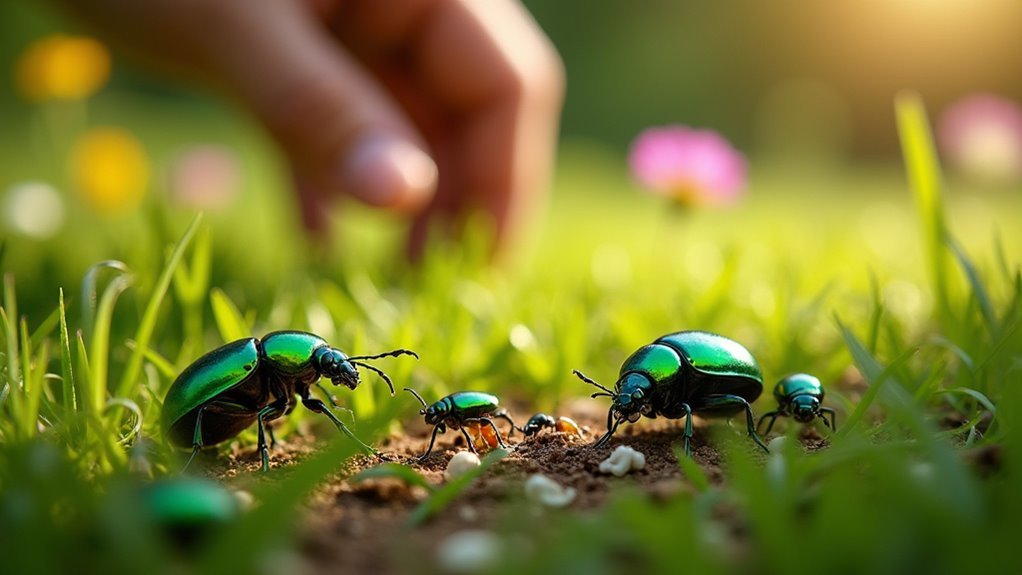
When managing your lawn effectively, you’ll need to recognize the seasonal patterns of common insects that can wreak havoc on your turf.
White grubs emerge in late spring to early summer, feeding on grass roots and causing significant damage.
White grubs feed on grass roots during late spring and early summer, causing severe lawn damage that requires immediate attention.
Caterpillars like armyworms and cutworms become active during late spring and summer, making regular inspections essential for monitoring pest activity before extensive damage occurs.
Chinch bugs thrive in hot, dry mid-summer conditions, creating yellowing patches that require timely intervention.
Leatherjackets damage turfgrass roots in cooler regions during spring and fall seasons.
Understanding these lawn pests’ life cycles enables you to time your monitoring pest strategies effectively, ensuring your pest population management occurs before infestations escalate beyond control.
Spring Lawn Insect Prevention and Early Detection Strategies
As spring temperatures begin to rise, you’ll want to establish a proactive approach that focuses on prevention and early detection rather than reactive treatments.
Start by conducting regular lawn inspections to identify irregular patches or wilting grass that signal pest activity. Implement cultural practices like proper irrigation and fertilization to promote dense, healthy turf that resists insect pressures.
Apply pre-emergent treatments in early spring for effective pest prevention, particularly targeting grubs and caterpillars before populations establish.
Monitor soil moisture carefully—avoid overwatering since stagnant water attracts mosquitoes and encourages disease.
Engage in early detection by sampling different lawn areas for pest populations. Track critical thresholds, such as over five armyworms per square yard, to determine when intervention becomes necessary for ideal lawn health.
Summer Pest Monitoring and Active Treatment Approaches
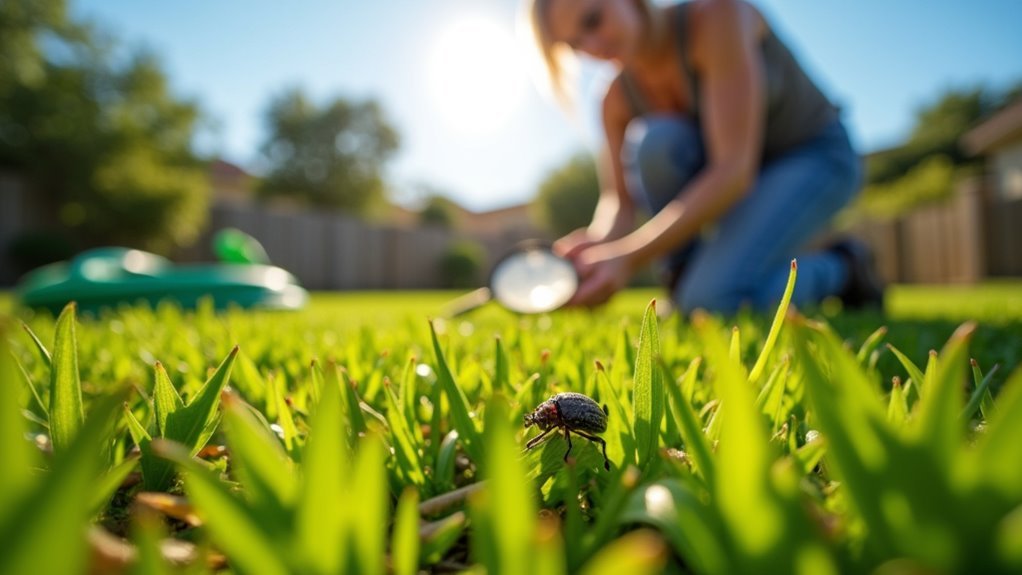
Once summer heat intensifies, you’ll need to shift from prevention to active monitoring and targeted intervention strategies.
Conduct weekly pest monitoring inspections to identify grubs, chinch bugs, and armyworms when their activity peaks. Maintain consistent irrigation providing one inch of water weekly to strengthen grass resilience against damage.
When pest populations exceed action thresholds, implement targeted insect control treatments. Apply Bacillus thuringiensis for caterpillar management and granular insecticides for grub infestations.
Keep mowing height and frequency ideal to promote dense turf that withstands pest pressure naturally.
Consider biological control methods like beneficial nematodes to manage lawn pests while reducing chemical dependency. These natural predators effectively control soil-dwelling insects without environmental harm.
Combining proper cultural practices with strategic treatments guarantees your lawn remains healthy throughout summer’s challenging conditions.
Fall Lawn Preparation for Overwintering Insect Management
As fall approaches, you’ll want to shift your focus from active pest treatment to preventing insects from successfully overwintering in your lawn.
Your pre-winter pest prevention strategy should include eliminating debris that provides shelter for insects and applying targeted treatments to address any lingering grub populations.
Start by conducting a thorough soil health assessment to identify weak areas that could become vulnerable to pest damage during the colder months.
Pre-Winter Pest Prevention
While summer’s heat fades and autumn temperatures settle in, you’ll want to shift your focus toward preparing your lawn for the challenging winter months ahead.
Pre-winter pest control requires proactive measures to eliminate overwintering insects before they establish themselves in your yard.
Start by conducting thorough lawn inspections to identify existing pest problems like grubs or other insects.
Apply preventative treatment using targeted insecticides according to label instructions for maximum effectiveness.
Remove fallen leaves and debris that provide shelter for pests, creating inhospitable conditions for insects seeking winter refuge.
Strengthen your lawn’s natural defenses by fertilizing with Scotts® Turf Builder® WinterGuard® Fall Lawn Food, which fortifies grass roots against winter pest pressure.
This all-encompassing approach guarantees your lawn enters winter prepared to resist insect infestations.
Soil Health Assessment
Beyond controlling existing pests, you need to evaluate your soil’s health to build a foundation that naturally resists insect invasions. Conduct a thorough fall assessment testing nutrient levels, pH, and organic matter content.
Contact your local cooperative extension for accurate soil analysis that identifies deficiencies weakening your lawn’s pest resistance.
Based on test results, amend your soil with organic matter, lime, or fertilizers to create ideal conditions for grass roots and beneficial microorganisms that combat pest infestations.
Don’t forget to aerate your lawn, improving soil structure and nutrient access while promoting healthier grass that’s less susceptible to insect damage.
Maintain proper irrigation practices to guarantee your grass stays healthy and resilient against overwintering insects and potential drought stress.
Winter Planning and Equipment Maintenance for Pest Control

When winter arrives and your lawn goes dormant, you’ll have the perfect opportunity to strategize for next season’s pest challenges. Your winter planning should begin with evaluating last year’s insect problems and developing a detailed pest management strategy. Document which pests caused the most damage and when they appeared.
Next, focus on maintaining your lawn care equipment. Sharpen mower blades, service aerators, and clean all tools thoroughly. Well-maintained equipment performs better and reduces plant stress that attracts pests.
Properly maintained lawn equipment reduces plant stress that makes grass vulnerable to pest infestations and disease outbreaks.
Store pesticides according to safety regulations and check expiration dates. Create a spring calendar marking when monitoring and treatments should begin.
Consider investing in identification tools and insect traps for early detection. This proactive approach guarantees you’re ready when pest activity resumes.
Natural and Chemical Treatment Options for DIY Application
You’ll have two main approaches when treating lawn insect problems: natural integrated pest management (IPM) methods and targeted chemical controls.
Natural options like beneficial nematodes and Bacillus thuringiensis offer effective pest control while protecting beneficial organisms in your lawn ecosystem.
Chemical treatments such as azadirachtin and spinosad provide selective control when natural methods aren’t sufficient, giving you flexibility to match your treatment approach to the severity of your pest problem.
Natural IPM Methods
Since Integrated Pest Management (IPM) emphasizes prevention over reaction, you’ll want to start with cultural practices that create an inhospitable environment for lawn pests.
Maintain proper watering schedules, fertilize appropriately, and mow at correct heights to strengthen your grass’s natural defenses. These IPM techniques create conditions that favor your turf over destructive insects.
Encourage natural enemies by planting diverse flowering plants around your lawn’s perimeter.
These attract beneficial insects like ladybugs, lacewings, and parasitic wasps that prey on common lawn pests. You can also introduce microbial insecticides such as Bacillus thuringiensis (Bt), which targets specific pest larvae without harming beneficial organisms.
Regular monitoring remains essential—inspect your lawn weekly for early pest signs.
This proactive approach allows you to implement the least invasive control methods first, preserving your lawn’s ecological balance.
Chemical Control Options
While natural IPM methods form your first line of defense, targeted chemical applications become necessary when pest populations exceed manageable thresholds.
Chemical control options include broad-spectrum insecticides like carbaryl, which effectively manages various lawn pests but shouldn’t be applied on blooming plants due to toxicity to beneficial organisms.
Neonicotinoids such as imidacloprid and clothianidin disrupt insect nervous systems and work best when applied during active turf growth and pest feeding periods.
You’ll achieve ideal results by timing applications correctly—apply Bt treatments in evening hours since caterpillars must ingest them.
For thorough pest management, choose chemicals based on target pests and application timing to minimize impact on beneficial organisms while maximizing control effectiveness.
Creating Your Personalized Lawn Insect Management Calendar
Although effective lawn insect management requires year-round vigilance, developing a personalized calendar guarantees you’ll tackle pest problems at the most strategic times. Your calendar should align with local climate patterns and common lawn pests in your region.
A personalized pest management calendar aligned with your local climate patterns ensures you address lawn insect problems at optimal times.
Start with these essential seasonal activities:
- Early spring: Conduct weekly inspections for emerging pests like ants and cutworms coming out of dormancy.
- Mid-spring: Establish action thresholds by monitoring populations—note when you see over 5 armyworms or 15 lawn moth larvae per square yard.
- Late spring: Schedule soil testing to evaluate nutrient levels and pH affecting pest vulnerability.
Summer emphasizes cultural practices including proper irrigation and mowing to maintain density against chinch bugs.
Fall preparation involves preventative treatments and aeration to reduce overwintering pest susceptibility while strengthening your lawn’s overall health through effective pest management strategies.
Measuring Success and Adjusting Your Management Strategy
| Monitoring Element | Frequency | Action Required |
|---|---|---|
| Pest Population Counts | Weekly | Adjust when threshold exceeded |
| Lawn Health Assessment | Bi-weekly | Modify treatment timing |
| Treatment Effectiveness | Post-application | Refine control measures |
Establish action thresholds for each pest species to trigger targeted interventions only when necessary. Follow-up inspections after treatments reveal whether adjustments are needed. Consulting local pest control professionals provides valuable insights to refine your management strategies based on current conditions and emerging pest trends.
Frequently Asked Questions
When Should I Apply Insect Control to My Lawn?
You’ll apply insect control when pest thresholds are exceeded, like five armyworms per square yard. Time treatments during peak activity periods, typically late spring through summer, and always check weather forecasts first.
How Do I Write a Lawn Care Business Plan?
You’ll start by defining your target market and services, then conduct market research on competitors. Create detailed financial projections, develop marketing strategies, and establish operational plans for equipment, staffing, and scheduling.
Do My Own Lawn Care Schedule?
You’ll create your own schedule by conducting weekly inspections during peak seasons, aerating twice yearly, maintaining proper irrigation and fertilization, introducing beneficial insects, and documenting all pest activity in a detailed journal.
What Is the Scotts Recommended Feeding Routine?
You’ll apply Scotts® Turf Builder® Triple Action in spring, Summerguard® during summer, and WinterGuard® Fall Lawn Food in fall. Cool-season grasses need two fall applications, while warm-season grasses require one.
In Summary
You’ve now got the framework for year-round lawn insect control. Remember, consistency beats perfection – stick to your calendar, monitor regularly, and don’t panic when you spot pests. Start with prevention, escalate to treatment only when needed, and always document what works for your specific lawn. Your grass will reward your diligent efforts with healthier growth and fewer pest problems each season.