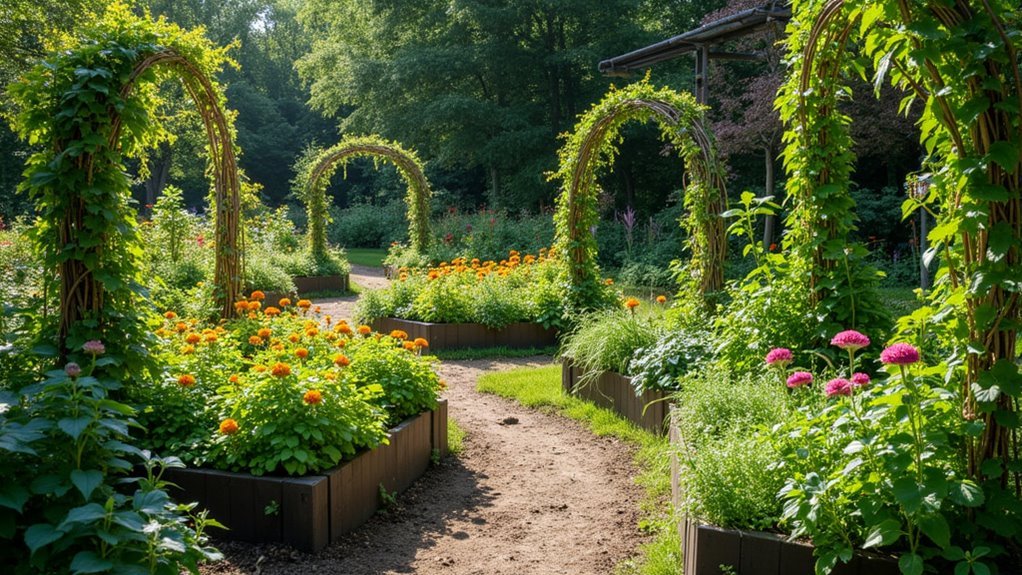
You can create a rabbit-resistant garden using seven strategic layouts: raised bed fortresses with 18-24 inch walls and buried barriers, perimeter defense rings of lavender and marigolds, layered height strategies with tall deterrent plants, maze-pattern pathways that confuse rabbit movement, central protection zones surrounded by repelling plants, elevated container gardens at least 30 inches high, and predator-friendly landscapes with clear sightlines. These clever designs transform your space into an impenetrable fortress that’ll keep your vegetables safe while maintaining beauty.
Raised Bed Fortress Design With Integrated Barriers
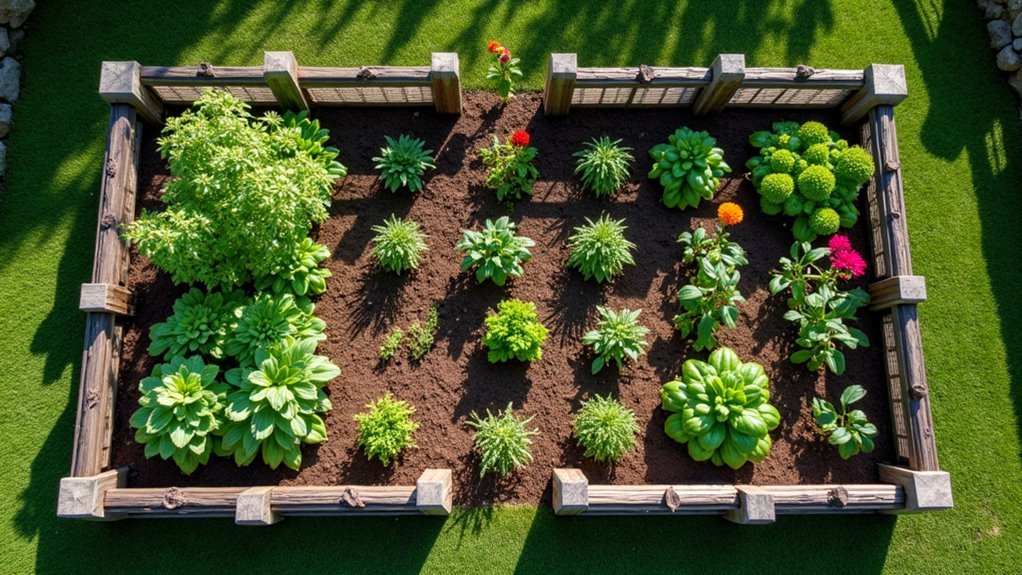
Creating a raised bed fortress transforms your garden into an impenetrable barrier against hungry rabbits while delivering superior growing conditions for your plants.
You’ll want to construct walls 18-24 inches high, creating a physical obstacle that deters rabbits from accessing your crops. Install chicken wire or hardware cloth around the perimeter, burying it at least 6 inches underground to prevent digging. This integrated barrier system blocks both surface and underground access points.
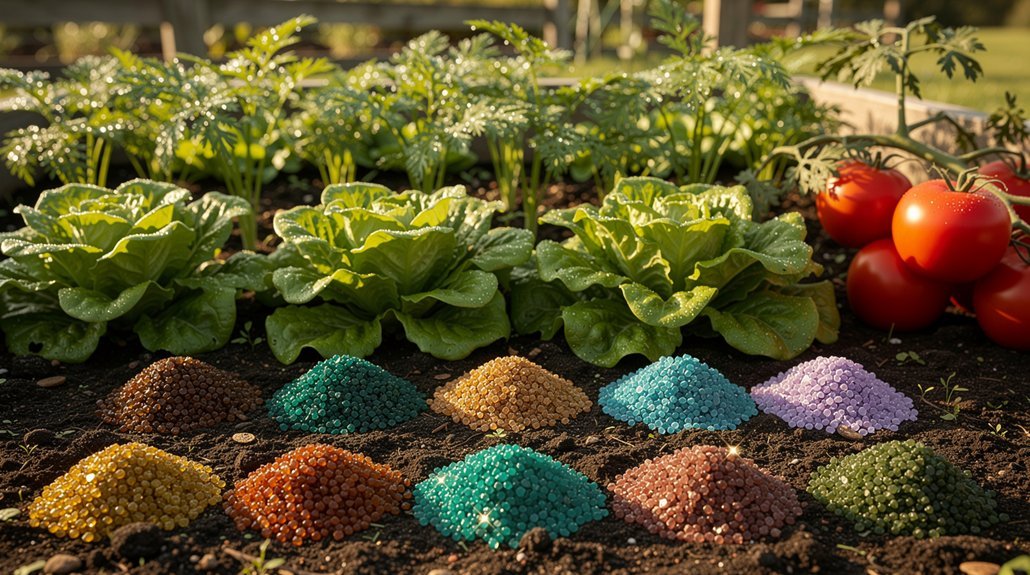
Related guide: Best Rabbit Repellent Granules for Vegetable Beds
Build 18-24 inch walls with buried wire barriers to create an integrated defense system against both jumping and digging rabbits.
Enhance your fortress by planting marigolds or garlic around bed edges—their strong scents confuse and repel rabbits naturally.
The elevated design provides excellent drainage and soil quality while keeping plants out of reach. Remember to inspect your barriers regularly, checking for damage or gaps that could compromise your garden’s protection.
Perimeter Defense Layout Using Rabbit-Repelling Plants
While raised beds offer excellent protection, a perimeter defense strategy creates multiple lines of defense that rabbits must navigate before reaching your prized vegetables.
You’ll establish this barrier by strategically positioning rabbit-repelling plants around your garden’s outer edges. Plant strong-scented herbs like lavender, garlic, and marigolds to create an aromatic deterrent that’ll keep rabbits away naturally.
Enhance your perimeter defense by incorporating thorny shrubs such as barberry and juniper along the borders. These create uninviting physical barriers that rabbits won’t want to cross.
Add rabbit-resistant perennials like coneflowers and daffodils in rings around your garden for both beauty and protection.
Dense, tall, fragrant plants not only strengthen your defense but also attract beneficial insects. Regular maintenance guarantees your perimeter defense remains effective throughout growing seasons.
Layered Height Strategy With Dense Plant Clustering
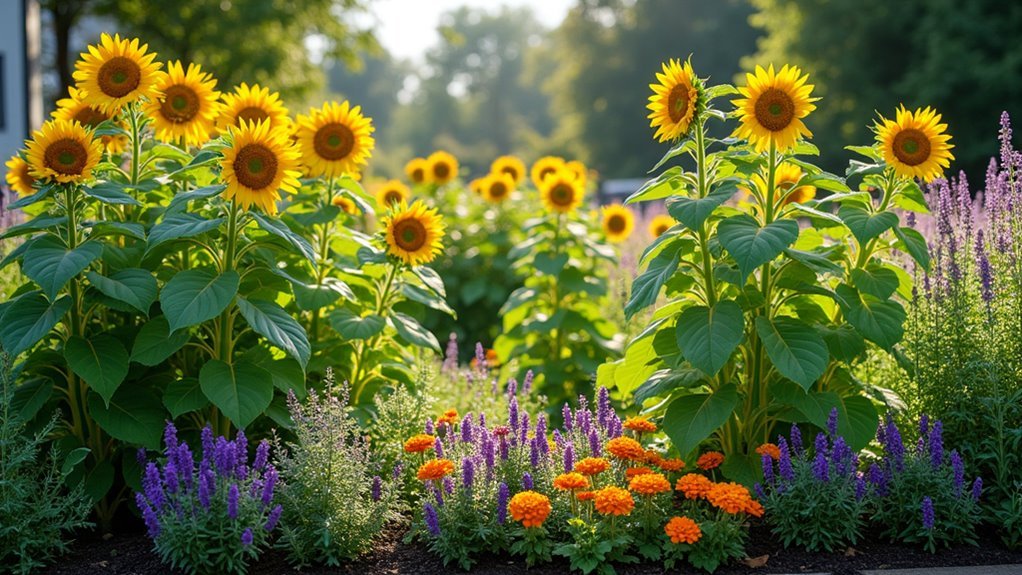
You’ll want to position tall plants around your garden’s perimeter to create natural barriers that rabbits can’t easily navigate.
Pack plants tightly together in dense clusters, making it nearly impossible for rabbits to squeeze through and reach your prized vegetables.
This multi-layered defense system works by stacking different plant heights while eliminating the open pathways rabbits prefer for quick escapes.
Tall Plants Create Barriers
When you establish towering perimeter plants like sunflowers and hollyhocks around your garden’s edges, you’re constructing a living fortress that blocks rabbits from reaching your prized vegetables and flowers.
These tall plants create an effective barrier that disrupts rabbit movement patterns and makes your garden less accessible.
Your height-based defense system works through multiple mechanisms:
- Physical obstruction – Dense clusters of towering plants block direct pathways into your garden.
- Visual deterrent – The imposing wall of vegetation makes rabbits think twice about entering.
- Pathway confusion – Varied plant heights from back to front disrupt normal rabbit navigation routes.
Strategic placement of aromatic shrubs like lavender or rosemary enhances this barrier effect, as their strong scents naturally repel rabbits while adding another defensive layer to your garden layout.
Dense Clustering Blocks Access
Building on this vertical defense approach, dense clustering amplifies your garden’s protective power by eliminating the gaps that rabbits exploit to access your crops.
When you pack plants tightly together in your garden beds, you create visual barriers that make navigation challenging for these persistent visitors. They prefer clear pathways and open spaces for easy movement and quick escapes.
Layer your plantings strategically within these clusters—place taller species around the perimeter and shorter ones toward the center. This creates a protective canopy that discourages rabbits from venturing deeper into your garden beds.
The varied heights confuse their natural foraging instincts while promoting better air circulation and sunlight penetration. This dual approach effectively reduces rabbit access while supporting healthier plant growth and increased pest resilience.
Multiple Layer Defense System
Since rabbits struggle to navigate complex terrain, implementing a multiple layer defense system creates an intricate maze that transforms your garden into an impenetrable fortress.
This strategic approach uses varying plant heights to establish physical barriers while dense clustering obscures sightlines, reducing rabbits’ confidence to approach vulnerable areas.
Your layered defense works through three key components:
- Perimeter Protection – Plant tall rabbit-resistant species like sunflowers around borders to deter entry.
- Middle Barrier – Incorporate strong-scented herbs such as lavender and mint to repel while adding aesthetic appeal.
- Inner Sanctuary – Shelter delicate plants behind these protective layers.
This layout doesn’t just protect your plants—it promotes biodiversity by creating varied habitats for beneficial insects and wildlife, making your garden both functional and ecologically rich.
Maze-Pattern Pathways That Limit Rabbit Movement
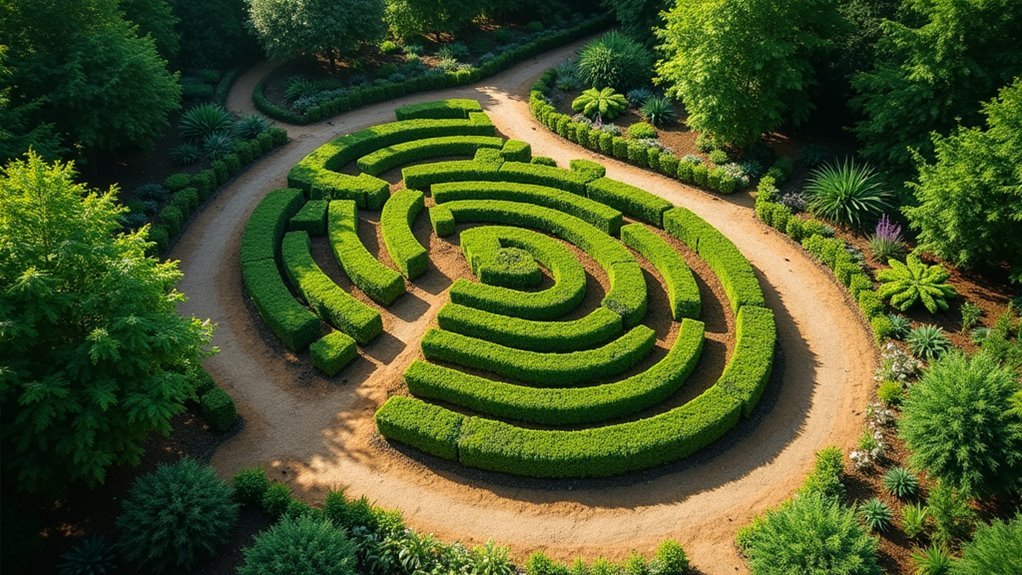
Rabbits thrive in open spaces where they can spot predators and dart to safety along familiar routes. You’ll disrupt their comfort zone by creating maze-pattern pathways throughout your garden.
Creating maze-like garden pathways exploits rabbits’ natural preference for clear sightlines and straight escape routes, effectively deterring unwanted visitors.
Design tight turns and narrow passages that force rabbits to navigate obstacles they’d rather avoid. Their instinct drives them toward clear escape routes, so winding paths naturally deter them.
Plant rabbit-resistant perennials like lavender, marigolds, and rosemary along these pathways to create visual barriers. These plants simultaneously limit rabbit access while making areas less appealing through scent and texture.
Incorporate raised beds within your maze layout for additional physical barriers.
Keep rabbits guessing by regularly adjusting pathway layouts and adding new plantings. This ongoing maintenance prevents them from establishing comfortable movement patterns through your garden space.
Central Protection Zone With Surrounding Deterrent Borders
While maze pathways confuse rabbits, you’ll achieve maximum protection by establishing a central sanctuary for your most vulnerable plants. This central protection zone houses your vegetables and tender flowers, surrounded by strategic deterrent borders that keep rabbits away.
Create your fortress using this three-layer approach:
- Inner sanctuary – Place vulnerable crops like lettuce, beans, and delicate flowers in the garden’s center.
- Natural barrier ring – Surround the zone with rabbit-repelling plants including lavender, garlic, and marigolds that naturally discourage intrusion.
- Outer perimeter defense – Install two-layer fencing at least 24 inches high, buried 6 inches underground, with tall sunflowers providing visual barriers.
You’ll enhance effectiveness by rotating plant placements regularly within your central zone, confusing rabbits while maintaining diverse deterrent species throughout your garden’s protective borders.
Elevated Container Garden Configuration
You’ll find that elevating your containers at least 24 inches off the ground creates an effective physical barrier against rabbits who can’t easily jump to higher levels.
Strategic placement becomes essential when you’re positioning these elevated containers throughout your garden space to maximize both protection and visual appeal.
You can enhance this defense by clustering rabbit-resistant plants in your elevated containers while creating clear sight lines that prevent rabbits from using nearby structures as launching points.
Height Prevents Rabbit Access
Since rabbits can’t jump higher than 24 inches, elevated container gardens create an effective physical barrier that puts your plants safely out of reach.
You’ll want to use containers at least 30 inches high to guarantee protection while making maintenance easier for yourself.
Elevated gardens offer multiple advantages that keep the rabbits away from your vulnerable vegetable gardens:
- Enhanced drainage – Better soil conditions reduce moisture that attracts rabbits
- Tiered layouts – Multiple levels create visual appeal while maximizing protection
- Strategic placement – Position elevated containers near rabbit-resistant plants for thorough defense
This height-based approach transforms your growing space into a fortress that’s both beautiful and functional, ensuring your harvest stays protected from these persistent garden invaders.
Strategic Container Placement Methods
Because thoughtful container arrangement amplifies your elevated garden’s rabbit-deterrent effects, you’ll need to contemplate both spatial relationships and strategic positioning when designing your layout.
Create varying heights using tiered arrangements that maximize vertical space while minimizing ground-level access points. Strategically positioning containers at different elevations confuses rabbits and disrupts their natural foraging patterns.
Stack planters in creative formations that provide visual appeal while maintaining practical rabbit deterrence. You’ll want to incorporate strong-scented plants like garlic, lavender, or marigolds throughout your elevated containers to create aromatic barriers.
Position these fragrant deterrents at multiple levels for maximum effectiveness.
Don’t forget to regularly rotate your container placements. This simple strategy prevents rabbits from establishing predictable feeding routes and keeps them guessing about accessible food sources.
Natural Predator-Friendly Landscape With Open Sightlines
Three strategic design principles can transform your garden into a natural rabbit deterrent by creating an environment where predators thrive and rabbits feel exposed.
Your garden layout should prioritize visibility and accessibility for natural predators like hawks and foxes. When rabbits can’t find secure hiding spots, they’ll seek safer territory elsewhere.
- Create elevated planting beds with wide pathways – This design maintains clear sightlines across your garden while giving predators multiple vantage points to hunt effectively.
- Install reflective surfaces strategically throughout the landscape – Mirrors and shiny objects will startle rabbits and create an unsettling environment that makes them feel vulnerable.
- Remove dense brush and debris regularly – Eliminating potential nesting spots forces rabbits to remain exposed, increasing their stress levels and encouraging them to relocate.
Frequently Asked Questions
What Do Rabbits Hate the Most?
You’ll find rabbits hate predator urine scents most, especially from coyotes or foxes. They’re also extremely deterred by strong-smelling plants like garlic and onions, plus spicy substances like hot peppers applied directly.
Does Irish Spring Soap Really Keep Rabbits Away?
Irish Spring soap can temporarily deter rabbits with its strong fragrance, but you shouldn’t rely on it completely. You’ll need frequent reapplication, and young rabbits might still nibble your plants despite the scent barrier.
What Is the Best Repellent for Rabbits in the Garden?
You’ll find Plantskydd organic blood-based spray works best since it deters rabbits while fertilizing plants and lasts monthly. You can also use predator urine sprays or motion-activated sprinklers for effective results.
What Smell Do Rabbits Hate the Most?
You’ll find rabbits hate predator scents most, particularly fox urine. They’re also strongly repelled by garlic, onions, and human scents. Cayenne pepper and marigolds create additional odor barriers that’ll keep them away effectively.
In Summary
You’ve now got seven proven garden layouts that’ll keep rabbits from destroying your hard work. Pick the design that matches your space and skill level, then start implementing those barriers, deterrent plants, and strategic configurations. Don’t wait until you’ve spotted nibbled leaves—set up your defenses now. With these clever layouts, you’ll finally enjoy a thriving garden that stays rabbit-free throughout the growing season.