You can create effective garlic-based pest control by blending fresh garlic cloves with water and a few drops of dish soap to repel aphids, beetles, caterpillars, deer, and rabbits. Garlic’s sulfur compounds disrupt insects’ sensory receptors while masking attractive plant scents. Apply the diluted spray weekly to both sides of leaves, increasing frequency after rainfall. You’ll also benefit from planting garlic directly among vulnerable crops for season-long protection and discovering advanced formulations that enhance effectiveness.
The Science Behind Garlic’s Pest-Repelling Properties
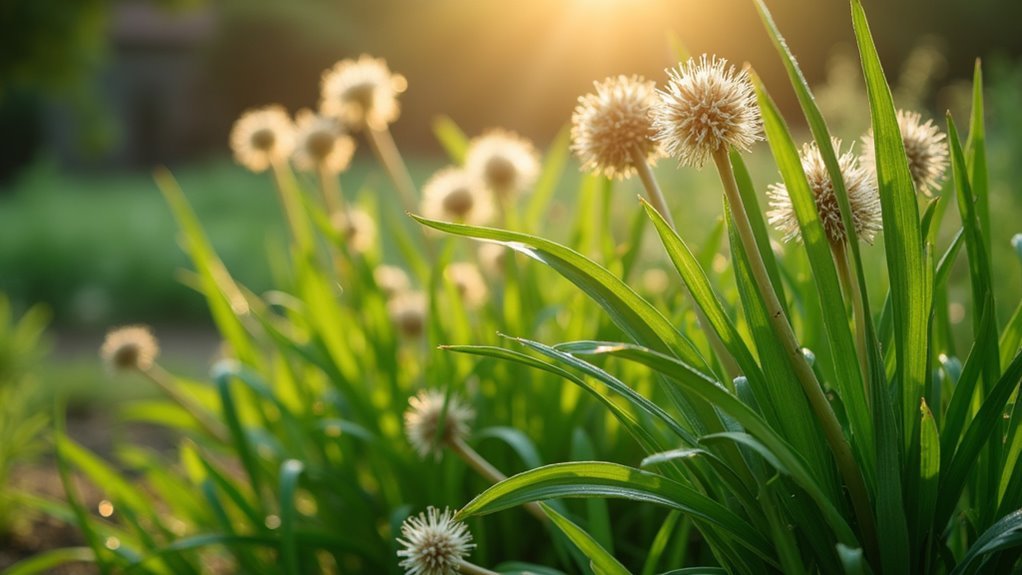
While many commercial pesticides rely on harsh chemicals, garlic’s natural pest-repelling power comes from sulfur compounds like diallyl disulfide and diallyl sulfide that create strong odors interfering with insects’ sensory receptors.
This garlic repellent mechanism works by disrupting pests’ ability to locate and identify their target plants. Research since the 1970s has proven this natural pest control method’s effectiveness against green peach aphids and cabbage fly larvae.
The sulfur compounds don’t just repel—they can be toxic to certain insects like yellow mealworm larvae and spined soldier bugs, causing disorientation and death.
You’ll find garlic’s pungent smell masks attractive plant scents, deterring aphids, beetles, and mosquitoes from infesting your garden effectively.
What Garden Pests Does Garlic Effectively Deter?
You’ll find that garlic’s potent sulfur compounds create an effective barrier against numerous garden invaders, from tiny aphids to larger mammals like deer and rabbits.
The same diallyl disulfide and diallyl sulfide that give garlic its distinctive smell actively disrupt pest sensory systems, causing confusion and driving them away from your plants.
This natural deterrent works particularly well against specific troublemakers like spider mites, caterpillars, beetles, and even underground pests such as moles that can wreak havoc on your garden’s root systems.
Common Garden Pest Types
Garlic’s pungent aroma acts as a natural fortress against an impressive range of garden invaders. When you apply garlic spray, you’re targeting common insects like aphids, beetles, and caterpillars that can devastate your plants.
These garden pests rely heavily on scent to locate food sources, making garlic an effective deterrent for your pest control strategy. The sulfur compounds in garlic interfere with insects’ sensory receptors, causing disorientation that drives them away from treated areas.
You’ll find it particularly effective against gall midges and green peach aphids, while also repelling slugs and mosquitoes. Don’t overlook larger nuisances either – rabbits and deer will avoid areas treated with garlic spray.
Remember to reapply regularly, especially after rainfall, to maintain protection against persistent infestations.
Garlic’s Natural Repelling Compounds
Behind garlic’s remarkable pest-deterring power lie specific sulfur compounds that transform your garden into an unwelcome zone for unwanted visitors.
Diallyl disulfide and diallyl sulfide disrupt sensory receptors in garden pests, causing disorientation and repulsion that drives them away from your plants.
You’ll find garlic effective against numerous pests including aphids, beetles, caterpillars, spider mites, mosquitoes, rabbits, and deer.
The pungent aroma masks attractive plant scents that typically draw these unwanted creatures to your garden.
Scientific studies confirm garlic’s efficacy against yellow mealworm larvae and spined soldier bugs, proving this garlic-based pest control method works as a credible alternative to chemical insecticides.
This natural deterrent has protected gardens since the 1970s while remaining safe for beneficial insects.
Effectiveness Against Specific Insects
Specific garden insects respond differently to garlic’s sulfur compounds, making it important to understand which pests you can effectively target with this natural deterrent.
Fresh garlic cloves contain powerful compounds that disrupt sensory receptors in various destructive insects.
Your DIY Garlic Spray effectively targets these common garden pests:
- Aphids – These soft-bodied insects can’t tolerate garlic’s sulfur compounds
- Spider mites – The pungent smell overwhelms their sensitive detection systems
- Caterpillars and armyworms – Garlic disrupts their feeding patterns and navigation
- Beetles – Various species avoid areas treated with garlic solutions
You’ll Keep Pests away while protecting beneficial insects, since garlic primarily affects pest species through scent masking rather than toxicity.
Regular applications create an invisible barrier that deters infestations without harming helpful pollinators.
Essential Ingredients for DIY Garlic Spray Recipes
You’ll need just a few basic components to create an effective garlic spray that protects your garden from unwanted pests. The foundation consists of crushed garlic cloves, water, and a small amount of liquid dish soap, but you can boost the spray’s potency with optional ingredients like hot peppers or onions. Getting the mixing ratios right guarantees your homemade solution repels pests without harming your plants.
Basic Garlic Spray Components
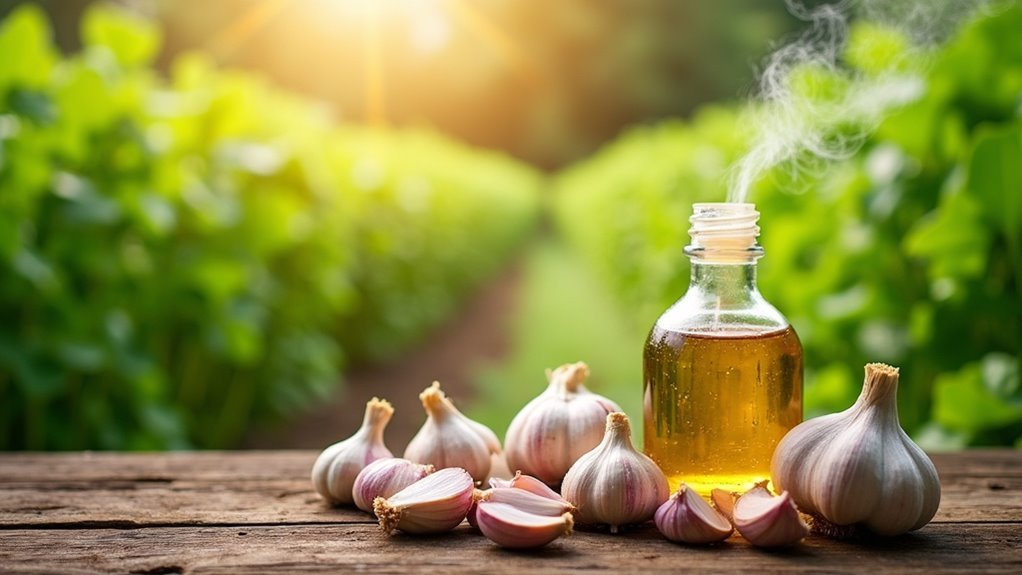
Creating an effective garlic spray requires just three simple ingredients that you likely already have in your kitchen.
When you make garlic spray, you’ll harness nature’s powerful pest deterrent using minimal components that deliver maximum results.
The foundation consists of:
- Fresh garlic cloves – The star ingredient containing sulfur compounds like diallyl disulfide
- Water – Approximately 4 cups for creating the initial concentrate
- Liquid dishwashing soap – Just a few drops to emulsify the mixture
- Additional water – For diluting the concentrate at a 1:10 ratio
These simple components work together to create a potent natural pest repellent.
The garlic’s strong sulfur compounds provide the repelling power, while water serves as the delivery system and soap guarantees proper mixing for effective coverage.
Optional Enhancement Ingredients
Several ingredients can amplify your basic garlic spray’s pest-fighting power when you’re dealing with stubborn infestations or want wider protection. Hot pepper adds spicy compounds that deter larger pests like deer and rabbits alongside insects. Minced onion contributes sulfur compounds for additional pest control effectiveness. Essential oils such as eucalyptus or neem oil boost repelling properties while maintaining your DIY spray’s organic nature.
| Enhancement Ingredient | Primary Benefit |
|---|---|
| Vegetable Oil | Improves adhesion to plant surfaces |
| Liquid Dish Soap | Better ingredient blending and foliage sticking |
| Hot Pepper/Onion | Wider pest spectrum targeting |
These additions transform your basic recipe into an all-encompassing solution for using garlic in your garden while preserving its natural pest-fighting characteristics.
Proper Mixing Ratios
Three basic ingredients form the foundation of every effective garlic spray: fresh garlic cloves, water, and liquid dish soap. Getting the proportions right guarantees your spray effectively deters pests without harming plants.
For concentrated garlic spray, you’ll need:
- 4 crushed garlic cloves mixed with 4 cups water
- 4-5 drops liquid dish soap for proper emulsification
- Strain through cheesecloth before diluting further
- Create ready-to-use spray with 1:10 dilution ratio
Alternatively, blend garlic with 700ml water and 30ml liquid soap for immediate application.
The liquid dish soap acts as an emulsifier, helping garlic oils mix with water while improving spray adhesion to plant surfaces. Always strain your concentrated mixture to prevent clogging spray bottles.
This diluted mixture provides effective pest control when applied consistently throughout your garden.
Step-by-Step Guide to Making Basic Garlic Plant Spray
Making your own garlic plant spray requires just a few simple ingredients and takes only minutes to prepare. Start by crushing several garlic cloves and mixing them with 4 cups of water and 4 to 5 drops of liquid dish soap. This creates a potent mixture that’ll effectively combat garden pests.
Next, strain the solution using cheesecloth or a coffee filter to remove solid garlic bits. This guarantees smooth application without clogging your spray bottle.
Before use, dilute the concentrated garlic solution with water at a 1:10 ratio, then transfer it to your spray bottle.
Apply weekly to affected plants for ideal pest protection. If rain occurs, increase application frequency to twice weekly.
Store unused spray in a cool place and use promptly for maximum effectiveness.
Enhanced Garlic Spray Formulations With Additional Natural Ingredients

While the basic garlic spray provides solid pest protection, you can considerably boost its effectiveness by incorporating additional ingredients that target different pest behaviors and vulnerabilities.
Creating an enhanced garlic spray transforms your natural pesticide into a thorough pest control solution.
Key additions include:
- Hot pepper – Adds spiciness that deters deer, squirrels, and rabbits beyond typical insects
- Minced onion – Introduces powerful allium compounds that strengthen the repelling effect
- Dish soap – Improves surface adhesion and breaks down insects’ protective barriers
- Vegetable oil – Creates emulsification and provides a suffocating effect on pests
These customized formulations broaden your spray’s pest-deterring spectrum while maintaining safety for beneficial insects and plants.
You’ll achieve more robust garden protection through these strategic combinations.
Proper Application Techniques for Maximum Effectiveness
Even the most potent garlic spray won’t protect your garden effectively without proper application techniques. You’ll need to spray both tops and bottoms of leaves for complete coverage, since pests often hide on undersides.
Apply weekly treatments consistently, increasing to twice weekly after rainfall to maintain your protective barrier and prevent re-infestation.
Always dilute garlic concentrate with water at a 1:10 ratio before application. This prevents plant damage while enhancing absorption.
Proper dilution at 1:10 ratio prevents plant burn while maximizing garlic spray absorption and effectiveness.
Test each new batch on a small foliage area first to monitor for adverse reactions.
Store leftover spray in cool, dark conditions and use within several weeks for maximum potency.
Garlic spray loses effectiveness over time, so fresh applications using proper techniques guarantee your plants stay protected from garden pests.
Intercropping With Garlic Plants for Natural Pest Management

Beyond spraying garlic solutions, you can harness garlic’s pest-fighting power by strategically planting it throughout your garden.
Intercropping garlic creates a natural defense system that’ll keep your garden healthier and more productive.
Companion planting with garlic offers multiple benefits:
- Masks attractive scents – Garlic’s strong odor confuses pests like aphids and flea beetles, making it harder for them to locate their target crops.
- Protects vulnerable plants – Place garlic near tobacco and cole crops to reduce pest infestations considerably.
- Suppresses weed growth – Garlic naturally inhibits unwanted vegetation, reducing competition for nutrients.
- Creates ecosystem balance – Strategic placement promotes beneficial insects while deterring harmful ones.
Studies confirm that pests does garlic effectively repel when planted strategically.
This companion planting approach provides season-long protection without chemical interventions.
Benefits and Limitations of Garlic-Based Pest Control Methods
Although garlic-based pest control offers remarkable advantages as a natural alternative, understanding both its strengths and weaknesses will help you make informed decisions for your garden.
You’ll appreciate that garlic effectively deters aphids, beetles, and mosquitoes while protecting beneficial insects from harm. The essential oil compounds like diallyl disulfide disrupt pest sensory receptors, creating natural disorientation without toxic chemicals.
However, you should recognize important limitations. Garlic shows reduced effectiveness against active borers such as ants and leaf miners.
You’ll need frequent reapplication, especially after rainfall, since garlic’s potency diminishes quickly and washes away easily. Additionally, you might experience mild skin irritation during application, so handle garlic sprays carefully to avoid discomfort while maintaining your garden’s health.
Storage Tips and Shelf Life for Homemade Garlic Solutions
Since homemade garlic solutions deteriorate rapidly, you’ll need to store them properly to maximize their pest-fighting power.
These storage tips will help extend your garlic-infused mixtures’ effectiveness and shelf life.
Keep your solutions in a cool, dark location away from direct sunlight and heat sources. Refrigeration works best for maintaining potency, but use within a few weeks for best results.
- Seal spray bottles tightly to prevent odor absorption and contamination
- Store in cool, dark places like pantries or refrigerators
- Use homemade garlic solutions within 2-3 weeks maximum
- Discard immediately if you notice unusual smells or visual changes
Remember that fresh batches always work better than stored solutions, so make smaller quantities more frequently rather than large batches that’ll lose their punch over time.
Frequently Asked Questions
How to Use Garlic as a Natural Pesticide?
You’ll crush garlic cloves, mix with water and dish soap, then strain. Dilute 1:10 before spraying weekly on leaf tops and bottoms to deter aphids, beetles, and caterpillars effectively.
How to Make Garlic Spray for Garden?
Crush 4-5 garlic cloves and mix with 4 cups water plus 4-5 drops dish soap. Strain the mixture, then dilute concentrate with water at 1:10 ratio before spraying.
What Garden Pests Does Garlic Repel?
Garlic repels aphids, beetles, caterpillars, spider mites, and mosquitoes through its sulfur compounds. You’ll also deter larger pests like rabbits, deer, and moles since garlic’s pungent smell disrupts their sensory receptors effectively.
How to Make a Garlic Drench for Plants?
Blend one garlic head with 235ml water, add 700ml water and 30ml liquid soap, then blend again. Let it steep twelve hours, strain through cheesecloth, and you’re ready to apply.
In Summary
You’ve now got a complete toolkit for using garlic as a natural pest deterrent in your garden. Whether you’re mixing up a basic spray or intercropping garlic plants, you’ll find these methods both effective and environmentally friendly. Remember to test new formulations on small areas first, store your solutions properly, and don’t expect instant results. With patience and consistent application, you’ll see significant pest reduction while maintaining a chemical-free garden.