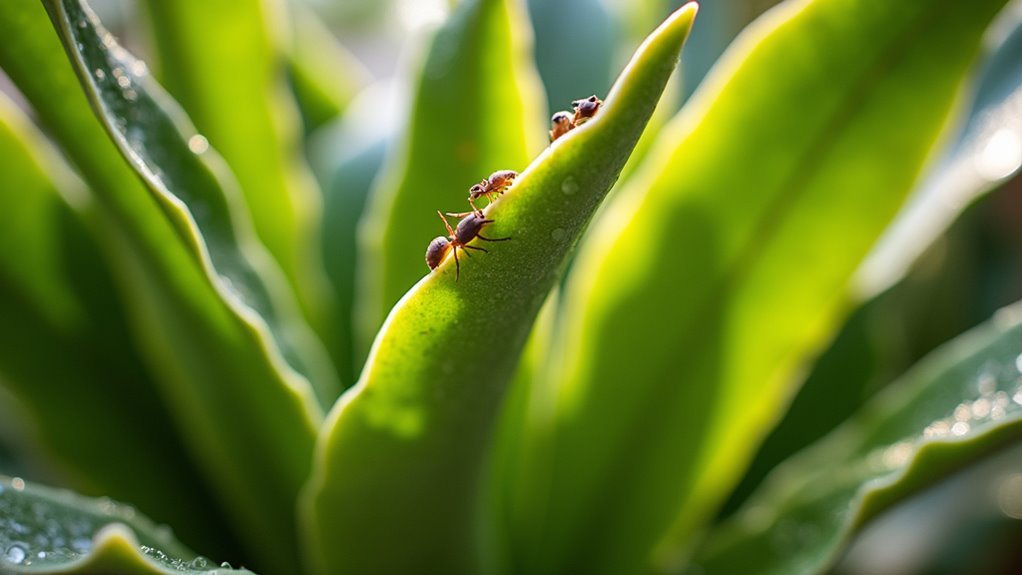
When you crush garlic, it releases allicin and other sulfur compounds that disrupt insects’ nervous systems and block their breathing pores, causing suffocation. The pungent odor confuses pests like aphids and spider mites by masking attractive plant scents they use for navigation and feeding. Additionally, garlic spray’s antifungal properties prevent infections that weaken plants. The solution creates a protective barrier that’s lethal to soft-bodied insects while remaining safe for beneficial organisms and your plant’s health.
The Science Behind Garlic’s Pest-Repelling Properties
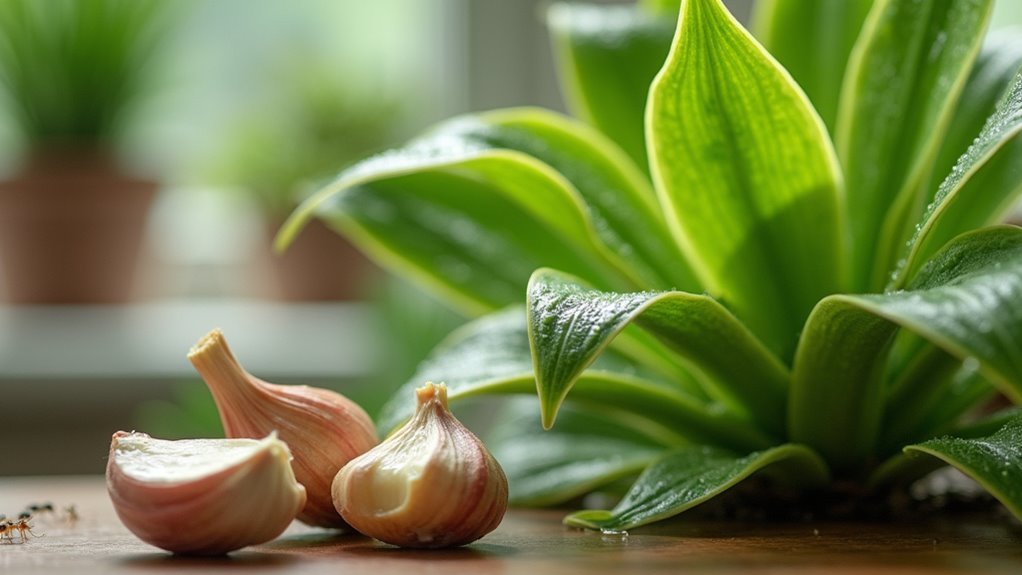
When pests invade your houseplants, garlic’s sulfur compounds like allicin work as natural defenders by releasing a pungent odor that disrupts insects’ sensory systems.
This strong odor confuses aphids and spider mites, making it nearly impossible for them to locate food sources or find mates. You’ll find that garlic functions as an effective natural repellent because it masks the attractive scents pests normally follow to your plants.
Related guide: Best Indoor Bug Foggers for Multi-Pest Infestations
Beyond pest control, garlic’s antifungal properties prevent fungal infections that weaken plants and invite more pest infestations.
Unlike commercial chemicals, this homemade pesticide won’t harm beneficial insects like ladybugs or bees. When you use garlic as companion plants or spray, you’re protecting your houseplants while promoting healthy microbial activity in the soil.
Active Sulfur Compounds That Disrupt Insect Behavior
As garlic tissue breaks down during crushing, it releases allicin—the primary sulfur compound responsible for disrupting insect nervous systems and metabolic processes. These active sulfur compounds possess powerful insecticidal properties that interfere with pest communication, feeding patterns, and reproduction cycles. When you apply garlic spray, the sulfur compounds disrupt behavior in aphids, spider mites, and other common houseplant invaders.
| Pest Type | Disrupted Function | Result |
|---|---|---|
| Aphids | Communication signals | Colony breakdown |
| Spider Mites | Feeding mechanisms | Starvation |
| Thrips | Reproductive cycles | Population decline |
| Whiteflies | Navigation systems | Disorientation |
The antifungal properties also prevent powdery mildew, protecting your plant’s overall health. Regular applications create an environment where pests can’t establish themselves effectively.
How Garlic Spray Affects Common Houseplant Pests
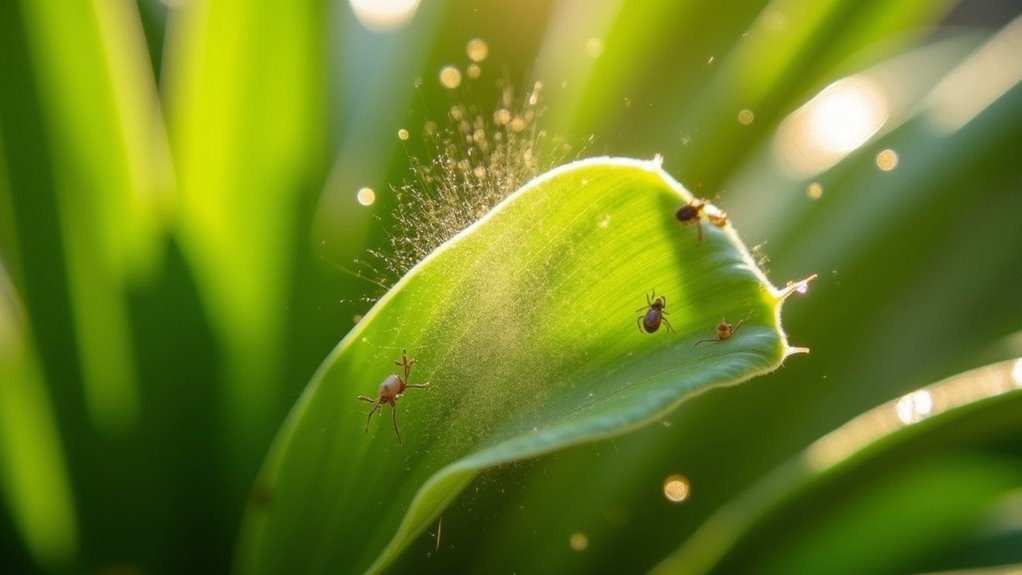
When you spray garlic on your houseplants, you’re targeting pests through multiple mechanisms that disrupt their ability to survive and reproduce.
The allicin in garlic spray suffocates soft-bodied insects like aphids, spider mites, and mealybugs while simultaneously masking the plant scents these pests use for navigation and feeding.
You’ll find that this dual-action approach creates an inhospitable environment that forces existing pests to leave while preventing new infestations from establishing.
Garlic’s Pest Repelling Mechanism
Although many commercial pesticides rely on harsh chemicals, garlic spray works through a completely natural mechanism that targets pests’ most basic survival instincts.
When you crush garlic, it releases allicin, creating a pungent aroma that disrupts insects’ olfactory receptors. This strong odor effectively masks the scents that normally attract houseplant pests to your plants, making it impossible for them to locate their food sources.
The garlic spray functions as a natural insecticide in multiple ways. The soapy mixture coats pests and suffocates them by blocking their breathing pores.
Additionally, garlic’s antifungal properties prevent plant diseases that often accompany pest infestations. Regular applications help repel unwanted visitors and reduce pest populations over time, creating an inhospitable environment that keeps your houseplants healthier naturally.
Affected Insect Species
While commercial pesticides target specific pest species through chemical compounds, garlic spray affects a broad spectrum of common houseplant invaders through its potent sulfur-based properties. You’ll find that garlic spray’s insecticidal properties work effectively against multiple unwanted insects that commonly plague indoor plants.
| Pest Species | How Garlic Affects Them | Result |
|---|---|---|
| Aphids | Sulfur compounds suffocate and repel | Death and avoidance |
| Spider Mites | Strong odor disrupts host location | Confusion and departure |
| Mealybugs | Creates unfavorable environment | Pest abandonment |
| Whiteflies | Masks attractive plant scents | Reduced infestation |
The repellent nature of garlic spray makes it particularly valuable for maintaining a pest-free environment. You’ll notice healthier growth as these houseplant pests either die from suffocation or simply avoid your treated plants entirely.
The Role of Allicin in Pest Elimination
Since garlic’s pest-fighting power stems from a single potent compound, understanding allicin’s mechanism becomes essential for effective houseplant protection.
When you crush garlic, enzymes convert alliin into allicin, releasing its insecticidal properties against common indoor invaders. This sulfur-containing compound disrupts pest metabolism while its strong odor masks plant scents that normally attract insects.
You’ll find allicin particularly effective against pests such as aphids, spider mites, and whiteflies. The compound doesn’t just repel—it actively impairs growth and reproduction in treated insects, reducing future infestations.
When you create garlic spray, adding soap enhances allicin’s effectiveness by improving adherence to plant surfaces. This natural pesticide works through multiple pathways, making it a reliable defense for your houseplants.
Physical Effects of Garlic Spray on Insect Respiratory Systems
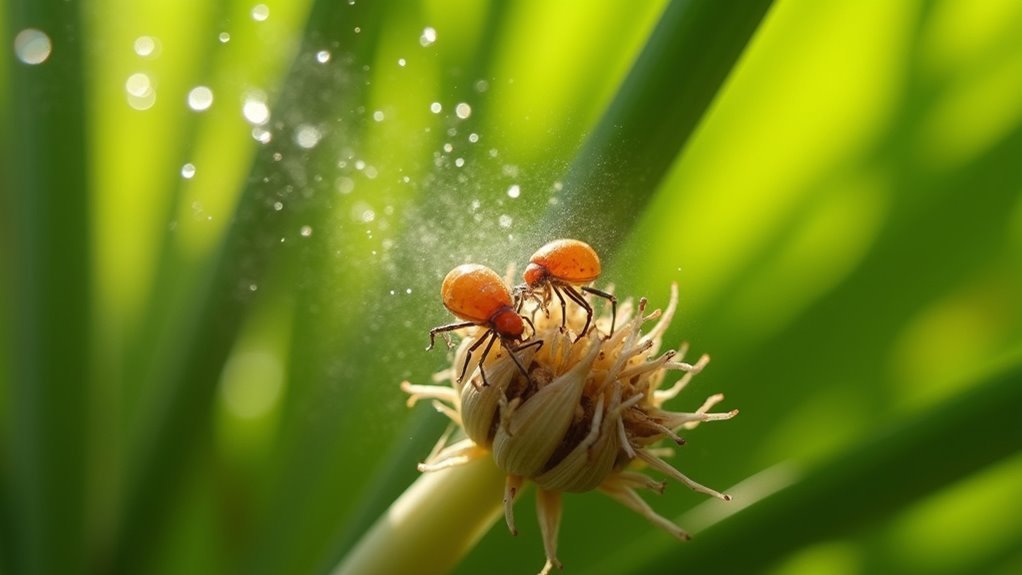
Beyond allicin’s metabolic disruption, garlic spray physically attacks insects through their respiratory systems, creating multiple pathways to elimination. When you apply this organic solution, you’re targeting pests through direct physical interference with their breathing mechanisms.
The spray creates respiratory distress through these four primary actions:
- Liquid coating blocks spiracles – The spray forms a film over insects’ air openings, causing immediate suffocation.
- Strong odor overwhelms respiratory tracts – Garlic’s pungent compounds irritate and inflame breathing passages.
- Sulfur compounds burn airways – These chemicals cause internal respiratory damage upon inhalation.
- Persistent residue maintains blockage – The coating continues obstructing airflow long after application.
This multi-pronged respiratory assault guarantees that even resilient insects can’t escape the spray’s lethal effects on their breathing systems.
Masking Plant Scents That Attract Pests
When you spray garlic on your houseplants, you’re creating a powerful scent barrier that confuses pest insects trying to locate their next meal.
The strong garlic odor overwhelms your plants’ natural attractant scents, making it nearly impossible for pests like aphids and spider mites to follow their usual scent trails to feeding sites.
This disruption happens because garlic’s pungent compounds, particularly allicin, interfere with insects’ ability to detect the chemical signals they rely on for navigation.
Strong Garlic Odor Effects
Although many commercial pest deterrents rely on toxic chemicals, garlic spray works through a completely natural mechanism that disrupts how pests locate their target plants. The strong garlic odor creates a powerful sensory disruption that confuses pests’ olfactory receptors, making navigation nearly impossible.
When you apply garlic spray, its pungent aroma works in several ways:
- Masks attractive plant scents that typically draw garden pests to your houseplants.
- Overwhelms insect navigation systems by flooding their sensory pathways with overpowering sulfur compounds.
- Creates confusion zones where aphids and spider mites can’t distinguish food sources.
- Forms invisible scent barriers that repel pests while protecting beneficial insects.
This spray establishes a long-lasting barrier that deters harmful insects without damaging your plants or affecting helpful garden allies.
Scent Disruption Mechanisms
Understanding how pests locate their target plants reveals why garlic spray works so effectively as a natural deterrent. When you apply garlic spray to your houseplants, you’re creating powerful scent disruption that confuses insects’ navigation systems.
The strong aroma from garlic’s sulfur compounds masks the natural plant scents that typically attract pests like aphids and spider mites. This masking effect targets insects’ sensory receptors directly.
Pests rely on chemical signals to find their preferred food sources, but garlic spray interferes with this process. The allicin released from crushed garlic alters these vital navigation signals, making it nearly impossible for insects to detect their target plants.
This scent disruption serves as an effective pest deterrent, greatly reducing infestations without harming your plants.
Garlic’s Antifungal Properties for Complete Plant Protection
Beyond deterring insects, garlic spray delivers powerful antifungal properties that shields your houseplants from common diseases like powdery mildew and black spot.
The allicin compound disrupts fungal cell membranes, preventing spore growth and stopping infections before they spread. This dual-action approach means you’re getting thorough plant protection against both pests and pathogens with one organic solution.
Your garlic spray creates complete disease deterrence by:
- Masking plant scents that attract harmful organisms
- Inhibiting fungal spore development on leaf surfaces
- Promoting beneficial microbial activity in surrounding organic matter
- Strengthening plant resilience against environmental stress
Regular applications maintain a balanced ecosystem around your houseplants, supporting healthy foliage while preventing fungal infections from compromising your indoor garden’s health.
Why Direct Contact With Garlic Solution Is Lethal to Soft-Bodied Insects
While garlic spray’s protective barrier works wonders for disease prevention, its deadliest impact occurs when it makes direct contact with soft-bodied insects like aphids, spider mites, and whiteflies.
The garlic solution’s insecticidal properties deliver a multi-pronged attack that guarantees swift elimination of these pests.
When you spray the garlic solution directly onto target insects, allicin compounds disrupt their physiological processes immediately.
The soap component breaks down their protective outer layer, making them vulnerable to the garlic’s chemical assault. This breakdown leads to rapid dehydration as insects can’t retain essential moisture.
Additionally, the solution suffocates pests by blocking their spiracles—tiny breathing openings vital for survival.
This combination of dehydration and suffocation assures mortality within hours of direct contact, making garlic spray devastatingly effective against soft-bodied insects.
Frequently Asked Questions
Does Garlic Kill Bugs in Houseplants?
Yes, you’ll find garlic effectively kills houseplant bugs. When you spray it, allicin disrupts pest physiology while the strong odor repels them. It’ll also suffocate soft-bodied insects like aphids and spider mites.
What Does Garlic Spray Do for Plants?
You’ll find garlic spray repels pests like aphids and spider mites while preventing fungal diseases. It creates a protective barrier that masks plant scents, making them less attractive to harmful insects without using toxic chemicals.
Why Does Garlic Repel Pests?
Garlic repels pests because you’re disrupting their sensory receptors with sulfur compounds like allicin. You’re masking plants’ natural scents that attract insects, making it harder for pests to find food and mates effectively.
How to Use Garlic as Insect Repellent for Plants?
Blend crushed garlic cloves with water and liquid soap, then strain the mixture. Dilute it further with water and spray weekly on your houseplants to repel aphids, spider mites, and caterpillars effectively.
In Summary
You’ll find garlic spray works through multiple mechanisms to eliminate houseplant pests. The sulfur compounds disrupt insect behavior while allicin directly damages their systems. When you spray it on affected plants, it’ll mask the scents that attract pests and create a hostile environment for soft-bodied insects. You’re also getting antifungal protection as a bonus. Direct contact with the solution proves lethal to most common houseplant pests you’ll encounter.