
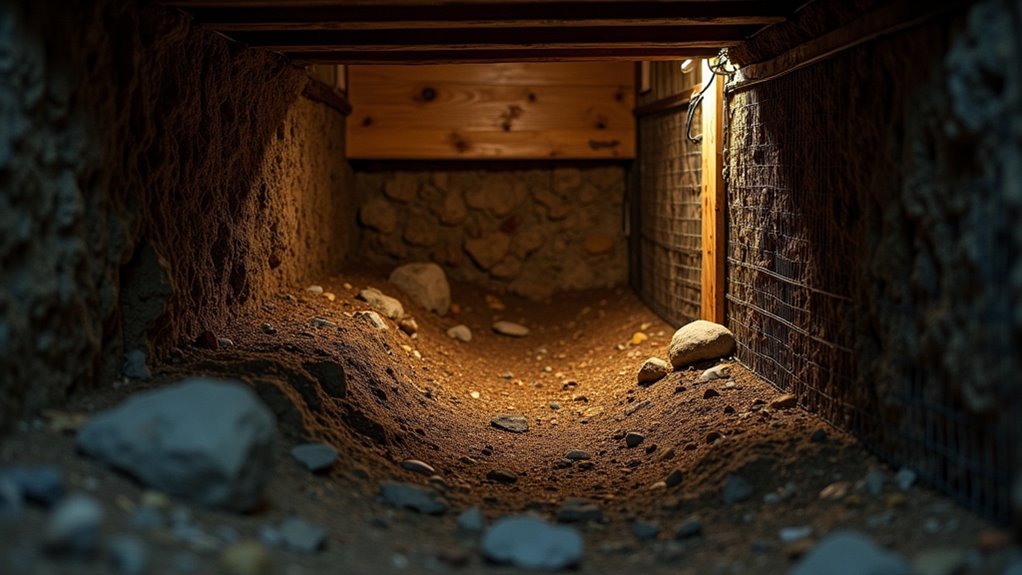
To raccoon-proof your crawlspace, you’ll need five effective barriers that block these persistent invaders. First, seal foundation openings using expanding foam and steel mesh over gaps larger than 4 inches. Install heavy-duty galvanized mesh barriers buried 12-18 inches deep around the perimeter. Reinforce access doors with metal materials and raccoon-proof latches. Remove all food sources and nesting materials like old insulation. Finally, control moisture with vapor barriers and dehumidifiers to make the space less attractive—these extensive strategies will transform your vulnerable crawlspace into an impenetrable fortress.
Seal Foundation Openings and Entry Points
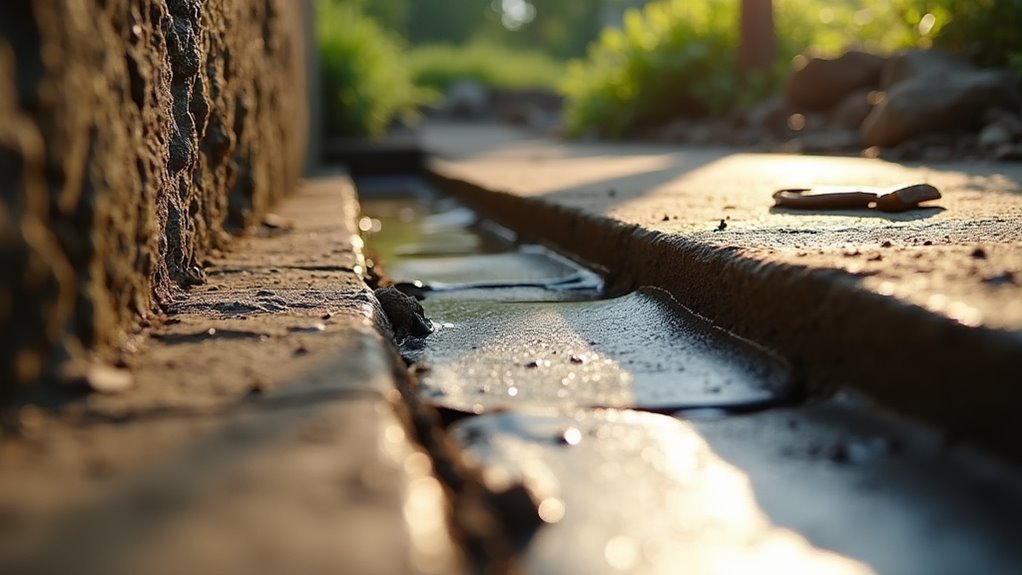
Since raccoons can squeeze through foundation openings as small as 4 inches, you’ll need to conduct a thorough inspection of your crawlspace perimeter to identify potential entry points.
Focus on examining foundation cracks, gaps around utility penetrations, and damaged vent screens that compromise both pest control and moisture control systems.
Use expanding foam or caulk to seal foundation openings around plumbing, electrical, and HVAC penetrations. For larger gaps, install steel mesh or hardware cloth over openings while maintaining proper ventilation.
Don’t forget to inspect and repair damaged siding or fascia boards around the foundation base.
Replace compromised crawl space vent covers with tightly fitting alternatives. This dual approach addresses entry points while maintaining essential airflow for effective moisture control throughout your crawlspace environment.
Install Heavy-Duty Mesh Barriers Underground
When raccoons persist in digging beneath your foundation despite sealed entry points, installing heavy-duty mesh barriers underground creates an impenetrable physical obstruction they can’t breach.
You’ll need robust, galvanized steel mesh that can withstand raccoons’ powerful claws and digging strength. Don’t use softer materials that they’ll easily tear through.
Bury your mesh barriers at least 12-18 inches deep around your crawl space perimeter to prevent raccoons from burrowing underneath. Extend the mesh six inches above ground level so they can’t climb over it.
Secure all anchoring points firmly to eliminate weak spots.
These mesh barriers provide long-term protection, but you’ll need regular inspections to check for wear or damage that could compromise their effectiveness against determined raccoons.
Reinforce Crawlspace Doors and Access Points
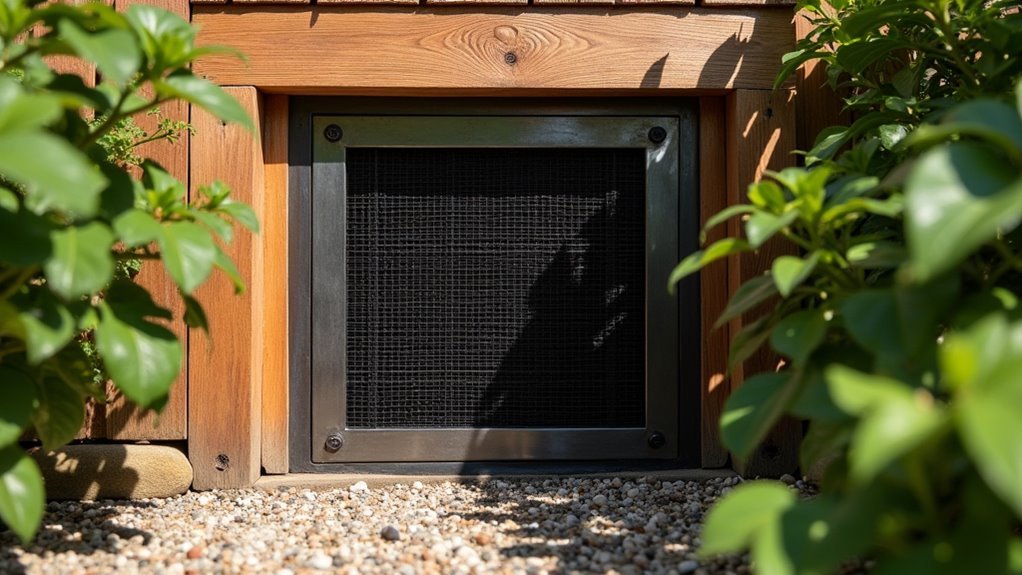
While underground barriers block raccoons from digging beneath your foundation, you’ll also need to fortify the most obvious entry points they target: your crawlspace doors and access panels.
To reinforce crawlspace doors effectively, replace flimsy materials with metal or heavy-duty wood that raccoons can’t break through. Install a heavy-duty locking mechanism for enhanced security, and consider raccoon-proof latches requiring tools to open, since these intelligent animals manipulate simple latches easily.
Focus on sealing gaps around all access points using caulk or weather stripping—raccoons squeeze through openings as small as six inches.
Don’t forget regular maintenance; inspect your reinforcements frequently to identify wear or deterioration that creates new vulnerabilities raccoons will exploit.
Remove Food Sources and Nesting Materials
After securing your crawlspace entry points, you’ll need to eliminate what attracts raccoons in the first place: food sources and comfortable nesting materials.
Start by securing trash cans with tight-fitting lids and using animal-proof containers to prevent easy access. Remove organic materials like old insulation, newspapers, and cardboard from your crawl space, as these create ideal nesting materials raccoons seek for shelter.
Secure trash with tight lids and remove insulation, newspapers, and cardboard that raccoons use for nesting materials.
Store pet food and bird seed in airtight containers, keeping them completely out of the crawl space.
Regularly clean the area to remove food crumbs or spills that could attract raccoons. Conduct routine inspections to identify and clear away clutter or debris, since raccoons prefer dark, hidden areas with available nesting materials for settling.
Control Moisture and Humidity Levels
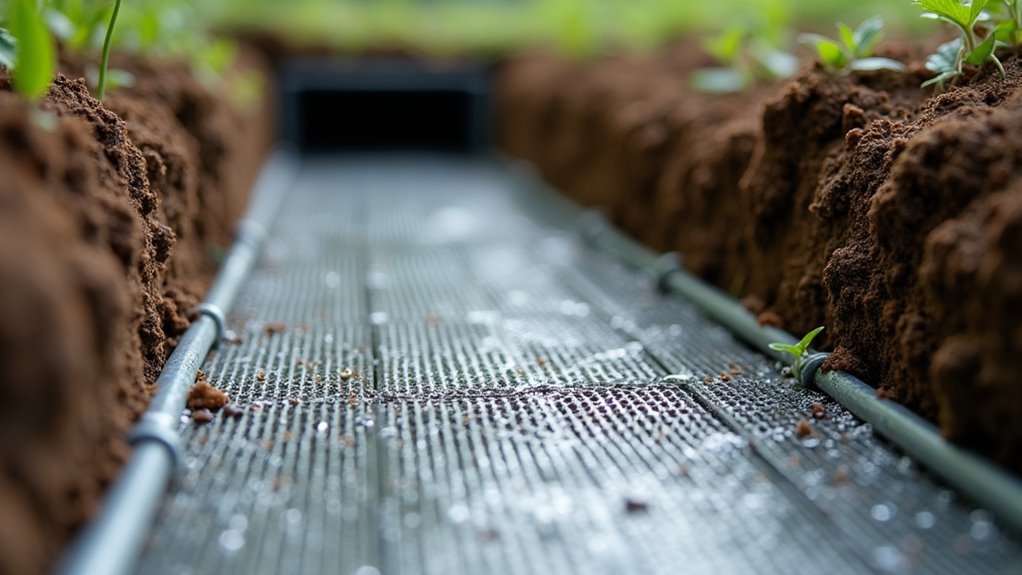
Since raccoons are naturally drawn to warm, damp environments, controlling moisture and humidity levels in your crawlspace becomes essential for deterring these persistent invaders.
You’ll want to install a vapor barrier as your first line of defense against moisture accumulation. This barrier greatly reduces the likelihood of raccoons making your space their home.
Regular inspection and repair of plumbing leaks or foundation issues helps you control humidity effectively.
Installing dehumidifiers will lower humidity levels below 50%, creating an uninviting environment for these critters.
Consider crawl space encapsulation for thorough moisture control.
This method prevents pooling water and maintains ideal humidity levels, making your crawlspace completely unattractive to raccoons seeking nesting sites.
Frequently Asked Questions
How Do I Keep Raccoons Out of My Crawl Space?
You’ll need to seal all entry points with aluminum covers, install sturdy vent screens, remove food sources like pet food, conduct regular inspections, and consider adding vapor barriers for moisture control.
How Do I Make My Crawl Space Rodent Proof?
Seal all entry points with steel wool, install vapor barriers to reduce moisture, guarantee airtight crawl space doors, inspect regularly for rodent signs, and consider professional encapsulation services for thorough protection.
How Do I Stop Animals From Entering the Crawl Space?
You’ll need to seal all crawl space vents and cracks with durable materials, install heavy-duty aluminum vent covers, use steel wool for entry points, and guarantee airtight, lockable doors.
What Can You Cover a Crawl Space With?
You can cover your crawl space with aluminum vent covers, heavy-duty mesh screening, or hardware cloth. These materials resist chewing while maintaining ventilation. Concrete barriers around the perimeter provide additional protection against unwanted entry.
In Summary
You’ve now equipped yourself with five proven strategies to keep raccoons out of your crawlspace. By sealing entry points, installing mesh barriers, reinforcing access doors, eliminating food sources, and controlling moisture, you’ll create an unwelcoming environment for these persistent invaders. Don’t wait until you hear scratching sounds overhead—implement these barriers now. With consistent effort and proper maintenance, you’ll protect your home’s foundation and enjoy peace of mind knowing raccoons can’t establish residence beneath your feet.