
You can protect your garden naturally by spreading a 2-3 inch layer of cedar mulch around your plants. Cedar’s natural oils, including thujone and fujiplicin, effectively repel ants, aphids, beetles, moths, and termites while providing antibacterial protection against soil-borne diseases. This eco-friendly solution lasts 1-2 years, offering dual benefits of pest control and weed suppression. Keep mulch away from plant stems to prevent rot, and discover the complete application strategies that maximize your garden’s natural defenses.
What Makes Cedar Mulch an Effective Pest Deterrent
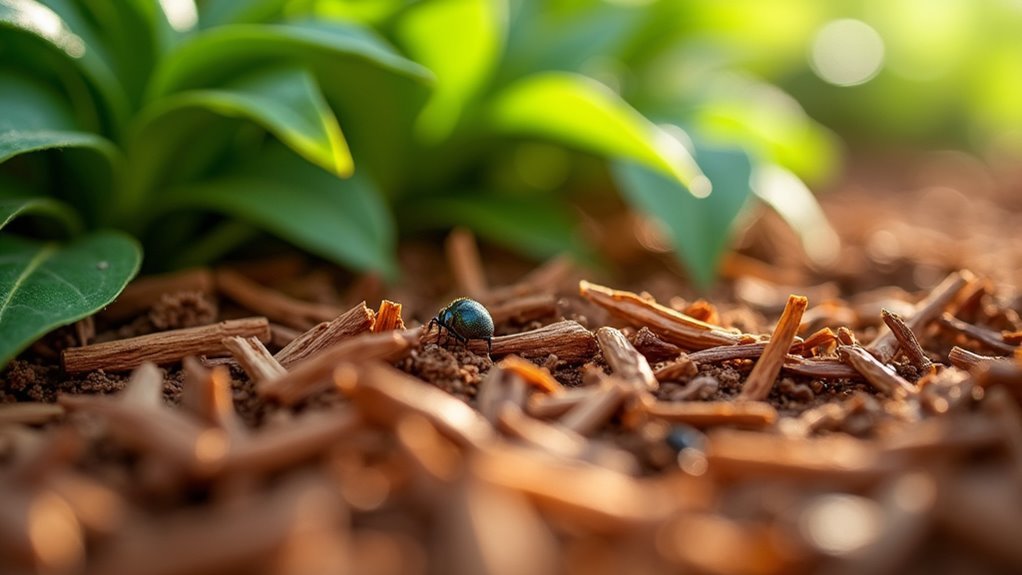
When you’re searching for a natural solution to garden pest problems, cedar mulch stands out as one of nature’s most effective deterrents.
Using cedar mulch provides powerful pest control through natural oils like thujone that repel harmful insects including aphids, beetles, and moths. These aromatic compounds create an environment that pests simply can’t tolerate, naturally reducing their population in your garden areas.
Cedar mulch’s natural thujone oils create a hostile environment for garden pests, effectively repelling aphids, beetles, and moths without chemicals.
You’ll appreciate cedar mulch’s lasting effectiveness since it decomposes slowly over one to two years, maintaining its pest-repelling properties without frequent reapplication.
Additionally, it prevents soil splash-up, reducing transmission of soil-borne diseases that pests often carry. This protective barrier promotes healthier plants while providing continuous defense against unwanted insects through its natural chemical composition.
Key Compounds in Cedar That Repel Common Garden Pests
You’ll find that cedar’s pest-repelling power comes from specific natural compounds working together to protect your garden.
Thujone acts as your primary defense against insects like aphids and beetles, while fujiplicin provides antibacterial protection that keeps soil-borne diseases at bay.
These natural oils create a powerful deterrent system that’ll keep common garden pests away from your plants without harsh chemicals.
Thujone’s Insect Repelling Properties
While cedar mulch offers numerous gardening benefits, its most remarkable feature lies in thujone, a powerful aromatic hydrocarbon that naturally repels insects without harming your plants or soil.
This compound effectively keeps pests away, including aphids, beetles, moths, and termites that threaten your garden’s health. When you apply cedar mulch, you’re releasing cedar oil containing high thujone levels that disrupt pest behavior and reproduction cycles.
What makes thujone particularly valuable is its dual action – it targets harmful insects while preserving beneficial ones, maintaining your garden’s ecological balance.
You won’t need synthetic pesticides when thujone’s doing the work. As your cedar mulch gradually decomposes, it continues releasing this natural repellent, providing long-term pest management that protects both plants and nearby wood structures.
Fujiplicin’s Antibacterial Defense Mechanism
Beyond thujone’s pest-repelling capabilities, cedar mulch contains fujiplicin, a potent antibacterial compound that creates an additional layer of protection for your garden. This natural compound targets soil-borne diseases that commonly affect plants like tomatoes, preventing splash-up contamination from infected soil.
When you apply cedar mulch, fujiplicin slowly releases into the surrounding soil, establishing an inhospitable environment for harmful pathogens. This mechanism doesn’t just stop diseases—it actively promotes healthier soil conditions.
| Benefit | Effect |
|---|---|
| Disease Prevention | Reduces soil-borne pathogens |
| Soil Protection | Creates protective barrier against splash-up |
| Microbiome Support | Enhances beneficial soil organisms |
Fujiplicin’s dual action makes cedar mulch particularly essential for organic gardening, offering natural disease control without synthetic treatments while supporting overall plant health.
Natural Oils Pest Deterrence
Cedar’s natural oils work as a sophisticated defense system against garden pests, with each compound targeting specific threats to your plants.
Thujone, the primary aromatic oil in cedar mulch, creates an effective barrier against ants, moths, and termites through its potent scent. These natural oils establish pest deterrence by making your garden environment less appealing to harmful insects that would otherwise attack your plants.
The oils’ concentrated aromatic properties remain active for extended periods, providing consistent protection without requiring frequent reapplication.
Unlike synthetic pesticides, cedar’s natural oils work gently yet effectively, creating an inhospitable environment for pests while maintaining safety for beneficial insects and your family.
This natural approach to pest deterrence offers sustainable protection that doesn’t compromise your garden’s ecological balance.
Proper Application Techniques for Maximum Pest Control
To achieve maximum pest control benefits from cedar mulch, you’ll need to apply it correctly around your plants and garden areas. Spread a 2 to 3-inch layer evenly across the soil, ensuring complete coverage without touching plant stems to prevent rot. This thickness maximizes moisture retention and pest-repelling properties.
For high-traffic zones like pathways, use larger cedar chippings that withstand foot traffic while maintaining pest control benefits. Create protective barriers around plant bases to deter soil-borne pests and prevent disease splash-up from rain.
Monitor moisture levels carefully since cedar mulch retains water efficiently. Avoid cedar mulch in poorly draining areas where over-saturation could cause root rot.
Replenish your mulch annually as natural oils diminish through decomposition, reducing effectiveness over time.
Which Pests Cedar Mulch Successfully Repels
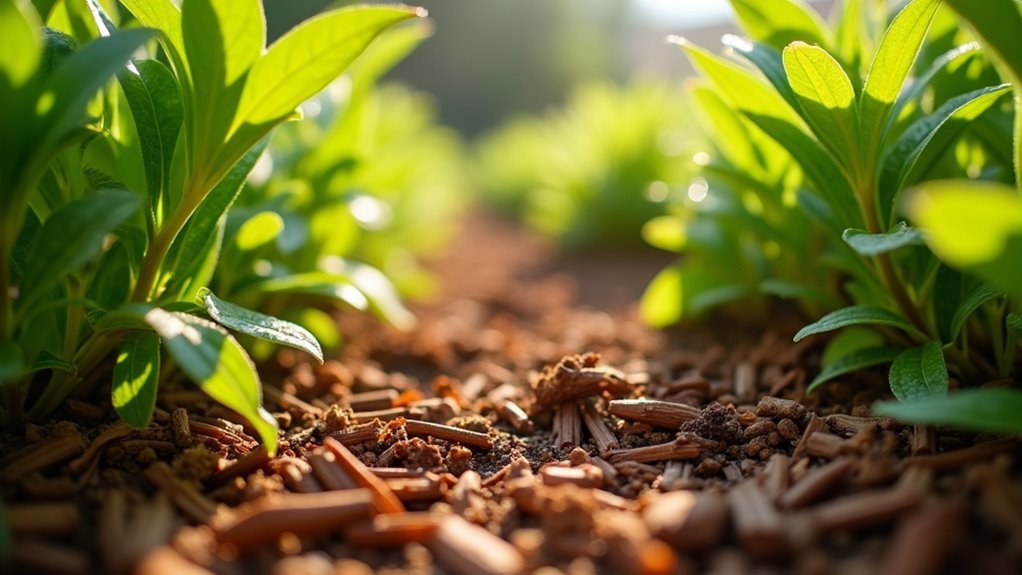
Several common garden pests can’t tolerate cedar mulch’s natural aromatic compounds, making it an effective biological deterrent for your outdoor spaces. The thujone and other oils from cedar trees create a protective barrier that repels ants, moths, and termites from your garden beds.
You’ll also notice fewer aphids and beetles, as these harmful insects avoid cedar’s distinctive scent.
Cedar mulch excels at controlling outdoor pests beyond typical garden insects. It greatly reduces tick and flea populations, creating safer environments for your family and pets. This natural pest control method targets moths that damage clothing and stored items when used near outdoor storage areas.
However, cedar’s aromatic properties can deter beneficial pollinators like bees. Place cedar mulch strategically away from flowering plants to maintain pollinator activity while protecting vulnerable areas.
Comparing Cedar Mulch to Other Natural Pest Prevention Methods
When you’re choosing between cedar mulch and other natural pest prevention methods, you’ll need to weigh several key factors to find what works best for your garden.
Cedar’s potent thujone oils offer longer-lasting protection than companion plants or essential oils, but they’ll also repel beneficial insects that marigolds and strategic plantings actually attract.
You’ll want to take into account both the upfront costs and long-term maintenance requirements, since cedar’s 1-2 year lifespan differs greatly from the ongoing expenses of reapplying oils or replanting companion species.
Cedar Vs Companion Plants
Why choose between cedar mulch and companion plants when both offer natural pest control benefits?
You’ll find cedar mulch excels at long-term pest deterrence through natural oils like thujone, requiring minimal maintenance once applied.
Companion plants, however, attract beneficial insects for pollination and natural pest management while enriching soil nutrients.
Cedar mulch’s slow decomposition provides lasting protection, but it may repel helpful insects your garden needs.
Companion plants require more frequent replanting and care but create ecological balance.
You should consider that cedar mulch can inhibit certain plants that traditionally work together for pest control.
Choose cedar mulch for low-maintenance, focused pest prevention, or select companion plants for extensive garden ecosystem benefits including pollinator attraction.
Essential Oils Comparison
How do cedar mulch’s natural oils stack up against other essential oil-based pest deterrents?
Cedar mulch offers significant advantages over traditional essential oils for pest control. While peppermint or lavender oils require dilution and frequent reapplication, cedar mulch provides continuous protection for 1-2 years with minimal maintenance.
You won’t need to worry about mixing concentrations or weather washing away your pest control efforts.
Cedar’s thujone compound naturally repels beetles, moths, and termites, while also delivering antibacterial and antifungal properties that protect against soil-borne diseases.
Unlike essential oils that target specific pests, cedar mulch offers wider spectrum effectiveness against multiple insect types.
You’ll save time and money while getting more extensive garden protection through this straightforward, long-lasting application method.
Cost Benefit Analysis
Many gardeners hesitate at cedar mulch’s higher upfront cost, but you’ll discover its long-term value becomes apparent when compared to other natural pest prevention methods.
A thorough cost benefit analysis reveals cedar mulch’s 1-2 year lifespan greatly outweighs cheaper alternatives requiring frequent replacement. While diatomaceous earth or neem oil cost less initially, you’ll spend more over time due to repeated applications.
Cedar mulch delivers dual benefits that enhance its value proposition. You’ll eliminate herbicide expenses since it suppresses weeds effectively while deterring pests.
Additionally, cedar mulch helps retain moisture, reducing watering costs and plant stress.
However, consider your garden’s ecosystem carefully—if you depend heavily on pollinators, cedar’s insect-repelling properties might counteract its economic advantages in your specific situation.
Potential Drawbacks and Limitations for Garden Use
While cedar mulch offers excellent pest control benefits, it’s important to understand its potential drawbacks before incorporating it into your garden.
Cedar’s allelopathic properties can inhibit seedling growth and establishment of young plants. Additionally, the mulch may deter beneficial insects and pollinators alongside unwanted pests, potentially disrupting your garden’s natural ecosystem balance.
Consider these limitations:
- Soil chemistry issues – Releases acetic acid during decomposition without proper oxygenation, affecting pH balance
- Allergic reactions – Strong cedar aroma can trigger sensitivities in some gardeners
- Slow decomposition – Provides minimal soil nutrient improvement, requiring additional fertilization
- Plant establishment problems – May negatively impact sensitive plants and new seedlings
Weigh these factors against cedar mulch’s pest control advantages when making your decision.
Best Garden Areas and Plants for Cedar Mulch Application
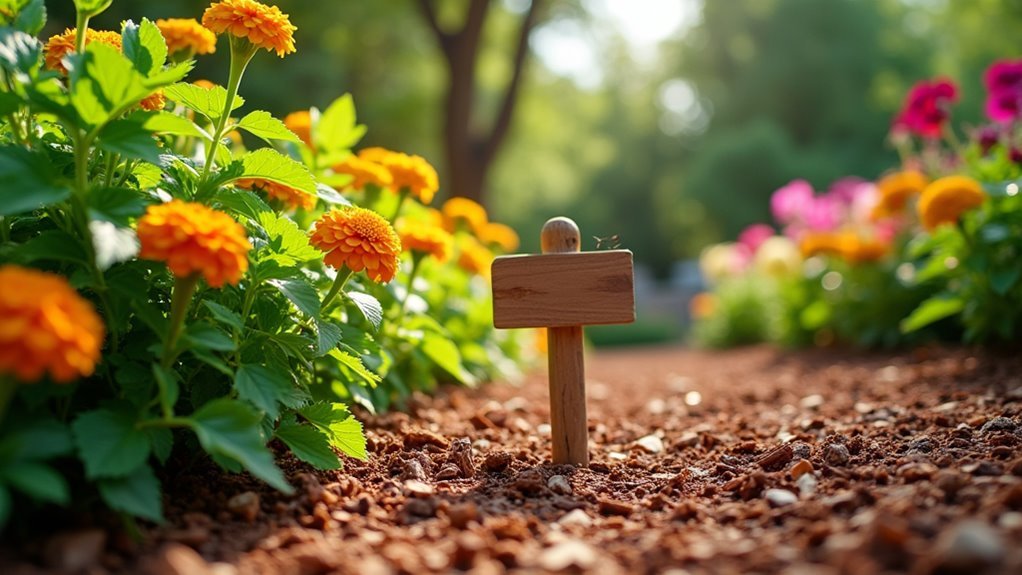
To maximize cedar mulch’s benefits while minimizing potential drawbacks, you’ll want to focus on specific garden areas where established plants can thrive without interference.
Cedar mulch works exceptionally well around mature perennials and shrubs in flower beds, where its nitrogen-depleting effects won’t harm developed root systems. You’ll find it particularly valuable in ornamental gardens, where its natural reddish-brown color enhances visual appeal while providing effective ground cover.
Cedar is also ideal for non-growing areas like pathways and dog walks, where you need durable surfaces without soil regeneration concerns. Its insect-repelling properties make it perfect for areas plagued by ants, moths, and ticks.
However, avoid using cedar mulch near vegetable gardens or young seedlings, where its allelopathic properties could inhibit healthy growth and development.
Maintaining Cedar Mulch for Long-Term Pest Protection
Since cedar mulch’s pest-repelling power relies on natural oils that gradually break down, you’ll need to establish a consistent maintenance routine to preserve its protective benefits.
Maintaining cedar mulch requires attention to several key factors that affect both pest control and plant health.
Essential maintenance practices include:
- Reapply fresh layers every 1-2 years as natural oils diminish with decomposition
- Monitor for compaction and excessive moisture that creates pest habitats, fluffing mulch regularly for proper airflow
- Maintain 2-3 inch thickness around plants to regulate soil temperature and block weed growth
- Watch for nitrogen depletion during decomposition and supplement with nitrogen-rich fertilizers when needed
Store cedar mulch in well-ventilated areas before application to prevent acetic acid buildup that could harm plants.
Frequently Asked Questions
Will Cedar Mulch Keep Bugs Away?
You’ll find cedar mulch repels certain bugs like ants, moths, and ticks due to its natural oils. However, it won’t eliminate all pests and may also deter beneficial insects from your garden.
What Are the Downsides of Cedar Mulch?
You’ll face higher costs than other mulches, potential nitrogen depletion as it decomposes, possible allergic reactions from its scent, soil acidification issues, and you’ll repel beneficial insects like bees and ladybugs.
Is It Okay to Put Cedar Mulch in a Vegetable Garden?
You shouldn’t use cedar mulch in vegetable gardens. It’ll deplete soil nitrogen, repel beneficial insects needed for pollination, and create acidic conditions that harm many vegetables, especially seedlings.
What Is the Best Mulch for Keeping Bugs Away?
You’ll find cedar mulch works best for repelling bugs due to its natural oils like thujone. It effectively deters aphids, beetles, termites, moths, and ticks while lasting longer than other organic options.
In Summary
You’ll find cedar mulch offers reliable, natural pest protection when you apply it correctly and maintain it regularly. It won’t solve every garden pest problem, but it’s an excellent foundation for your integrated pest management strategy. Remember to refresh your cedar mulch annually and combine it with other organic methods for best results. With proper application, you’ll enjoy reduced pest pressure while improving your garden’s overall health and appearance.



Leave a Reply