
You can safely eliminate attic pests by first identifying signs like scurrying noises, disturbed insulation, and distinctive droppings from rodents, squirrels, or raccoons. Keep children away during inspections and use non-toxic deterrents like peppermint oil-soaked cotton balls, bright lighting, and noise disruption. Seal entry points around vents, rooflines, and utility penetrations, then maintain a clutter-free environment. For protected species like bats or extensive contamination, you’ll need professional assistance to guarantee complete removal and sanitization.
Identifying Signs of Animal Activity in Your Attic
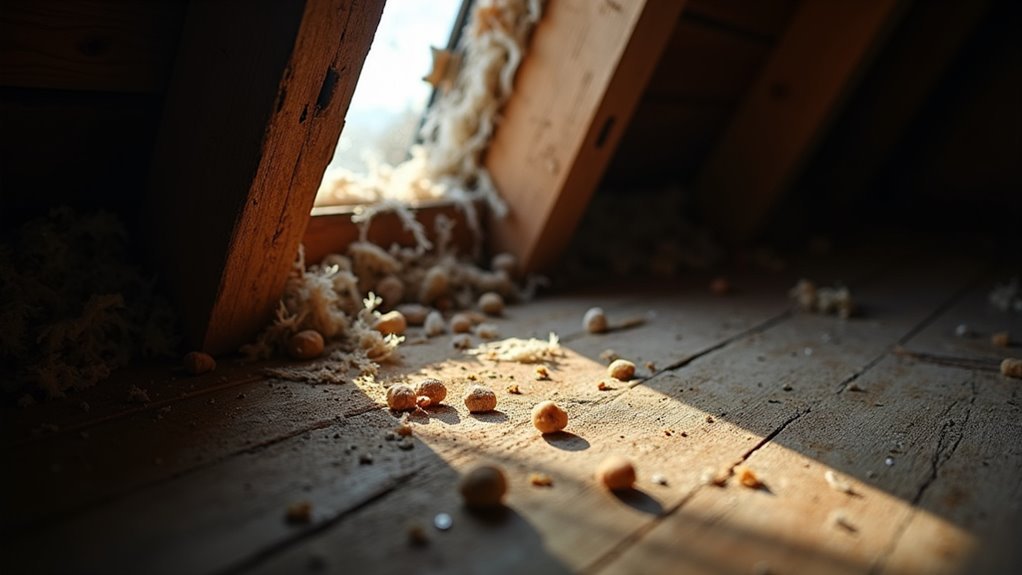
Before you can effectively eliminate pests from your attic, you’ll need to confirm their presence and identify what type of animals you’re dealing with.
Listen for scurrying noises during evening and nighttime hours, which typically indicate squirrels or rodents. Check your insulation for disturbances that signal nesting activity from squirrels or raccoons.
Evening and nighttime scurrying sounds plus disturbed insulation are telltale signs of squirrels, rodents, or raccoons nesting in your attic.
Look for droppings throughout the space – rodent droppings resemble small rice grains, while raccoon droppings look like cat waste.
Examine your ductwork for tears, as raccoons often rip through materials seeking shelter. Pay attention to gnawing sounds or squeaking at night, which usually means you’re dealing with rats.
These signs of animal activity will help you determine the appropriate removal strategy.
Common Pest Species Found in Attic Spaces
Once you’ve confirmed animal activity in your attic, you’ll need to identify the specific species to choose the most effective removal method.
Common pest species found in attics include rodents like mice and rats, which leave distinctive droppings—rice-grain-shaped for mice and curved, sausage-shaped for rats.
Squirrels are active during daylight hours and cause extensive damage by gnawing through insulation and electrical wiring.
Raccoons create significant disturbances, leaving cat-sized droppings throughout your space.
Bats produce dry, powdery droppings and require professional removal due to legal protections.
You’ll also encounter cockroaches and cluster flies, which thrive in warm, dark attic environments and multiply rapidly if left untreated.
Child-Safe Methods for Initial Assessment
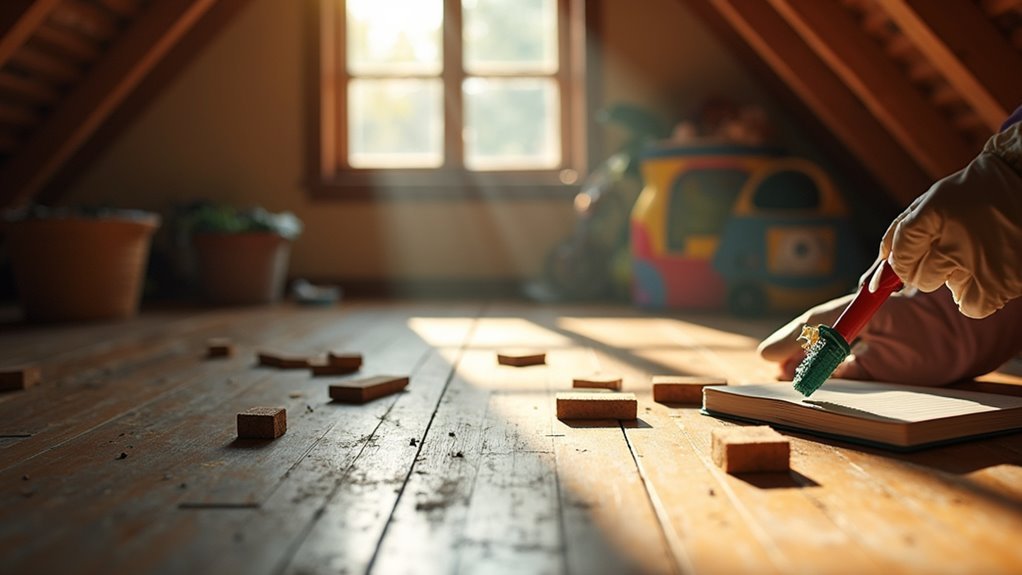
When children live in your home, you’ll need to take extra precautions during your initial attic assessment to guarantee their safety while gathering essential information about potential pest problems.
Here’s how to conduct a child-safe evaluation:
- Listen during quiet times – Check for scurrying noises when kids are asleep or out of the house to accurately identify pest activity without distractions.
- Keep children away – Restrict access to attic areas and maintain distance from entry points while you inspect for droppings and damage.
- Document everything safely – Take photos of evidence like disturbed insulation or pest droppings rather than handling materials directly.
- Ventilate naturally – Open windows and doors to encourage animals to exit while ensuring children stay in secure areas during your assessment before scheduling professional pest removal.
Sealing Entry Points to Prevent Further Access
You’ll need to locate the specific gaps, cracks, and holes that allowed pests into your attic in the first place.
Focus your inspection on areas around windows, doors, vents, and rooflines where squirrels and rodents commonly find entry points.
Once you’ve identified these access routes, you can choose the most effective sealing materials and techniques to block them permanently.
Identify Common Entry Points
Several key areas around your home serve as highways for unwanted attic visitors. Understanding where pests typically gain entry helps you target your inspection efforts effectively.
Here are the most common access points to examine:
- Roofline and eaves – Check for entry holes around soffit vents, ridge vents, and where the roof meets exterior walls, as rodents and bats often exploit these overlooked gaps.
- Windows and doors – Inspect weatherstripping and frames where deteriorated seals create opportunities for pests to squeeze through remarkably small openings.
- Utility penetrations – Examine areas where cables, pipes, and electrical lines enter your home, as contractors often leave unsealed spaces around these installations.
- Damaged exterior materials – Look for compromised shingles, siding, or trim that create entry holes for larger wildlife like squirrels and raccoons.
Effective Sealing Methods
Once you’ve identified where pests are entering your attic, selecting the right sealing materials becomes critical for long-term success. Steel mesh and caulk represent effective sealing methods that withstand rodent gnawing while permanently blocking access routes.
When you seal holes around doors, windows, and rooflines, you’re eliminating the primary pathways for pests in your attic.
Don’t forget to cover vents with fine screens that maintain ventilation while preventing entry. Pay special attention to plumbing and electrical entry points, as these overlooked areas often provide easy access.
After implementing these measures to prevent access, you’ll need to inspect your home regularly. Weathering and structural changes can create new vulnerabilities, so routine maintenance guarantees your sealing efforts remain effective against future infestations.
Non-Toxic Deterrent Strategies for Families
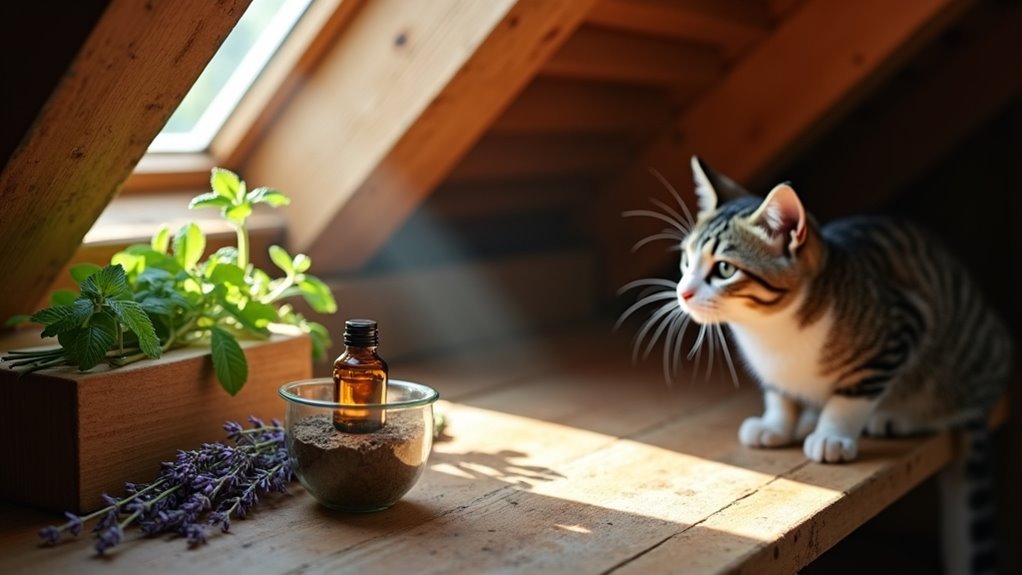
When you’re dealing with attic pests but want to protect your family’s health, natural deterrent methods offer effective solutions without introducing harmful chemicals into your home.
These safe approaches can deter various pests while maintaining a non-toxic environment for your loved ones.
- Scent-based deterrents – Place peppermint oil or apple cider vinegar-soaked cotton balls throughout your attic, as these strong natural scents repel many common pests effectively.
- Sound disruption – Install white noise machines or play loud music to create an uncomfortable acoustic environment that encourages pests to relocate.
- Bright lighting – Add continuous lighting to discourage nocturnal animals like raccoons and bats from settling in dark spaces.
- Regular maintenance – Keep your attic clean and clutter-free to eliminate hiding spots and food sources that attract unwanted visitors.
Safe Trapping Techniques for Small Rodents
While non-toxic deterrents can discourage many pests, you’ll sometimes need more direct action to eliminate small rodents that have already established themselves in your attic.
Safe trapping techniques using wooden snap traps offer the most effective solution for controlling small rodents. Position these traps along walls where you’ve spotted droppings or gnaw marks, since rodents follow established pathways.
Bait your traps with attractive food sources like peanut butter, sunflower seeds, or dried fruit to maximize capture rates. Check traps daily to remove caught animals promptly and reset them for continued effectiveness.
Always wear gloves when handling traps and deceased rodents to prevent the spread of diseases during disposal.
When to Keep Children Away During Removal
Several safety concerns make it essential to keep children away from your attic during pest removal activities.
Frightened animals become unpredictable and may bite or scratch when cornered, creating serious risks for curious children who might venture too close.
Here are four critical safety measures to follow:
- Restrict attic access completely until all animals have been confirmed removed from the premises.
- Keep children at a safe distance from any traps or bait that could accidentally harm them.
- Maintain constant supervision of children and pets throughout the entire removal process.
- Explain the importance of staying clear to avoid startling defensive animals.
Don’t allow children back into the attic area until you’ve verified complete removal and sanitized the space thoroughly.
Natural Repellents That Won’t Harm Kids
Once you’ve secured your attic and removed the immediate pest threats, you can implement child-safe repellents to prevent future infestations.
Natural repellents offer effective protection without toxic chemicals. Essential oils like peppermint and eucalyptus create strong scents that deter mice and squirrels while remaining safe around children. You can mix vinegar with water for a non-toxic cleaning solution that eliminates odors and repels rodents through its pungent smell.
Ultrasonic pest repellers emit high-frequency sounds inaudible to humans, keeping pests away without endangering kids.
Plant pest-repelling herbs such as mint and lavender around your home’s perimeter to establish natural barriers.
Additionally, place cotton balls soaked in apple cider vinegar throughout strategic attic areas for ongoing, family-safe pest deterrence.
Proper Cleanup and Sanitization After Removal
After successfully removing pests from your attic, proper cleanup becomes your next critical step to protect your family’s health.
Effective attic sanitization after pest removal is essential for eliminating dangerous pathogens and protecting your family from serious health risks.
You’ll need to approach sanitization methodically to eliminate health hazards left behind.
Follow these essential steps:
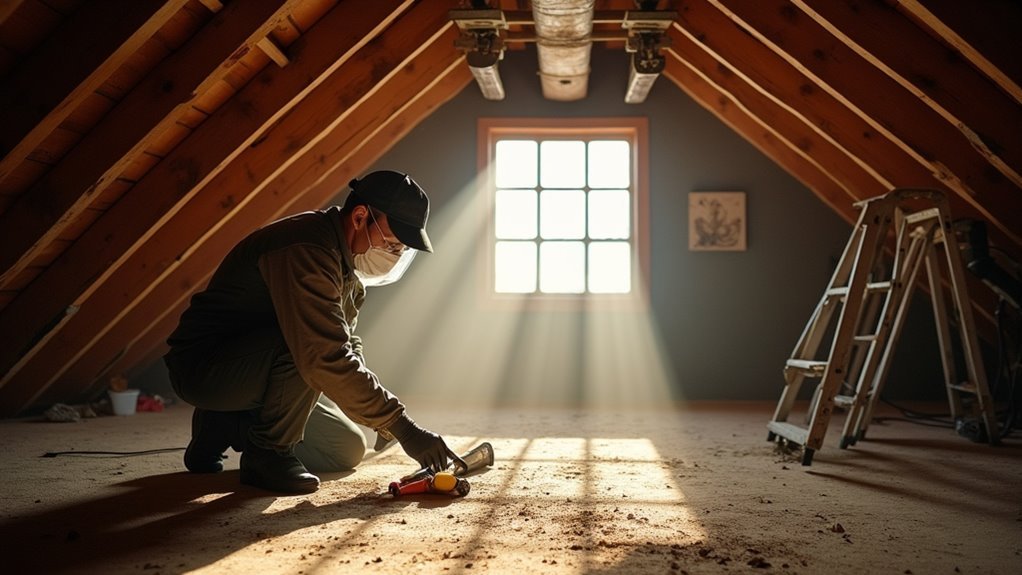
- Wear protective gear including gloves, masks, and eye protection before entering the contaminated space to avoid exposure to harmful droppings and parasites.
- Use a HEPA vacuum to remove all droppings and debris, effectively capturing allergens and pathogens that regular vacuums can’t handle.
- Replace contaminated insulation completely, as cleaning won’t eliminate all pathogens and pests that harbor within the material.
- Clean the attic thoroughly with water and mild detergent, then apply a specialized disinfectant designed for animal waste to complete the sanitization process.
Pet-Safe Products for Ongoing Prevention
When you have pets in your home, maintaining an attic free from pests requires careful selection of control products that won’t endanger your furry family members.
Choose pet-safe pest control products containing natural ingredients like diatomaceous earth, peppermint oil, or neem oil to effectively deter pests without toxic risks.
Install humane live traps that allow safe pest relocation without harmful chemicals.
Apply pet-safe repellents around entry points to create protective barriers pests won’t cross.
Keep your clean attic environment clutter-free, which naturally discourages infestations while eliminating the need for dangerous substances.
Invest in pest-proof storage solutions such as sealed plastic bins to protect belongings while ensuring harmful materials remain inaccessible to pets.
These strategies maintain effective pest prevention without compromising your pets’ safety.
Creating an Unwelcoming Environment for Pests
Since pests gravitate toward comfortable, undisturbed spaces, you’ll need to make your attic as inhospitable as possible to drive them away.
To create an unwelcoming environment for pests in your attic, implement these deterrent strategies:
- Install bright lights throughout the space to disrupt nocturnal animals that prefer darkness for nesting and feeding.
- Use strong scents like peppermint oil or apple cider vinegar on cotton balls, placing them strategically around the area to repel unwanted visitors.
- Generate noise disruption by playing loud music or using noise-making devices to disturb their peace and comfort.
- Focus on sealing entry points by regularly inspecting and blocking access routes, while maintaining a clutter-free space that eliminates hiding spots and food sources.
Maintaining Attic Conditions to Discourage Return
While driving pests from your attic is an important first step, you’ll need to maintain specific conditions that prevent their return.
Regularly inspect your attic for moisture signs and leaks that create pest-friendly environments. Maintain proper insulation and ventilation to prevent temperature fluctuations that attract unwanted visitors. Control humidity levels using dehumidifiers to discourage moisture-loving pests, keeping levels below 50%.
Seal any gaps, cracks, or openings that serve as entry points for pests seeking shelter. This includes areas around pipes, vents, and electrical wiring.
Store items in airtight plastic containers instead of cardboard boxes, which provide food sources and nesting materials. These preventive measures create an inhospitable environment that discourages pests from returning to your attic space.
Storage Solutions That Reduce Pest Attraction
Beyond keeping pests out of your attic, how you store items directly impacts whether they’ll find your space attractive for long-term habitation.
Smart storage solutions create an environment that’s hostile to unwanted visitors.
Here’s how to implement pest-deterrent storage practices:
- Switch to sealed plastic bins instead of cardboard boxes, which provide food sources and nesting materials for pests.
- Elevate all items off the floor to minimize contact with pest habitats and make cleaning easier.
- Organize storage to maintain good airflow and reduce moisture levels that attract many pest species.
- Regularly inspect stored items for droppings or damage, and declutter the attic by removing unnecessary items that create hiding spots.
These strategies make your attic considerably less appealing to potential invaders.
Recognizing When Professional Help Is Necessary
You’ll need professional help when dealing with protected species like bats, as removing them yourself violates wildlife regulations and can result in hefty fines.
Contamination from animal droppings and urine poses serious health risks that require proper assessment and specialized cleanup equipment.
Don’t risk your safety or legal compliance when experts can handle these complex situations properly.
Protected Species Removal
When dealing with certain attic invaders, you can’t simply grab a trap and start your own removal process.
Protected species removal requires professional assistance to guarantee you’re complying with federal and state conservation laws.
Many creatures living in your attic fall under legal protection:
- Bats – Federally protected species requiring specialized removal techniques and proper cleanup of droppings that can cause histoplasmosis
- Opossums – Often protected under state regulations, making DIY trapping illegal without permits
- Entry points – Must be identified and sealed by trained professionals who understand animal behavior patterns
- Sanitation – Requires specialized equipment and knowledge to prevent health risks
Wildlife specialists provide safe and humane removal while protecting you from legal violations and health hazards.
Health Risk Assessment
While professional removal protects you legally, the health risks these attic invaders pose present an even more immediate concern for your safety.
Bats and raccoons carry diseases that threaten human health through direct contact or contaminated droppings. Bat guano harbors histoplasmosis, causing serious respiratory infections when inhaled. Raccoons transmit leptospirosis and raccoon roundworm, both dangerous to humans.
Rodent droppings indicate potential hantavirus exposure through contaminated surfaces. These health risks aren’t worth the gamble of DIY removal without proper protective equipment and training.
When you’re facing multiple species or significant infestations, expert intervention becomes essential. Professional removal services guarantee safe and compliant removal while protecting you from disease exposure.
Frequently Asked Questions
How Do I Get Rid of Bugs in My Attic?
You’ll need to inspect for signs of infestation, vacuum thoroughly, seal entry points like cracks and gaps, use targeted insecticides for specific bugs, and consider professional help for severe cases.
How Do You Get Rid of Pests in the Attic?
You’ll need to inspect for signs like droppings and nests, use humane traps for removal, seal entry points with steel mesh, maintain cleanliness, and use bright lights as deterrents.
What Can You Put in Your Attic to Keep Pests Away?
You can place oil-soaked cotton balls with peppermint or apple cider vinegar in corners to deter rodents. Install dehumidifiers to reduce moisture and use bright lights with loud noises to discourage pests naturally.
How Do I Force Rodents Out of My Attic?
You’ll force rodents out by opening doors and windows while playing loud music or using bright lights. Place traps near activity signs, then seal entry points with steel mesh once they’ve all exited.
In Summary
You’ve learned effective strategies to reclaim your attic from unwanted pests while keeping your family safe. By identifying signs early, sealing entry points, and using non-toxic deterrents, you’ll create an environment pests won’t want to inhabit. Remember to maintain proper storage practices and monitor conditions regularly. Don’t hesitate to call professionals when the situation exceeds your comfort level – sometimes expert intervention is the safest, most efficient solution.

Leave a Reply