

You can effectively repel garden flies by sprinkling used coffee grounds around plant bases and high-traffic areas like compost bins. The caffeine compounds and strong aroma disrupt flies’ sensory navigation, creating an inhospitable environment they’ll avoid. Apply cooled, dried grounds in thin layers every 3-4 feet, maintaining a 10-20% soil volume ratio. Refresh your coffee ground barriers every 2-4 weeks for peak effectiveness. Discover advanced techniques to maximize this natural fly control method.
How Coffee Grounds Naturally Deter Garden Flies
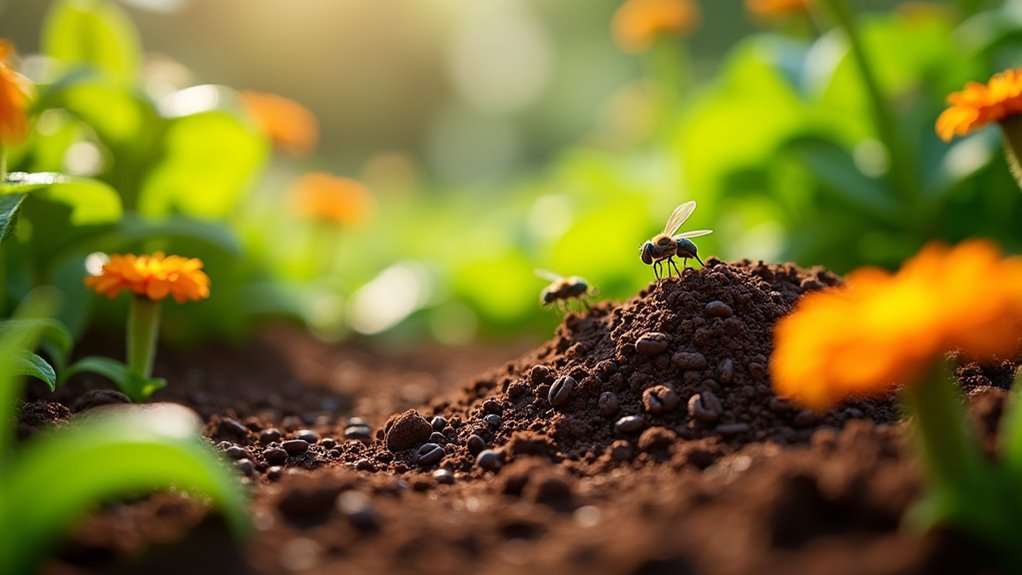
When you’re battling pesky garden flies, coffee grounds offer a surprisingly effective natural solution. These leftover grounds contain compounds that produce a strong odor many insects find absolutely repulsive.
Garden flies instinctively avoid areas where this scent lingers, making coffee grounds an excellent natural deterrent for your outdoor space.
The effectiveness comes from the potent aroma that signals danger to these pests. When you sprinkle used coffee grounds around your plants, you’re creating an invisible barrier that flies won’t cross.
This natural repellent works without harmful chemicals, protecting both your garden and beneficial insects.
Fresh grounds work best since their scent remains strongest, but even used grounds can successfully repel garden flies when applied consistently around affected areas.
Why Flies Avoid Coffee Aroma and Compounds
You’ll find that coffee’s strong aroma creates a natural barrier that flies instinctively avoid, as the scent signals an inhospitable environment to these pests.
The caffeine compounds and essential oils in coffee grounds interfere with flies’ sensory receptors, disrupting their ability to locate food sources and breeding sites.
This aromatic defense system works because flies rely heavily on scent detection for survival, and coffee’s potent fragrance overwhelms their navigation systems.
Coffee’s Natural Bug Deterrent
Coffee’s potent aroma acts as a powerful natural deterrent that sends flies searching for more welcoming environments. The strong compounds within coffee grounds create an unwelcoming atmosphere that many bugs simply can’t tolerate.
You’ll find that unused coffee grounds work better as a pest repellent since they retain higher concentrations of these deterrent compounds compared to their used counterparts.
The caffeine naturally present in coffee grounds doesn’t just wake you up—it actively inhibits insect growth and reproduction.
When you burn coffee grounds, you’re amplifying their repelling power by creating smoke that adds another layer of protection. This natural approach means you’re avoiding harsh chemicals while effectively managing your garden’s fly problem through coffee’s inherent bug-fighting properties.
Caffeine Compounds Repel Insects
Although flies rely heavily on scent to locate food sources and breeding sites, caffeine compounds disrupt their sensory navigation system and create an environment they instinctively avoid.
These naturally occurring compounds in coffee grounds act as a powerful deterrent by interfering with flies’ ability to detect attractive odors. The caffeine compounds don’t just mask scents—they’re actually toxic to certain insects, creating a hostile environment that flies want to escape.
When you spread coffee grounds around your garden, you’re fundamentally deploying a chemical defense system.
The caffeine compounds create confusion in flies’ sensory receptors, making it difficult for them to navigate effectively. This disruption forces flies to seek alternative locations, naturally reducing their presence in treated areas without harmful pesticides.
Aromatic Barriers Against Pests
Beyond the toxic effects of caffeine, coffee’s distinctive aroma creates a powerful sensory barrier that flies can’t ignore. When you spread coffee grounds around your garden, you’re establishing an olfactory defense system that masks the scents flies typically seek out. The compounds within coffee naturally repel insects, making treated areas unappealing to these pests.
For maximum effectiveness in repelling flies, you’ll want to use fresh, unused coffee grounds rather than spent ones. The potency of fresh grounds delivers stronger aromatic deterrence.
You can amplify this effect by burning coffee grounds, which produces smoke that flies interpret as danger signals. This dual approach—combining the natural repellent properties of coffee compounds with enhanced aroma—creates an effective barrier that protects your plants from fly infestations.
Best Types of Coffee Grounds for Fly Control
You’ll get better fly-repelling results with fresh coffee grounds since they retain stronger aromas that bugs find offensive.
Burning your grounds can amplify their effectiveness by creating smoke that signals danger to flies.
Dark roast varieties typically work better than lighter roasts due to their more potent scent compounds.
Fresh Vs Used Grounds
Two key factors determine coffee grounds’ effectiveness against flies: freshness and potency.
Fresh coffee grounds outperform used ones considerably because they contain higher concentrations of aromatic compounds that repel flies. The stronger scent from unused grounds effectively masks human odors that typically attract these pests, making treated areas less appealing.
Used grounds still offer some deterrent benefits, but their effectiveness decreases over time as essential compounds break down. You’ll notice diminished results when relying on older, spent grounds for fly control.
However, you can boost either type’s effectiveness by burning them. The smoke produced creates an additional deterrent layer that flies naturally avoid.
For ideal garden protection, choose fresh grounds whenever possible, but don’t discard used ones entirely—they’re still useful supplements.
Burning Ground Techniques
When burning coffee grounds to repel flies, select freshly brewed grounds that haven’t aged beyond 30 days for maximum potency. Fresh grounds contain stronger aromatic compounds that effectively mask scents attracting garden pests.
You’ll achieve better results with unused grounds rather than previously brewed ones, as their intense aroma provides superior deterrent properties.
To burn grounds effectively, place them in a heat-safe container and light carefully. The resulting burnt coffee smoke creates an environment that flies find unpleasant.
However, you should monitor results closely since effectiveness varies. Consider combining your burning technique with other natural repellents like citronella for enhanced protection.
This dual approach strengthens your garden’s defense system against flies while maintaining an eco-friendly pest control strategy that’s both practical and repelling flies naturally.
Application Methods Comparison
Different coffee ground types offer varying levels of effectiveness in your fly control strategy.
You’ll achieve better results repelling flies with unused coffee grounds since their fresh, potent aroma creates a stronger deterrent than spent grounds. The intense scent of fresh grounds masks human odors that typically attract flies to your garden space.
While used coffee grounds still provide some benefit, their weakened aroma reduces their pest-repelling power. You can enhance either type’s effectiveness by combining coffee grounds with complementary natural deterrents like neem oil. This combination approach maximizes your fly control results.
Consider your specific garden needs when selecting ground types. Fresh grounds work best for immediate fly problems, while used grounds offer a more economical long-term solution for general pest management.
Preparing Coffee Grounds for Garden Application
Before you can harness coffee grounds as an effective fly deterrent, you’ll need to properly prepare them for garden use.
Preparing coffee grounds for garden application requires attention to detail to maximize their pest-repelling properties.
Follow these essential preparation steps:
- Cool completely – Allow used coffee grounds to reach room temperature after brewing to prevent heat damage to your plants.
- Dry thoroughly – Verify grounds are moisture-free to prevent mold growth and avoid attracting unwanted pests.
- Mix with compost – Combine used coffee grounds with other organic materials to enhance nutrient breakdown and prevent clumping.
- Store properly – Keep unused grounds in sealed containers in cool, dry locations to maintain freshness.
Apply sparingly around plant bases, maintaining a 10-20% ratio of total soil volume for best results.
Strategic Placement Methods Around Your Garden

You’ll achieve maximum fly deterrence by placing coffee grounds in specific zones around your garden rather than scattering them randomly.
Focus your efforts on high-traffic pest areas like compost bins, trash receptacles, and the immediate perimeter of vulnerable plants where flies typically congregate.
Create overlapping coverage patterns by positioning small mounds of grounds every 3-4 feet along garden borders and pathways to establish an effective barrier system.
Targeted Application Areas
The most effective coffee ground placement follows specific patterns that maximize fly deterrence while protecting your valuable plants.
You’ll achieve superior results by targeting areas where flies congregate most frequently.
Focus your coffee grounds application on these strategic zones:
- Compost areas – Sprinkle grounds around bins and piles to prevent fly breeding while simultaneously improving decomposition quality.
- Plant base perimeters – Create protective barriers directly around vulnerable seedlings and mature plants that flies typically target.
- Outdoor dining spaces – Position bowls of dried grounds near patios, picnic tables, and barbecue areas where food odors attract pests.
- Moisture-prone locations – Apply extra layers near irrigation systems, water features, and naturally damp soil where flies thrive.
These targeted zones guarantee maximum coverage while conserving your coffee grounds supply for repelling unwanted garden visitors effectively.
Effective Coverage Patterns
Beyond identifying where to place coffee grounds, your success depends on creating systematic coverage patterns that establish extensive protection throughout your garden space.
Start by forming a complete perimeter barrier around your garden’s outer edges, ensuring no gaps exist where flies can penetrate. Create overlapping zones by scattering grounds in concentric circles, working inward from the boundary toward your plants’ base areas.
Establish strategic grid patterns across larger garden sections, spacing coffee ground deposits every three to four feet for thorough coverage.
Focus on high-traffic zones like pathways and entry points where pest activity concentrates. Layer your repelling strategy by combining perimeter placement with targeted soil application around vulnerable plants, creating multiple defensive barriers that flies must navigate through before reaching your garden.
Combining Coffee Grounds With Other Natural Repellents
While coffee grounds work effectively on their own, combining them with other natural repellents can greatly boost their fly-deterring power.
These strategic combinations create stronger barriers and more potent scents that flies can’t tolerate.
You can enhance your coffee grounds’ repelling abilities through these proven combinations:
- Essential oils blend – Mix coffee grounds with peppermint or eucalyptus oils for enhanced aromatic protection
- Diatomaceous earth mixture – Create a dual-action barrier that repels flies while controlling crawling insects
- Garlic enhancement – Sprinkle crushed garlic with coffee grounds around plants for intensified scent deterrence
- Vinegar spray solution – Combine coffee grounds with vinegar to make a potent liquid repellent for outdoor application
These combinations work synergistically, masking human scents while creating multiple layers of natural protection.
Effectiveness Against Different Fly Species
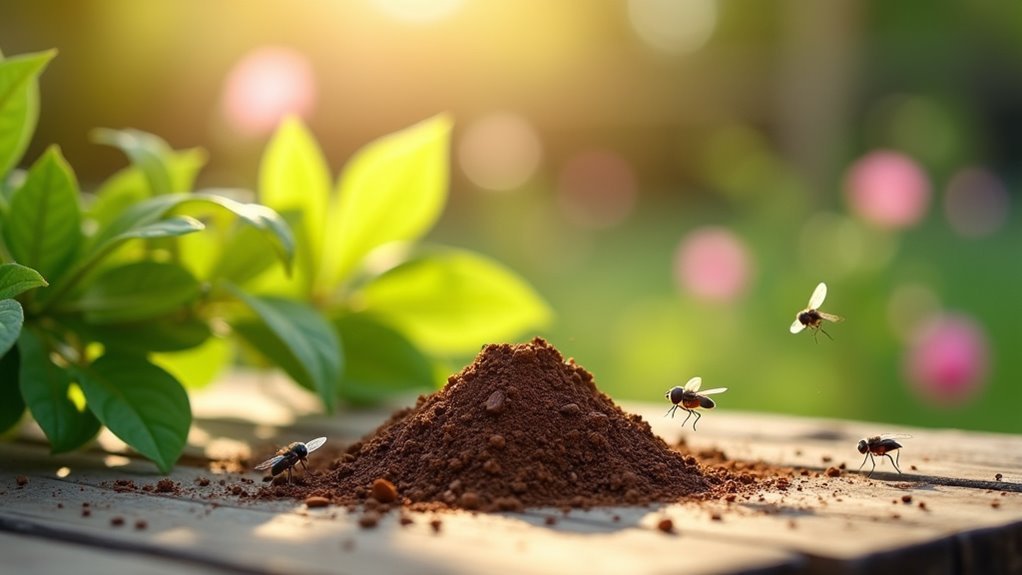
Understanding how coffee grounds perform against various fly types helps you set realistic expectations for your natural pest control efforts.
Coffee grounds work particularly well against fruit flies and common houseflies, which find the strong aroma off-putting. However, you’ll notice varying results depending on the specific species in your garden.
Some housefly varieties show minimal reaction to coffee grounds, making them less reliable for universal fly control. The grounds prove most effective when you’re dealing with fruit flies attracted to decomposing organic matter.
You’ll achieve better results by targeting areas where these sensitive species congregate rather than expecting complete elimination of all flies.
Remember that coffee grounds serve as one component in your integrated pest management strategy, not a standalone solution.
Burning Coffee Grounds for Enhanced Protection
When standard coffee ground applications aren’t providing adequate fly control, you can amplify their deterrent effect by burning them to create repelling smoke. This unconventional method works because the smoke signals danger to flies, making burning coffee grounds particularly effective for repelling flies in garden areas.
To implement this technique safely:
Pack used coffee grounds into a container with a wick, light carefully, monitor constantly, and never leave unattended.
- Pack used coffee grounds into a container with a wick
- Light the wick carefully and monitor constantly
- Experiment with different containers if the wick won’t stay lit
- Combine with citronella candles for better results
While anecdotal evidence supports this method’s effectiveness, results vary between different situations. You shouldn’t rely solely on burning coffee grounds for pest control.
Always supervise open flames and never leave them unattended to prevent fire hazards.
Maintaining Coffee Ground Barriers Throughout the Season
Once you’ve established coffee ground barriers around your garden, you’ll need to refresh them regularly to maintain their fly-repelling power. Coffee grounds lose potency when exposed to weather elements, requiring consistent maintenance throughout the growing season.
Apply fresh layers every 2-4 weeks for peak effectiveness. Mix coffee grounds with mulch or compost to enhance longevity and deterrent properties. Heavy rainfall washes away barriers, so replenish after storms to restore protection.
| Maintenance Task | Frequency | Weather Consideration |
|---|---|---|
| Refresh barriers | 2-4 weeks | After heavy rainfall |
| Mix with organics | Monthly | During dry periods |
| Monitor effectiveness | Weekly | All conditions |
| Adjust application | As needed | Based on fly activity |
Monitor treated areas for increased fly activity and adjust your application frequency accordingly for sustained protection.
Additional Garden Benefits Beyond Fly Control
While coffee grounds excel at repelling garden flies, they deliver multiple benefits that transform your garden’s health and productivity.
You’ll discover these grounds work as a thorough garden enhancement system that supports your plants beyond pest control.
Coffee grounds provide your garden plants with remarkable advantages:
- Soil enrichment – They add nitrogen, potassium, and phosphorus directly to your soil
- Enhanced composting – Mixed into compost piles, they accelerate decomposition and boost nutrient content
- Natural mulching – They retain soil moisture while deterring slugs and snails
- Earthworm attraction – These beneficial creatures improve soil aeration and structure
For acid-loving garden plants like blueberries and roses, coffee grounds create ideal growing conditions that promote vigorous growth and abundant flowering throughout the season.
Common Mistakes to Avoid When Using Coffee Grounds
Despite coffee grounds’ impressive benefits for fly control and garden health, several application mistakes can transform this valuable resource into a garden hazard.
| Mistake | Problem | Solution |
|---|---|---|
| Overusing grounds | Creates water/air barriers | Apply thin layers only |
| Skipping composting | Grounds are toxic to seedlings | Compost before garden use |
| Wrong plant pairing | Caffeine restricts sensitive plants | Research plant compatibility first |
You’ll want to avoid applying fresh grounds directly to your soil, as they can inhibit seed germination. Don’t concentrate applications in single areas—rotate locations to prevent nutrient buildup. Remember that coffee grounds keep certain plants healthy while harming others like tomatoes. Also consider pet safety, since caffeine toxicity affects dogs accessing treated garden areas.
Frequently Asked Questions
Will Used Coffee Grounds Keep Flies Away?
You’ll find used coffee grounds can help repel flies since their strong smell deters many insects. Fresh or burnt grounds work better, though effectiveness varies depending on fly species and environmental conditions.
Why Should Coffee Grounds Not Be Used in the Garden?
You shouldn’t use coffee grounds in gardens because they can inhibit seed germination, harm pets through caffeine toxicity, sterilize soil when overused, and stunt growth in sensitive plants like tomatoes.
How to Use Used Coffee Grounds as Insect Repellent?
You’ll sprinkle used coffee grounds directly around plants to create pest barriers. Mix them with compost for enhanced effectiveness, or burn grounds to produce deterrent smoke. Reapply regularly for continuous protection against ants and termites.
What Do Coffee Grounds Repel in the Garden?
Coffee grounds repel ants, slugs, snails, mosquitoes, and fruit flies in your garden. You’ll find they create an effective barrier around plants while the strong aroma and texture naturally deter these unwanted pests.
In Summary
You’ve now got a natural, cost-effective solution that’ll keep garden flies at bay while enriching your soil. Remember to refresh your coffee grounds regularly, especially after rain, and don’t overdo the application. By combining strategic placement with proper preparation techniques, you’ll create an environment that’s unwelcoming to flies but perfect for your plants. Start saving those used grounds today and watch your garden transform into a fly-free zone.


Leave a Reply