
You can effectively repel flies by creating penny bags with simple household materials. Fill a clear Ziploc bag halfway with water, drop in 4-6 shiny copper pennies, and seal tightly after removing excess air. The light reflecting off the pennies creates visual distortions that confuse flies and trigger their natural fear responses. Hang these bags near entry points, garbage areas, or outdoor dining spaces where flies congregate most. Discover additional placement strategies and alternative natural deterrents below.
What You Need to Make Copper Penny Bags

You’ll need just a few common household items to create these effective fly deterrents.
Start by gathering 4 to 6 shiny copper pennies, as their reflective surface is essential for the method’s success.
The reflective properties of copper pennies create the optical illusion that confuses and deters flying insects effectively.
Next, select a Ziploc bag of any size, but make certain it’s durable enough to hold water without leaking. Fill the bag halfway with water to create the necessary light refraction when you hang it up.
This bag filled with water becomes your primary fly repelling tool. Seal the bag tightly to prevent leaks and guarantee it remains functional in problem areas.
For extra security and easier hanging, you can optionally tie off the bag with a rubber band.
Step-by-Step Assembly Instructions
Three simple steps will get your copper penny fly deterrent assembled and ready to hang.
First, fill your Ziploc bag halfway with water, leaving enough room for the pennies and proper seal. The water level is essential for creating the light refraction that’ll keep flies away.
Second, drop 4 to 6 shiny pennies into the water-filled bag. Make sure they’re clean and reflective for maximum effectiveness.
Third, seal the bag tightly, pressing out excess air before closing. Check for potential leaks by gently squeezing the sealed bag. For extra security, wrap a rubber band around the seal.
Your deterrent’s now ready to hang near entry points, garbage cans, or anywhere flies congregate.
How the Light Refraction Method Works

Light bounces off the shiny pennies in your water-filled bag to create a natural fly deterrent that works through visual confusion. The refraction creates distorted reflections that disorient flies since their large, complex eyes are extremely sensitive to light variations.
These insects depend heavily on consistent light patterns for movement and landing decisions. When light hits the pennies and water, it produces fragmented reflections that mimic insect eyes, potentially triggering flies’ natural fear responses.
This visual disturbance forces them to seek alternative landing spots away from your area. Some people enhance this effect by adding aluminum foil strips to increase reflective surfaces.
Entomologists support this method’s effectiveness, noting that the constant light changes create enough visual confusion to considerably reduce fly presence around your space.
Best Placement Locations for Maximum Effectiveness
You’ll get the best results by strategically placing your penny-filled water bags at key locations where flies typically enter and gather.
Focus on hanging them near doors, windows, and other entry points to create an effective barrier that prevents flies from entering your home in the first place.
For outdoor spaces, position the bags around dining areas, picnic tables, and barbecue zones where food odors naturally attract these pests.
Entry Points Strategy
While the copper penny water bags work through light refraction principles, their effectiveness depends entirely on strategic placement around your property. You’ll want to focus on areas where flies typically enter your home or gather in large numbers.
| Entry Point | Placement Strategy | Why It Works | Tips |
|---|---|---|---|
| Doors & Windows | Hang bags directly above or beside openings | Creates light barrier at entry zones | Position 2-3 feet from opening |
| Garbage Areas | Suspend near bins and compost | Flies congregate around waste sources | Replace water weekly |
| Food Areas | Place around patios, picnic tables | Prevents contamination during meals | Guarantee direct sunlight exposure |
| Livestock Areas | Position in barns, stables | Reduces fly activity around animals | Multiple bags for larger spaces |
This targeted approach will prevent flies from establishing footholds in your space.
Outdoor Activity Areas
Beyond entry points, outdoor activity areas require specialized positioning to maximize the copper penny bags’ fly-deterrent effects.
You’ll want to place bags strategically around patios and picnic tables where you dine outdoors, creating a protective barrier that minimizes fly interference during meals and gatherings. Unlike chemical insect repellents, these bags offer a natural solution that won’t contaminate your food or outdoor space.
Focus on areas with minimal wind movement, as flies tend to congregate in still air pockets. Suspend bags near garbage cans and compost bins since these hotspots naturally attract flies.
For garden spaces, position the bags around your flower beds’ perimeter to protect blooming plants and vegetables from persistent fly activity while maintaining an enjoyable outdoor environment.
Field Test Results and Success Stories
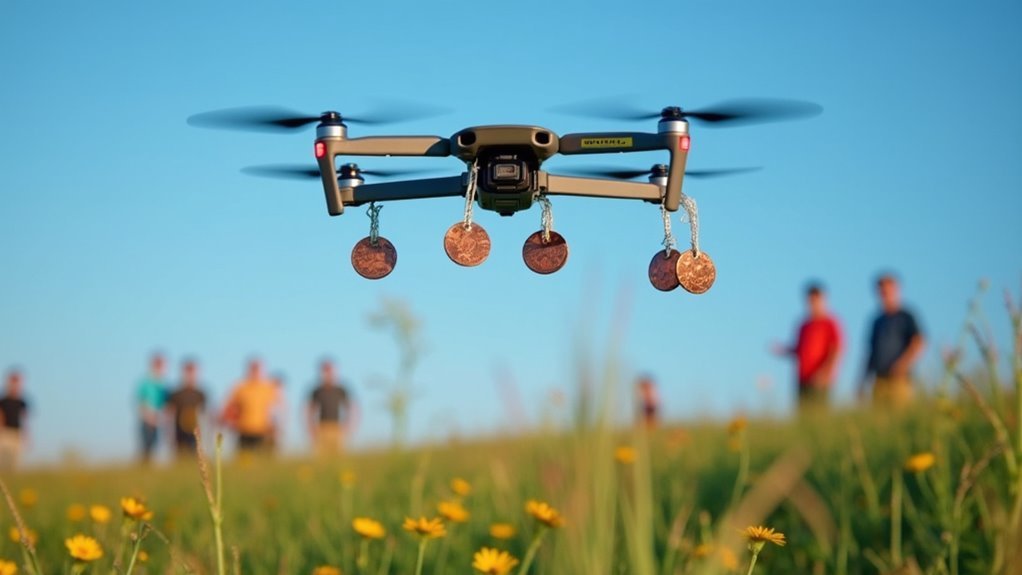
Countless success stories from real users demonstrate the penny bag method’s effectiveness across diverse environments.
You’ll find compelling evidence from various field tests that make sure this natural approach delivers real results:
- Barn Applications: Stepmom Maggi saw immediate fly reduction in her goat barn, while horse owners discovered a chemical-free alternative that outperformed traditional traps.
- Outdoor Events: Tennessee residents successfully protected summer gatherings from fly invasions using this simple technique.
- Commercial Use: Mexican restaurants effectively shield guests from fly disturbances with water-filled bags and shiny pennies.
- Peak Season Performance: Users report exceptional results during heavy fly activity periods.
- Cost-Effective Solution: You’ll spend pennies compared to expensive commercial pest control products while achieving superior natural protection.
Alternative Materials and Natural Fly Deterrents
You don’t have to limit yourself to pennies when creating reflective fly deterrent bags.
Aluminum foil works just as effectively as copper pennies and offers the added benefit of being easier to clean up after use.
You can also explore natural scent-based repellents like cinnamon, peppermint, and essential oils such as eucalyptus or citronella for chemical-free fly control.
Aluminum Foil Substitution
While pennies work well for this fly deterrent method, aluminum foil offers an equally effective alternative that’s often more convenient. The reflective properties create similar visual distractions that confuse flies, making them avoid the area.
Here’s how to use aluminum foil effectively:
- Crumple pieces of aluminum foil into your water-filled bag to enhance light refraction.
- Hang bags near fly-prone areas like garbage cans or food prep zones.
- Use indoors or outdoors just like the penny method.
- Enjoy easier cleanup since you won’t need to collect coins afterward.
- Combine with natural scents like cinnamon or peppermint for enhanced repellent effects.
This substitution requires less preparation while delivering the same results, making it perfect when you don’t have pennies readily available.
Natural Scent Repellents
Beyond visual deterrents, flies can’t stand certain natural scent repellents that make excellent repellents for your home and outdoor spaces.
Essential oils like eucalyptus, lavender, and citronella work exceptionally well when used in diffusers or mixed into spray bottles with water. You’ll find cinnamon and peppermint equally effective at creating an unwelcome environment for these pests.
Apple cider vinegar serves a dual purpose—you can use it in traps to attract flies while applying it in other areas as a deterrent.
Bay leaves scattered around your home emit strong scents that flies find repulsive.
For a simple DIY solution, mix water with dish soap in a spray bottle to create a safe, natural fly repellent perfect for indoor use.
Essential Oil Options
Essential oils pack a powerful punch against flies, with peppermint leading the charge at an impressive 90% repellent rate when you apply it in proper concentrations.
These natural essential oil options offer safer alternatives to chemical insecticides while protecting your family and pets.
You can maximize their effectiveness through various application methods:
- Mix oils with water in spray bottles for targeted application
- Use diffusers to create protective barriers in indoor spaces
- Combine with carrier oils for longer-lasting outdoor protection
- Add vinegar to enhance potency and duration
- Focus on peppermint, cinnamon, and eucalyptus for best results
Their strong scents disrupt flies’ sensory receptors, creating an eco-friendly deterrent that’s both effective and environmentally responsible.
Frequently Asked Questions
Does a Bag of Pennies Keep Flies Away?
You’ll find that hanging water-filled bags with shiny pennies can reduce fly numbers considerably. The light refraction and penny reflections confuse flies’ vision, making this Amish-derived technique surprisingly effective for deterring them.
Do Bags of Water Keep Flies Away in Mythbusters?
You’ll find MythBusters tested water bags for fly deterrence and declared it “busted.” They couldn’t replicate the claimed results, though they acknowledged some variables might affect real-world effectiveness differently.
What Does Hanging a Bag of Pennies Outside Your Door Do?
You’ll supposedly repel flies by hanging a water-filled bag with shiny pennies outside your door. The refracted light confuses flies’ vision, deterring them from approaching the area as a chemical-free pest control method.
Does Copper Get Rid of Flies?
Copper doesn’t directly repel flies through chemical properties. However, you’ll find copper pennies in water bags create light refraction that confuses flies’ compound eyes, potentially disrupting their navigation and flight patterns.
In Summary
You’ve learned how copper penny bags create light refraction that confuses flies’ compound eyes, making them avoid treated areas. Place your bags near doorways, patios, and outdoor dining spaces for best results. While success rates vary, many homeowners report significant fly reduction within days. If pennies don’t work for you, try hanging CDs, essential oil sachets, or planting basil and lavender. You’re now equipped with multiple natural, chemical-free methods to reclaim your outdoor spaces.


Leave a Reply