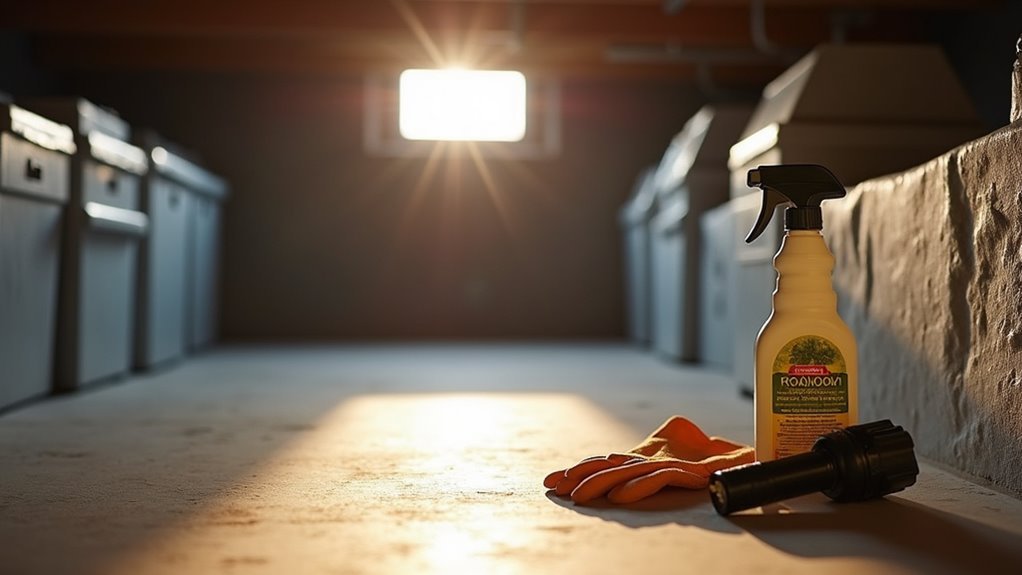
You can safely control crawl space pests with three essential strategies. First, seal entry points using copper mesh and caulk around foundation walls, pipes, and vents—remember that mice squeeze through nickel-sized holes. Second, control moisture by maintaining humidity below 60% with proper ventilation and dehumidifiers to eliminate pest-attracting conditions. Third, apply targeted treatments wearing protective equipment and following manufacturer instructions for crawl space-specific insecticides. These thorough approaches will transform your space into a pest-proof environment.
Seal Entry Points and Eliminate Access Routes
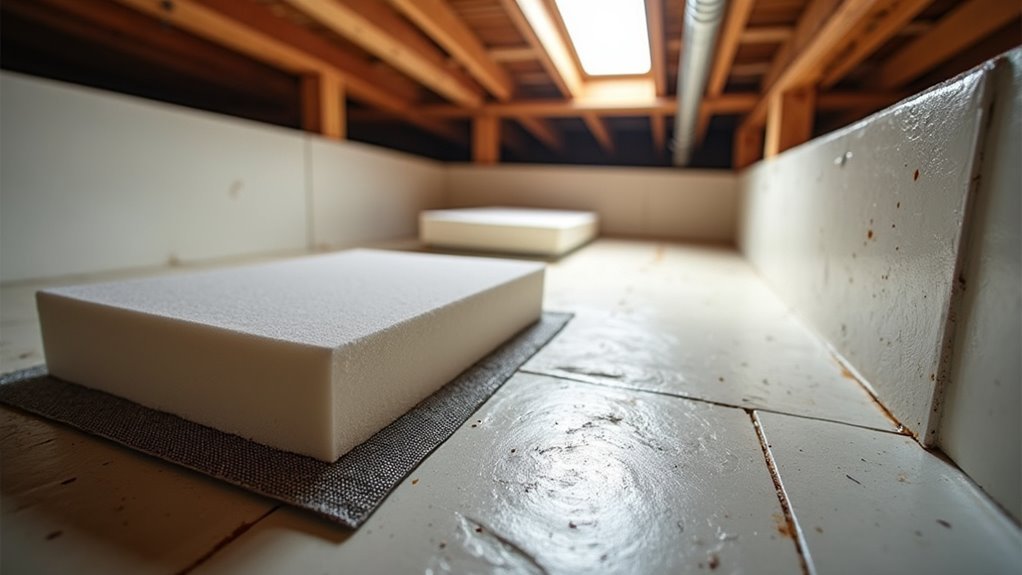
Since pests can squeeze through surprisingly small openings, you’ll need to conduct a thorough inspection of your home’s interior and exterior to identify potential entry points.
Even tiny gaps can become major pest highways into your home, making detailed inspection absolutely essential for effective prevention.
Mice can fit through holes the size of a nickel, while insects can enter through quarter-sized gaps and cracks. Use copper mesh and caulk to seal entry points effectively, preventing pest infestations before they start.
Focus on areas around your foundation wall, pipes, and air conditioning vents where pests commonly enter your crawl space. For larger openings, cover them with plywood until permanent repairs can be completed.
These control measures not only create a pest-free home but also address moisture issues and improve proper ventilation.
Regularly check for pest droppings and new openings, as ongoing maintenance prevents future access routes.
Control Moisture Levels With Proper Ventilation
While sealing entry points creates an important physical barrier, controlling moisture levels through proper ventilation addresses one of the root causes that attract pests to your crawl space in the first place.
Proper ventilation helps control moisture by maintaining humidity levels below 60%, creating an environment that’ll prevent pest infestations and protect against structural damage.
Here’s how to establish effective moisture control:
- Install ventilators or exhaust fans to enhance airflow and create a drier environment that deters termites and carpenter ants.
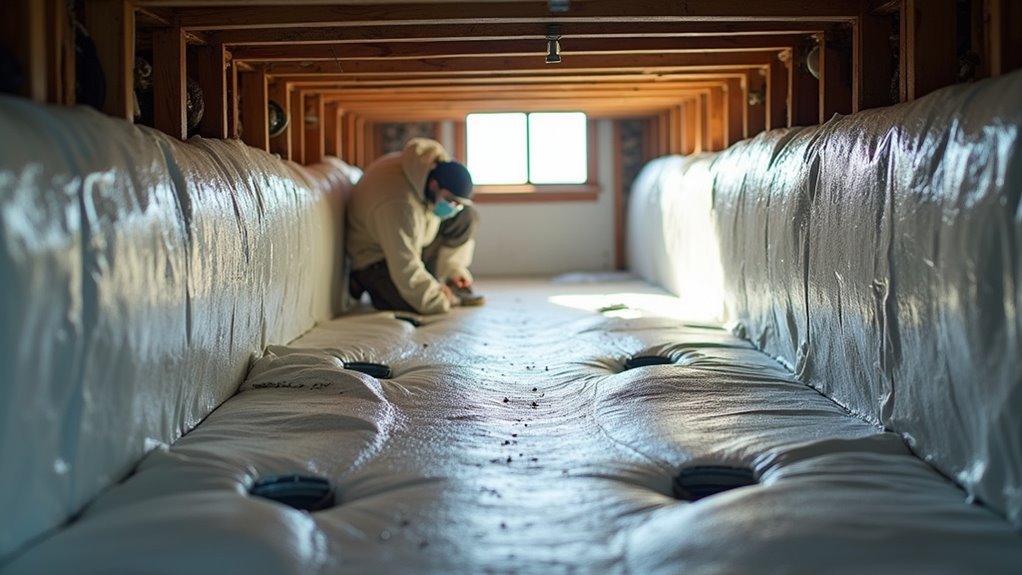
- Add a crawl space vapor barrier combined with ventilation for dual defense against moisture intrusion.
- Inspect and clean vents regularly to guarantee unobstructed air circulation.
- Use dehumidifiers alongside natural ventilation to regulate humidity and eliminate pest problems while promoting a healthy home.
Apply Targeted Treatment Methods Safely
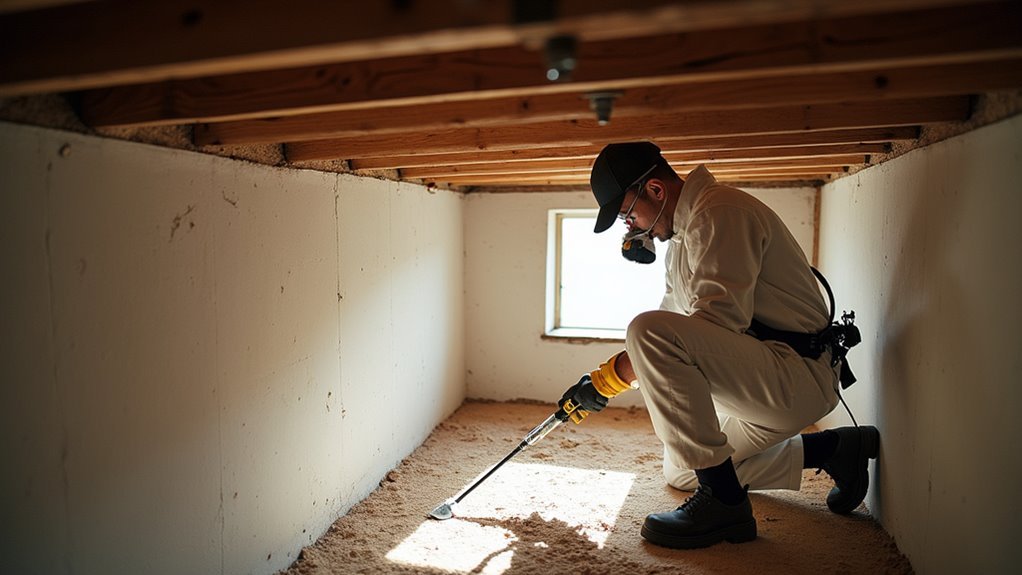
Once you’ve controlled moisture levels, applying targeted treatment methods safely becomes your next critical step in eliminating existing pest populations from your crawl space.
Choose specific treatments based on identified pests—traps for rodents, baits for ant infestations. Always wear personal protective equipment (PPE) including gloves, masks, and goggles when handling chemicals near electrical wiring and vapor barrier systems.
Use crawl space-specific insecticides designed for confined areas, applying them in cracks, crevices, and perimeter zones.
Follow manufacturer instructions precisely regarding application rates and safety precautions to protect yourself and the environment.
Monitor treated areas regularly for signs of moisture damage and continued pest activity.
This systematic approach guarantees your pest control efforts work safely and effectively while maintaining proper crawl space conditions.
Frequently Asked Questions
How Do I Keep Pests Out of My Crawl Space?
You’ll need to seal all gaps smaller than nickels, install vapor barriers for moisture control, maintain clean landscaping around your foundation, place traps strategically along walls, and schedule annual professional inspections.
How Do I Make My Crawl Space Rodent Proof?
You’ll need to seal all gaps around pipes and vents with copper mesh, install a tight-fitting door, remove debris regularly, and inspect for new cracks that rodents could exploit.
Should You Spray Your Crawl Space for Bugs?
You should spray your crawlspace for bugs during peak activity seasons using long-lasting insecticides like Supreme IT. Clean the area first, follow manufacturer instructions, and combine with sealing entry points for thorough control.
Should You Wear a Mask in a Crawl Space?
You should absolutely wear a mask in a crawl space. These areas contain harmful dust, mold spores, and contaminants that can cause respiratory issues. A properly fitted respirator protects you from dangerous airborne particles.
In Summary
You’ll protect your crawlspace from pests by focusing on these three essential strategies. Don’t forget to regularly inspect and seal any new cracks or gaps that develop over time. Keep monitoring moisture levels throughout the seasons, as humidity changes can create new pest problems. When you’re applying treatments, always prioritize safety and consider calling professionals for severe infestations. Consistent maintenance of these three areas will keep your crawlspace pest-free long-term.


Leave a Reply