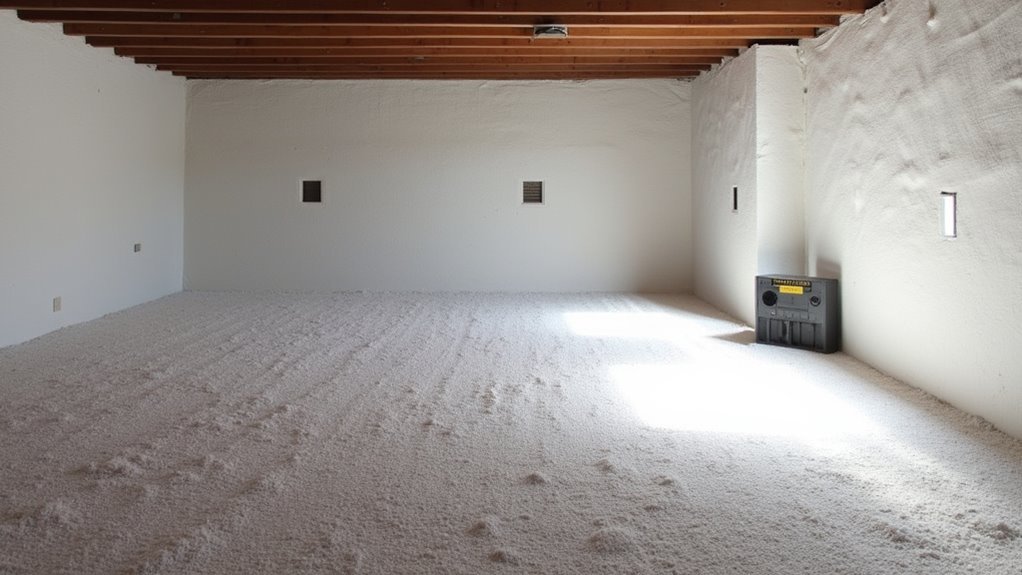
You can eliminate moisture-loving pests from your crawlspace by controlling humidity levels below 50% and implementing proper moisture barriers. Install crawlspace encapsulation with 20-mil plastic vapor barriers, improve ventilation, and seal foundation cracks that allow pest entry. Remove organic debris, fix plumbing leaks, and guarantee proper drainage around your foundation. Regular bi-annual inspections help identify early signs of termites, cockroaches, and rodents before they cause structural damage. Discover extensive strategies to protect your home permanently.
Why Moisture-Loving Pests Target Your Crawlspace
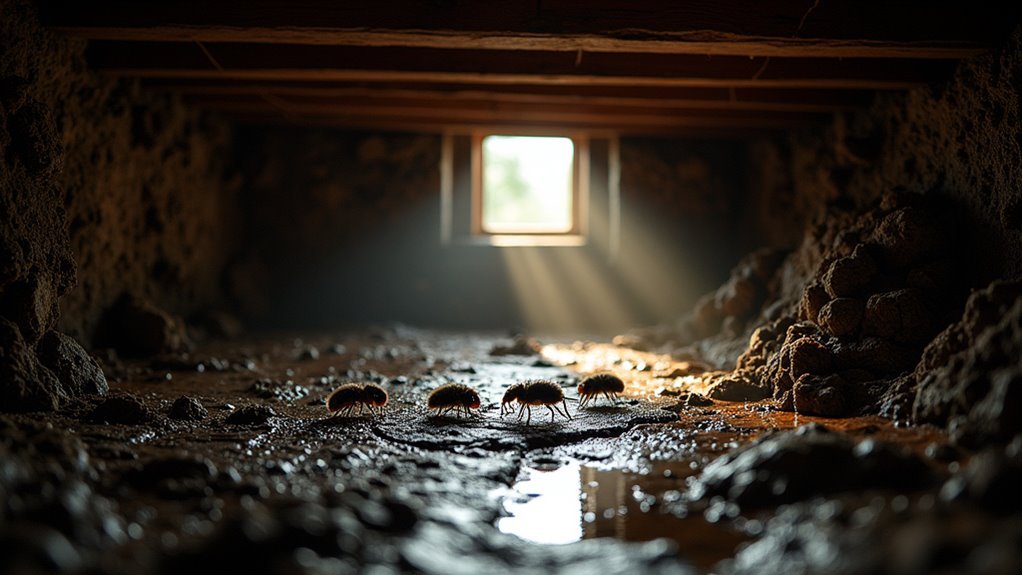
When you think about your crawlspace, you’re probably not considering how attractive it looks to moisture-loving pests—but you should be. Your crawl space creates the perfect storm for infestations when moisture accumulates from rainfall, plumbing leaks, or poor drainage.
Your crawlspace becomes a pest paradise when moisture from rain, leaks, or drainage problems creates ideal breeding conditions.
Termites, rodents, and cockroaches thrive in these damp, dark environments that offer ideal nesting and breeding conditions. High humidity levels promote mold growth and wood rot, providing both food sources and shelter for unwanted visitors.
Your foundation’s small cracks and gaps become convenient entry points for pests seeking moisture-rich environments. Open vents and wooden framing trap humidity, while organic debris combines with dampness to create an all-you-can-eat buffet.
This moisture makes your crawlspace irresistible to pests.
Common Crawlspace Pests That Thrive in Damp Conditions
Your damp crawlspace becomes a magnet for destructive pests that can compromise both your home’s structure and your family’s health.
Termites silently feast on wooden support beams while rodents establish colonies in the humid environment below your floors.
Meanwhile, various insects and arthropods multiply rapidly in these moisture-rich conditions, creating infestations that spread throughout your property.
Termites and Wood Damage
Silent destroyers work around the clock in damp crawl spaces, where termites find the perfect combination of moisture and wood to fuel their relentless appetite.
When moisture levels exceed 50%, you’re creating an ideal breeding ground for termite activity that can devastate your home’s foundation.
These pests consume up to a pound of wood daily during severe infestations, causing extensive structural damage that often goes undetected until it’s too late.
You’ll notice warning signs like mud tubes, discarded wings, and hollow-sounding wood indicating serious wood damage beneath the surface.
Implementing proper moisture control measures and conducting regular inspections are your best defenses.
Even minimal dampness attracts these destructive pests, so maintaining dry conditions keeps your crawl space pest-free.
Rodents Seeking Shelter
Mice and rats view your damp crawl space as prime real estate, drawn to the combination of moisture, warmth, and protection it offers for nesting. These rodents seeking shelter can squeeze through openings as small as a quarter inch, making thorough sealing essential for effective pest control.
| Entry Points | Attractants | Prevention |
|---|---|---|
| Quarter-inch gaps | Food debris | Seal cracks |
| Foundation cracks | Moisture buildup | Remove clutter |
| Damaged insulation | Warm temperatures | Install vapor barriers |
| Ventilation holes | Organic materials | Regular inspections |
| Utility openings | Mold growth | Moisture control |
Moisture issues create ideal conditions for mold growth, which attracts rodents while threatening your health. To keep your crawl space dry, install proper ventilation, remove organic debris, and maintain your insulation. Regular maintenance prevents infestations effectively.
Insects and Arthropods
While rodents grab attention with their gnawing and scurrying, countless smaller invaders quietly establish thriving colonies in your damp crawl space.
Termites silently devour wooden structures, causing costly damage while you remain unaware. Spiders hunt other insects in humid corners, while cockroaches reproduce rapidly in dark, moisture-rich conditions.
Carpenter ants pose a serious threat, boring through damp wood and weakening your home’s foundation. These pests create extensive tunnel systems that compromise structural integrity over time.
Millipedes and centipedes seek decaying organic matter in your crawl space’s moist environment. They’re drawn to the humidity these areas provide for survival and reproduction.
Effective moisture control remains your strongest defense against these destructive invaders.
Signs Your Crawlspace Has a Moisture Problem
You’ll notice musty odors wafting from your crawlspace when moisture creates the perfect breeding ground for mold and mildew.
Your floors may start sagging or feeling bouncy underfoot as excess humidity weakens floor joists and subflooring.
You’re also likely seeing higher energy bills since your HVAC system works overtime to compensate for the moisture-laden air affecting your home’s overall climate control.
Musty Odors Present
That unmistakable musty smell wafting from your crawlspace isn’t just unpleasant—it’s a red flag signaling excess moisture that’s creating the perfect breeding ground for unwanted pests.
These musty smells indicate humidity levels above 50%, attracting moisture-loving pests like rodents and insects to your home’s foundation.
When you detect these odors, you’re likely dealing with poor ventilation, standing water, or hidden plumbing leaks.
The moisture doesn’t just create a pest problem—it also causes wood rot and structural damage that’ll cost you thousands later.
Don’t ignore these warning signs. A dry crawl space is your best defense against infestations.
Schedule regular inspections to identify moisture sources early, ensuring you can address issues before they become expensive pest and structural problems.
Sagging Floor Issues
When your floors start sagging or feel uneven underfoot, you’re witnessing the destructive power of crawlspace moisture at work. Moisture accumulation weakens wooden beams and joists, causing them to warp and lose their structural integrity.
You’ll notice dips in your flooring, accompanied by creaking or popping sounds when you walk across affected areas. High humidity creates perfect conditions for mold growth on your home’s framework.
During inspection, you might discover damp insulation, visible mold, or condensation coating structural elements. These warning signs indicate your floor system’s compromising and potential health risks for your family.
Don’t wait for further structural damage to occur. Crawl space encapsulation and proper dehumidification can halt moisture-related deterioration, protecting your home’s foundation and preserving your flooring investment.
Higher Energy Bills
Beyond structural damage, moisture problems in your crawlspace directly attack your wallet through skyrocketing energy bills.
When water intrusion creates moisture buildup, your HVAC system struggles harder to maintain comfortable temperatures. Wet insulation loses effectiveness, forcing your heating and cooling systems to work overtime. This damp environment doesn’t just waste energy—it attracts pest activity that can damage ductwork and wiring, compounding your costs.
You’ll notice higher energy bills when musty odors or visible moisture appear in your crawlspace. Mold spores circulating through your home may require expensive air quality improvements.
The solution is clear: keep your crawl space dry to prevent these cascading problems. Addressing moisture issues now saves you from watching your energy costs spiral out of control.
How Excess Humidity Creates Perfect Pest Habitats
Why do pests seem to gravitate toward your crawl space with such persistence?
Excess humidity transforms your crawl space into a pest paradise. When moisture levels exceed 50%, you’re fundamentally rolling out the welcome mat for unwanted invaders.
Here’s how humidity creates ideal pest habitats:
- Termite highways – Damp wood becomes soft buffet tables where termites feast and multiply.
- Cockroach sanctuaries – Dark, humid corners provide perfect breeding grounds for roach colonies.
- Rodent hotels – Moist environments attract mice and rats seeking comfortable nesting sites.
- Mold restaurants – Fungal growth feeds countless pest species while providing shelter.
Your crawl spaces become pest magnets because humidity supplies everything they need: food, water, and shelter.
Without proper moisture control, you’re fighting an uphill battle against infestations that’ll keep returning to their preferred humid hideaway.
Crawlspace Encapsulation for Moisture Control
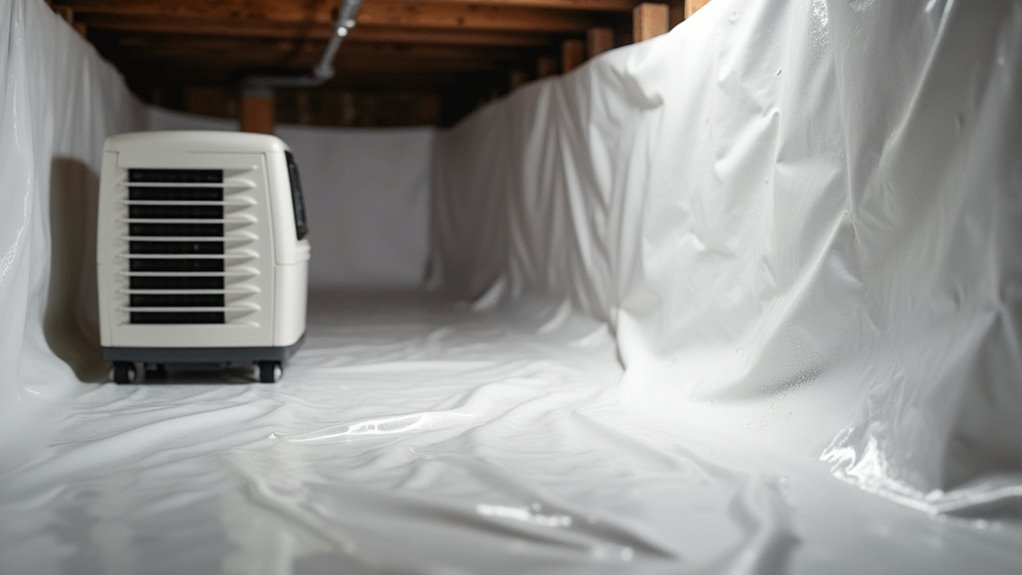
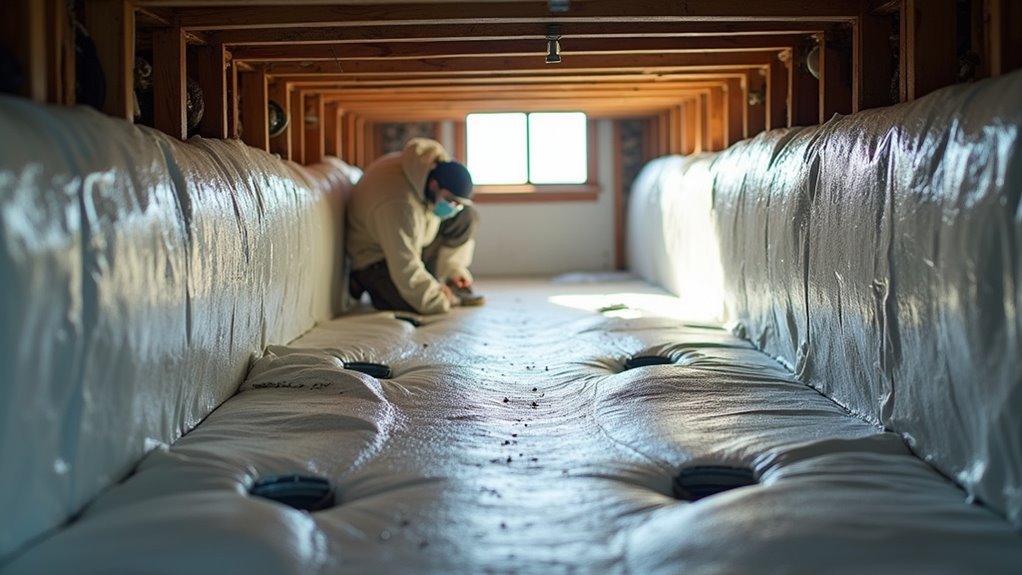
You’ll need to install a 20-mil plastic vapor barrier on your crawlspace floors and walls to create an effective moisture control system.
Properly sealing all seams in the barrier is essential for preventing moisture intrusion and blocking pest access points.
This encapsulation process transforms your damp crawlspace into a dry environment that’s inhospitable to moisture-loving pests.
Vapor Barrier Installation
Installing a vapor barrier serves as your most effective defense against moisture infiltration in crawlspaces. This encapsulation process requires 20-mil thick plastic sheeting that you’ll install across floors and walls to block soil moisture from entering your home.
Follow these critical installation steps:
- Secure the foundation perimeter – Wrap sheeting up foundation walls and seal edges with construction adhesive.
- Tape all seams – Use high-quality seam tape to create watertight connections between sheets.
- Seal around obstacles – Carefully cut and fit material around piers, posts, and utilities.
- Inspect for gaps – Check every corner and connection point for potential moisture entry points.
Proper vapor barrier installation eliminates the damp conditions that attract pests while protecting against wood rot and mold growth, greatly improving your home’s energy efficiency.
Sealing Entry Points
Three fundamental sealing strategies work together to create an impenetrable moisture barrier that stops both pests and humidity at their source.
First, you’ll need to identify and seal every crack, gap, and opening throughout your crawlspace. Remember that mice can squeeze through openings as small as a quarter inch, so thoroughness is critical.
During encapsulation, tape all seams in your vapor barrier properly to prevent gaps that compromise your moisture control system. Even tiny unsealed areas can become entry points for both pests and humid air.
Finally, you must conduct regular inspections to identify new vulnerabilities. Your sealing efforts aren’t one-time fixes – they require ongoing maintenance to guarantee your crawlspace remains completely dry and pest-free.
Installing Vapor Barriers to Block Ground Moisture
Since ground moisture is the primary culprit behind crawlspace humidity problems, a 20-mil thick plastic vapor barrier becomes your most effective defense against moisture intrusion.
This encapsulation method will reduce humidity levels and prevent pest infestations from taking hold in your crawl space.
Proper vapor barrier installation requires these critical steps:
- Secure seam taping – Use specialized tape to seal all joints completely
- Wall anchoring – Attach barriers six inches up foundation walls
- Floor coverage – Guarantee complete ground surface protection
- Overlap sealing – Create watertight connections between barrier sections
Combined with a dehumidifier, your vapor barrier maintains humidity below 50%, creating an environment where moisture-loving pests can’t survive.
This thorough approach eliminates breeding grounds while protecting against mold growth and wood rot damage.
Dehumidifier Selection and Placement Strategies
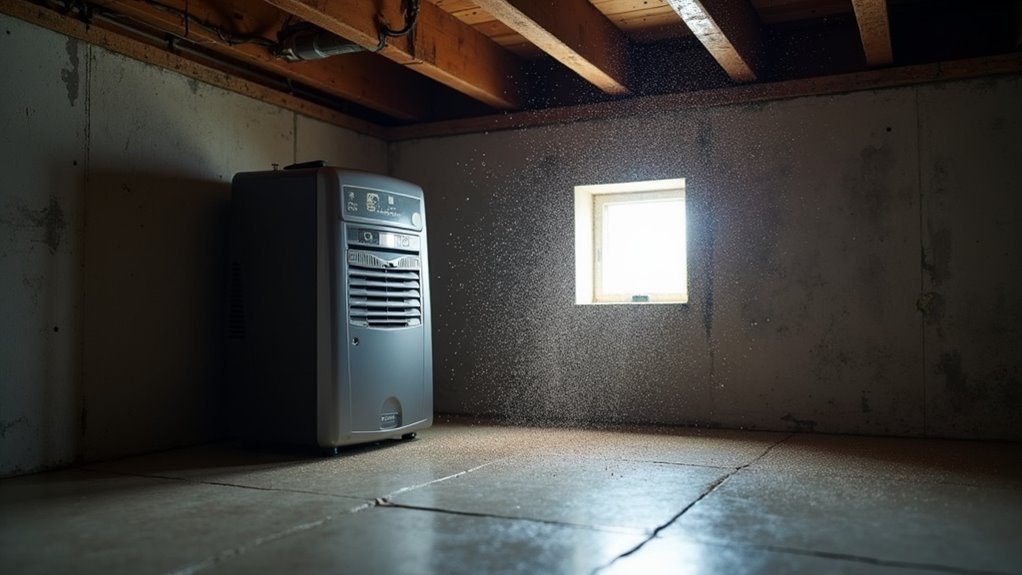
While vapor barriers block moisture from entering your crawl space, a properly selected and positioned dehumidifier removes any humidity that manages to penetrate your defenses.
You’ll need a professional-grade model with at least 30 pints per day capacity to effectively control moisture and prevent pests. Position it centrally for maximum airflow, keeping it 6 inches above ground to avoid water damage.
Choose a unit with a built-in hygrometer that automatically maintains humidity below 50% – this level deters moisture-loving pests.
Opt for continuous drainage to eliminate manual water removal and guarantee uninterrupted operation.
Regular maintenance is essential for peak performance: inspect and clean the filter and drainage system monthly to keep your dehumidifier working efficiently against humidity and pest problems.
Sealing Entry Points and Foundation Cracks
Even the most effective dehumidifier can’t protect your crawl space if pests are entering through unsealed cracks and gaps in your foundation.
These tiny openings invite both moisture and unwanted visitors into your home.
Focus on sealing these critical entry points:
- Foundation cracks – Use expanding foam, concrete patch, or specialized sealants to close gaps that allow moisture infiltration.
- Quarter-inch openings – Inspect thoroughly since mice squeeze through surprisingly small spaces in your foundation.
- Vent screens – Verify mesh remains intact to prevent pest infiltration while maintaining proper airflow.
- Access doors – Install weather stripping for tight closure, blocking both pests and humidity.
Don’t forget your insulation during inspections.
Replace damaged materials with pest-resistant alternatives that’ll deter infestations while maintaining your crawl space’s dry environment.
Proper Drainage Solutions Around Your Foundation
Water pooling around your foundation creates the perfect breeding ground for moisture-loving pests that’ll eventually find their way into your crawl space.
Implementing proper drainage solutions starts with regrading the land around your foundation to direct surface water away and prevent pooling near your home’s base.
You’ll also need to extend your downspouts and gutters at least 6-10 feet from your house to effectively divert rainwater.
Don’t overlook sealing foundation cracks with hydraulic cement or waterproof sealant to block groundwater infiltration.
For areas prone to standing water, installing a sump pump efficiently removes excess moisture around your foundation.
These drainage strategies protect against water damage while considerably reducing pest infestations by eliminating the damp conditions moisture accumulation creates.
Ventilation Techniques for Moisture Management
Managing external water sources represents just one piece of the moisture control puzzle. Proper crawl space ventilation forms the backbone of effective moisture management and pest prevention.
Effective crawl space ventilation serves as the foundation for controlling moisture levels and preventing costly pest infestations in your home.
You’ll need strategic air circulation to maintain humidity levels below 50%, creating an environment that moisture-loving pests can’t tolerate.
Implement these proven ventilation techniques:
- Install foundation vents with cross-ventilation patterns to establish continuous airflow throughout your crawl space.
- Add exhaust fans in problem areas where natural ventilation can’t adequately reduce moisture buildup.
- Position dehumidifiers strategically to work alongside existing ventilation systems for maximum humidity control.
- Seal unnecessary openings while maintaining planned ventilation routes to prevent moisture-laden air infiltration.
Regular maintenance of these systems guarantees long-term effectiveness in deterring pest infestations.
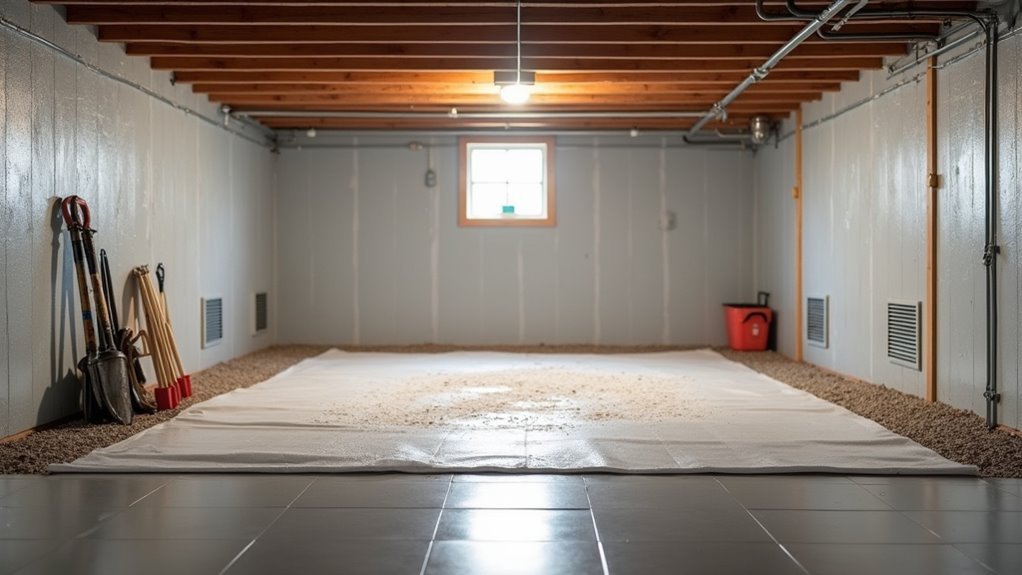
Regular Cleaning and Debris Removal Methods
While ventilation controls humidity levels, maintaining a debris-free crawl space eliminates the hiding spots and food sources that attract moisture-loving pests in the first place.
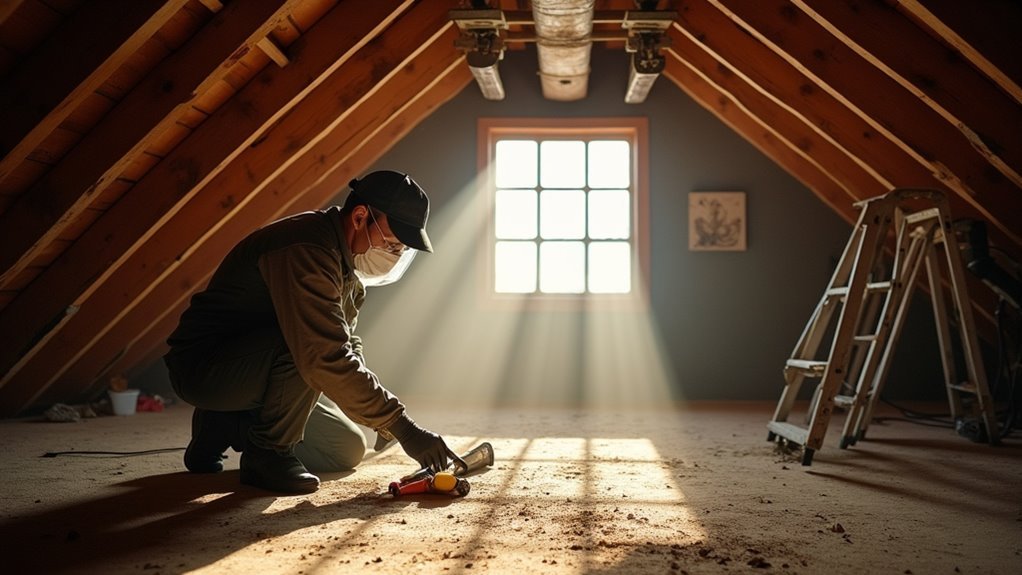
Regular cleaning should occur twice yearly, targeting accumulated leaves, dust, and deteriorating insulation that create pest habitats. You’ll need to remove any discarded items or garbage that serve as food sources for unwanted invaders.
Use specialized vacuum systems designed for crawl spaces to efficiently handle debris removal without spreading allergens throughout your home.
During cleaning sessions, conduct thorough inspections to spot early signs of pest activity or moisture problems. This proactive approach allows you to address issues before they escalate, keeping your crawl space dry and pest-free year-round.
Long-Term Monitoring and Maintenance Practices
Effective pest prevention extends far beyond initial cleaning efforts and requires a systematic approach to ongoing surveillance.
To keep your crawl space dry and pest-free, you’ll need consistent monitoring and proactive maintenance.
Establish these essential practices to prevent moisture build-up:
- Schedule bi-annual inspections of your crawl space to spot early signs of pest activity, mold growth, or structural issues.
- Monitor humidity levels monthly with a hygrometer, maintaining levels below 50% to discourage moisture-loving pests.
- Clean gutters and drainage systems quarterly to prevent water pooling around your foundation.
- Arrange professional evaluations annually for expert pest prevention strategies and hidden problem detection.
This systematic approach removes moisture from the air while addressing potential entry points before they become major infestations.
Frequently Asked Questions
How Do You Dry Out a Crawl Space Fast?
You’ll dry out your crawl space fast by removing standing water with pumps, installing a 20-mil vapor barrier, running professional dehumidifiers, using air movers for ventilation, and fixing moisture sources.
How Do I Keep Pests Out of My Crawl Space?
You’ll keep pests out by installing a 20-mil vapor barrier, sealing all gaps and cracks, maintaining humidity below 50% with a dehumidifier, removing debris regularly, and scheduling professional inspections twice yearly.
What Absorbs Moisture in a Crawl Space?
Wood, insulation, cardboard, and other organic materials in your crawl space absorb moisture from humid air and soil evaporation. Damaged insulation acts like a sponge, while accumulated debris retains water, creating perfect conditions for pests.
What Happens if a Crawl Space Is Too Dry?
If your crawl space gets too dry, you’ll face cracking wooden beams, brittle insulation, poor air quality from dust buildup, static electricity issues, and disrupted ecosystems that normally help control pests.
In Summary
You’ve got the tools to transform your crawlspace from a pest paradise into a dry, inhospitable environment. Don’t wait for moisture problems to worsen—start with proper encapsulation and drainage solutions today. Regular monitoring and maintenance will keep humidity levels low and pests at bay. Take control of your crawlspace’s moisture, and you’ll effectively eliminate the root cause that attracts unwanted visitors to your home’s foundation.

Leave a Reply