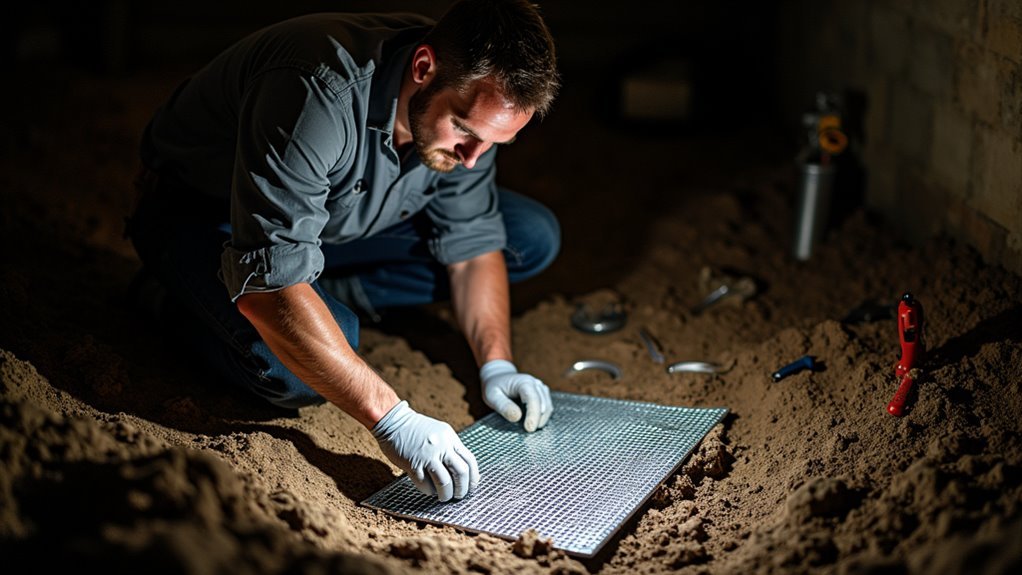
You’ll need to seal all gaps larger than 1/4 inch using steel wool and caulk, then install galvanized steel mesh screens over foundation vents with holes no bigger than 1/4 inch. Focus on foundation walls, utility openings, and structural cracks where rodents commonly enter. Install a puncture-resistant vapor barrier extending 6 inches up foundation walls to control moisture that attracts pests. This thorough approach creates effective barriers when combined with regular maintenance inspections.
Identifying Common Rodent Entry Points in Your Crawlspace
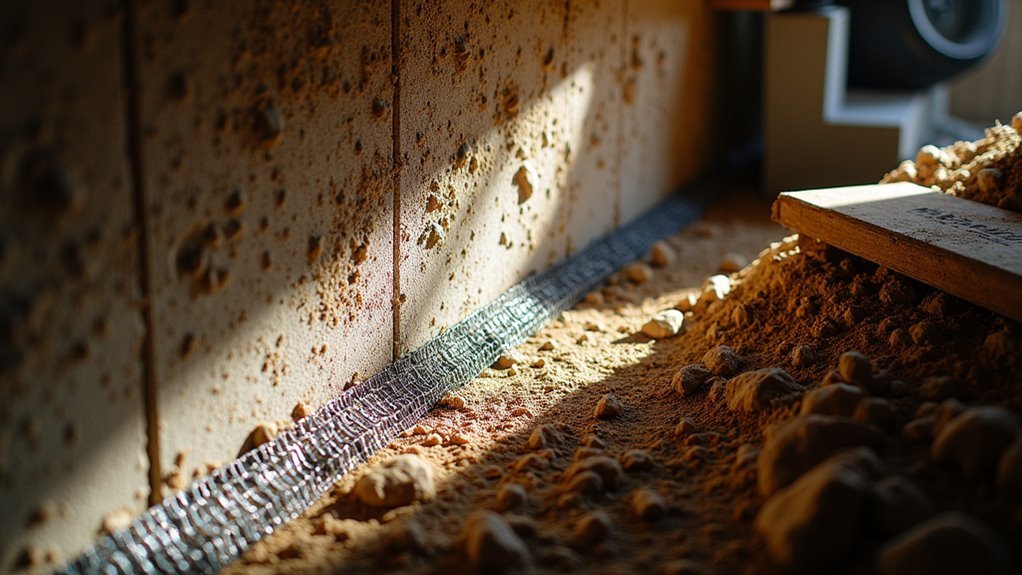
Rodents need surprisingly little space to invade your crawlspace—gaps as small as a quarter inch can serve as gateways for mice and other pests.
You’ll find the most common entry points around foundation walls, utility line openings, and structural cracks. Don’t overlook vents and crawl space doors that aren’t properly sealed, as these create easy access for unwanted visitors.
Pay special attention to areas where ground meets your foundation, particularly if settling has created gaps.
Overgrown vegetation near your crawlspace provides both concealment and access routes for rodents, making these spots prime targets for a rodent problem.
Conduct thorough inspections twice yearly to identify these entry points before they become major issues requiring extensive repairs.
Essential Materials and Tools for Barrier Installation
You’ll need specific materials and tools to create effective rodent barriers in your crawlspace.
The right steel mesh materials form the foundation of your barrier system, while proper installation tools guarantee secure and long-lasting protection.
Let’s examine what you’ll need to gather before starting your barrier installation project.
Steel Mesh Materials
Steel mesh stands as one of the most reliable materials for creating effective rodent barriers in crawlspaces. You’ll want galvanized steel mesh that’s specifically designed to withstand harsh conditions while preventing crawl space pests from infiltrating your home. The galvanized coating provides excellent rust resistance, guaranteeing your rodent barriers maintain their integrity over time.
| Feature | Specification |
|---|---|
| Material | Galvanized Steel |
| Hole Size | Maximum 1/4 inch |
| Rust Resistance | High (galvanized coating) |
| Durability | Long-lasting |
| Effectiveness | Blocks mice and larger rodents |
When selecting steel mesh, make sure the hole size doesn’t exceed 1/4 inch – this prevents even small mice from squeezing through. You’ll need wire cutters, a staple gun, and heavy-duty gloves for installation. Proper securing to your foundation and sealing gaps maintains effectiveness.
Installation Tool Requirements
Installing effective rodent barriers requires more than just selecting the right steel mesh—you need the proper tools and materials to complete the job correctly.
When installing a crawl space barrier, start with a staple gun to secure mesh firmly to wooden surfaces. You’ll need a utility knife for cutting materials to exact dimensions and a drill for attaching barriers to foundation walls.
Measuring tape guarantees accurate sizing for a snug fit that prevents rodents from entering through gaps. Don’t forget safety gear including gloves and masks to protect against sharp edges and crawl space allergens.
Finally, keep a caulking gun with rodent-proof caulk handy to seal small openings around your newly installed barriers.
Sealing Foundation Cracks and Gaps With Steel Wool and Caulk
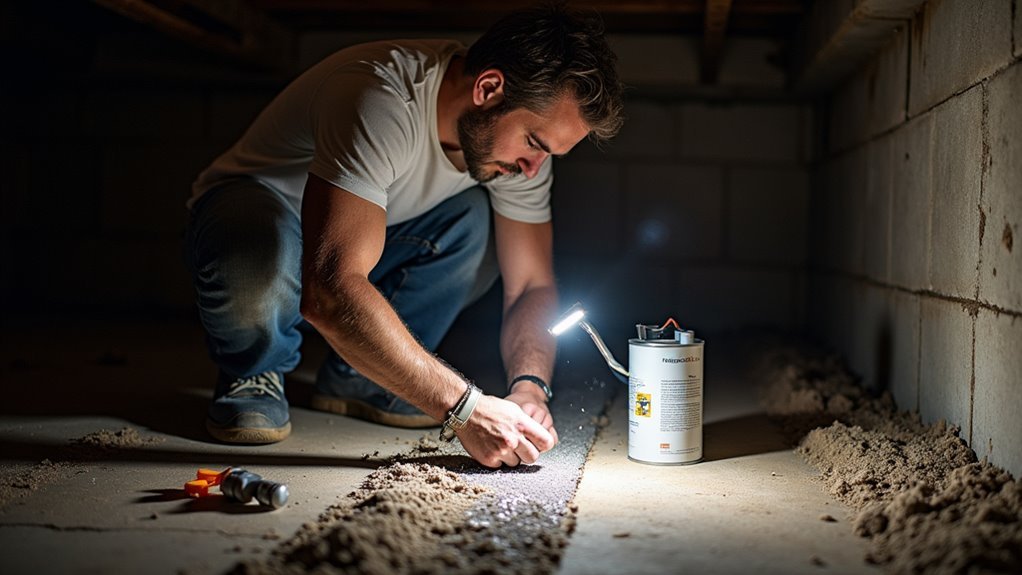
One of the most effective strategies for preventing rodent infiltration involves combining steel wool with caulk to seal foundation cracks and gaps.
You’ll need to target openings as small as a quarter-inch, since rodents can squeeze through surprisingly tight spaces. Start by stuffing steel wool into each crack—it’s durable and gnaw-resistant, making it an excellent deterrent.
Next, apply caulk around the steel wool’s edges to create a waterproof seal.
This dual approach serves multiple purposes beyond pest control. You’ll achieve superior moisture control by preventing water infiltration that could attract rodents.
Additionally, you’ll boost your home’s energy efficiency by eliminating air leaks that increase heating and cooling costs.
Remember to inspect these seals regularly, as deterioration over time can recreate entry points.
Installing Mesh Screens Over Vents and Openings
While sealing cracks forms your first line of defense, you’ll also need to protect larger openings like foundation vents and access ports that must remain functional.
Install galvanized steel mesh with 1/4-inch holes over these areas to block rodents while maintaining proper airflow for moisture control and your crawl space vapor barrier system.
Protect crawl space openings with 1/4-inch galvanized steel mesh to block rodents while preserving essential airflow and moisture control.
Secure the mesh tightly to prevent rodents from gnawing through or lifting screens away. Use screws or heavy-duty staples along all edges, ensuring no gaps remain. Inspect screens monthly for damage, as even tiny openings invite infestations.
Combine mesh installation with steel wool and caulk around the perimeter for maximum protection. This layered approach prevents moisture buildup while creating an impenetrable barrier against unwanted pests entering your crawl space.
Creating Physical Barriers With Plywood and Hard Plastic

When mesh screens aren’t sufficient for larger gaps or irregularly shaped openings, plywood and hard plastic barriers provide robust alternatives that rodents can’t easily breach.
These materials offer superior durability for crawl spaces requiring thorough pest protection.
Cut plywood or hard plastic to fit specific gaps and holes where rodents enter. Hard plastic resists gnawing and moisture better than wood, making it ideal for long-term solutions.
Make sure your barriers extend at least 12 inches above ground level to prevent tunneling underneath.
Seal all edges and joints with caulk or screws to eliminate gaps rodents could exploit. Don’t leave any potential entry points exposed.
Regular maintenance is vital since ground shifts and structural settling can create new openings over time, compromising your pest control efforts.
Proper Vapor Barrier Installation to Deter Nesting
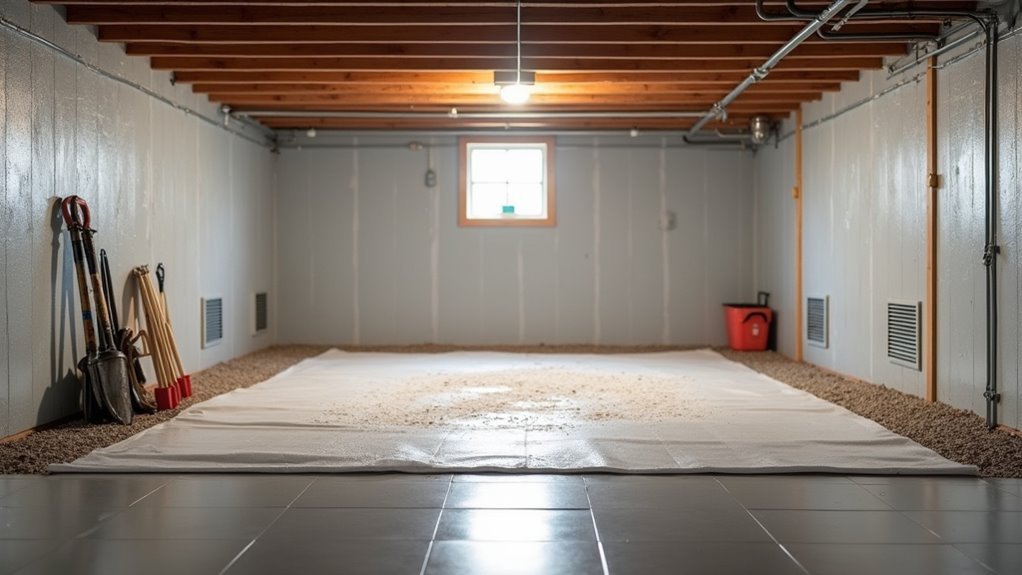
You’ll create an effective rodent deterrent by properly installing vapor barriers that eliminate moisture buildup in your crawlspace.
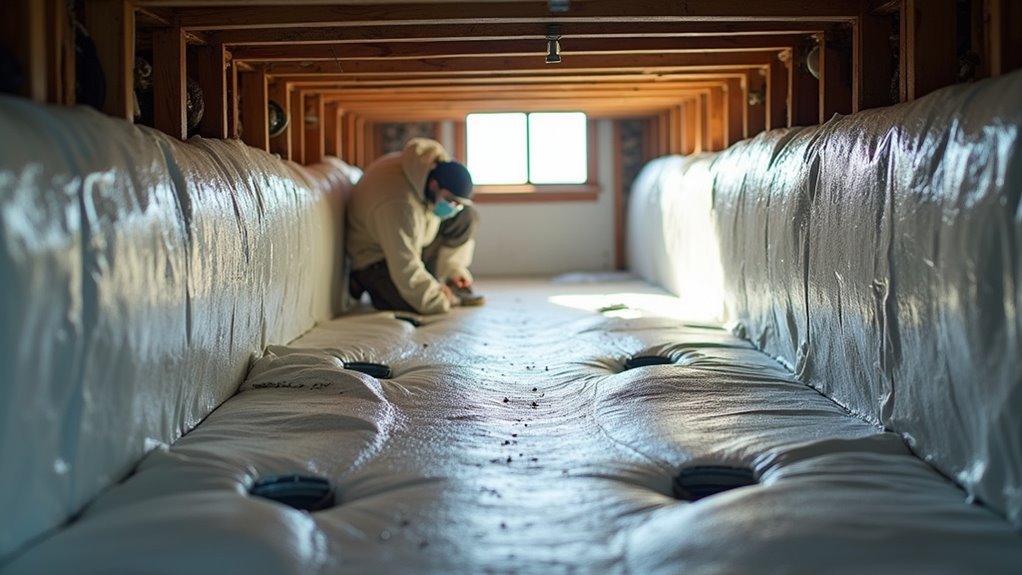
Start by sealing the foundation wall perimeter with a vapor barrier that extends at least 6 inches up the walls and attaches securely to prevent any gaps rodents could exploit.
This moisture control strategy removes the damp conditions that attract rodents for nesting while creating a physical barrier they can’t penetrate.
Sealing Foundation Wall Perimeter
Since moisture creates an attractive environment for rodents seeking shelter and nesting materials, installing a vapor barrier along your foundation wall perimeter serves as both a moisture control system and an effective pest deterrent.
You’ll need to extend your vapor barrier up the foundation wall and seal it securely to regulate moisture levels effectively. This creates a continuous barrier that eliminates rodent access points.
| Space Type | Extension Height | Purpose |
|---|---|---|
| Encapsulated | 4-6 inches below sill plate | Complete moisture seal |
| Non-encapsulated | 6-12 inches above grade | Ground moisture barrier |
| Both types | Full perimeter coverage | Rodent access prevention |
Use heavy-duty, puncture-resistant materials for maximum durability against pest damage. Regular inspections verify your vapor barrier remains intact and continues deterring rodent nesting while preventing moisture intrusion.
Moisture Control Through Barriers
Proper vapor barrier installation requires specific techniques and materials to maximize its dual function as moisture control and rodent deterrent.
You’ll need polyethylene material with minimum 6-mil thickness to effectively block moisture and prevent nesting. Extend the barrier 6-12 inches up foundation walls and seal it securely to eliminate moisture accumulation that attracts rodents.
Install the barrier without punctures or tears, as even small openings compromise effectiveness.
Space encapsulation creates the most controlled environment by installing continuous barriers along walls and floors, dramatically reducing rodent opportunities.
Conduct regular inspections to identify damage or displacement, particularly after extreme weather events.
This proactive approach guarantees your moisture control system maintains its integrity and continues deterring pests from establishing nests in your crawlspace.
Maintenance and Inspection Schedule for Long-Term Protection
Creating an effective maintenance and inspection schedule forms the backbone of long-term rodent protection in your crawl space. Regular monitoring guarantees your barriers remain intact and functional against unwanted intruders.
Consistent maintenance and monitoring create the foundation for keeping your crawl space permanently protected from rodent invasions.
Your detailed maintenance routine should include:
- Bi-annual crawl space inspections – Check for new openings and rodent activity signs, especially after severe weather events.
- Barrier integrity checks – Examine steel wool and caulk seals to confirm they haven’t deteriorated or been compromised.
- Ventilation system monitoring – Verify proper airflow and moisture control to prevent conditions that attract rodents.
- Annual professional pest assessments – Schedule expert evaluations to assess barrier effectiveness and recommend improvements.
Keep your crawl space clutter-free between inspections, as debris creates hiding spots and complicates thorough examinations.
Frequently Asked Questions
How Do I Make My Crawl Space Rodent Proof?
You’ll need to seal all entry points with steel wool or caulk, install a vapor barrier, regularly inspect for droppings, keep the area clean, and consider professional encapsulation services.
Do Vapor Barriers Work in Crawl Space?
Yes, vapor barriers work effectively in crawl spaces by preventing moisture accumulation that attracts rodents. You’ll need to properly seal them to foundations and walls, ensuring complete ground coverage without punctures for maximum effectiveness.
Will Mice Chew Through the Vapor Barrier?
Mice can chew through thin vapor barriers with their strong incisors. You’ll need a thick, high-quality polyethylene barrier that’s properly sealed to your foundation to effectively deter them from entering.
What Is the Best Rat Repellent for Crawl Space?
You’ll find peppermint oil and ultrasonic devices work best as natural options. Chemical repellents with ammonia or predator urine create unpleasant environments. You’ll need regular reapplication and clean spaces for maximum effectiveness.
In Summary
You’ve now equipped your crawlspace with thorough rodent barriers that’ll protect your home for years. Remember, you can’t set it and forget it—regular inspections every three months will catch problems early. Check your mesh screens, steel wool seals, and vapor barriers for damage or displacement. Don’t skip maintenance; it’s what separates effective rodent control from wasted effort. Your diligence guarantees these barriers continue working when you need them most.


Leave a Reply