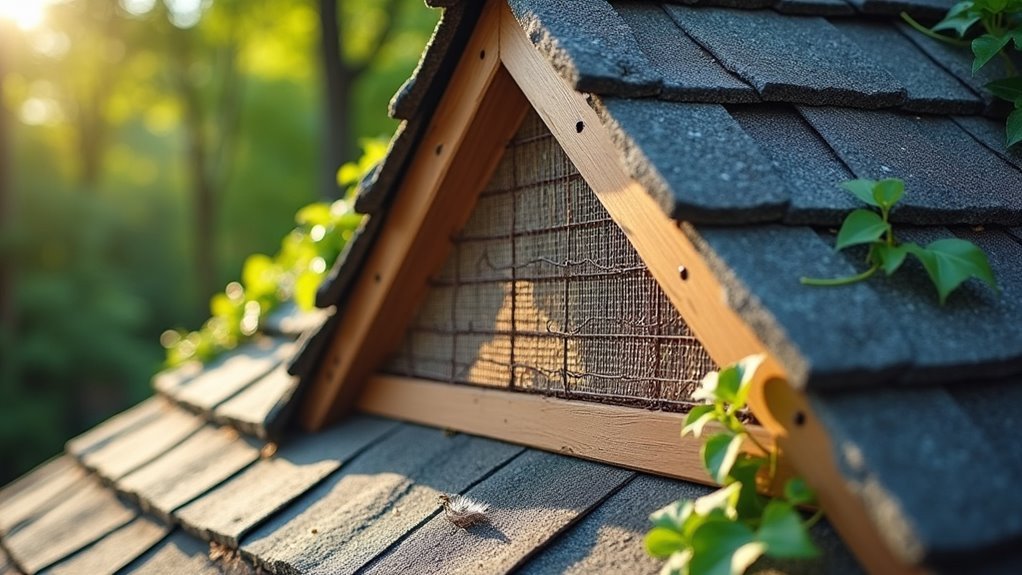
You’ll keep wildlife out of your attic by sealing entry points with hardware cloth, expandable foam, and metal flashing around roof vents, eaves, and dormers. Install one-way exclusion doors at main access points to let trapped animals exit safely without returning. Use natural deterrents like peppermint oil or ammonia-soaked rags in potential nesting areas. Schedule inspections twice yearly to check for damage and reinforce barriers before peak activity seasons. Discover the complete step-by-step exclusion strategy below.
Identifying Common Entry Points Animals Use to Access Your Attic
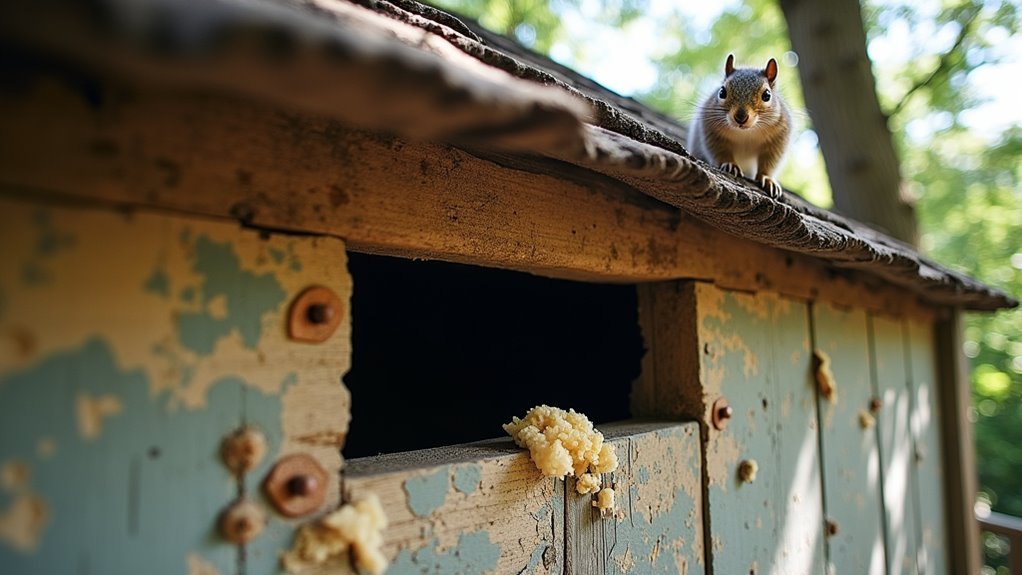
A single unnoticed gap can transform your peaceful attic into a bustling wildlife highway.
You’ll find the most common entry points around dormers, gable vents, and ridge vents, especially when they’re poorly sealed.
Don’t underestimate rodents—they’ll squeeze through holes as small as a quarter and gnaw through aluminum soffit or vinyl siding.
Static roof vents and cheaply constructed ventilation systems create particularly vulnerable access points for shelter-seeking animals.
You should inspect damaged roofing and siding regularly, as these create larger openings over time.
Seasonal changes drive this problem, with animals aggressively seeking attic shelter during colder months.
That’s why you need proactive inspections before winter hits, focusing on these critical entry points to prevent wildlife invasions.
Essential Materials and Tools for DIY Wildlife Exclusion
You’ll need the right materials and tools to effectively exclude wildlife from your attic and prevent future intrusions.
Quality hardware and sealing materials form the backbone of any successful exclusion project, while specialized traps and detection tools help you identify and safely remove existing animals.
Let’s examine the specific items you should have in your wildlife exclusion toolkit.
Hardware and Sealing Materials
Effective wildlife exclusion starts with selecting the right materials and tools for the job.
Hardware cloth stands out as your first line of defense, offering durable, rust-resistant protection that covers vents and entry points while maintaining proper ventilation.
You’ll want expandable foam sealant for filling small gaps around foundations, doors, and windows—it blocks wildlife while adding insulation benefits.
Metal flashing proves invaluable for roofing and siding gaps, as its robust construction prevents animals from gnawing through to reach your attic.
Don’t overlook caulk for sealing joints around windows, doors, and siding; it creates watertight barriers that stop both wildlife and moisture damage.
Finally, one-way exclusion doors let trapped animals exit while preventing their return, ensuring permanent exclusion.
Traps and Detection Tools
While sealing entry points forms the foundation of wildlife exclusion, traps and detection tools become critical when animals have already breached your defenses.
These tools help you locate intruders and safely remove them from your attic space.
Essential traps and detection equipment include:
- Live traps – Havahart traps offer humane capture solutions, allowing you to relocate animals safely away from your home without causing harm.
- Motion-activated cameras – These monitoring devices detect wildlife presence in and around your attic, enabling targeted exclusion efforts based on actual animal behavior patterns.
- Noise and light deterrents – Radios playing loud music and high-wattage bulbs create uncomfortable environments for nocturnal animals, encouraging them to vacate naturally.
You’ll achieve better results by combining multiple detection methods with appropriate trapping techniques for your specific wildlife situation.
Sealing Gaps and Holes Around Roof Vents and Eaves
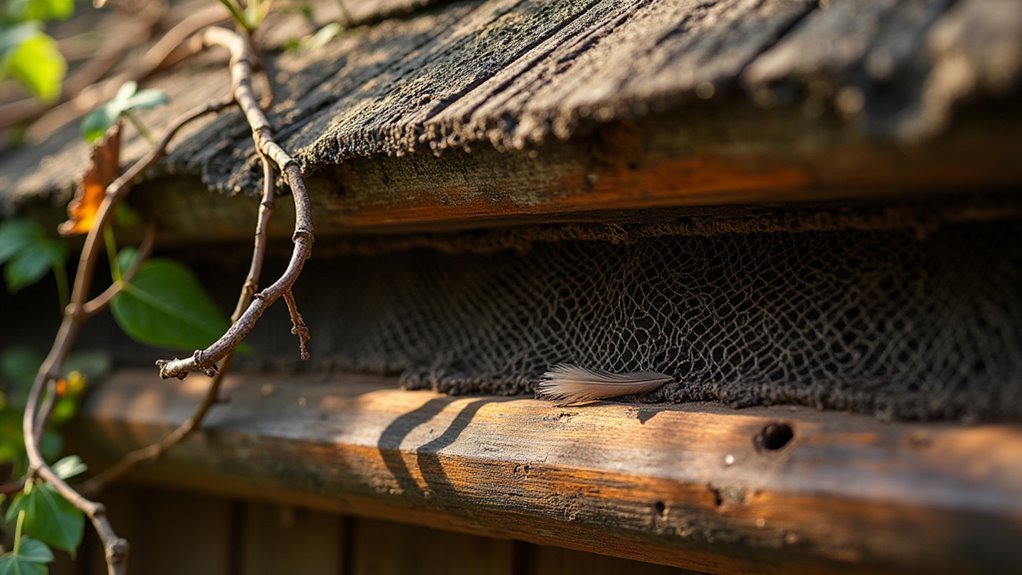
Since roof vents and eaves serve as prime entry points for unwanted wildlife, you’ll need to inspect these areas thoroughly for any gaps or holes that could welcome bats, squirrels, and raccoons into your attic.
When you discover entry holes, seal them using durable materials like hardware cloth, sheet metal, or expanding foam. These materials effectively prevent animal access and resist damage.
You should also guarantee vent covers are securely fastened with sturdy materials that can withstand chewing or manipulation.
Don’t forget to check regularly for wear and tear, as seasonal changes and weather can weaken existing seals and create new openings.
Schedule routine inspections at least twice yearly to proactively identify and address potential wildlife entry issues before they become major problems.
Installing Hardware Cloth Over Vulnerable Openings
After identifying vulnerable openings in your attic, you’ll want to install hardware cloth as your primary defense against wildlife intrusion. This durable wire mesh material features a 1/4 inch mesh size that’ll effectively keep animals like mice and rats from entering your space.
When installing hardware cloth, focus on these critical areas:
- Vent openings – Cover all exhaust and intake vents completely
- Pipe gaps – Seal spaces around plumbing and electrical penetrations
- Structural weaknesses – Reinforce damaged soffits and eave connections
You’ll need to securely fasten the cloth using screws or staples to withstand persistent chewing and clawing.
Properly installed hardware cloth can last over a decade, making it extremely cost-effective. Remember to inspect your installation regularly to maintain its effectiveness against wildlife threats.
Securing Gable Vents and Ridge Vents Against Animal Intrusion
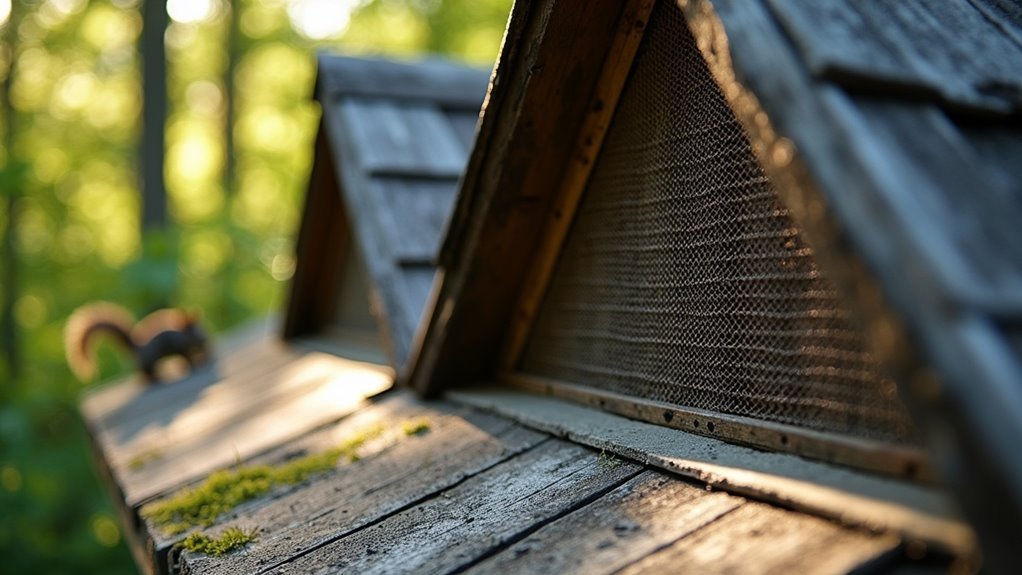
Two critical ventilation points require your immediate attention when securing your attic against wildlife intrusion: gable vents and ridge vents. These vulnerable areas often fail because they’re made of flimsy materials that animals can easily push aside. Ridge vents compound the problem by warping from temperature changes, creating exploitable openings.
| Vent Type | Common Vulnerability | Recommended Solution |
|---|---|---|
| Gable Vents | Flimsy materials | Metal/heavy-duty plastic covers |
| Ridge Vents | Temperature warping | Robust securing covers |
| Both Types | Edge gaps | Caulk or expanding foam sealing |
| Both Types | Screen damage | Durable mesh reinforcement |
| Both Types | Wear over time | Regular inspection schedule |
Install metal or heavy-duty plastic vent covers while sealing gaps around edges with caulk or expanding foam. Conduct regular inspections to identify potential entry points before wildlife exploits them.
Using Steel Mesh to Block Chimney and Soffit Access Points
While properly securing vents forms your first line of defense, chimneys and soffits present equally vulnerable entry points that require specialized protection.
Steel mesh offers the most reliable solution for blocking these access points, as its durability prevents animals like raccoons, squirrels, and rodents from chewing through and entering your attic.
When installing steel mesh, you’ll need to:
- Choose mesh with openings no larger than 1/4 inch to block smaller animals while maintaining ventilation
- Secure the material firmly over all openings, avoiding weaker alternatives like aluminum or vinyl
- Inspect regularly for wear or damage to guarantee continued effectiveness
Combining steel mesh with additional exclusion techniques like sealing gaps and installing one-way doors creates a thorough wildlife prevention system that’ll protect your home year-round.
Creating One-Way Exclusion Doors for Safe Animal Exit
You can create one-way exclusion doors that allow trapped animals to exit your attic safely while preventing their return.
These doors feature a simple outward-opening flap design that animals can push through from inside but can’t manipulate from outside to regain entry.
Proper installation at identified access points guarantees the door functions effectively and doesn’t create new entry opportunities for wildlife.
One-Way Door Design
When animals have taken up residence in your attic, one-way exclusion doors offer a humane solution that lets wildlife exit safely without allowing their return.
These doors feature a simple outward-opening mechanism that makes departure easy while preventing re-entry.
Your one-way exclusion door design should focus on three essential elements:
- Secure mounting system – Fasteners must withstand animal tampering and weather conditions
- Proper sizing – Door dimensions should accommodate the specific wildlife species while maintaining effectiveness
- Smooth operation – Moving parts need regular maintenance to guarantee consistent outward movement
You’ll achieve the best results by installing your one-way exclusion door at the main entry point animals use most frequently.
Remember that this solution works most effectively when you’ve sealed other potential access points around your home’s exterior.
Installation Best Practices
Since proper installation determines whether your one-way exclusion door succeeds or fails, start by choosing galvanized steel or heavy-duty aluminum that won’t buckle under an animal’s weight or deteriorate from weather exposure.
Position your door at the primary entry point where you’ve observed the most activity—look for droppings, scratches, or areas where you’ve heard the loudest noises.
Clear away branches, debris, or other obstacles within three feet of the door’s exit point. Animals need an unobstructed escape route to leave quickly and confidently.
Mount the door securely, ensuring it swings freely outward without gaps around the edges.
After installation, inspect your one-way exclusion doors weekly. Check that the mechanism operates smoothly and confirm no animals remain trapped inside your attic.
Reinforcing Weak Areas Around Dormers and Roof Intersections
Although dormers add architectural appeal to your home, they’re prime targets for wildlife looking to establish attic residences.
These architectural features create multiple intersection points where roofing materials meet, often leaving gaps that animals in your attic exploit for easy access.
You’ll need to inspect these vulnerable areas regularly and take proactive measures:
- Reinforce with durable materials – Install hardware cloth or sheet metal around dormer connections to create impenetrable barriers
- Seal gaps thoroughly – Apply caulk or expanding foam to eliminate small openings that rodents and insects can squeeze through
- Maintain roofing integrity – Keep all materials in excellent condition and properly sealed to prevent animals from exploiting weak spots
Regular maintenance of these intersection points prevents costly wildlife intrusions before they begin.
Natural Deterrents That Make Attics Less Appealing to Wildlife
You can make your attic an unwelcome environment for wildlife by using natural deterrents that don’t harm animals but encourage them to find shelter elsewhere.
Scent-based repelling methods involve strategically placing strong odors like peppermint oil, vinegar, or ammonia throughout the space to create an unpleasant atmosphere for nesting animals.
Light and sound disruption techniques work by introducing bright lighting and intermittent noise that mimic human activity, making wildlife feel unsafe and prompting them to relocate.
Scent-Based Repelling Methods
When wildlife has made your attic their home, scent-based repellents can serve as your first line of defense against unwanted guests.
These natural deterrents create an unpleasant atmosphere that disrupts wildlife’s natural behaviors, making them feel unsafe and encouraging relocation to more comfortable habitats.
You can implement several effective scent-based repelling methods:
- Oil-soaked cotton balls infused with peppermint oil or apple cider vinegar placed strategically throughout your attic
- Ammonia or vinegar-soaked rags positioned in areas where raccoons and squirrels typically nest
- Regular renewal of all scent deterrents to maintain potency as odors diminish over time
While these methods work well for single animals or small infestations, larger problems may require professional removal services for complete resolution.
Light and Sound Disruption
Since most wildlife species naturally seek dark, quiet spaces for shelter, disrupting these preferred conditions with bright lights and loud sounds can effectively encourage them to relocate.
Light and sound disruption creates an uncomfortable environment that makes your attic less appealing to unwanted visitors.
Install high-wattage bulbs in your attic and keep them running continuously for several nights. The constant illumination disrupts animals’ natural behavior patterns and forces them to seek darker locations elsewhere.
Bright lighting is particularly effective because wildlife depends on secluded, dim spaces for nesting and resting.
Combine lighting with loud music or sounds to mimic human presence. This dual approach enhances the deterrent effect, especially against nocturnal animals who’re more sensitive to noise during their active hours.
Maintaining Your Exclusion Barriers Throughout the Seasons
After installing exclusion barriers to keep wildlife out of your attic, you’ll need to maintain them consistently throughout the year to guarantee they remain effective.
Regular inspection and maintenance prevent small problems from becoming costly infestations.
Here’s your seasonal maintenance approach:
- Inspect twice yearly – Check vent covers and mesh screens for damage, especially after severe weather events that can weaken their structural integrity.
- Reinforce before peak seasons – Strengthen barriers during fall and winter when wildlife actively seeks warm shelter.
- Use durable repair materials – Replace damaged sections with heavy-duty steel mesh or hardware cloth that resists animal gnawing.
Schedule routine checks to address emerging vulnerabilities promptly.
Consider adding motion-activated lights or noise deterrents near your exclusion barriers to enhance their effectiveness during peak wildlife activity periods.
When to Call Professionals Instead of Attempting DIY Solutions
While DIY exclusion methods can handle minor wildlife issues, certain situations demand professional expertise to protect your health, property, and legal standing.
If you’re hearing persistent attic noises despite using repellents, you’re likely dealing with a significant infestation requiring pest control specialists.
When you discover droppings or urine, especially from raccoons or bats, call professionals immediately due to serious health risks.
Damaged electrical wiring or insulation also warrants expert intervention to prevent fires and costly repairs.
Professionals accurately identify all entry points and provide thorough exclusion solutions, while DIY attempts often miss vulnerabilities that allow animals to return.
Additionally, protected species like bats require legally compliant removal methods that only licensed professionals can provide.
Frequently Asked Questions
What to Put in an Attic to Keep Animals Out?
You’ll want to place ammonia-soaked rags, commercial repellents, or high-wattage lights in your attic. Install mesh screens over vents and play loud music to create an unwelcoming environment that’ll discourage animals from nesting.
How to Get Rid of Wildlife in Your Attic?
First, you’ll identify the animal type by listening for sounds and checking for droppings. Use humane traps for small animals, seal entry points with steel mesh, and apply deterrents like bright lights or strong odors.
How Do I Tell What Animal Is in My Attic?
You’ll identify attic animals by listening for specific noises like scratching or thumping, examining droppings’ size and shape, checking for disturbed insulation, looking for gnaw marks, and detecting strong urine or feces odors.
What to Do if You Hear Critters in Your Attic?
If you hear critters in your attic, avoid direct contact and keep pets away. Try playing loud music or using bright lights to make them uncomfortable. Contact a professional wildlife control service for safe removal.
In Summary
You’ll successfully keep wildlife out of your attic by identifying entry points, sealing gaps with proper materials, and installing hardware cloth over vulnerable areas. Don’t forget to secure all vents and reinforce weak spots around dormers. Use natural deterrents and maintain your barriers seasonally for long-term success. Remember, you should call professionals when dealing with large infestations or complex structural issues you can’t safely handle yourself.

Leave a Reply