
You can create an effective garden pest spray by boiling orange peels from two oranges in water for ten minutes, then letting it infuse for 24 hours. The limonene compound in fresh citrus peels naturally repels aphids, ants, spider mites, and other common pests. Apply the strained liquid every three days, targeting leaf undersides where insects hide. This chemical-free solution works best when stored properly and used within two weeks for ideal pest control results.
Why Orange Peels Work Against Garden Pests
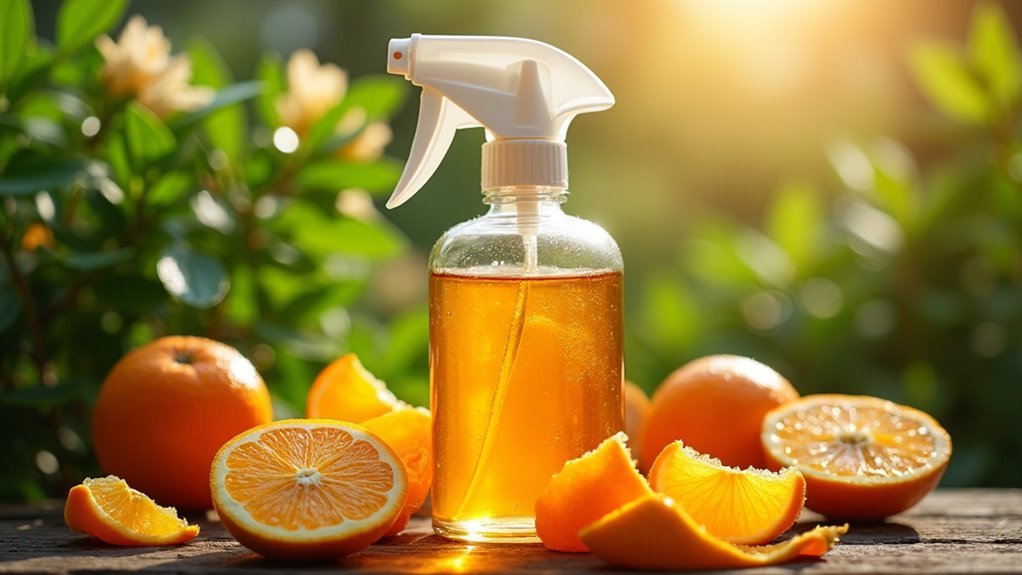
When you’re looking for a natural solution to garden pest problems, orange peels offer a powerful ally through their active compound limonene. This natural chemical acts as an effective insect repellent, specifically targeting troublesome pests like aphids, ants, and spider mites that damage your plants.
The strong citrus scent that fresh orange peels emit creates an environment that garden pests find extremely unappealing. When you use these peels to create a homemade spray, you’re harnessing essential oils that naturally deter insects without harmful chemicals.
Fresh peels work considerably better than dried ones, so you’ll want to use recently peeled oranges for maximum effectiveness. The oils in fresh peels retain their potency, ensuring your natural repel strategy delivers ideal results against unwanted garden invaders.
How to Make Citrus Peel Spray at Home
Creating your own citrus peel spray requires just three simple steps that’ll have you protecting your garden in under 30 minutes of active work.
This homemade spray harnesses natural oils from orange peels to deter pests effectively:
- Boil and extract: Add peels from two oranges to 1-2 cups of water and boil for 10 minutes to release the natural oils that make this solution so effective.
- Let it infuse: Allow the mixture to sit for 24 hours, giving the pest-repelling compounds time to fully saturate the liquid.
- Strain and store: Remove all solid peel pieces and transfer the strained liquid into a spray bottle for easy application.
You’ll spray this solution directly on affected plants every three days, targeting leaf undersides where pests typically hide.
Best Application Methods for Maximum Effectiveness
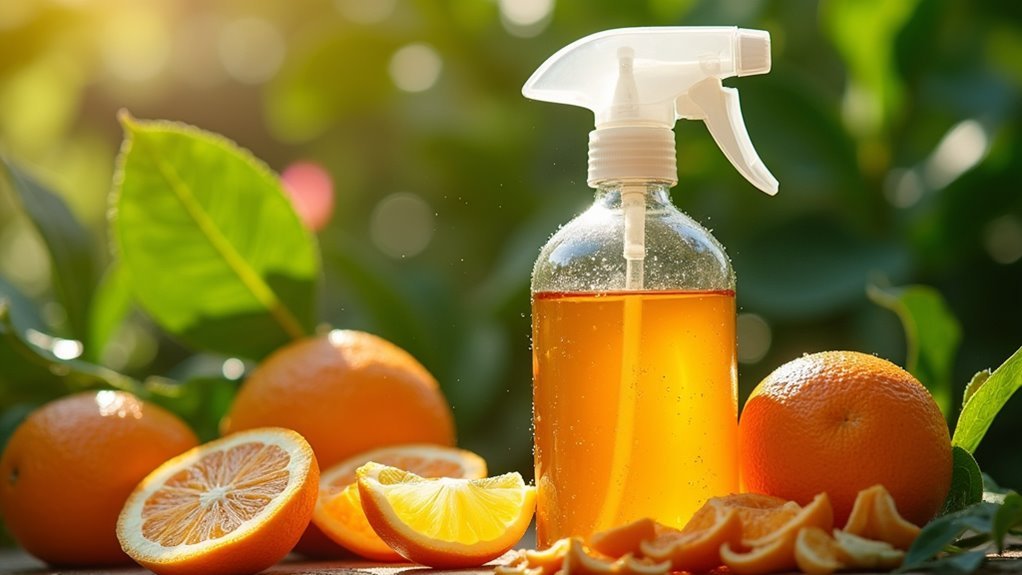
Although you’ve prepared your citrus peel spray perfectly, applying it strategically determines whether you’ll achieve real pest control results.
Target the undersides of leaves and stems where pests hide most frequently. The smell of citrus from fresh orange peels contains limonene that’ll effectively keep pests away when you create a spray mixture with water. Reapply every three days during spring and summer when pest activity peaks to maintain protection.
Focus your citrus spray on leaf undersides and stems where pests congregate, reapplying every three days during peak season.
For maximum potency, let your boiled orange peels steep for 24 hours before straining. This extracts more beneficial compounds that help get rid of pests.
Monitor your plants regularly after each application, adjusting frequency based on pest activity levels and plant health to guarantee continuous protection throughout the growing season.
Which Pests Orange Peel Spray Targets Most
Understanding your application technique sets the stage for recognizing which specific pests you’ll successfully combat.
Orange peel spray targets several common garden invaders through its potent citrus compounds. You’ll find this natural solution particularly effective against fast-reproducing aphids that damage plants by sucking sap. The spray also repels slugs that would otherwise feast on your leaves and stems.
Top three pests orange peel spray eliminates:
- Aphids – Prevents rapid reproduction and sap damage while reducing honeydew secretion
- Whiteflies – Blocks virus transmission to vulnerable plants through effective deterrence
- Ants – Disrupts foraging patterns and nesting activities with citrus scent
Additionally, you’ll notice reduced fruit flies around overripe produce, as the strong aroma deters their attraction to fermenting fruits.
Storage Tips and Shelf Life of Your Homemade Spray
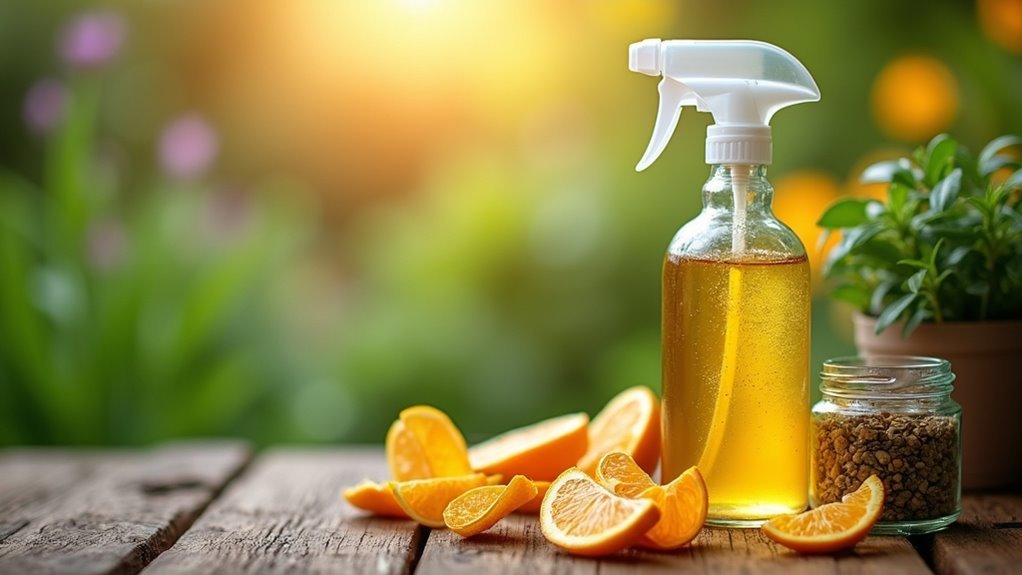
Once you’ve prepared your orange peel spray, proper storage becomes essential for maintaining its pest-fighting power.
Your homemade spray requires specific storage tips to maximize its effectiveness. Store it in a cool dark place using a sealed spray bottle to preserve the natural oils that repel pests.
The shelf life typically extends up to two weeks when stored correctly. However, you’ll get maximum results using it within 3-5 days after preparation, as the oils degrade over time.
Consider refrigerating your spray to extend its lifespan, but let it reach room temperature before application.
Monitor your spray regularly – if it develops strange odors or color changes, discard it immediately and prepare a fresh batch.
Frequently Asked Questions
How to Make a Citrus Spray for Bugs?
You’ll boil two orange peels in 1-2 cups water for ten minutes, let it sit twenty-four hours, then strain into a spray bottle. Apply every three days on plant leaves and stems.
Do Citrus Peels Repel Bugs?
Yes, you’ll find citrus peels effectively repel bugs like ants, aphids, and fruit flies. They contain D-Limonene, a natural insecticide that deters pests with its strong scent while providing an organic solution.
What Can I Spray on My Vegetable Garden to Keep Bugs Away?
You can spray homemade citrus peel solution on your vegetable garden. Boil orange peels in water, strain after 24 hours, and apply every three days to repel aphids and ants naturally.
How Do You Make Orange Peel Bug Repellent?
You’ll boil peels from two oranges in 1-2 cups water for ten minutes. Let it sit twenty-four hours, then strain into a spray bottle. Apply every three days on plants.
In Summary
You’ve got everything you need to create an effective, natural pest deterrent from citrus peels you’d normally throw away. Start making your spray today and apply it consistently for best results. You’ll notice fewer aphids, ants, and soft-bodied insects bothering your plants within days. Store your homemade spray properly, and you’ll have an eco-friendly garden defense that’s both cost-effective and safe for your family and pets.


Leave a Reply