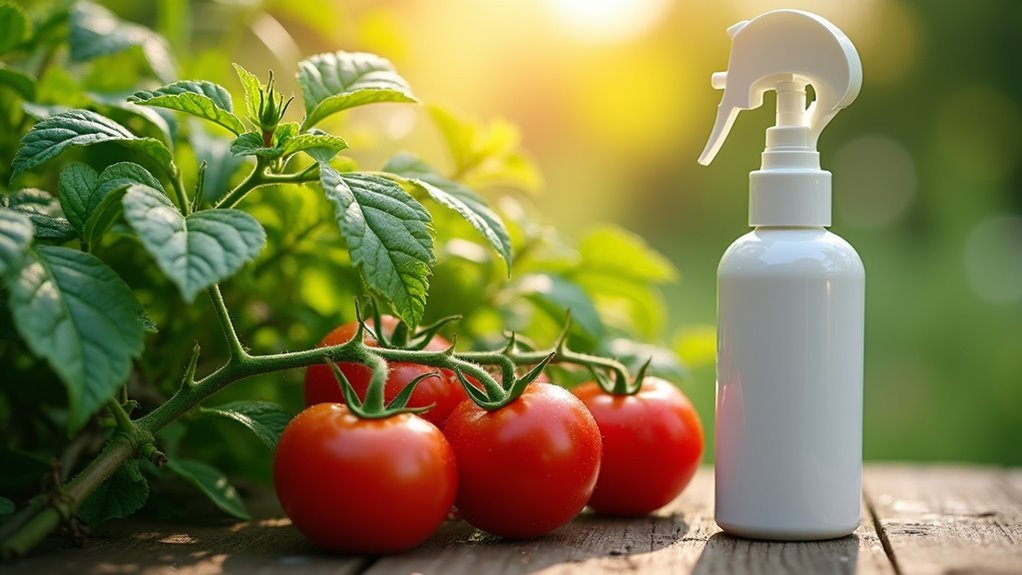
Garlic spray is a natural, homemade pest control solution you can create by steeping crushed garlic cloves in water overnight, then straining and diluting the mixture. You’ll apply this eco-friendly spray to your tomato plants to repel harmful pests like aphids, spider mites, and slugs while protecting beneficial insects. The garlic’s strong odor masks scents that attract destructive pests and creates an invisible protective barrier around your plants. This sustainable approach reduces your reliance on chemical pesticides and supports organic gardening practices that’ll maximize your tomato harvest success.
Understanding Garlic’s Natural Pest-Repelling Properties

When you’re looking for a natural way to protect your tomato plants, garlic spray offers one of the most effective organic solutions available.
Garlic’s powerful compounds create a strong odor that naturally repels common garden pests like aphids, spider mites, and slugs without harming beneficial insects. This makes it an ideal choice for organic pest control in your garden.
Garlic’s natural compounds repel harmful pests while protecting beneficial insects, making it perfect for organic garden pest control.
The secret lies in garlic’s ability to mask the scents that typically attract destructive pests to your tomatoes.
When you apply DIY Garlic Spray regularly, you’re creating an invisible barrier that keeps harmful insects at bay.
Beyond pest deterrence, garlic spray also helps reduce powdery mildew risk on tomato foliage, providing dual protection for healthier plants throughout the growing season.
Essential Ingredients and Equipment for Garlic Spray
Creating your own garlic spray requires just a few simple ingredients and basic kitchen tools that you likely already have at home.
The essential ingredients include crushed garlic cloves, water, liquid dishwashing soap, and vegetable oil for enhanced effectiveness. You’ll need equipment to crush the garlic properly and strain the mixture before application.
For best results, follow the basic ratio of one part concentrated garlic solution to ten parts water. A spray bottle provides easy, targeted application on your tomato plants.
- Fresh garlic cloves (4-6 cloves for one batch)
- Liquid dishwashing soap (just a few drops)
- Vegetable oil (1-2 tablespoons, optional)
- Clean water for dilution
Avoid excessive soap or oils that could harm your plants, and store your finished garlic spray in a cool location.
Step-by-Step Garlic Spray Preparation Method

You’ll start by crushing 3-5 garlic cloves to release their natural oils and compounds that repel pests.
Next, you’ll combine the crushed garlic with 4 cups of water and let it steep overnight to extract maximum potency.
Finally, you’ll strain out all solid pieces using cheesecloth or a coffee filter, then dilute the concentrate with water at a 1:10 ratio before transferring it to your spray bottle.
Crushing Garlic Components
Begin by selecting 3-5 fresh garlic cloves and crushing them thoroughly to release their potent pest-repelling compounds. This essential step breaks down the garlic’s cell walls, allowing the natural sulfur compounds to become active ingredients in your homemade insecticide for your vegetable garden.
You can crush the garlic cloves using several effective methods:
- Garlic press – Squeeze cloves through the press for quick, uniform crushing
- Food processor – Pulse briefly until cloves are finely minced and fragrant
- Mortar and pestle – Grind manually for maximum oil extraction and control
- Chef’s knife – Mince finely after smashing with the flat blade side
Once crushed, you’ll mix these garlic cloves with water and dish soap before transferring to a spray bottle and apply to your tomato plants.
Straining and Mixing
After steeping your crushed garlic mixture overnight, strain the liquid through cheesecloth or a fine coffee filter to remove all solid particles that could clog your spray bottle.
This straining process guarantees you’ll have a smooth, clear garlic infusion ready for mixing.
Next, dilute your strained garlic concentrate with water using a 1:10 ratio. For example, if you have one cup of garlic infusion, add ten cups of water.
This mixing creates the proper concentration for effective pest control without harming your tomato plants.
Finally, add a few drops of liquid dish soap to your diluted garlic spray. The soap acts as a surfactant, helping the mixture adhere better to plant leaves and enhancing its pest-deterring properties.
Stir gently to combine all ingredients thoroughly.
Proper Application Techniques for Tomato Plants
You’ll need to master three key application techniques to guarantee your garlic spray effectively protects your tomato plants from pests.
The timing and frequency of your applications directly impacts the spray’s effectiveness, while maintaining proper coverage distance prevents plant damage.
Getting the concentration and dilution ratios right guarantees you’re providing adequate protection without overwhelming your plants.
Spray Timing and Frequency
When evening temperatures drop and the sun’s intensity fades, you’ll achieve best results by applying garlic spray to your tomato plants. This timing minimizes leaf burn and maximizes absorption of your garlic solution.
You’ll want to maintain consistent weekly applications to keep pests at bay, but increase frequency to twice weekly after rainfall washes away protection.
Your spray timing strategy should include:
- Evening applications when temperatures cool to prevent leaf damage from concentrated garlic, water, oil, and soap mixture
- Weekly maintenance schedule for continuous pest deterrence throughout growing season
- Post-rainfall boosters applied twice weekly to counteract dilution effects from heavy downpours
- Pre-harvest pause stopping applications near harvest time to avoid garlic flavor contaminating your tomatoes
Coverage and Distance Guidelines
Proper distance control makes the difference between effective pest protection and potential plant damage when applying garlic spray to your tomatoes.
When you spray at home, maintain 15-30 cm (6-12 inches) from foliage to guarantee ideal coverage without harming leaves. Your oil mixture should coat both leaf surfaces evenly—pests often hide underneath, so don’t neglect the undersides.
Following these coverage and distance guidelines protects beneficial insects while targeting harmful pests. Apply during evening hours to prevent sun-induced leaf burn and allow overnight settlement.
Test each new batch on a single leaf first to check for adverse reactions. Reapply every few days or after rainfall, as water washes away the protective barrier.
Consistent application at proper distances maximizes effectiveness while preserving plant health.
Concentration and Dilution Ratios
Getting the concentration right determines whether your garlic spray protects or damages your tomato plants. The proper concentration and dilution ratios guarantee effective pest control without harming your crops.
Start by creating your concentrated base solution using one garlic head blended with 235ml water. Steep this mixture for at least 12 hours, then strain thoroughly.
When you’re ready to apply, mix one part of this concentrated solution with ten parts water.
- Test each new batch on a single tomato leaf before full application
- Apply the diluted garlic spray every few days or after rainfall
- Guarantee even coverage on both leaf surfaces for maximum pest deterrence
- Maintain proper ratios to prevent leaf burn while effectively repelling pests
This balanced approach protects your tomato plants while maintaining their health.
Target Pests That Garlic Spray Effectively Controls
Because garlic’s pungent compounds naturally disrupt pest behavior, this simple spray tackles multiple threats to your tomato plants simultaneously.
You’ll find garlic particularly effective against aphids, spider mites, and whiteflies, as it masks the scents these pests use to locate your plants. The strong odor also repels slugs, beetles, and caterpillars that’d otherwise feast on your tomatoes.
Red spider mites, which thrive in warm conditions and can devastate foliage, are especially vulnerable to regular garlic applications.
Beyond insects, you’ll appreciate that garlic’s natural properties help control fungal diseases like powdery mildew. When you apply the spray consistently at proper dilution, it won’t affect your tomatoes’ flavor while providing extensive protection against this wide range of garden threats.
Storage Tips and Spray Longevity Guidelines
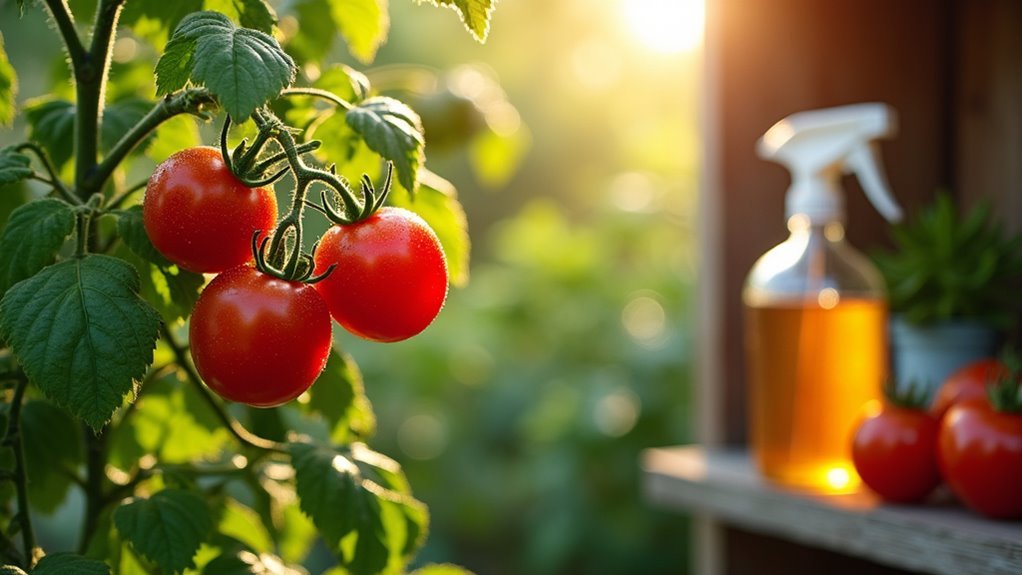
While garlic spray offers impressive pest control benefits, you’ll need to store it correctly to maintain its effectiveness.
Garlic-infused mixtures lose their potency quickly, so proper storage tips are essential for maximum effectiveness against tomato pests.
Follow these storage guidelines to preserve your garlic spray’s pest-fighting power:
- Strain thoroughly – Remove all solid garlic bits before storage to prevent spoilage and bacterial growth
- Refrigerate immediately – Store your garlic-infused mixtures in the refrigerator to slow down degradation of active compounds
- Use within 1-2 weeks – Apply the spray within this timeframe for maximum effectiveness against garden pests
- Make fresh batches – If you notice reduced pest control results, prepare a new mixture rather than using old spray
Frequently Asked Questions
How to Make Garlic Spray for Tomato Plants?
Crush 3-5 garlic cloves, mix with one liter water and tablespoon vegetable oil overnight. Strain, add another liter water plus teaspoon dish soap. Spray tomato leaves every few days.
Does Garlic Spray Really Repel Mosquitoes?
Yes, garlic spray effectively repels mosquitoes because its strong odor masks scents that attract them. You’ll find the allicin compounds naturally deter biting insects, making it a safe, chemical-free alternative for your outdoor spaces.
How Do You Make Your Own Garlic Spray?
You’ll crush 3-5 garlic cloves and mix them with 4 cups water plus 4-5 drops dish soap. Let it steep overnight, strain it, then dilute 1:10 before spraying.
What Do You Spray on Tomatoes to Keep Bugs Away?
You can spray garlic solution on tomatoes to repel aphids, spider mites, and beetles. Apply the mixture every few days, covering both leaf sides. It’s safe for beneficial insects and perfect for organic gardening.
In Summary
You’ll find garlic spray is a powerful, natural defense for your tomato plants. It’s easy to make, cost-effective, and won’t harm beneficial insects or your family. By applying it regularly every 7-10 days and after rain, you’ll keep aphids, whiteflies, and hornworms at bay. Store your homemade spray properly, and you’ll have an eco-friendly pest control solution that protects your tomatoes without toxic chemicals.




Leave a Reply