
You’ll find hidden pest activity by checking behind large appliances like refrigerators and stoves where cockroaches and rodents breed in dark, warm spaces. Inspect corners, crevices, and gaps between baseboards using a flashlight, looking for droppings, egg casings, or gnaw marks. Don’t forget attic spaces, crawlspaces, under stairs, closets, and areas around utility lines where pests establish colonies undetected. Survey garage corners and outdoor sheds regularly for nesting materials and unusual odors that signal active infestations requiring immediate attention.
Check Behind Large Appliances and Furniture

One of the most overlooked hiding spots for pests lies directly behind your large appliances and furniture. These dark, warm spaces provide ideal breeding grounds for cockroaches and rodents.
Dark, warm spaces behind appliances create perfect breeding environments where cockroaches and rodents can multiply undetected in your home.
You’ll want to regularly inspect your home by checking behind refrigerators, stoves, washers, and heavy furniture for telltale signs of pest activity like droppings, egg casings, or gnaw marks.
When you clean behind these large appliances, you’re removing food particles and crumbs that attract unwanted visitors.
Don’t skip this step during routine inspections—pests often use these hidden areas as entry points into your living space. Early detection through thorough checking allows you to explore pest control options before minor problems become major infestations.
Inspect Dark Corners and Crevices Throughout Your Home
Beyond large appliances, you’ll find that dark corners and crevices throughout your home harbor even more pest activity than you might expect.
When you inspect dark corners, focus on gaps between baseboards and walls where common pest species often hide undetected. These overlooked spaces provide shelter and remain undisturbed during regular cleaning routines.
Use a flashlight to illuminate areas under sinks and cabinets where moisture creates ideal conditions for silverfish and cockroaches.
Look for signs of pest activity like droppings, nests, or damage in these shadowy spaces. Crevices around door frames, window sills, and behind furniture also warrant close examination.
Identifying these hiding spots early allows you to implement targeted pest control methods before infestations spread throughout your home.
Search Attic Spaces for Signs of Pest Activity

You’ll want to carefully examine your attic for telltale signs that rodents have made themselves at home.
Start by identifying potential entry points around vents, pipes, and eaves where small gaps can provide easy access for mice and rats.
Look closely for nesting materials like shredded insulation, fabric scraps, or paper fragments that indicate active pest activity in these often-forgotten spaces.
Identifying Rodent Entry Points
Since rodents prefer dark, undisturbed spaces for nesting and travel, attic areas often serve as their primary highways and hideouts within your home.
When you inspect attic spaces, examine gaps and holes throughout the structure carefully. Mice can squeeze through openings as small as ¼ inch, making every tiny crack a potential entry point.
Look for gnaw marks on wooden beams where rodents chew to widen existing holes. Check around pipe penetrations, electrical conduits, and where rooflines meet walls.
Dark staining around openings often indicates repeated rodent activity through these access routes. If you’re discovering multiple entry points or extensive damage, consider contacting a pest control technician for professional assessment and sealing recommendations.
Recognizing Nesting Material Signs
After you’ve identified potential entry points, focus your attention on discovering the telltale signs of established nesting areas throughout your attic space.
Look for nesting materials like shredded paper, insulation, or small twigs scattered around corners and hidden spaces. These materials indicate that pests have already settled in and begun establishing their homes.
- Check for droppings – Larger droppings suggest rats or squirrels, while smaller ones indicate mice presence
- Examine wooden beams – Signs of chewing or gnawing on wood and insulation reveal active rodent activity
- Notice unusual odors – Musty or oily scents often signal cockroaches or rodent infestations
Listen for scratching or scurrying sounds during quiet periods, as active nests produce these distinctive noises.
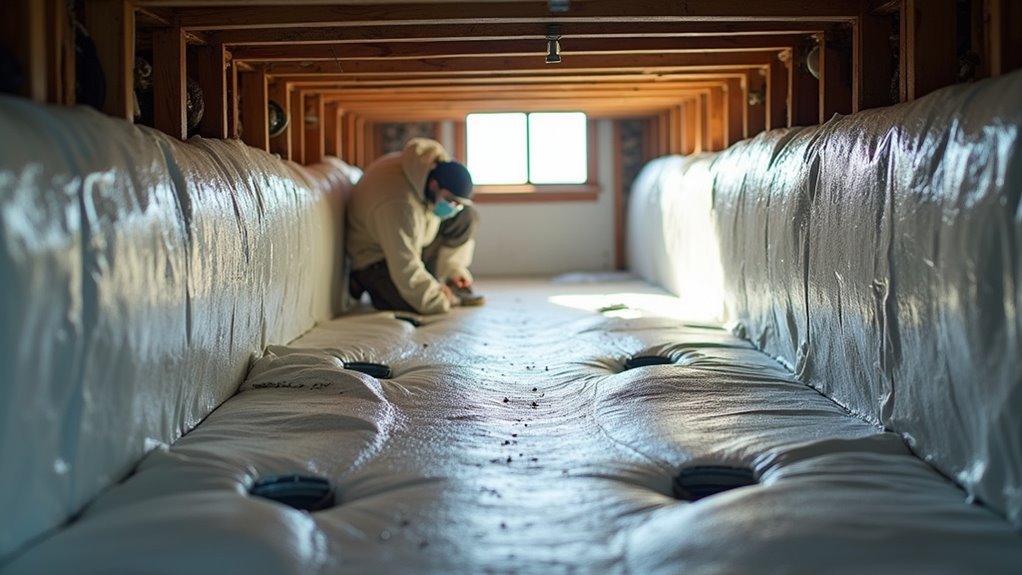
Examine Crawlspace Areas for Infestations
Because crawlspaces provide dark, damp environments that pests find irresistible, they’re among the most critical areas you’ll need to inspect for infestations.
Check regularly for droppings, nests, and chewed wires that signal pest activity. Look specifically for mud tubes along foundation walls—these structures indicate termite presence as they use them to access wood sources.
Control moisture levels through proper ventilation, as excessive dampness attracts silverfish and other pests. Even minor humidity creates ideal breeding conditions for various infestations.
Seal all foundation gaps and cracks immediately, no matter how small. Openings as tiny as 1/16 inch allow cockroaches and insects entry into your crawlspaces.
Regular inspections combined with moisture control and thorough sealing will greatly reduce pest problems in these vulnerable areas.
Look Under Stairs and Storage Areas

You’ll find that under stairs and storage areas create perfect hiding spots for pests due to their dark, undisturbed environments.
These spaces often contain hidden entry points like cracks in walls or gaps in flooring that allow rodents, spiders, and cockroaches to slip inside unnoticed.
Check these dark corners regularly for telltale signs like droppings, webs, or nesting materials that indicate pest activity.
Hidden Pest Entry Points
While most homeowners focus on obvious entry points like windows and doors, pests often infiltrate through hidden spaces that receive little attention.
The areas under stairs and within storage spaces contain numerous hidden pest entry points that household pests exploit to gain access to your home. Mice can squeeze through openings as small as 1/5 inch, while cockroaches need only 1/16 inch gaps to enter.
These tiny spaces around staircases and storage areas often go unnoticed during routine inspections.
- Check for cracks and gaps around staircase foundations and storage room perimeters regularly
- Seal any openings immediately using appropriate materials to prevent pest infiltration
- Consider professional pest control services for thorough pest prevention strategies in overlooked areas
Signs in Dark Corners
Dark corners under stairs and in storage areas serve as perfect refuges for household pests seeking undisturbed shelter.
You’ll find these spaces attractive to spiders, mice, and cockroaches because they’re warm and rarely disturbed.
When inspecting these dark corners, look for telltale signs like small, dark droppings that indicate rodents or insects have moved in.
Check for nests constructed from shredded paper, fabric, or similar materials, which signal active breeding.
Examine stored items for chewing or gnaw marks where mice and rats have damaged boxes or furniture to create homes.
Pay attention to unusual odors too—musty smells often indicate rodents, while oily scents suggest cockroaches.
These neglected areas concentrate such smells, making detection easier during thorough inspections.
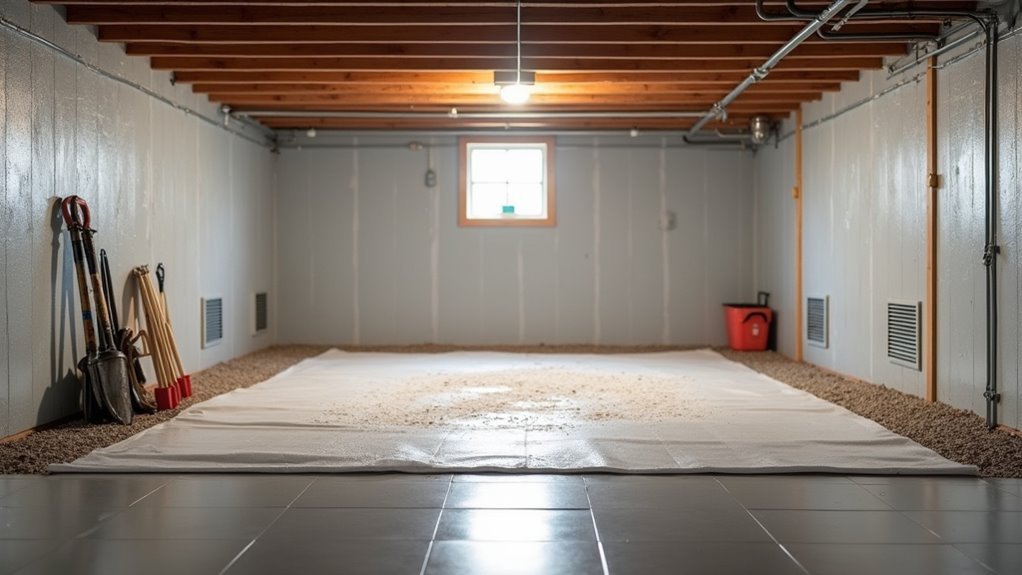
Investigate Basement Walls and Floor Joints
Three critical areas in your basement demand immediate attention when hunting for pest activity.
You’ll want to inspect basement walls for moisture signs, as damp environments create perfect conditions where pests thrive. Silverfish and cockroaches love these humid spaces.
Next, examine floor joints carefully for cracks and gaps. Rodents like mice and rats can squeeze through openings as small as ¼ inch, making these spots prime entry points.
Mice and rats can slip through cracks as narrow as ¼ inch, making floor joints critical entry points to seal.
Finally, check for droppings near baseboards and corners, which signal active infestations and nesting sites.
- Look for moisture damage or mold on walls that attracts wood-destroying pests like termites.
- Examine seams between floors and walls where pests hide and breed undetected.
- Search corners and baseboards for pest droppings indicating current activity.
Scan Closets and Rarely Used Storage Spaces
You’ll find that closets and rarely used storage spaces create perfect hiding spots for pests seeking dark, undisturbed areas.
Start by checking for droppings in corners and on shelves, as these telltale signs reveal rodent or insect activity.
Don’t forget to inspect your stored clothing and fabric items for damage, then look carefully for nests tucked away behind boxes or in forgotten corners.
Check for Droppings
Hidden corners of closets and storage spaces often harbor the telltale signs of unwanted visitors. When conducting your inspection, focus on identifying droppings that’ll reveal which pests have invaded your home.
Larger droppings typically signal rodent activity, while smaller, pellet-like waste indicates insects such as cockroaches or ants.
The location and quantity of droppings provide valuable insights into infestation severity. Fresh droppings mean recent activity, while older waste suggests long-standing problems.
Don’t forget to check behind boxes, bags, and stored items where pests often nest.
- Size matters: Large droppings = rodents; small pellets = insects
- Freshness indicates timing: New droppings show active infestations
- Search hidden spots: Check behind storage items for accumulated waste
Regular inspection enables early detection and prevents larger infestations.
Inspect Fabric Damage
Fabric-eating pests can turn your favorite sweater into a moth-eaten disaster before you even notice they’ve moved in. When you inspect fabric damage in closets and storage areas, look for telltale holes and frayed edges in clothing and textiles.
Check for signs of frass—a powdery substance from insect droppings that accumulates near damaged items. Don’t overlook webbing or cocoons tucked into fabric folds, as these signal moth larvae presence.
Examine garment seams carefully for tiny larvae or pupae, which indicate an active infestation requiring immediate attention.
Pay special attention to overlooked spaces like seasonal storage bins and rarely opened wardrobes. Watch for discoloration or unusual musty odors, as these often serve as early warning signs before visible damage becomes extensive.
Look for Nests
Where do pests prefer to establish their homes when they invade your living space?
They’re drawn to closets and rarely used storage areas where they won’t be disturbed.
You’ll want to look for signs of nesting activity in these overlooked spaces, including small piles of debris or shredded materials made from twigs, leaves, or paper.
Pay special attention to dark corners and hidden areas where rodents and insects build their homes.
Don’t forget to use your nose – unusual odors like musty or foul smells often indicate a pest infestation nearby.
- Check for nests constructed from household materials like paper and fabric
- Inspect seldom-used areas where pests access food sources undisturbed
- Monitor for debris accumulation in dark, sheltered corners
Monitor Areas Around Utility Lines and Pipes
Utility lines and pipes throughout your home create numerous entry points that pests exploit to gain access to your living spaces. You’ll need to monitor these vulnerable spots regularly, as even quarter-inch gaps allow rodents to squeeze through. Check for moisture around pipes, since damp conditions attract silverfish and termites.
| Inspection Area | Warning Signs | Action Needed |
|---|---|---|
| Pipe gaps | Holes, openings | Seal immediately |
| Insulation | Damage, wear | Replace/repair |
| Utility lines | Droppings, chew marks | Investigate pest presence |
Inspect insulation around pipes for damage that creates hiding spots. Look for droppings or chew marks near utility lines, as these indicate active pest activity. Regular monitoring and sealing prevents infestations before they establish.
Survey Garage Corners and Workbench Areas
Garages present multiple hidden zones where pests congregate undetected, particularly in corners and beneath workbenches where dust, debris, and clutter accumulate over time.
You’ll need to inspect these areas regularly since they’re prime real estate for spiders, rodents, and cockroaches seeking shelter.
When surveying your garage, look for telltale signs of pest activity. Check for droppings – small pellets indicate mice while larger ones suggest rats.
Examine wooden shelving and tools for chew marks, another clear indicator of rodent presence. Pay attention to musty or oily odors that signal cockroach infestations.
- Search corners and under workbenches for pest droppings and debris buildup
- Inspect wooden surfaces for gnaw marks and damage from rodent activity
- Maintain proper ventilation and organization to reduce pest harborage opportunities
Evaluate Outdoor Shed Interiors and Tool Storage
Outdoor sheds and tool storage areas harbor pests just as readily as garage spaces, often providing even more secluded environments where infestations can develop unnoticed.
You’ll want to inspect these spaces for telltale signs like droppings, nests, and chew marks that indicate rodents have discovered food sources or shelter.
Check corners and shelves carefully for spider webs, which signal spider presence and potential pest activity nearby.
Spider webs in storage areas serve as warning signs of both arachnid inhabitants and broader pest infiltration issues.
Don’t overlook moisture accumulation, as damp conditions attract silverfish and termites.
Keep tools and gardening equipment clean and properly stored to avoid drawing unwanted visitors.
Regular decluttering eliminates hiding spots and makes future inspections easier, helping you catch problems before they escalate.
Frequently Asked Questions
How to Figure Out Where Bugs Are Coming From?
Check entry points where pipes and wires enter your home, inspect behind appliances for food debris, examine basement and attic areas for droppings, and look along baseboards for insect trails.
What Is the First Thing You Should Do When You Detect the Presence of a Pest?
When you detect a pest, you should first identify the specific type by looking for signs like droppings, nests, or damage. This’ll help you determine the appropriate control measures needed.
How Do You Keep Pests Out by Getting Rid of Space Under and Around Doors?
You’ll seal gaps under doors with door sweeps and weatherstripping around frames. Install threshold plates to eliminate floor spaces, and regularly inspect for damaged frames that create entry points for crawling pests.
How Can You Hinder Pest Entry?
You can hinder pest entry by sealing cracks around foundations, windows, and doors with caulk and weatherstripping. Check screens for holes, maintain vent covers, and inspect crawl spaces regularly.
In Summary
You’ll catch pest problems early by regularly checking these overlooked areas throughout your property. Don’t wait until you notice obvious signs like droppings or damage – make these inspections part of your monthly routine. Remember that pests prefer undisturbed, dark spaces where they can establish colonies undetected. By staying proactive and thorough in your searches, you’ll prevent minor issues from becoming major infestations that require expensive professional treatment.


Leave a Reply