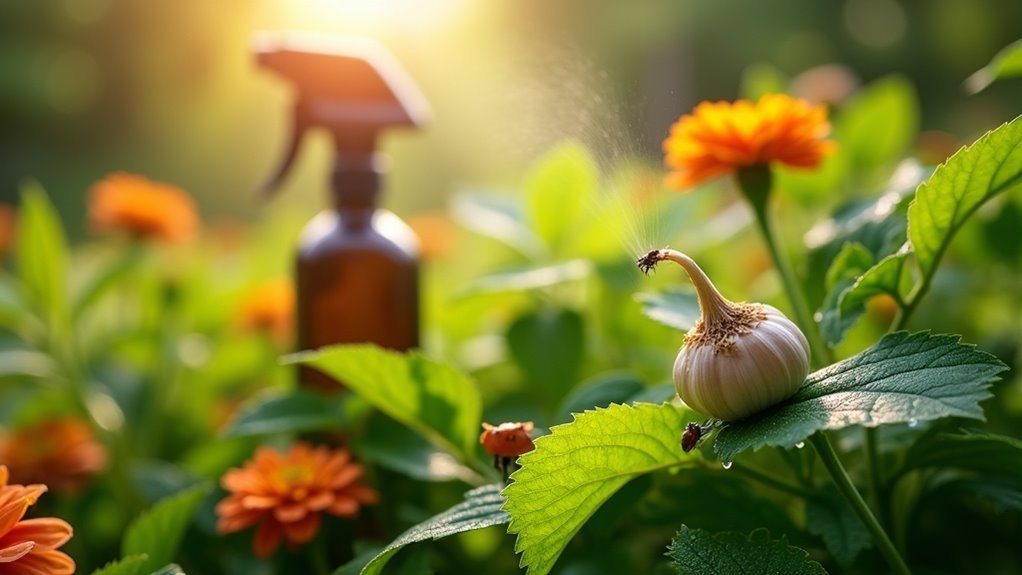
When you crush garlic, it releases allicin, a powerful sulfur compound that acts as nature’s pest deterrent. This strong-smelling chemical masks the scents that typically attract harmful insects like aphids, beetles, spider mites, and caterpillars to your garden. Allicin’s antibacterial and antifungal properties create an unwelcoming environment for pests while acting as a contact insecticide that can kill on touch. Discover how to harness this natural protection for your plants.
The Science Behind Garlic’s Pest-Repelling Properties
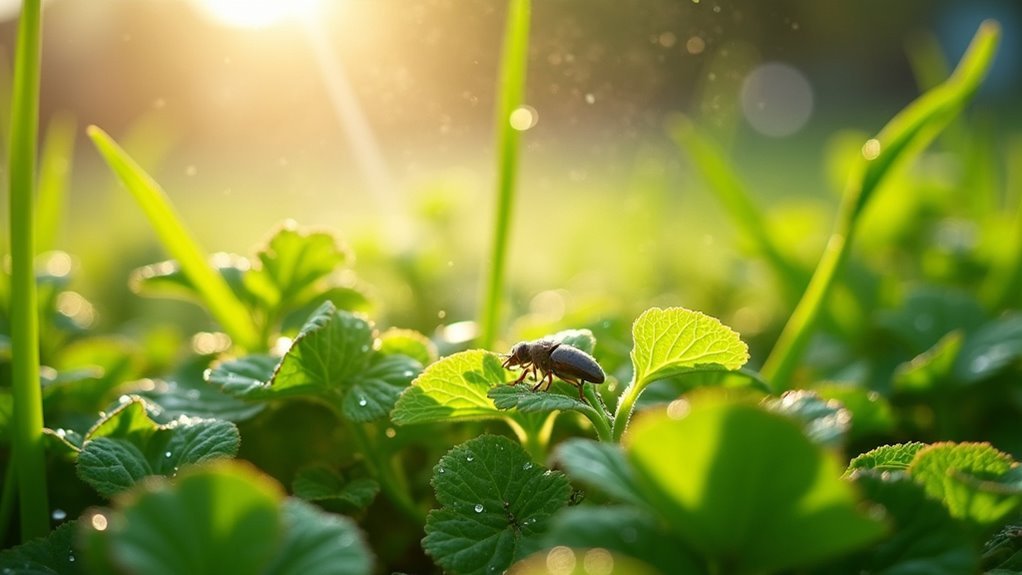
When you crush or chop garlic cloves, you’ll release allicin, a powerful sulfur compound that serves as nature’s multi-purpose pest deterrent. This remarkable chemical provides insect-repellent, antibacterial, and antifungal properties that make garlic an effective pest control solution.
Allicin’s strong odor masks the scents that typically attract garden pests to your plants, deterring aphids, beetles, and slugs from settling in your garden.
Scientists have documented garlic’s pest control effectiveness since the 1970s, proving its value as a natural alternative to synthetic pesticides. Research shows allicin can even act as a contact insecticide, killing certain pests like yellow mealworm larvae on contact due to its toxicity.
However, garlic’s repellent properties fade after several days, requiring regular reapplication for consistent protection.
Which Garden Pests Does Garlic Effectively Deter
You’ll find garlic spray remarkably effective against common garden pests like aphids, spider mites, slugs, beetles, cabbage flies, and green peach aphids due to its sulfur compounds.
However, you can’t expect it to work on every pest, as silverleaf whiteflies have shown resistance to garlic treatments.
You should also consider that while garlic targets harmful insects, there’s potential risk to beneficial insects that help your garden thrive.
Common Garden Pests Repelled
Garlic spray targets numerous garden pests that can devastate your plants, making it one of the most versatile natural repellents available.
You’ll find this insect repellent effectively deters aphids, spider mites, caterpillars, and slugs through its potent allicin content. The spray also repels beetles, grasshoppers, and blackflies that commonly damage vegetable gardens and flower beds.
Beyond small insects, garlic’s pungent odor successfully drives away larger garden pests like mice and voles that nibble on roots and bulbs. The strong scent masks attractive plant odors that typically draw these unwanted visitors to your garden.
When applied carefully, garlic spray won’t harm beneficial insects while protecting your plants. You’ll need to reapply every few days during active infestations to maintain its protective effects against these common garden pests.
Beneficial Insects Risk
Although garlic spray effectively targets harmful pests, it can also inadvertently repel beneficial insects that your garden desperately needs.
When you apply this organic pest control solution, you’re not just deterring aphids and spider mites—you’re potentially driving away ladybugs, lacewings, and essential pollinators like bees and butterflies.
These beneficial bugs play vital roles in maintaining your garden’s ecosystem. Ladybugs consume hundreds of aphids daily, while pollinators guarantee your plants reproduce successfully.
The same sulfur compounds that make garlic spray effective against pests can overwhelm these helpful insects’ sensitive detection systems.
To minimize this risk, apply garlic spray during early morning or evening hours when beneficial insects are less active.
You’ll maintain effective pest control while protecting your garden’s natural allies.
How to Make Basic Garlic Spray for Your Garden
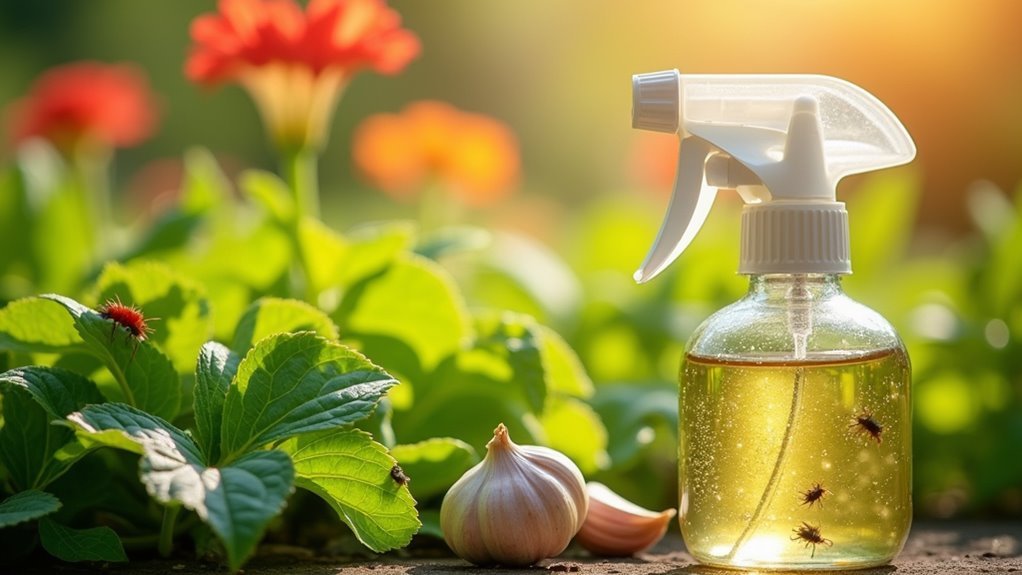
Creating an effective garlic spray requires just three simple ingredients that you likely already have in your kitchen. Start by gathering 3 to 5 garlic cloves and crushing them thoroughly.
Mix the crushed garlic and water to create a fine puree, then let this mixture rest overnight. Strain the solution through cheesecloth to remove solid particles.
For enhanced effectiveness, add a teaspoon of dish soap and vegetable oil to improve adhesion and blending.
Combine 1 part strained garlic solution with 10 parts water for your final mixture. Store this concentrated solution in a reusable spray bottle in your refrigerator.
When ready to apply, coat both sides of plant leaves evenly during evening hours for ideal results.
Enhancing Your Garlic Spray With Natural Additives
You can supercharge your basic garlic spray by incorporating natural additives that’ll boost its pest-fighting power.
Hot peppers add capsaicin for extra deterrent strength, while essential oils like eucalyptus or tea tree provide additional repelling and antifungal benefits.
A soap and oil mixture improves the spray’s ability to stick to plant surfaces and creates a more effective barrier against unwanted garden visitors.
Hot Pepper Power Boost
One simple addition can transform your basic garlic spray into a formidable pest deterrent that tackles both insects and larger garden invaders.
Adding hot pepper to your garlic repellent introduces capsaicin, creating a powerful dual-action formula that repels everything from aphids to deer.
Mix one tablespoon of hot pepper flakes or several teaspoons of cayenne powder into your garlic solution for maximum effectiveness.
The capsaicin irritates sensory receptors in both insects and mammals, making your treated plants highly unappealing to pests.
This spicy enhancement creates multiple barriers of protection, targeting different pest types simultaneously.
You’ll notice stubborn pests that previously resisted basic garlic treatments will avoid your capsaicin-enhanced spray, giving your garden extensive protection against diverse threats.
Essential Oil Additions
While hot peppers pack a punch against garden invaders, aromatic oils offer another powerful enhancement to boost your garlic spray’s pest-fighting capabilities.
These natural additives transform your basic garlic spray into a thorough pest management solution.
Here are four essential oils that’ll supercharge your natural insecticide:
- Eucalyptus or tea tree oil – Repels broader pest ranges while adding antibacterial properties to your mix
- Peppermint or spearmint oil – Creates pleasant scents while deterring aphids and spider mites through strong aromas
- Citrus oils (lemon/orange) – Boosts repellent effects and masks garlic’s pungent smell for easier application
- Neem oil – Creates powerful combinations that disrupt pest life cycles for long-term control
Mix essential oils with garlic spray immediately before application to maintain maximum potency and effectiveness.
Soap and Oil Mix
Two simple kitchen ingredients can transform your garlic spray from a basic deterrent into a professional-grade pest control solution.
Adding a teaspoon of dish soap improves adhesion to plant surfaces, ensuring better coverage against pests. Vegetable oil enhances blending while creating a protective barrier that extends the spray’s effectiveness on foliage.
This soap and oil combination emulsifies your garlic spray, making it more potent against soft-bodied insects like aphids and spider mites. The additives help active compounds penetrate insect exoskeletons, delivering superior pest control.
You’ll need to reapply your enhanced garlic spray regularly, especially after rain, to maintain the protective benefits. This simple modification creates a sticky, long-lasting treatment that outperforms basic garlic solutions.
Proper Application Techniques for Maximum Effectiveness
Since garlic spray’s effectiveness depends heavily on proper application methods, you’ll want to time your spraying sessions for early morning or late evening hours. This prevents plant burn while enhancing foliage absorption.
Proper Application Techniques:
- Target both leaf surfaces – Spray tops and bottoms of leaves since pests often hide underneath.
- Test before full application – Apply to a single leaf first to check for adverse plant reactions.
- Reapply frequently – Use the spray every few days, especially after rainfall, as effectiveness diminishes quickly.
- Store correctly – Keep unused spray refrigerated and use within two days for ideal potency.
These proper application techniques guarantee your garlic spray maintains maximum effectiveness against garden pests while protecting your plants from potential damage.
Intercropping With Garlic Plants for Passive Protection

Beyond applying garlic spray, you can establish long-term pest protection by intercropping garlic plants directly among your vulnerable crops. This strategy leverages garlic’s natural sulfur compounds that continuously deter flea beetles, aphids, and other harmful insects without requiring regular applications.
| Companion Plants | Pest Management Benefits |
|---|---|
| Carrots | Reduced carrot fly infestations |
| Beets | Enhanced growth, fewer leaf miners |
| Tomatoes | Decreased aphid populations |
| Lettuce | Protection from flea beetles |
Intercropping creates a diverse ecosystem that naturally regulates pest populations while suppressing weed growth. You’ll notice healthier plants and improved soil conditions as garlic’s presence promotes sustainable gardening practices. This passive protection method eliminates the need for chemical pesticides while maintaining consistent pest deterrence throughout the growing season.
Storage Tips and Reapplication Guidelines
Once you’ve prepared your garlic spray, proper storage becomes crucial for maintaining its pest-fighting power.
Smart storage tips guarantee you’ll get maximum effectiveness from each batch while protecting your plants from unwanted pests.
Follow these key guidelines for best results:
- Store leftover garlic spray in your refrigerator – Use within two days since allicin’s strength diminishes quickly over time.
- Reapply every 7-14 days – Increase frequency after rainfall to maintain protective coverage against garden pests.
- Apply during morning or evening hours – Avoid midday sun exposure that can cause leaf burn on treated plants.
- Test new batches first – Apply to small plant areas before full treatment to check for adverse reactions.
Proper timing and storage maximize your garlic spray’s natural pest-repelling properties.
Frequently Asked Questions
Does Garlic Repel Garden Pests?
Yes, you’ll find garlic effectively repels many garden pests like aphids, slugs, and beetles. Its allicin compound and strong odor deter insects, though it won’t work against all pests like certain mammals.
How to Use Garlic as a Natural Pesticide?
Blend 2-3 crushed garlic cloves with two cups water, strain, and add to spray bottle. Add dish soap for better adherence. Apply weekly, coating leaf tops and bottoms where you’ve spotted pests.
Is Garlic Spray Harmful to Plants?
You don’t need to worry about garlic spray harming your plants when you apply it correctly. It’s safe and won’t damage them, though you should test first and avoid over-application.
Is Garlic Spray a Good Pesticide?
You’ll find garlic spray’s an excellent natural pesticide that effectively repels aphids, beetles, and slugs while combating fungal issues. It’s non-toxic and safe, though you should reapply weekly for best results.
In Summary
You’ve discovered garlic’s powerful natural pest control abilities through its sulfur compounds that confuse and repel unwanted insects. You’ll protect your garden from aphids, spider mites, and various other pests while avoiding harsh chemicals. Whether you’re spraying homemade solutions, adding companion ingredients, or intercropping garlic plants, you’re creating a sustainable defense system. Remember to reapply regularly and store your spray properly for consistent protection throughout the growing season.




Leave a Reply