
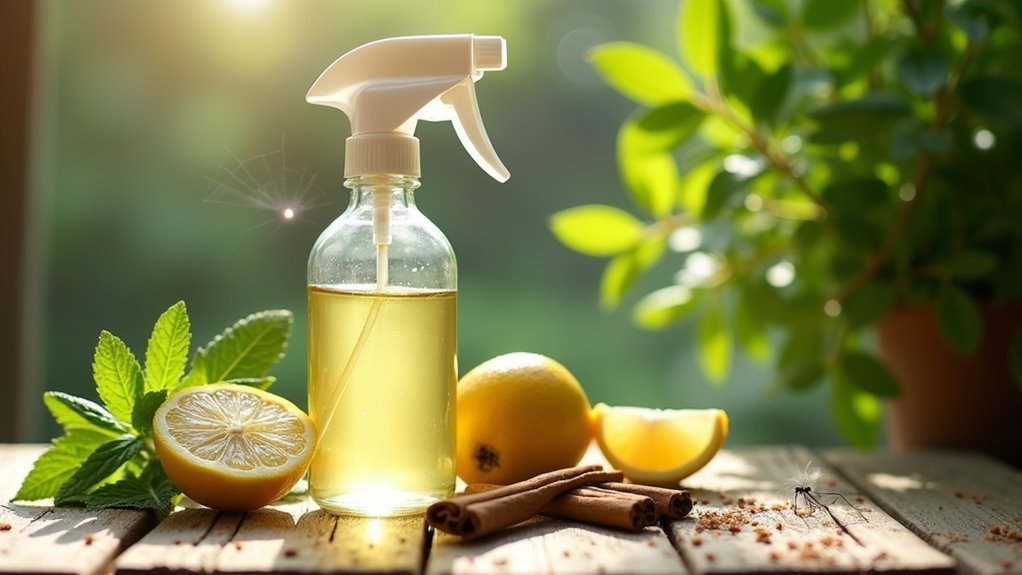
You can create an effective spider repellent spray using just three ingredients: equal parts distilled white vinegar and water, one tablespoon of liquid soap, and 30 drops of peppermint or cinnamon essential oil in a 16-ounce bottle. Mix the ingredients in a glass spray bottle, shake vigorously, and apply weekly around entry points, corners, and baseboards where spiders commonly hide. This natural solution’s safer for families and pets than chemical alternatives while targeting spiders’ scent sensitivity for maximum effectiveness.
Why Natural Spider Repellents Work Better Than Chemical Options
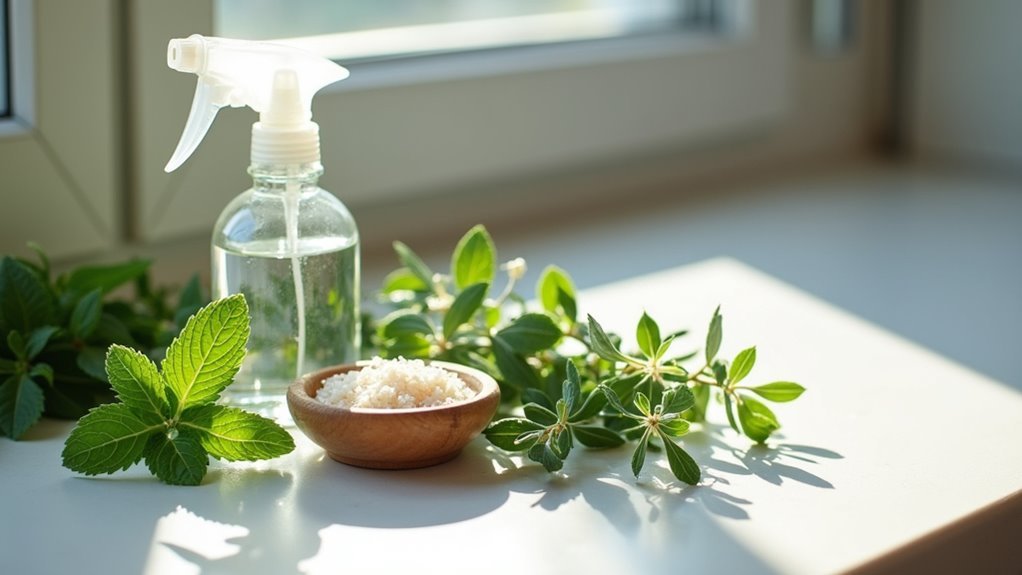
When you’re dealing with unwanted eight-legged visitors, natural spider repellents outperform chemical alternatives by targeting spiders’ heightened sensitivity to specific scents rather than relying on harsh toxins that often miss the mark.
Essential oils like peppermint essential oil effectively deter spiders while creating a safer environment for your family and pets.
Your homemade spider spray contains non-toxic ingredients that won’t leave harmful residues throughout your home like chemical pesticides do.
While you’ll need to maintain effectiveness through regular reapplication, you’re choosing environmentally friendly solutions that support sustainable pest management practices.
Unlike synthetic chemicals that can harm beneficial insects and ecosystems, natural repellents protect both your household and the environment while successfully keeping spiders at bay.
Essential Ingredients for Your Homemade Spider Spray
Creating an effective homemade spider spray requires just a few simple ingredients you likely already have in your pantry.
Your natural spider repellent starts with distilled white vinegar and water in equal parts, forming the base for effective pest control. Add one tablespoon of liquid soap to help the mixture adhere to spiders and break down their protective coating.
While cinnamon essential oil works excellently, peppermint essential oil also repels spiders effectively—use about 30 drops per 16-ounce bottle.
This spray recipe targets spiders without harsh chemicals. To prevent spiders and avoid a spider infestation, you’ll need regular application every few days to maintain the essential ingredients’ potency and keep your home spider-free.
Step-by-Step Instructions to Make the Perfect Spider Deterrent
Now that you’ve gathered your ingredients, making this powerful spider deterrent becomes a straightforward process. Start by adding the liquid soap to your glass spray bottle first. Next, fill the bottle with distilled white vinegar up to the neck. Finally, add 30 drops of cinnamon essential oil to complete your homemade mixture.
| Step | Action | Result |
|---|---|---|
| 1 | Add soap first | Creates base foundation |
| 2 | Pour vinegar slowly | Prevents excessive foaming |
| 3 | Drop essential oils last | Guarantees proper distribution |
Secure the spray nozzle and shake vigorously for 20 seconds. This natural ingredients combination will effectively repel spiders when you spray areas where spiders commonly hide, keeping your home spider-free.
Where and How Often to Apply Your DIY Spider Spray
Where should you apply your freshly made spider spray for maximum effectiveness? Focus on entry points like doors, windows, and garage openings to create a protective barrier.
Target high-traffic areas where spiders congregate, including corners, baseboards, and spaces behind furniture to disrupt their habitats.
For outdoor areas, spray gardens and patios where spiders typically gather, guaranteeing thorough coverage on plants and surfaces.
Always test the spray on a small, inconspicuous area first to prevent potential staining or damage.
To maintain effective protection, reapply your DIY spider spray weekly during peak spider seasons in spring and early summer.
This consistent application schedule guarantees your homemade deterrent remains potent against unwanted eight-legged visitors throughout your home and outdoor spaces.
Safety Tips When Using Natural Spider Repellent Around Pets and Children

While natural spider repellents offer a gentler alternative to harsh chemicals, you’ll need to take specific precautions to protect your family and furry friends.
These safety tips guarantee your homemade spider repellent won’t harm pets or children. Store all mixtures out of reach, as essential oils can be toxic if ingested.
Keep homemade spider repellents safely stored away from children and pets, as essential oils pose ingestion risks.
Always apply natural repellents when kids and pets aren’t present, using well-ventilated areas. Monitor pets closely since oils like peppermint can be dangerous to cats and dogs in high concentrations.
Conduct a patch test on fabrics and painted surfaces before widespread application to prevent staining or damage.
For the best pet safety, consult your veterinarian about specific ingredients in your repellent recipe to create a truly safe environment.
Frequently Asked Questions
What Is the Best Homemade Spray for Spiders?
You’ll want to mix 2 cups distilled white vinegar, 1/4 cup liquid soap, and 30 drops cinnamon essential oil in a 16-ounce spray bottle for effective spider control.
Will Vinegar and Dawn Kill Spiders?
Yes, you’ll kill spiders effectively with vinegar and Dawn. The soap suffocates them by reducing surface tension, while vinegar’s acetic acid disrupts their bodily functions when you spray directly onto them.
What Liquid Do Spiders Hate?
You’ll find spiders hate strong-scented liquids like peppermint oil, citronella, and cinnamon essential oils mixed with water. They also despise distilled white vinegar and garlic-infused water due to their overwhelming odors.
What Smell Do Spiders Hate the Most?
You’ll find spiders hate cinnamon’s aroma most intensely. Peppermint, eucalyptus, and citronella also repel them effectively. Their leg taste buds detect these offensive scents, disrupting their hunting abilities and forcing them to avoid treated areas completely.
In Summary
You’ve now got everything you need to create an effective, natural spider repellent that’s safer for your family than harsh chemicals. Remember to reapply your homemade spray every few weeks and focus on entry points where spiders typically enter. With consistent use, you’ll notice fewer eight-legged visitors in your home. Keep your ingredients fresh, store the spray properly, and you’ll maintain a spider-free environment naturally.



Leave a Reply