
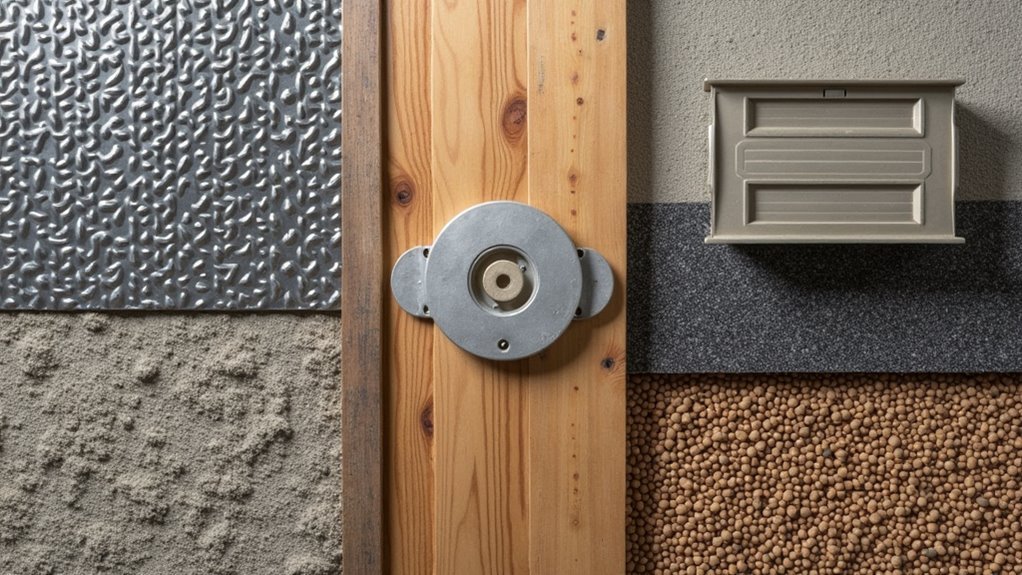
You can mouse-proof your foundation using seven effective barriers: stuff steel wool and caulk into pipe penetrations, install metal weatherstripping around doors and windows, secure heavy-duty wire mesh over foundation vents, patch cracks with concrete sealant, add rodent-proof door sweeps to exterior entries, cover large openings with galvanized hardware cloth, and fill irregular gaps with expandable fabric. These all-encompassing sealing techniques block entry points ¼ inch or larger while maintaining energy efficiency and weather resistance throughout seasonal changes.
Steel Wool and Caulk Combination for Pipe Penetrations
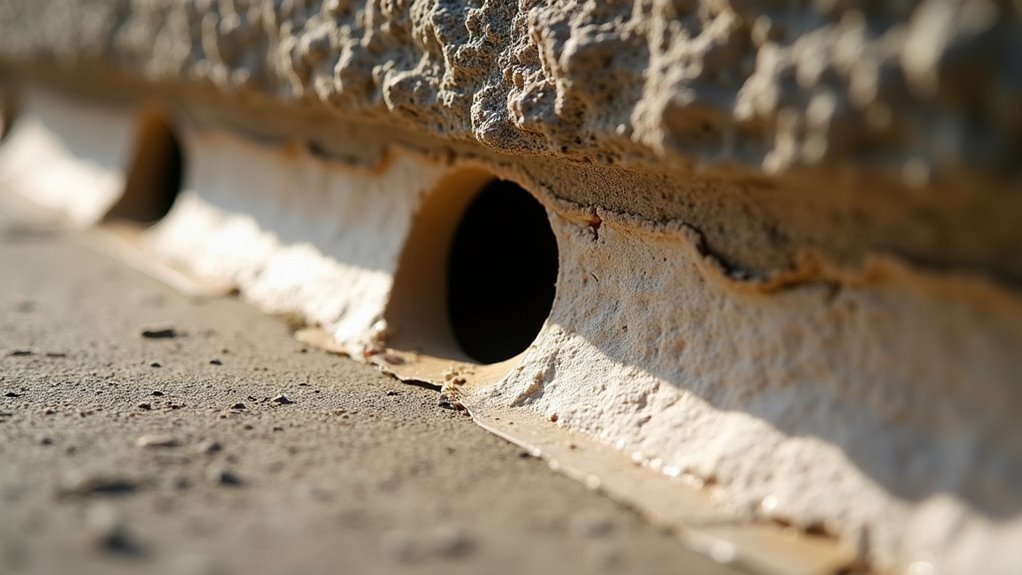
One of the most vulnerable spots in your foundation defense against mice lies where pipes penetrate your home’s exterior walls.
These openings create perfect entry points since mice can squeeze through gaps around pipes larger than ¼ inch.
Steel wool provides an excellent first line of defense. Its coarse texture and resistance to chewing effectively deters mice from gnawing through these openings.
Stuff steel wool tightly into gaps around all pipe penetrations, guaranteeing complete coverage.
After inserting the steel wool, apply caulk over the surface to prevent rodents from accessing any remaining spaces.
This combination creates a weather-tight seal that maintains energy efficiency while blocking mouse entry.
Regularly inspect these sealed areas, especially in basements and under sinks, to confirm the barrier remains intact.
Metal Weatherstripping for Door and Window Gaps
While pipes create obvious vulnerabilities, mice also exploit the smaller gaps around doors and windows that homeowners often overlook.
Metal weatherstripping provides superior rodent control by sealing these entry points that measure ¼ inch or larger. Unlike plastic alternatives, metal weatherstripping resists chewing, making it your most durable defense against persistent rodents.
Metal weatherstripping creates an impenetrable barrier against rodents while resisting chewing damage that destroys plastic alternatives.
You’ll need to measure and cut the weatherstripping precisely, ensuring it fits snugly against all gaps and cracks around door frames and window sashes. This creates an impenetrable barrier that blocks even determined mice from squeezing through.
Beyond rodent control, you’ll also improve your home’s energy efficiency by eliminating drafts. Inspect your metal weatherstripping regularly to maintain its effectiveness and replace any damaged sections immediately.
Heavy-Duty Wire Mesh for Foundation Vents and Openings
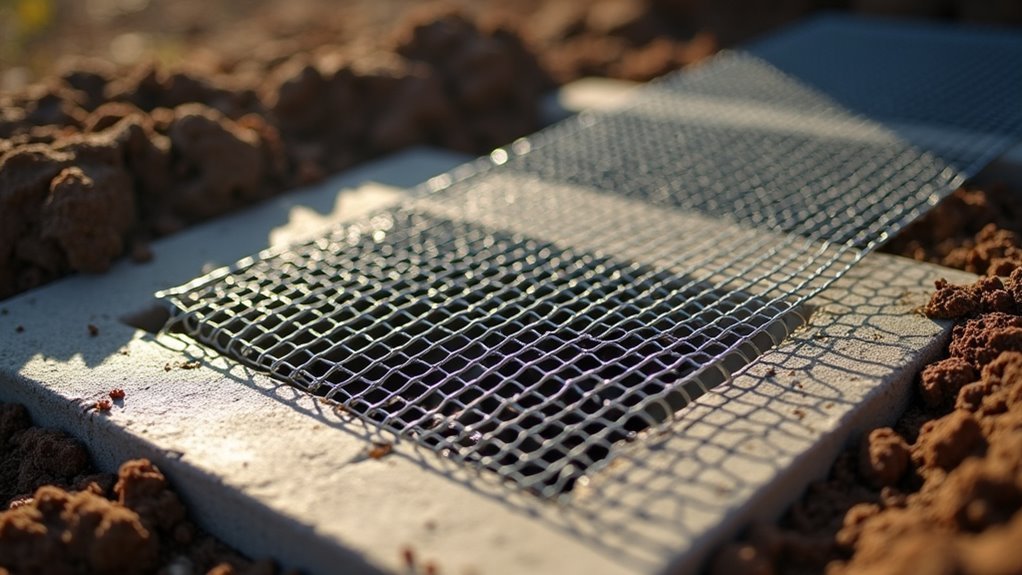
You’ll need to select the right mesh size to effectively block mice while maintaining proper ventilation through your foundation vents.
Choose heavy-duty wire mesh with openings no larger than ¼ inch, as this prevents even the smallest rodents from squeezing through.
Proper installation techniques guarantee the mesh stays securely in place and can’t be compromised by persistent gnawing or weather conditions.
Mesh Size Selection
Selecting the right mesh size stands as your most essential decision when installing heavy-duty wire mesh around foundation vents and openings. You’ll need mesh with openings no larger than 1/4 inch to effectively block mice from squeezing through. Anything larger compromises your pest control efforts.
| Mesh Opening Size | Effectiveness | Recommendation |
|---|---|---|
| 1/4 inch or smaller | Excellent | Recommended |
| 1/2 inch | Poor | Avoid |
| 1 inch or larger | Ineffective | Don’t use |
Mice can compress their bodies through surprisingly small gaps, making precise mesh size selection vital. Choose galvanized steel heavy-duty wire mesh with 19-gauge or thicker wire for maximum durability. This combination of proper opening size and wire thickness creates an impenetrable barrier that’ll protect your foundation long-term.
Installation Best Practices
Proper installation technique determines whether your heavy-duty wire mesh creates an effective barrier or leaves vulnerabilities that mice can exploit.
You’ll need galvanized materials to prevent corrosion and guarantee long-lasting protection. Secure the wire mesh using screws or heavy-duty staples, creating a tight seal against the foundation surface. Pay careful attention to corners and edges where gaps commonly form – even tiny openings can allow mouse entry.
Check that your mesh maintains consistent contact with all surfaces without any loose spots. Install the barrier so it extends slightly beyond the opening’s perimeter for complete coverage.
After installation, run your hands along the edges to identify any potential gaps that need reinforcement. This thorough approach guarantees your wire mesh creates an impenetrable barrier against rodent intrusion.
Concrete Patching for Foundation Cracks and Crevices
Foundation cracks create highways for unwanted rodent visitors, making concrete patching one of your most effective defensive strategies.
You’ll need to regularly inspect your foundation’s exterior for cracks, since mice can squeeze through openings larger than ¼ inch. Before applying any sealant, clean cracks thoroughly to guarantee proper adhesion.
For minor cracks, use high-quality exterior caulk for effective sealing. Larger gaps require hydraulic cement for durable repairs that’ll withstand weather and time.
Smooth your sealant with a putty knife and let it dry completely according to manufacturer instructions.
These entry points won’t stay sealed forever, so you’ll need ongoing maintenance. Check your patched areas regularly and reapply sealant when necessary to maintain your foundation’s integrity against rodent intrusion.
Rodent-Proof Door Sweeps for Exterior Entry Points
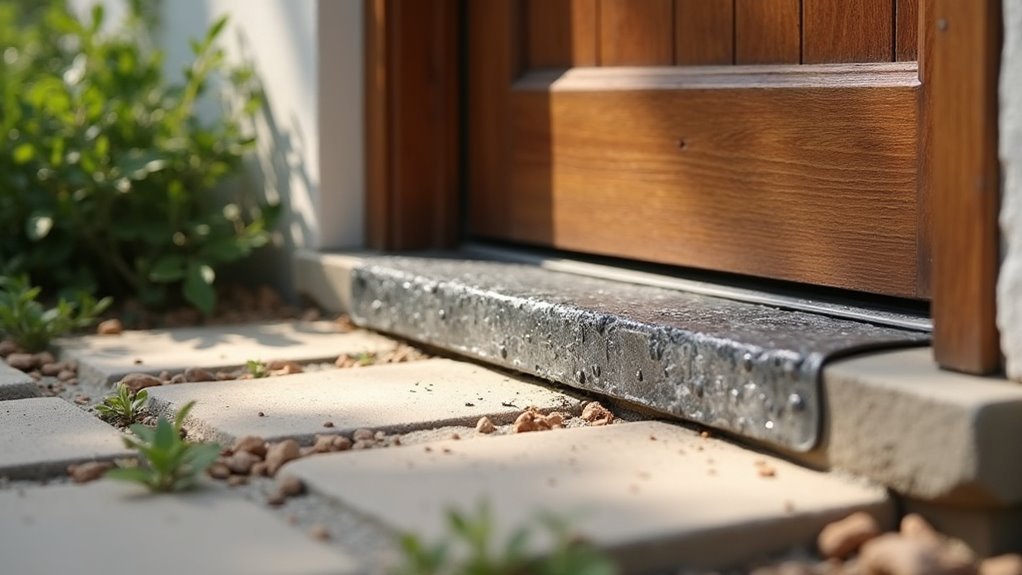
While sealing foundation cracks addresses one entry route, mice often find their way indoors through the gaps beneath exterior doors.
Installing rodent-proof door sweeps creates an effective barrier at this common point of entry, blocking access through gaps up to 1.75 inches.
Installing quality door sweeps provides reliable protection by sealing gaps up to 1.75 inches where mice commonly enter homes.
These specialized sweeps work alongside metal weatherstripping to enhance energy efficiency while keeping your home less vulnerable to rodent invasion.
Consider these options for maximum protection:
- Standard door sweeps – Handle gaps up to 1.25 inches, priced from $53.35 to $110.00
- Automatic door bottoms – Offer durable sealing solutions, ranging from $122.65 to $158.30
- Regular maintenance – Essential for continued effectiveness, as rodents can gnaw through materials
Proper installation guarantees long-lasting protection against unwanted intrusions.
Galvanized Hardware Cloth for Large Foundation Openings
Although door sweeps handle smaller gaps effectively, larger foundation openings require a more robust solution. Galvanized hardware cloth provides excellent protection against rodent entry through substantial foundation openings. You’ll want to choose mesh sizes between 1/4 inch and 1/2 inch, as this effectively blocks mice and rats from squeezing through.
The galvanized coating guarantees durability and corrosion resistance, making it perfect for outdoor foundation applications.
When installing, securely fasten the hardware cloth using screws or staples to prevent rodents from gnawing through attachment points. You can enhance protection by combining it with expanding foam around edges.
Don’t forget to inspect your installation regularly, as environmental wear can compromise effectiveness over time, potentially creating new rodent entry opportunities.
Expandable Fill Fabric for Irregular Gaps and Spaces
Countless irregular gaps and spaces around your foundation can’t be effectively sealed with standard materials like hardware cloth or door sweeps.
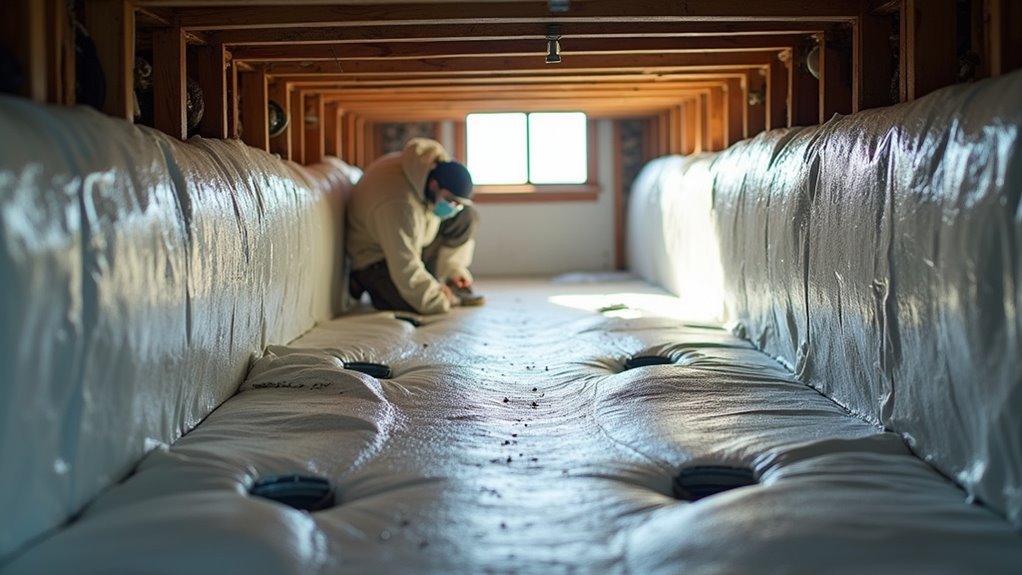
Expandable fill fabric provides the perfect solution for these challenging areas. This specialized material conforms to oddly shaped openings, expanding and contracting with temperature fluctuations while maintaining an effective seal.
The fabric’s rodent-resistant construction prevents mice from gnawing through, ensuring long-term protection. Installation is straightforward—you’ll cut pieces to size and press them firmly into gaps for a tight fit.
Key benefits of expandable fill fabric include:
- Adaptive sealing – Expands to fill irregular gaps that rigid materials can’t address
- Weather resistance – Contracts and expands with seasonal temperature changes
- Comprehensive coverage – Integrates seamlessly into your overall rodent-proofing strategy
Frequently Asked Questions
What to Put Around Foundation to Keep Mice Away?
You’ll want to spread 18 inches of sharp gravel around your foundation, apply crushed rock for a clean perimeter, and install metal flashing at the base to deter mice effectively.
What Material Can Mice Not Climb?
You’ll find that mice can’t climb smooth, vertical surfaces like glass or polished metal. They also struggle with steel, galvanized sheet metal, and heavy-duty flashing since these materials resist their claws.
What Do Mice Hate the Most?
You’ll find mice hate peppermint oil’s scent most intensely. They’re also strongly repelled by vinegar’s pungent odor and cinnamon’s powerful aroma. These natural deterrents exploit their sensitive noses, making them highly effective repellents.
How to Completely Mouse Proof Your House?
You’ll need to seal all entry points with steel wool and caulk, install door sweeps, store food in airtight containers, eliminate water sources, and maintain clean spaces throughout your home.
In Summary
You’ve got seven proven methods to fortify your foundation against unwanted rodent visitors. Don’t wait until you hear scratching in the walls—take action now. Start by inspecting your foundation thoroughly, then prioritize the most vulnerable areas first. Remember, mice only need a dime-sized opening to squeeze through, so attention to detail matters. With these barrier techniques, you’ll create an impenetrable defense that keeps your home rodent-free year-round.


Leave a Reply