You can eliminate stubborn ant invasions using proven neem oil formulas that target different infestation levels. Mix basic recipes with 1 tablespoon neem oil per gallon of water, or use concentrated blends with 6.5 ounces for heavy infestations. Enhance effectiveness by combining neem oil with peppermint, cinnamon essential oils, or white vinegar for doubled deterrent power. Apply specialized indoor plant-safe formulas or outdoor perimeter defense solutions every 3-7 days. These ten professional-strength recipes will transform your ant control strategy completely.
Basic Neem Oil Ant Spray Recipe
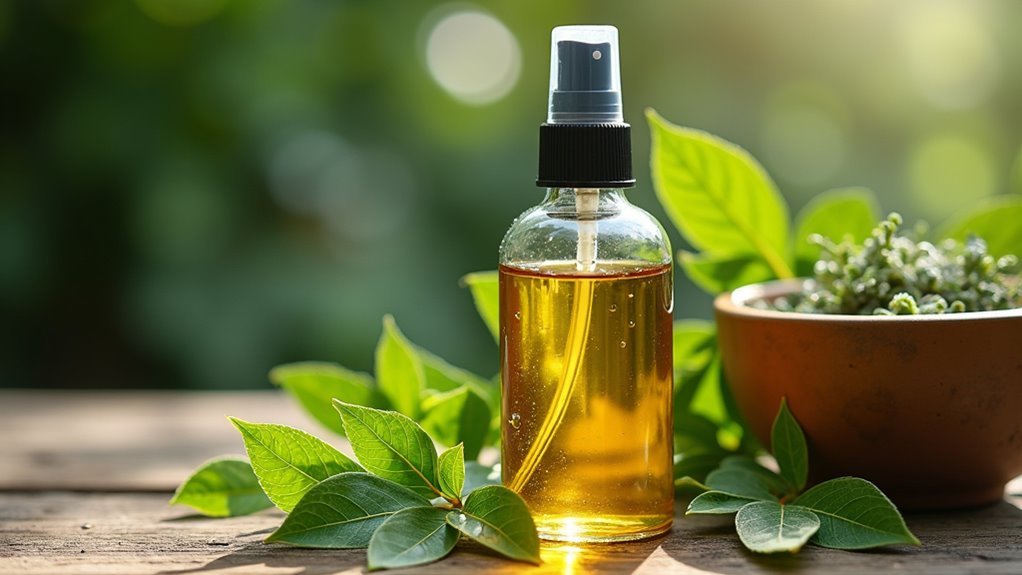
Creating a basic neem oil ant spray requires just three simple ingredients that you’ll likely find in your kitchen or garden shed.
Mix 1 tablespoon of 100% pure neem oil with 1 gallon of water and 2 teaspoons of gentle dish soap for effective pest control. Shake the mixture well before application, as neem oil separates from water easily.
For maximum effectiveness, always shake your neem oil mixture thoroughly before each application to ensure proper emulsification.
Apply your ant spray directly onto trails, nests, and areas where you’ve spotted ants. This disrupts their pheromone communication and repels them effectively.
Use the spray within 8 hours of mixing since it degrades quickly and loses potency. Reapply every 3-4 days until the infestation’s eliminated, while maintaining cleanliness to prevent future ant problems.
Concentrated Neem Oil Formula for Heavy Infestations
When dealing with severe ant problems, you’ll need a more potent solution that packs considerably more punch than the basic formula. This concentrated formula combines 6.5 ounces of neem oil with 4 teaspoons of insecticidal soap and 4 gallons of warm water, creating a powerful weapon against heavy ant infestations.
| Component | Amount |
|---|---|
| Neem Oil | 6.5 ounces |
| Insecticidal Soap | 4 teaspoons |
| Warm Water | 4 gallons |
| Reapplication Frequency | Every 3-4 days |
| Target Areas | Trails, nests, plants |
Apply this concentrated formula directly onto ant trails, nests, and infested plants. The azadirachtin compound must be ingested, so spray both leaf surfaces and stems thoroughly. Reapply every three to four days until you see significant population reduction.
Neem Oil and Dish Soap Mixture for Enhanced Coverage
Although neem oil works effectively on its own, combining it with dish soap creates a superior formula that dramatically improves coverage and penetration.
Adding dish soap to neem oil transforms it into a powerhouse pest control solution with enhanced adhesion and penetration capabilities.
The dish soap acts as a surfactant, breaking down water’s surface tension while helping the mixture adhere better to plant surfaces and ant exoskeletons.
For peak pest control results, mix 2 tablespoons of neem oil with 2 teaspoons of gentle dish soap per gallon of water.
This combination allows the neem oil to penetrate ants’ protective barriers more effectively, enhancing its repelling and killing properties.
Always shake your mixture thoroughly before application to guarantee even distribution.
Apply during cooler parts of the day to prevent potential leaf burn while maximizing the formula’s effectiveness against ant infestations.
Neem Oil With Peppermint Oil Double-Action Formula
Taking your ant control strategy one step further, the neem oil with peppermint oil double-action formula delivers powerful results by combining two distinct pest-fighting mechanisms. This powerful insect repellent disrupts ants’ pheromone trails while the active compound Azadirachtin targets their feeding and reproduction.
| Ingredient | Amount | Purpose |
|---|---|---|
| Pure neem oil | 2 tablespoons | Disrupts ant behavior |
| Peppermint oil | 10-20 drops | Natural repellent |
| Purified water | 1 gallon | Base solution |
| Dish soap | Few teaspoons | Emulsifies oils |
Apply this mixture every 7-14 days, covering leaf surfaces and ant entry points thoroughly. The peppermint oil enhances deterrent effects while leaving a fresh scent, making it a pleasant alternative to synthetic chemicals for effective ant control.
Slow-Release Neem Oil Cotton Ball Solution
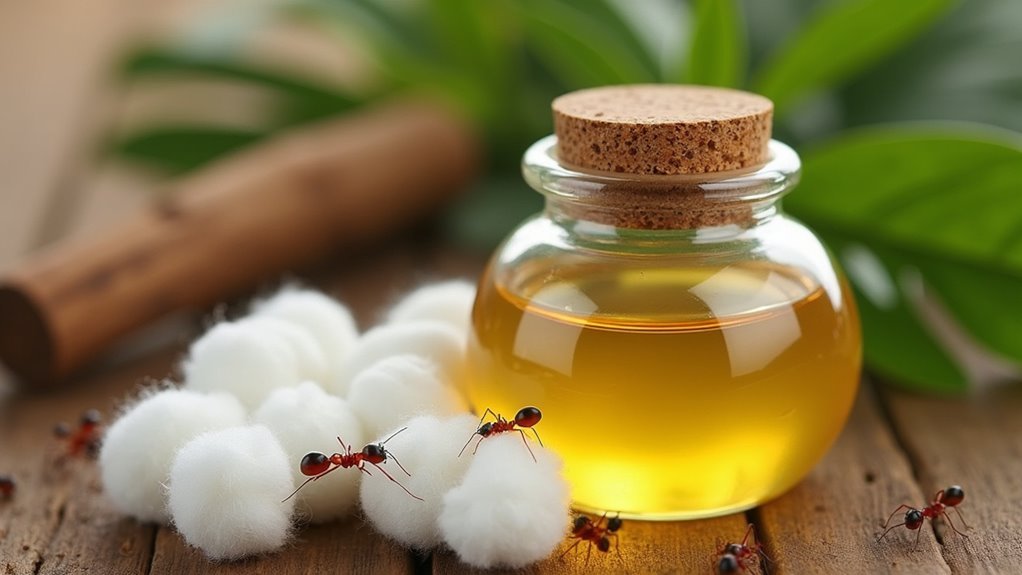
You’ll create an effective slow-release ant deterrent by preparing cotton balls with the right neem oil mixture and water ratio.
The preparation method involves soaking cotton balls in a solution of 5-10 drops of neem oil mixed with 2 cups of water for maximum saturation.
Once prepared, you’ll need to place these treated cotton balls strategically in high-traffic ant areas and entry points around your home.
Cotton Ball Preparation Method
One effective method for creating a continuous ant deterrent involves preparing slow-release cotton balls that gradually dispense neem oil compounds over several days.
You’ll need to saturate cotton balls with a mixture of 100% pure neem oil and water using a 1:16 ratio—one tablespoon of neem oil per cup of water.
Mix the solution thoroughly before applying it to guarantee ideal distribution. Allow the cotton balls to absorb the liquid completely, making sure they’re fully saturated for maximum effectiveness.
Place these prepared cotton balls strategically in areas where you’ve observed ant activity, as they’ll repel ants while slowly releasing active compounds.
Store unused saturated cotton balls away from direct sunlight to prevent degradation and maintain their ant-repelling properties.
Strategic Placement Guidelines
Once you’ve prepared your neem oil-saturated cotton balls, proper placement becomes the determining factor in your ant control success.
You’ll want to strategically position these cotton balls at key entry points where ants typically invade your home. Focus on windowsills, doorways, cracks, and crevices where you’ve spotted ant activity. Place the repellent directly along established ant trails to disrupt their pheromone pathways effectively.
For maximum coverage, use multiple cotton balls in high-traffic areas rather than relying on single placements. Space them approximately two feet apart to create an overlapping barrier that ants won’t cross.
Don’t forget basement entrances, kitchen corners, and areas near food storage. This systematic approach guarantees your neem oil treatment creates extensive protection throughout your living space.
Neem Oil and White Vinegar Combination Treatment
You’ll discover that combining neem oil with white vinegar creates a powerful dual-action treatment that disrupts ant pheromone trails while repelling them from your home.
The correct mixing ratios and strategic application timing can greatly boost your ant elimination results compared to using neem oil alone.
This combination leverages the antifungal properties of neem oil alongside vinegar’s acetic acid to create an enhanced barrier that’s both effective and environmentally safe.
Mixing Ratios Guide
Creating an effective neem oil and white vinegar combination requires equal parts of each ingredient in a standard spray bottle.
You’ll need 100% actual neem oil mixed with an equal amount of white vinegar to maximize effectiveness. This balanced ratio guarantees the neem oil functions as both repellent and insecticide while the vinegar disrupts ant pheromone trails.
Always shake your neem oil and vinegar mixture vigorously before each use since neem oil naturally separates from vinegar when left sitting. This emulsification step is vital for proper distribution of both active ingredients.
Apply the solution directly onto ant trails, entry points, and high-traffic areas where you’ve spotted ant activity. You’ll need to reapply every few days since vinegar’s scent dissipates quickly, requiring frequent applications for sustained ant control.
Application Timing Methods
When should you apply your neem oil and vinegar mixture for maximum ant deterrent effects? Application timing considerably impacts your pest control success when repelling ants.
Apply the mixture during early morning or late afternoon hours when temperatures are cooler. This prevents rapid evaporation, ensuring the neem oil maintains its potency longer on treated surfaces.
You’ll need to reapply every few days or immediately after rain, as both ingredients lose effectiveness over time.
Monitor ant activity patterns and target their most active areas during these ideal windows. The cooler temperatures help the mixture penetrate deeper into cracks and crevices where ants travel.
As an added benefit, this natural cleaning solution will sanitize treated areas while maintaining continuous protection against future ant invasions.
Enhanced Ant Elimination
While individual treatments can provide temporary relief, combining neem oil with white vinegar creates a powerful dual-action formula that both eliminates existing ants and prevents future invasions.
This potent mixture disrupts ant trails by breaking down pheromone communications while simultaneously cleaning surfaces that attract more insects.
You’ll need equal parts neem oil and white vinegar for maximum effectiveness.
Here’s your application strategy:
- Mix ingredients in a spray bottle, shaking well for proper emulsification
- Target ant trails and entry points with thorough coverage
- Clean surfaces while repelling ants, removing scent markers
- Reapply every few days since both components lose potency over time
This dual-action approach tackles existing infestations while preventing future problems, making it superior to single-ingredient treatments for extensive ant control.
Outdoor Neem Oil Perimeter Defense Formula
Protecting your home’s exterior from ant invasions becomes straightforward with a properly mixed neem oil perimeter defense formula.
Combine 2 tablespoons of 100% pure neem oil with 1 gallon of water and 2 teaspoons of gentle dish soap for best emulsification. This organic gardening solution creates an effective barrier when applied around your home’s perimeter and entry points.
Focus your application on the ground and plant bases to disrupt ant trails while protecting vegetation.
Apply during early morning or late evening hours when temperatures are cooler to prevent rapid evaporation. You’ll need to reapply every 7-14 days or after heavy rainfall to maintain effectiveness.
This perimeter defense strategy excels at repelling ants naturally without harsh chemicals, making it ideal for homes and gardens.
Indoor Plant-Safe Neem Oil Ant Deterrent
Anyone can safely eliminate indoor ant problems without compromising their houseplants by using a gentle neem oil deterrent formula. This non-toxic insecticide derived from the neem tree provides effective pest control while keeping your indoor plants healthy and thriving.
Neem oil offers a plant-safe solution for indoor ant control, delivering effective pest management without toxic chemicals or houseplant damage.
Essential Application Steps:
- Mix the solution – Combine 1 teaspoon neem oil with 1/3 teaspoon insecticidal soap in 1 quart warm water.
- Spray thoroughly – Apply to leaf tops, undersides, stems, and ant travel areas around your indoor plants.
- Target reproduction – The ant deterrent disrupts feeding and breeding behaviors without harming beneficial insects.
- Maintain schedule – Apply every 7-14 days for prevention or every 3-4 days for active infestations.
You’ll achieve exceptional results by consistently treating both visible ants and their hiding spots.
Neem Oil and Cinnamon Essential Oil Blend
Combining neem oil with cinnamon essential oil creates a powerful dual-action ant deterrent that disrupts both feeding behaviors and navigation systems.
This pest-repelling blend targets ants through multiple mechanisms: cinnamon essential oil disrupts ant trails by interfering with pheromone communication, while neem oil’s azadirachtin compounds suppress feeding and reproductive behaviors.
You’ll create this natural ant deterrent by mixing 1 tablespoon of neem oil with 10-15 drops of cinnamon essential oil in a water-filled spray bottle.
The combination enhances each ingredient’s effectiveness while providing a pleasant scent. Spray the mixture directly on ant trails and around entry points where ants enter your home.
This creates an effective barrier that confuses ant navigation while simultaneously reducing their ability to feed and reproduce in treated areas.
Professional-Strength Neem Oil Concentrate Recipe
You’ll need specific mixing ratios to create a professional-grade neem oil concentrate that delivers maximum potency against ant infestations.
Professional application methods guarantee you’re targeting the right areas with proper coverage techniques that commercial pest control services use.
Understanding how to extend the solution’s effectiveness will help you maintain long-term ant control without constant reapplication.
Maximum Potency Mixing Ratios
When dealing with severe ant infestations, you’ll need a professional-strength neem oil concentrate that delivers maximum potency.
The right mixing ratios guarantee you’ll achieve effective coverage while maintaining plant safety.
For maximum potency against established ant colonies, combine:
- 6.5 ounces of neem oil with 4 gallons of warm water
- 4 teaspoons of insecticidal soap to enhance oil distribution
- Slow incorporation method while shaking sprayer for even mixing
- Complete application to leaf tops, undersides, stems, and ant-hiding crevices
For preventive measures, use a lighter ratio: 1 teaspoon neem oil and 1/3 teaspoon insecticidal soap per quart of warm water.
Always test your solution on a single leaf first to check for adverse plant reactions before full application.
Commercial Grade Application Methods
Professional-strength neem oil applications require precise mixing techniques to maximize effectiveness against persistent ant colonies.
You’ll need to combine 1 gallon of water with 4 ounces of 100% pure neem oil and 2 tablespoons of gentle dish soap for this potent formula. Shake thoroughly before each use to guarantee proper emulsification, which enhances the solution’s insecticide properties.
Apply directly to ant trails, nests, and affected areas, guaranteeing complete coverage on foliage and surrounding ground. For standard pest control, reapply every 7-14 days. During acute infestations, increase application frequency to every three to four days.
Always test the mixture on a small area first to check for adverse reactions. These application methods deliver commercial-grade results for serious ant problems.
Extended Effectiveness Duration Tips
Three key factors determine how long your neem oil concentrate remains effective against ant colonies. Application timing, environmental conditions, and consistent monitoring directly impact your treatment’s success rate.
To maximize your neem oil’s extended effectiveness against persistent ant activity, follow these strategic guidelines:
- Reapply every 3-4 days consistently until you notice significant reduction in ant movement and foraging behavior.
- Apply during cooler hours (early morning or evening) to prevent rapid evaporation and maintain longer surface contact.
- Monitor weather conditions and avoid application before rainfall, which can wash away the protective barrier.
- Store unused concentrate properly in cool, dark locations to preserve potency between applications.
Remember that neem oil works gradually by disrupting ants’ feeding and reproductive cycles rather than providing instant elimination.
Frequently Asked Questions
How to Mix Neem Oil to Kill Ants?
You’ll mix 2 tablespoons of pure neem oil with 1 gallon of water and 2 teaspoons of dish soap. Shake well before spraying directly on ants and their entry points.
What Is the Ratio of Neem Oil to Water?
You’ll use 2 tablespoons of neem oil per gallon of water for the standard ratio. For smaller batches, mix 1 tablespoon in ½ gallon or 1.5 teaspoons in 1 quart.
How Do You Make Homemade Ant Killer Solution?
You’ll mix 1 tablespoon of pure neem oil, 1 teaspoon of mild dish soap, and 1 quart of warm water in a spray bottle. Shake well before spraying directly on ants and entry points.
How Do You Make Neem Oil Insecticide?
You’ll mix 2 tablespoons of pure neem oil with 1 gallon of water and 2 teaspoons of dish soap. Shake thoroughly for proper emulsification, then apply immediately for maximum effectiveness.
In Summary
You’ve now got nine powerful neem oil formulas to tackle any ant problem you’re facing. Whether you’re dealing with a light infestation or need heavy-duty protection, there’s a recipe that’ll work for your specific situation. Remember to reapply these solutions regularly and target ant trails for maximum effectiveness. With consistent use, you’ll see those unwanted visitors disappear from your home and garden for good.


Leave a Reply