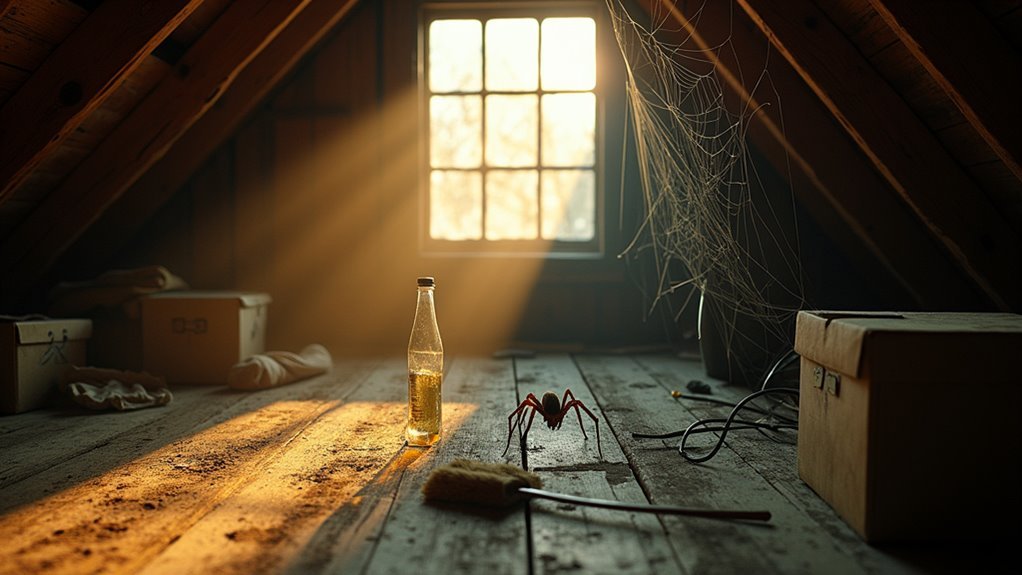
Spiders invade your attic because it offers everything they need: warmth, darkness, shelter from weather, and abundant hiding spots among clutter. You’ll find common species like house spiders, black widows, and brown recluses creating webs in corners and low-traffic areas. To safely remove them, wear protective gear including gloves and long sleeves, then vacuum webs and egg sacs thoroughly. Seal cracks with caulk, install mesh screens on vents, and apply natural repellents like peppermint oil to keep them out permanently.
What Attracts Spiders to Attic Spaces
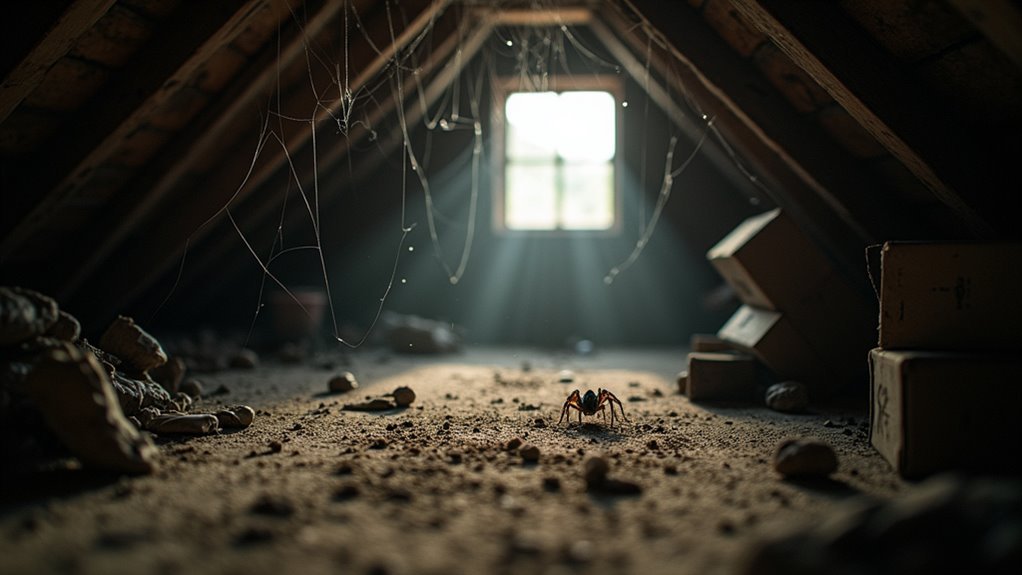
When you’re wondering why spiders seem to gravitate toward your attic, several environmental factors make this space particularly appealing to them.
Attics provide warmth and shelter from harsh weather conditions, creating an ideal refuge. The dark, quiet environment allows spiders to construct webs undisturbed and hunt effectively.
Attics create perfect spider sanctuaries with their warm, undisturbed darkness that enables undisturbed web construction and effective hunting opportunities.
Your cluttered attic offers countless hiding spots where spiders can thrive without interference. Small cracks and gaps in your roofing or siding become convenient entry points for these eight-legged invaders.
Additionally, insects that often inhabit attics serve as an abundant food source, drawing spiders deeper into your home.
To prevent spider infestations, you’ll need to address these attractive conditions by sealing entry points, reducing clutter, and eliminating their food sources through proper pest control measures.
Common Spider Species Found in Attics
You’ll encounter several spider species in your attic, ranging from harmless house spiders to potentially dangerous venomous varieties.
House spiders with their tangled brown webs and long-legged cellar spiders pose no threat to your health.
However, you should watch for black widows with their distinctive red hourglass markings, as these venomous spiders can deliver dangerous bites if disturbed.
Dangerous Venomous Species
Two particularly dangerous venomous spiders commonly inhabit attics: the black widow and brown recluse.
These venomous spiders create significant health risks when they establish themselves in dark areas like your attic space.
You’ll recognize black widows by their glossy black bodies and red hourglass markings.
Brown recluse spiders display violin-shaped marks on their backs.
Both species can cause serious medical complications through spider bites.
Key identification and safety measures include:
- Look for distinctive markings before approaching any spider
- Understand that black widow bites cause severe muscle cramps and abdominal pain
- Know that brown recluse bites create necrotic skin lesions requiring immediate medical attention
- Practice cautious removal techniques to avoid accidental contact
- Seek professional help for proper identification when you’re uncertain about species
Both species hunt insects in undisturbed attic environments.
Harmless House Spiders
Most attic-dwelling spiders pose no threat to your safety and actually benefit your home by controlling insect populations. Harmless house spiders like the common house spider prefer attics’ dark, undisturbed environments for web-building.
These brown or gray spiders measure 1/4 to 1 inch and serve as natural pest control by eating small insects.
You’ll need to manage their populations since they produce multiple egg sacs yearly, each containing up to 300 eggs. Regular cleaning in your attics effectively controls these spiders without harsh chemicals.
When you vacuum consistently, you’ll remove webs and egg sacs before they multiply. This simple maintenance approach keeps harmless house spiders at manageable levels while preserving their beneficial insect-eating role in your home.
Identifying Spider Infestations in Your Attic

When was the last time you ventured into your attic to check for unwanted eight-legged residents?
Spider infestations in attics often go unnoticed until they’ve established themselves. House spiders and cellar spiders gravitate toward these warm, secluded spaces for breeding and hunting.
Key signs you’re dealing with a spider problem include:
- Visible webs stretched across corners and beams
- Small round egg sacs containing hundreds of spider eggs
- Increased spider sightings in dark, undisturbed areas
- Multiple web formations in low-traffic zones
- Clustered activity around stored items and debris
Regular inspections help you catch infestations early.
Focus on maintaining cleanliness and reduce clutter that provides hiding spots. These preventive measures make your attic less appealing to spiders seeking nesting opportunities.
Safety Precautions Before Entering the Attic
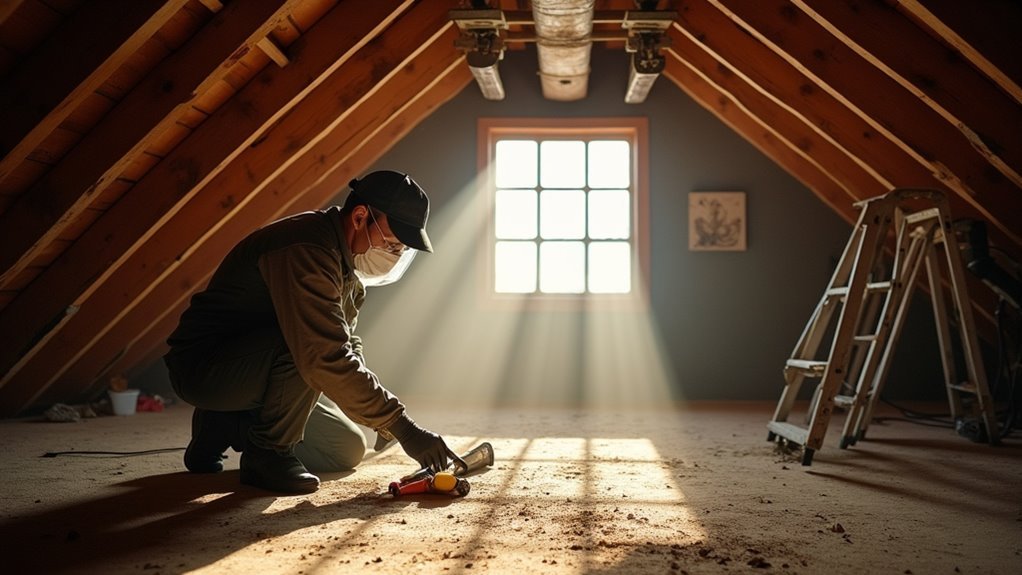
Before you enter your attic to deal with spiders, you’ll need proper protective gear to shield yourself from dust, allergens, and potential bites.
Put on gloves, a mask, and safety goggles as your first line of defense.
You’ll also want to complete a thorough inspection checklist to verify the space is structurally sound and safe for movement.
Protective Gear Requirements
Several essential protective items can greatly reduce your risk of injury when entering spider-infested attics.
The attic environment presents multiple hazards that require proper protective gear to navigate safely.
Essential protective equipment includes:
- Gloves – Shield your hands from spider bites and sharp objects commonly found in cluttered spaces
- Dust mask or respirator – Prevent inhalation of dust, mold spores, and allergens present in attic areas
- Safety goggles – Protect your eyes from falling debris, spider webs, and airborne particles
- Long sleeves and pants – Create a barrier against spider bites and scratches from insulation materials
- Sturdy footwear – Safeguard your feet from sharp objects and potential pest encounters on attic floors
This protective gear forms your first line of defense against common attic hazards.
Attic Inspection Checklist
Once you’ve gathered your protective gear, conducting a thorough safety assessment becomes your next priority before stepping foot in the attic. Start with proper ventilation and lighting setup, then verify your ladder’s stability before climbing. During your attic inspection, you’ll systematically examine every corner for spider activity indicators.
| Inspection Focus | What to Look For |
|---|---|
| Spider Evidence | Webs and egg sacs in corners and crevices |
| Structural Issues | Cracks and gaps in walls, roof, and foundation |
| Entry Points | Openings around vents, pipes, and electrical fixtures |
Document all entry points you discover, as these require immediate attention to seal effectively. If you find extensive infestations during your inspection, consider consulting pest control experts for professional removal tips rather than attempting dangerous DIY solutions.
Step-by-Step Spider Removal Methods
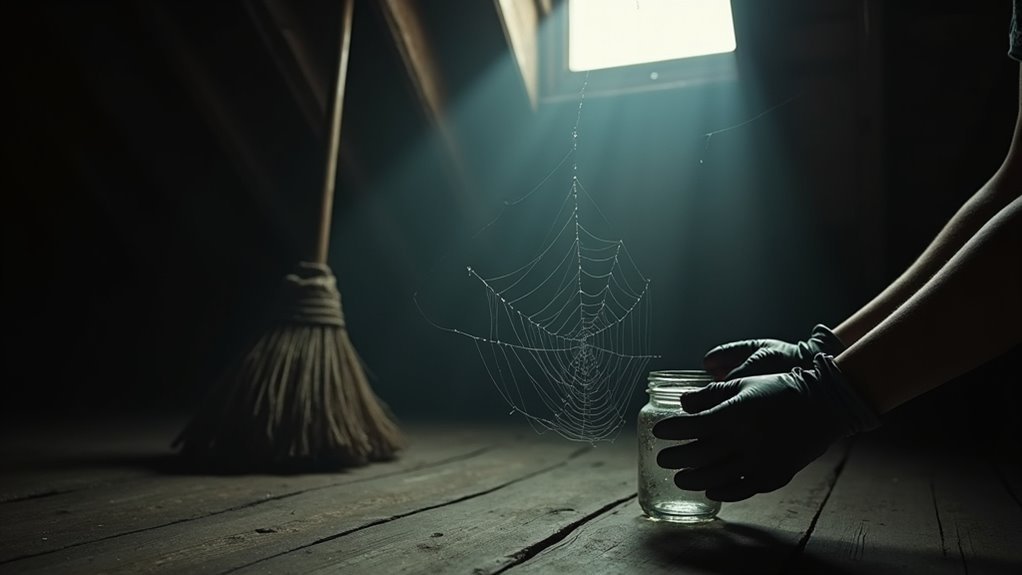
When dealing with spiders in your attic, start with a thorough vacuuming session that targets all corners, wooden beams, and hidden crevices where these eight-legged intruders typically establish their homes.
This thoroughly vacuuming approach removes webs, egg sacs, and live spiders effectively.
Follow these essential spider removal steps:
- Deploy sticky traps in high-activity zones and inspect them regularly for best results
- Apply homemade spider repellent using water mixed with vinegar or peppermint oil around nesting areas
- Seal cracks and gaps with caulk or weatherstripping to eliminate entry points
- Monitor for venomous spiders like black widows that require special handling
- Contact professional pest control services for severe infestations to prevent future invasions
These methods create a broad defense system against spider populations.
Natural Deterrents for Attic Spider Control
After implementing physical removal methods, you’ll want to establish natural barriers that keep spiders from returning to your attic space.
Natural deterrents offer safe, effective solutions without harsh chemicals. Mix peppermint oil with water and spray it in attic corners—spiders hate this scent and will avoid treated areas.
Create a vinegar solution using equal parts vinegar and water, then spray it directly on spider webs and entry points to repel spiders effectively.
Place citrus peels, particularly lemon and orange, in corners where their natural oils deter invasions.
Sprinkle diatomaceous earth strategically throughout your attic to dehydrate spiders on contact.
Maintain a clutter-free environment while regularly applying these deterrents to considerably reduce likelihood of future infestations.
Sealing Entry Points and Prevention Strategies
While natural deterrents help repel spiders from your attic, you’ll achieve better long-term results by preventing their entry altogether.
Sealing entry points forms the foundation of effective spider prevention, requiring systematic inspection and maintenance.
To prevent spiders from accessing your attic space:
- Inspect your attic regularly for small cracks, gaps in roofing, siding, and around vents
- Use caulk or weather stripping to seal identified openings and limit infiltration
- Install fine mesh screens on windows and vents to block entry while preserving ventilation
- Trim tree branches near the roofline seasonally to reduce access routes
- Focus on regular cleaning and decluttering to eliminate hiding spots
Maintaining a clean, organized attic environment greatly helps reduce the likelihood of spider infestations taking hold.
When to Call Professional Pest Control
How do you know when your spider problem requires professional intervention? If you’ve spotted venomous spider species like black widow or brown recluses, don’t hesitate to contact a pest control expert immediately.
These dangerous spiders necessitate safe identification and removal by trained professionals.
Venomous spider species require immediate professional intervention to ensure safe identification and proper removal from your home.
When your DIY efforts—including natural repellents and sealing entry points—haven’t resolved persistent infestations, it’s time for professional spider control.
A larger underlying pest problem may be attracting spiders to your attic.
Professional pest control treatments offer targeted solutions that eliminate current populations and prevent future invasions.
If you’re unsure about safely handling spider removal or have allergies, professionals provide safer alternatives than DIY methods.
Their expertise guarantees your home remains spider-free while minimizing health risks.
Maintaining a Spider-Free Attic Environment
Once you’ve successfully removed spiders from your attic, maintaining a spider-free environment requires consistent effort and preventive measures.
Implementing these preventative measures helps keep your home protected from future spider invasions.
- Regular vacuuming and web removal – Eliminate spider habitats and reduce food sources by removing webs, egg sacs, and insects they prey upon.
- Decluttering stored items – Organize boxes and remove unnecessary materials to eliminate hiding spots where spiders breed.
- Seal cracks and entry points – Close gaps around vents, windows, and roof areas to prevent spider access.
- Apply natural repellents – Use peppermint oil or vinegar sprays to deter spiders through scent aversion.
- Conduct regular inspections – Monitor for spider activity signs and address issues promptly for long-term maintenance.
Frequently Asked Questions
How Do I Get Rid of Spiders in My Attic?
You’ll want to vacuum regularly to remove webs and egg sacs, seal cracks with caulk, place sticky traps in corners, spray peppermint oil mixture, and contact professionals for severe infestations.
Should I Call an Exterminator for Attic Spiders?
You should call an exterminator if you’ve identified venomous spiders like black widows, have a severe infestation, or DIY methods aren’t working effectively in your attic space.
Why Are There so Many Spiders in My Attic?
Your attic provides spiders everything they need: warmth, darkness, undisturbed spaces, and prey insects. Cluttered storage creates hiding spots, while roof cracks offer easy entry points from outside.
Why Should You Never Squish a Spider?
You shouldn’t squish spiders because it can release danger pheromones attracting more spiders, spread hundreds of eggs throughout your home, and increase your risk of getting bitten defensively.
In Summary
You’ve learned why spiders choose your attic and how to remove them safely. Remember to wear protective gear, use natural deterrents like essential oils, and seal all entry points to prevent future invasions. Don’t hesitate to call professionals for severe infestations or venomous species. By maintaining regular inspections and keeping your attic clean and dry, you’ll create an environment that’s unwelcoming to these eight-legged intruders and protect your home long-term.

Leave a Reply