
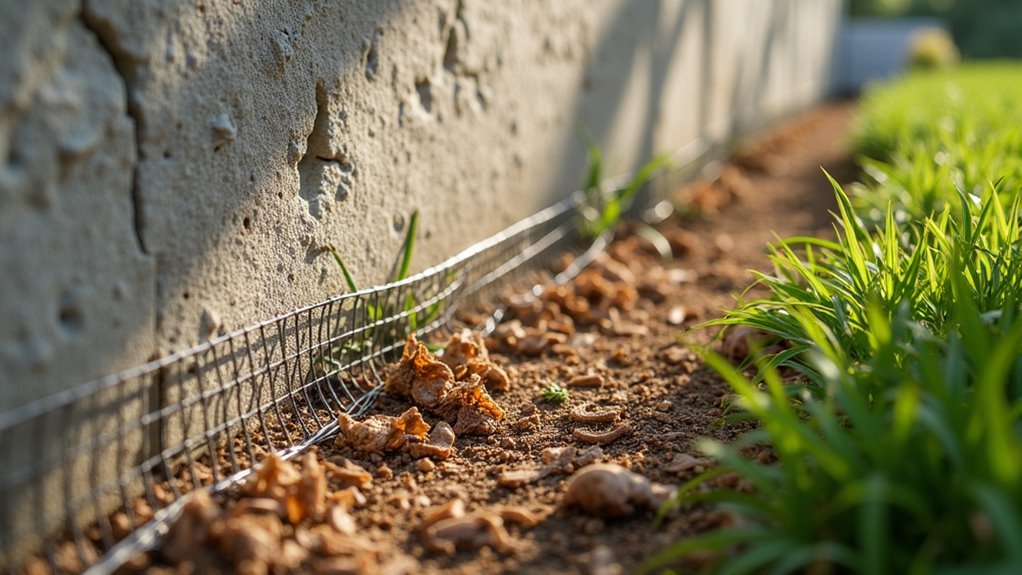
You can keep mice out of your foundation by sealing gaps as small as 1/4 inch with steel wool and caulk, since mice can squeeze through surprisingly tiny openings. Install chew-resistant weatherstripping around doors and windows, and create a vegetation-free zone at least 12 inches from your foundation walls. Use expanding foam for larger cracks and inspect utility entry points where pipes and wires enter. These extensive strategies will help you build an impenetrable barrier against unwanted rodent intrusions.
Signs That Mice Are Targeting Your Foundation
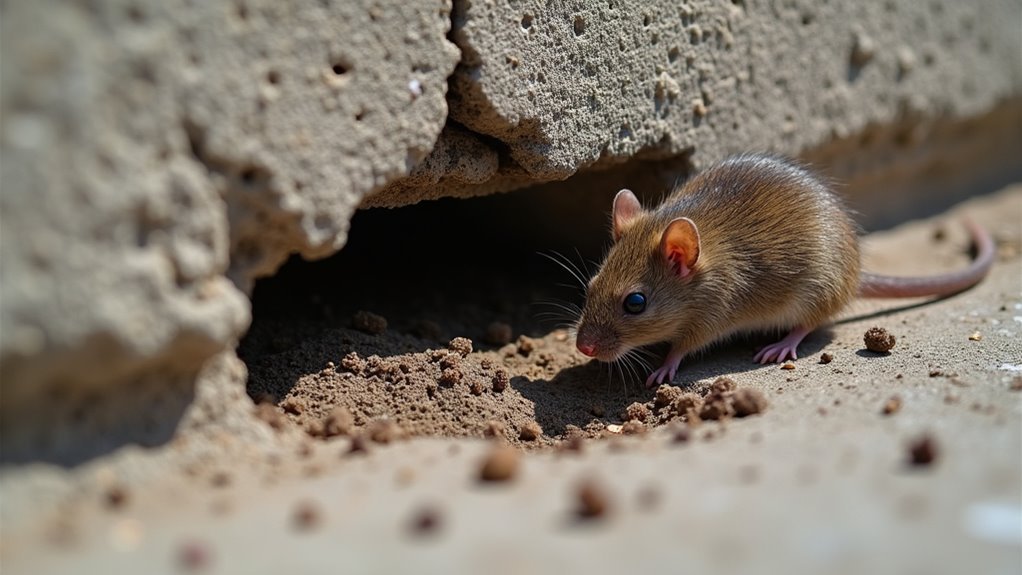
How can you tell if mice are setting their sights on your foundation? Look for mouse droppings resembling small dark rice grains scattered around entry points and foundation areas. These droppings indicate active rodent presence and frequent traffic patterns.
Check for chew marks on storage boxes, dry goods bags, or even foundation materials themselves. Mice create these marks while attempting to access your home or gather nesting materials.
You’ll also notice scratch marks and rub marks along baseboards near foundation gaps where mice navigate regularly. A musty odor from urine or decay signals nearby mouse activity.
Finally, inspect for nesting areas containing shredded paper or wood shavings in hidden spots around your foundation. These small nests confirm mice have established habitation close to your home’s perimeter.
Understanding How Mice Enter Through Foundation Gaps
You might be surprised to learn that mice can squeeze through foundation gaps as small as 1/4 inch, making even tiny cracks potential doorways into your home.
These gaps typically form when your foundation settles over time, develops cracks from weather exposure, or deteriorates around utility entry points.
The most vulnerable areas you’ll need to monitor include spaces between walls and floors, plus any openings where pipes, electrical lines, or other utilities enter your foundation.
Small Gap Entry Points
When inspecting your foundation for potential mouse entry points, you’ll discover that these persistent rodents can squeeze through openings as narrow as a quarter-inch in diameter. This remarkable ability makes thorough examination of your home’s foundation absolutely critical for effective pest control.
Focus your inspection on vulnerable areas where structural elements meet. Check seams between walls and floors carefully, as these joints often develop small cracks over time.
Window and door frames frequently contain gaps that provide easy access for mice seeking shelter.
Don’t overlook utility penetrations in your foundation walls. Areas where pipes, cables, or wires enter your home create natural entry points that mice readily exploit.
Even tiny holes around these utilities can compromise your efforts to prevent rodents from establishing themselves inside your property.
Foundation Crack Vulnerabilities
While foundation cracks may appear insignificant to the naked eye, they represent major highways for mice seeking entry into your home. These tiny rodents can squeeze through foundation cracks as small as 1/4 inch, making even hairline fractures potential access points.
You’ll find the most vulnerable areas where your foundation meets the ground, particularly around utility penetrations and pipe entries.
Pay special attention to seams between foundation walls and horizontal surfaces, as settling often creates gaps here. To seal these entry points effectively, use steel wool combined with masonry repair compounds. This combination creates a durable barrier that mice can’t chew through.
Regular foundation inspections help you identify new cracks before they become invasion routes. Proper drainage maintenance also prevents foundation movement that creates additional vulnerabilities to prevent mice infiltration.
Inspecting Your Foundation for Vulnerable Entry Points
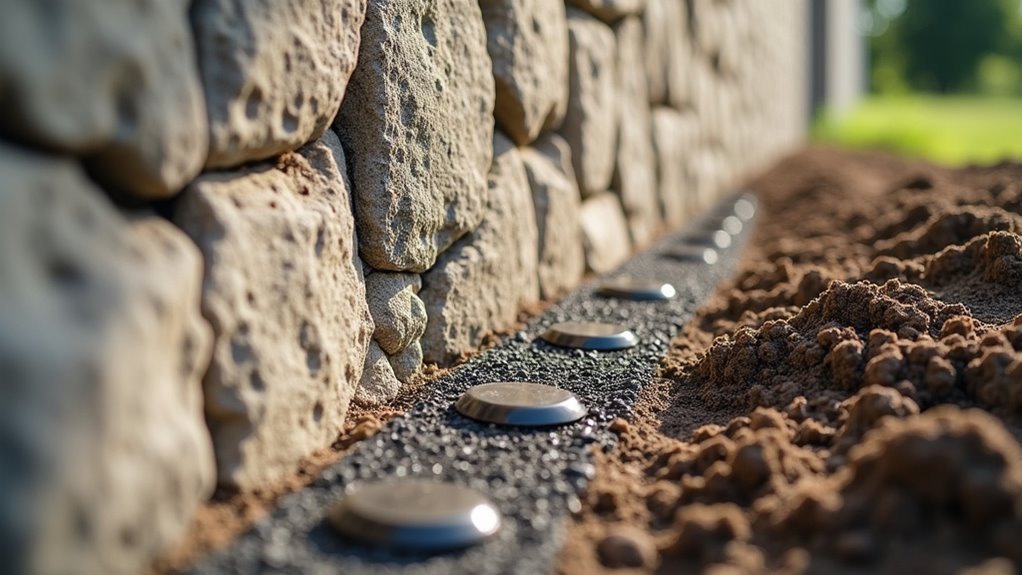
You’ll need to systematically examine your foundation using proven detection methods to identify cracks and gaps where mice can enter.
Start by walking around your home’s perimeter with a flashlight, checking for any openings as small as 1/4 inch in the foundation walls, around utility entry points, and near window wells.
Once you’ve located these vulnerable spots, you can seal them effectively using the right combination of materials and techniques.
Foundation Crack Detection Methods
Regular foundation inspections form the cornerstone of effective mouse prevention, as these small rodents can squeeze through openings as tiny as 1/4 inch. You’ll need systematic methods to inspect your foundation thoroughly and identify potential entry points before mice exploit them.
| Detection Method | Target Areas | Signs to Look For |
|---|---|---|
| Flashlight Inspection | Dark foundation corners | Visible cracks, gaps, wear damage |
| Light Penetration Check | Foundation perimeter | Light shining through openings |
| Window Well Examination | Basement windows | Deteriorated seals, structural gaps |
| Vent Assessment | Foundation vents | Damaged screens, loose fittings |
| Utility Penetration Review | Plumbing/electrical areas | Unsealed gaps around pipes/wires |
Focus your inspection efforts on seams where walls meet floors, as these junctions commonly develop vulnerable gaps that require immediate sealing.
Sealing Small Entry Gaps
Once you’ve identified vulnerable spots through your inspection, act quickly to seal any gaps measuring 1/4 inch or larger.
Sealing small entry gaps requires the right materials and technique to create an effective barrier against mice.
Focus on critical areas where gaps commonly appear:
- Wall-to-floor seams where settling creates separations
- Pipe and vent penetrations where utility lines enter your foundation
- Foundation cracks that provide direct access routes
Start by stuffing steel wool into openings, as its rough texture deters gnawing.
Follow with caulking over the steel wool for a permanent seal.
For larger gaps, use expanding foam sealant, but test it first to understand its expansion rate.
Always check your work by looking for light around sealed areas—any visible light means mice can still find their way in.
Sealing Foundation Cracks With Proper Materials
Even the smallest foundation cracks can become highways for determined mice seeking shelter in your home. When sealing foundation cracks, you’ll need durable materials that can withstand constant gnawing attempts and weather exposure.
| Material Type | Best Use | Rodent Resistance |
|---|---|---|
| Masonry Repair Compounds | Foundation cracks | Excellent |
| Steel Wool + Caulk | Medium gaps | Very Good |
| Expanding Foam | Large basement gaps | Moderate |
Masonry repair compounds offer superior protection against rodent entry compared to spray foam alone. For cracks as small as 1/4 inch, apply these compounds thoroughly after cleaning debris. Use steel wool to fill larger gaps before sealing – mice can’t chew through its rough texture. Remember to inspect your work regularly, ensuring these durable materials maintain their integrity over time.
Installing Effective Weatherstripping Around Foundation Access Points
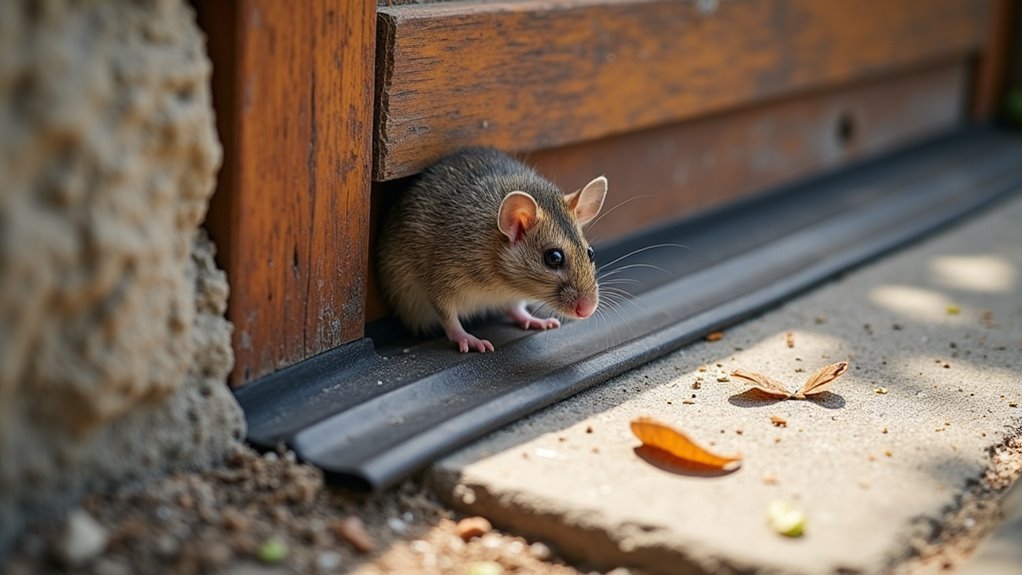
You’ll need to select the right weatherstripping materials and install them properly to create an impenetrable barrier around foundation access points.
Foam weatherstripping works well for doors and windows since it adapts to uneven surfaces, while metal or heavy-duty vinyl provides superior protection for garage doors and larger openings.
Proper installation requires flush mounting against surfaces to eliminate any gaps that mice could exploit.
Choosing Proper Weatherstrip Materials
The foundation of effective mouse control starts with selecting weatherstripping materials that can withstand determined rodents.
You’ll want to choose durable, chew-resistant substances that effectively seal gaps around your foundation access points.
Consider these proven weatherstrip materials to prevent mice from entering your home:
- Rubber weatherstripping – Provides excellent flexibility and durability while resisting chewing attempts from persistent rodents.
- Vinyl strips – Offers long-lasting protection with smooth surfaces that mice can’t easily grip or gnaw through.
- Metal weatherstripping – Delivers maximum chew resistance with aluminum or steel construction that creates impenetrable barriers.
These materials create tight seals that block even the smallest entry points.
Installation Best Practices
Proper installation techniques determine whether your weatherstripping actually keeps mice out or becomes another failed barrier. You’ll need to guarantee adequate compression when doors and windows close, creating impenetrable seals around all gaps. Focus particularly on garage doors and basement windows, as these entryways attract mice seeking foundation access.
| Installation Step | Key Requirement | Common Mistake |
|---|---|---|
| Measuring gaps | Precise dimensions | Eyeballing measurements |
| Cutting materials | Clean, straight cuts | Jagged edges |
| Positioning strips | Flush against surfaces | Uneven placement |
| Testing compression | Firm but flexible seal | Too loose/tight |
Choose chew-resistant weatherstripping that withstands temperature fluctuations. Regularly inspect installed seals for wear and replace damaged sections immediately. Even dime-sized holes compromise your entire barrier system.
Using Steel Wool to Block Small Foundation Openings
One of the most effective materials for sealing small foundation openings is steel wool, which creates a formidable barrier that mice can’t gnaw through due to its rough, abrasive texture.
This affordable pest control solution works exceptionally well because rodents can’t chew through the steel fibers without injuring themselves.
When installing steel wool to block openings, follow these key steps:
- Pack the steel wool tightly into cracks and holes as small as 1/4 inch
- Layer caulk or expanding foam over the steel wool for additional reinforcement
- Verify no loose gaps remain that could allow mice to squeeze through
You’ll find steel wool readily available at hardware stores, making it a cost-effective choice for thorough foundation protection against rodent infestations.
Applying Expanding Foam for Larger Foundation Gaps
When you’re dealing with larger gaps in your foundation, expanding foam becomes your go-to solution for creating an effective mouse barrier.
You’ll need to select the right foam type for your specific conditions, master proper application techniques to guarantee complete coverage, and carefully test the foam’s expansion rate before tackling the actual repairs.
Getting these fundamentals right means you’ll create a durable seal that keeps mice out while maintaining your foundation’s integrity.
Choosing Right Foam Type
Since larger foundation gaps require more robust sealing solutions, you’ll need polyurethane-based expanding foam for its superior adhesion and resistance to mouse gnawing.
This type delivers exceptional durability that’s essential for effective pest prevention.
When selecting your expanding foam, look for products specifically designed for rodent control.
These specialized formulas contain additives that deter mice from chewing through your barriers, making them far more effective than standard construction foams.
Consider these key features when choosing:
- Pest-control labeling – guarantees the foam contains mouse-deterrent additives
- Polyurethane base – provides stronger adhesion and gnaw resistance than other formulations
- Weatherproof properties – maintains seal integrity through temperature changes and moisture exposure
The right expanding foam creates an impenetrable barrier that mice can’t breach, giving you long-term protection against unwanted intrusions.
Proper Application Technique
Before applying expanding foam to larger foundation gaps, you’ll want to thoroughly clean the area of debris, dirt, and moisture that could compromise adhesion.
This proper application technique guarantees your sealant performs effectively against mouse intrusion.
Use a caulking gun to dispense the expanding foam gradually, filling gaps without creating excessive overflow.
Wear protective gloves and safety goggles to prevent skin irritation and eye contact during application.
Allow the foam to fully expand and cure according to manufacturer instructions, typically requiring several hours before trimming excess material.
This patience guarantees peak sealing performance.
Inspect your sealed areas regularly for signs of wear or new gaps, as foundation settling may occur over time, requiring reapplication to maintain continued effectiveness against mice entry.
Testing Expansion Carefully
After completing your preparation steps, you’ll need to test the foam’s expansion rate before tackling the full gap. Testing expansion carefully prevents costly damage to your foundation’s surrounding structures. Most expanding foam products grow 3-4 times their original size, making a small test application essential for success.
Start with a tiny amount in an inconspicuous area to observe how your specific foam behaves. This helps you gauge exactly how much product you’ll need for each foundation gap.
- Watch the foam slowly bubble and expand outward like rising bread dough
- Notice how it fills crevices and creates an irregular, puffy surface texture
- Observe the color change from wet application to final cured state
Once you understand your foam’s expansion pattern, you can confidently seal larger foundation gaps without over-application.
Creating Physical Barriers Around Your Foundation Perimeter
Physical barriers form your most reliable defense against mice attempting to breach your foundation perimeter.
Start by installing metal mesh or hardware cloth buried at least 12 inches below ground level around your foundation to prevent burrowing rodents from tunneling underneath. You’ll want to seal any seams between your foundation and walls using high-quality caulk or foam sealant, as mice can squeeze through gaps as small as 1/4 inch.
These barriers work best when you maintain intact weather seals around all exterior doors, windows, and vents.
Create a clear zone around your foundation by removing debris, vegetation, and mulch that could shelter mice. Combined with a solid concrete foundation slab that’s level and crack-free, these physical barriers create an impenetrable defense system.
Removing Vegetation and Debris Near Foundation Walls
While physical barriers provide excellent protection, you’ll undermine their effectiveness if you allow vegetation and debris to accumulate near your foundation walls.
Removing vegetation and debris creates an inhospitable environment that forces mice to seek shelter elsewhere.
Maintain these critical clearances around your foundation:
- Clear zone: Keep at least 12 inches between any vegetation and your foundation walls
- Storage buffer: Position firewood, building materials, and outdoor debris at least 18 inches away from the foundation
- Trimmed perimeter: Cut back shrubs and plants that touch or overhang your foundation walls
Schedule seasonal cleanups, particularly in fall, to eliminate leaf piles, weeds, and brush that provide nesting materials.
This proactive approach removes both shelter opportunities and easy access routes that mice exploit.
Installing Gravel Zones to Deter Mouse Nesting
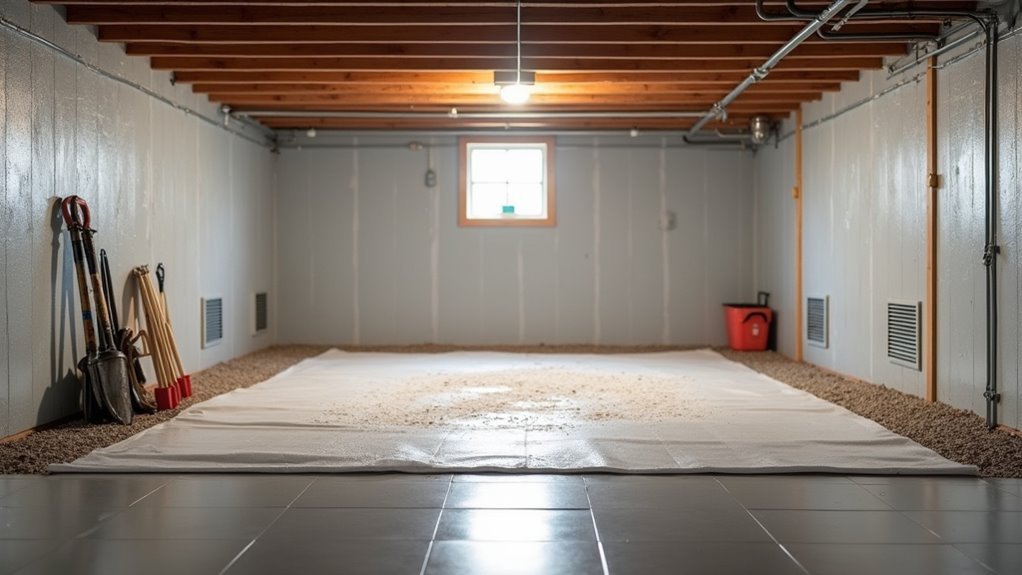
Beyond clearing vegetation, you can create an additional protective barrier by installing gravel zones around your foundation perimeter. These zones effectively deter mice by eliminating preferred nesting environments, as rodents avoid the loose, unstable texture that makes burrowing difficult.
| Zone Width | Distance from Foundation | Maintenance Frequency |
|---|---|---|
| 12+ inches | 2-3 feet | Monthly raking |
| Loose gravel | Full perimeter | Weed removal |
| Proper drainage | Even coverage | Debris clearing |
Gravel zones work because mice prefer softer, concealed areas for shelter. The rocky surface provides no organic matter for nesting materials and creates proper drainage that reduces moisture buildup. You’ll need to maintain these zones regularly by raking and removing weeds to prevent accumulation of materials that could attract rodents back to your foundation area.
Maintaining Proper Drainage to Prevent Foundation Moisture
Gravel zones work best when paired with proper drainage systems that keep moisture away from your foundation.
You’ll need to verify your gutters and downspouts direct water at least 5-10 feet from your home’s base to prevent pooling that attracts mice seeking shelter.
Create effective water management by implementing:
- Sloped landscaping that channels rainwater naturally away from your foundation walls
- Gravel trenches or dry wells that capture and redirect surface water before it accumulates
- Regular maintenance of French drains and sump pumps to prevent clogs and backup
You should inspect your drainage systems regularly, as even minor blockages can create moisture buildup.
When water accumulates near your foundation, it creates an inviting environment for rodents looking for nesting sites and consistent water sources.
Using Natural Repellents Around Foundation Areas
After addressing moisture concerns through proper drainage, you can strengthen your mouse prevention strategy by incorporating natural repellents around your foundation perimeter.
Peppermint oil and eucalyptus oil work effectively as deterrents when applied around foundation areas. Apply these essential oils daily rather than weekly to maintain a consistent barrier against rodents.
Cedar wood shavings provide another natural solution, as mice find cedar’s scent unpleasant. Scatter these shavings around your foundation for added protection.
You can also create a cayenne pepper spray by mixing pepper with water, then applying it around potential entry points.
Remember to reapply all natural repellents after rain or moisture exposure to maintain their effectiveness.
These eco-friendly methods complement other prevention strategies while keeping harmful chemicals away from your home’s foundation.
Setting Up Monitoring Traps Near Foundation Entry Points
While natural repellents create an effective first line of defense, monitoring traps positioned near foundation entry points serve as your early warning system for detecting mouse activity.
Place snap or live traps along walls where cracks and gaps provide access, since mice travel along edges rather than open spaces.
Mice prefer traveling along wall edges and foundation perimeters rather than crossing open floor spaces when seeking entry points.
Use attractive baits like peanut butter or sunflower seeds to lure rodents into your monitoring traps. Position them strategically:
- Behind appliances and furniture where mice feel secure
- Along foundation walls near visible cracks or gaps
- In corners where two walls meet near entry points
Check traps regularly for captured mice or consumed bait, then adjust placement based on observed mice activity.
This proactive approach catches intruders before they establish themselves inside your home’s foundation areas.
Seasonal Foundation Maintenance for Year-Round Protection
Because mice seek shelter and food sources throughout different seasons, you’ll need to adapt your foundation protection strategy to address changing conditions year-round.
Conduct seasonal inspections during spring and fall to identify new vulnerabilities. During these checks, carefully examine your foundation for cracks and gaps as small as 1/4 inch, then immediately seal cracks and gaps using appropriate materials.
Spring maintenance should focus on clearing winter debris and checking drainage systems for proper function.
Summer requires maintaining vegetation-free zones around your foundation.
Fall preparation involves removing leaf piles and inspecting weatherstripping around doors and windows.
Winter inspections should verify that previous repairs remain intact.
This systematic approach helps prevent mice from finding seasonal entry points, ensuring your foundation stays protected regardless of weather conditions or time of year.
Frequently Asked Questions
What Can I Put Around Foundation to Keep Mice Out?
You can install buried wire mesh around your foundation’s perimeter, maintain gravel landscaping to create dry zones, and keep the area clear of debris like leaves and weeds that provide shelter.
What Scent Will Keep Mice Away?
You’ll find peppermint oil most effective when applied daily around entry points. Ammonia, cayenne pepper, cinnamon, and citrus scents like lemon also repel mice by disrupting their senses and creating unwelcoming environments.
How Do I Keep Mice Out of My House Asap?
You’ll need to seal foundation cracks with steel wool and caulk, store food in rodent-proof containers, eliminate clutter, and set snap traps immediately in areas where you’ve spotted mouse activity.
Does Irish Spring Soap Really Keep Mice Away?
You’ll find mixed results with Irish Spring soap repelling mice. While some people report temporary success, there’s little scientific evidence supporting its effectiveness. Don’t rely on soap alone—use all-encompassing pest control methods instead.
In Summary
You’ve got the tools and knowledge to keep mice out of your foundation for good. Stay vigilant with regular inspections, seal those cracks promptly, and don’t skip seasonal maintenance. Remember, prevention’s always easier than dealing with an infestation. Keep your drainage working properly, maintain those natural barriers, and check your traps regularly. With consistent effort, you’ll protect your home’s foundation from unwanted rodent visitors year-round.


Leave a Reply