
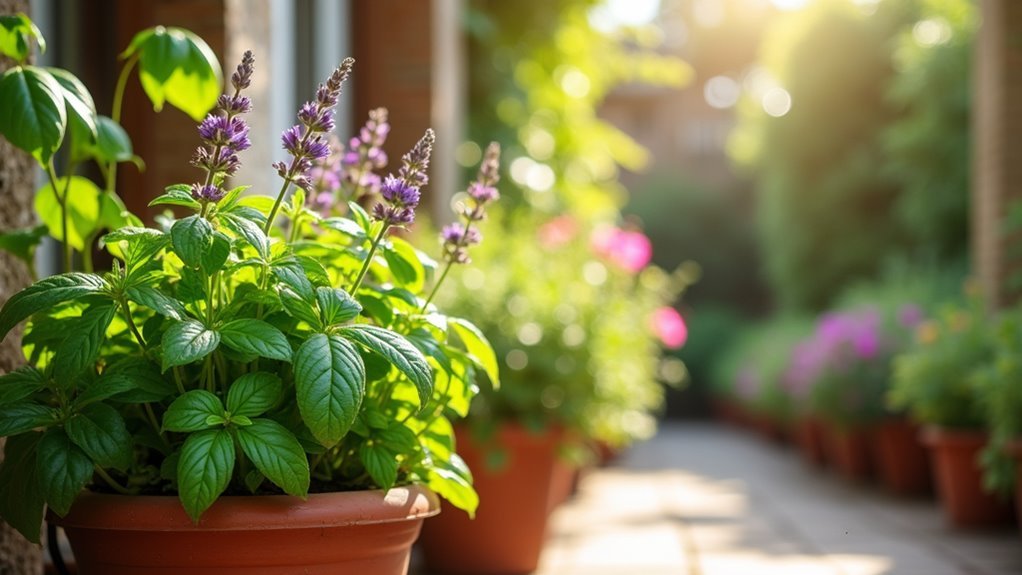
Plants keep flies away from your patio by releasing strong aromatic oils that interfere with flies’ sensory receptors and mask the scents that attract them to your outdoor space. These natural compounds create an effective scent barrier that disrupts flies’ normal behavior patterns, fundamentally confusing their navigation systems. Herbs like basil, lavender, mint, and rosemary emit powerful fragrances that flies find overwhelming and unpleasant. Strategic placement of these aromatic plants around your patio’s perimeter will maximize their pest-repelling effectiveness throughout the season.
How Plant Aromas Naturally Deter Flying Insects
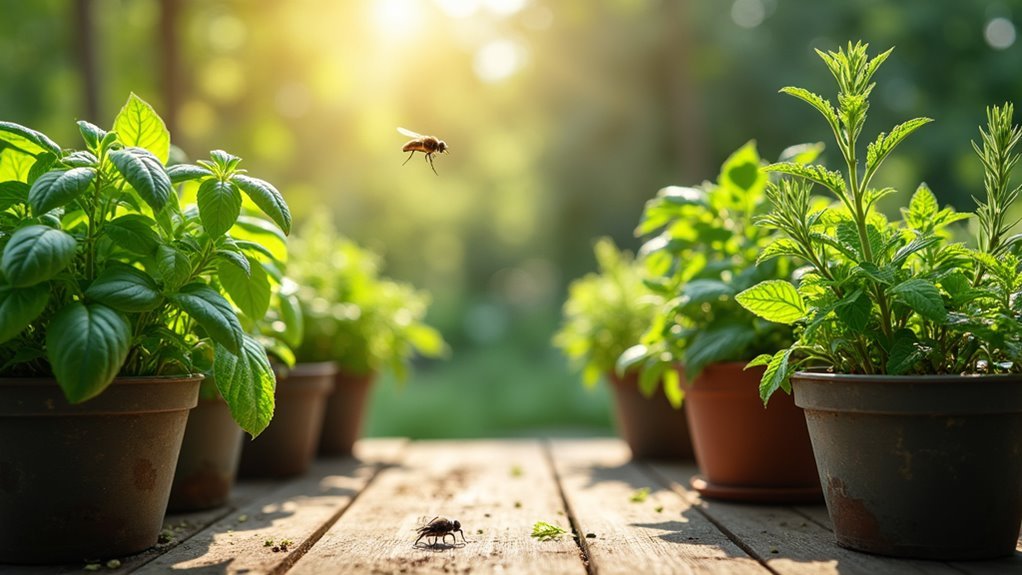
When you step into a garden filled with basil, mint, and lavender, you’re experiencing nature’s own pest control system in action.
These plants emit strong aromatic oils that naturally repel flies by masking the scents that typically attract them to your patio space. The compounds in these plant aromas directly interfere with flies’ sensory receptors, making it nearly impossible for them to locate food sources and potential mates.
When you’re planting it around your outdoor living areas, you’re creating an effective scent barrier that disrupts their normal behavior patterns.
Essential oils from plants like citronella and eucalyptus have proven particularly effective at reducing fly populations.
These natural compounds don’t just repel flies—they also deter mosquitoes and moths, giving you extensive pest protection.
Top Herb Varieties That Repel Flies Effectively
Strategic herb selection transforms your outdoor space into a fly-free sanctuary while adding beauty and functionality to your garden.
Basil stands out among plants that repel flies, emitting aromatic oils that effectively deter these pests when positioned near doorways or grown in accessible containers.
Basil’s natural aromatic oils create an effective barrier against flies when strategically placed near entrances or in portable containers.
Lavender enhances your patio’s aesthetics while naturally repelling flies, moths, and fleas with its pleasant fragrance.
Mint’s vigorous growth and strong aroma make it excellent for repelling flies, though you’ll want to contain it in pots to control spread.
Rosemary thrives in sunny locations, simultaneously repelling mosquitoes and flies while improving air quality.
Catnip proves particularly effective against stable flies and requires minimal maintenance, making these herb varieties perfect natural solutions.
Strategic Plant Placement Around Outdoor Spaces

You’ll maximize your fly-repelling plants’ effectiveness by positioning them strategically around your outdoor space’s perimeter, especially near doors and windows where flies typically enter.
Container gardening gives you the flexibility to move these aromatic herbs wherever fly activity is heaviest or seasonal conditions change.
Place your plants in sunny spots to boost their growth and intensify the natural oils that keep flies at bay.
Perimeter Plant Positioning
Creating a natural barrier around your outdoor spaces becomes effortless once you position fly-repelling plants like lavender, basil, and mint along your patio’s perimeter.
These aromatic plants repel flies while masking scents that typically attract them to your space.
You’ll want to place taller varieties like rosemary at the back of your perimeter arrangement. This strategy guarantees shorter plants receive adequate sunlight while maintaining clear sightlines across your patio.
Growing multiple bug-repelling species together amplifies their deterrent effects through diverse natural scents.
Don’t forget to rotate and relocate your plants periodically. This practice spreads their repellent aromas throughout different areas, maximizing coverage.
Your strategic positioning not only keeps flies away but also enhances your patio’s visual appeal through thoughtful plant arrangement.
Container Mobility Benefits
Container gardening transforms your fly-repelling strategy by giving you complete control over plant placement and positioning.
You’ll maximize container mobility benefits by relocating basil, mint, and lavender wherever flies congregate most. Move plants from sunny breakfast areas to shaded evening dining spots as needed throughout the day.
Strategic placement guarantees each herb receives ideal light while targeting problem areas. You can position decorative pots near seating areas, doorways, or food prep zones where fly activity peaks.
When harsh weather threatens, simply move containers indoors to protect your investment.
Rotating plant locations disrupts fly patterns and maintains aromatic effectiveness. This mobility keeps your outdoor space flexible and repels flies more efficiently than fixed plantings ever could.
Optimal Sun Exposure
Understanding your outdoor space’s sun patterns enables strategic placement that amplifies each plant’s fly-repelling potential.
You’ll maximize your natural pest control by matching plants to their preferred light conditions. Proper ideal sun exposure enhances aromatic oils that make these fly repellent plants more effective.
- Position lavender and rosemary in full-sun areas around your patio where they’ll thrive and produce stronger scents that deter flies effectively.
- Place mint in shaded spots where it grows vigorously while still providing natural pest control in areas with limited direct sunlight.
- Locate basil and citronella near seating areas with full sun exposure to enhance their aromatic properties and maximize fly-repelling benefits.
- Rotate potted plants seasonally between sunny and shaded locations to maintain ideal health and strengthen their natural pest-deterrent qualities.
Container Gardening Benefits for Fly Control
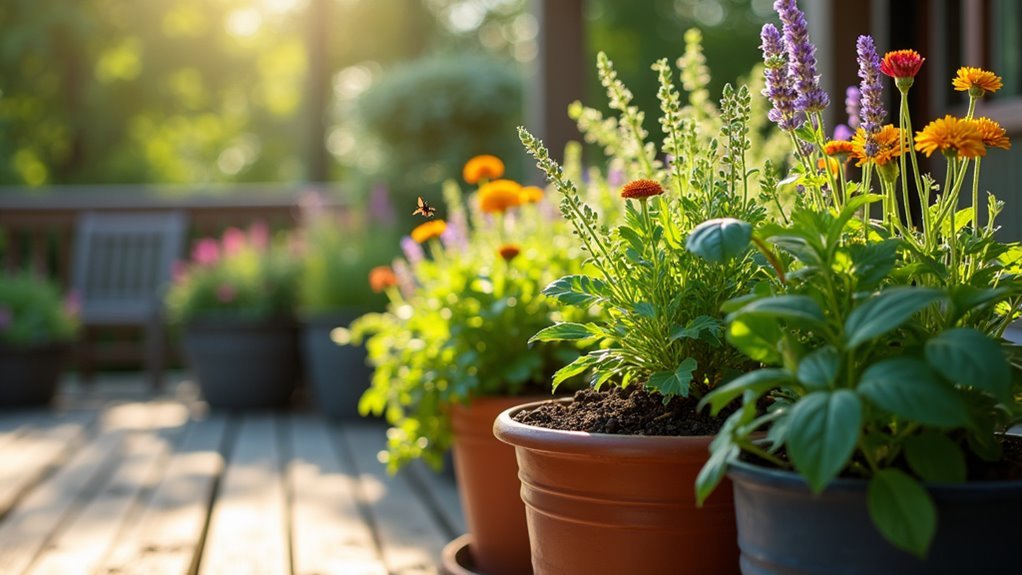
You’ll find container gardening transforms your fly control strategy by letting you move plants wherever they’re needed most.
Moving mint, basil, or lavender in pots means you can position them near problem areas like garbage cans or outdoor dining spaces for maximum impact.
You’ll also keep aggressive spreaders like mint contained instead of letting them take over your entire garden.
Easy Plant Relocation
When flies become problematic in specific areas of your outdoor space, you’ll appreciate how container gardening transforms your fly control strategy. The easy mobility of potted fly-repelling plants like basil, mint, and lavender lets you quickly reposition them wherever flies congregate most.
Here’s how easy plant relocation maximizes your fly control:
- Strategic positioning – Move rosemary and citronella containers to areas where flies are most troublesome.
- Enhanced dispersal – Relocate plants to optimize their aromatic oils’ effectiveness against flies.
- Weather protection – Bring potted plants indoors during harsh conditions for continuous seasonal control.
- Aesthetic flexibility – Use decorative pots that enhance your patio’s appeal while serving practical purposes.
This mobility guarantees your natural fly deterrents work efficiently year-round.
Enhanced Mobility Options
Container gardening revolutionizes your ability to create dynamic fly control zones throughout your property. You can instantly move fly-repelling herbs like basil, mint, and lavender to areas experiencing the heaviest fly activity.
These enhanced mobility options let you adapt to changing outdoor conditions and seasonal pest patterns. When hosting outdoor events, you’ll reposition decorative pots around seating areas for maximum protection.
During peak sunlight hours, you can relocate plants to optimize their growth and potency. Mint’s vigorous growth thrives in containers, preventing it from overtaking your garden while maintaining easy transport capabilities.
This flexibility guarantees you’re never stuck with ineffective plant placement. You’ll customize your pest control strategy by moving multiple varieties to create powerful barriers exactly where flies congregate most.
Controlled Growth Management
While aggressive spreaders like mint can quickly dominate traditional garden beds, containers provide perfect boundaries that harness their vigorous growth for your benefit.
Controlled growth management becomes effortless when you’re working with potted fly-repelling plants around your patio.
You’ll maintain ideal plant health and appearance through container gardening:
- Prevent unwanted spreading – Keep mint family plants from overtaking nearby vegetation while maximizing their fly-deterrent properties
- Control plant size – Trim and shape basil, mint, and other vigorous growers without affecting surrounding landscape
- Maintain desired aesthetics – Position perfectly-sized plants exactly where they’ll be most effective against flies
- Ensure consistent performance – Well-contained roots produce healthier foliage that releases stronger natural repellent compounds
Container boundaries transform potentially problematic spreaders into well-behaved patio guardians.
Dual-Purpose Plants That Enhance Cooking and Repel Pests
Since many gardeners prefer plants that serve multiple functions, selecting herbs that both repel flies and enhance your cooking creates a practical and efficient garden solution.
You’ll find basil’s aromatic oil naturally deters flies while providing essential flavor for summer dishes.
Mint offers vigorous growth with invigorating aroma that keeps pests away and adds zest to beverages.
Rosemary represents one of the best dual-purpose options, effectively repelling mosquitoes while serving versatile culinary and medicinal uses.
Lavender’s pleasant fragrance helps repel pests and provides subtle culinary benefits in small amounts.
Bay leaves round out your arsenal, deterring flies while remaining essential for savory cooking preparations, making these herbs excellent choices to repel pests naturally.
Seasonal Care Tips for Maintaining Repellent Plants
Proper maintenance guarantees your fly-repelling plants stay healthy and effective year-round.
Well-maintained fly-repelling plants deliver consistent pest protection throughout every season with proper care and attention to their specific needs.
These seasonal care tips for repellent plants will maximize their pest-deterring abilities while keeping them thriving.
- Prune regularly – Deadhead lavender and basil throughout the growing season to encourage robust growth and enhance their fly-repelling properties.
- Ensure proper drainage – Use pots with adequate drainage for mint and rosemary to prevent root rot, especially during wet seasons when excess moisture accumulates.
- Provide winter protection – Move potted repellent plants like lavender and rosemary indoors during harsh winter months while maintaining their pest-repelling benefits.
- Water appropriately – Meet each plant’s specific needs by keeping mint in shaded areas and placing rosemary in full sun for peak fly-deterring effectiveness.
Creating a Natural Barrier With Multiple Plant Species
Although individual plants provide some fly-repelling benefits, combining multiple species creates a powerful defensive perimeter around your outdoor spaces.
You’ll want to strategically position lavender, basil, and mint around your patio’s edges to establish the foundation of your natural barrier. These aromatic plants emit scents that effectively deter flies while creating an appealing landscape.
Enhance your barrier’s effectiveness by incorporating marigolds and rosemary, which serve dual purposes – they repel unwanted pests while helping attract pollinators like bees and butterflies.
Adding catnip and citronella provides additional diversity, as each species releases unique compounds that target different flying insects.
Container gardening offers flexibility, allowing you to reposition plants based on seasonal fly activity patterns and maximizing your barrier’s effectiveness throughout the year.
Frequently Asked Questions
What Plants Repel Flies on Patio?
You’ll find basil, mint, lavender, citronella, marigolds, rosemary, and catnip effectively repel flies from your patio. These aromatic plants emit strong scents that naturally deter flies while adding beauty to your outdoor space.
How Do I Keep Flies off My Patio?
You’ll keep flies off your patio by covering food with mesh screens, cleaning spills immediately, removing standing water, using citronella candles, installing sticky traps, and enclosing your outdoor space effectively.
What Plants Keep Bugs Away From the Patio?
You’ll want to plant lavender, basil, mint, rosemary, and catnip around your patio. These herbs release natural oils and scents that effectively repel flies, mosquitoes, moths, and other bothersome insects.
Why Are Flies All Over My Outdoor Plants?
You’re likely seeing flies because decaying organic matter, overripe fruits, or standing water around your plants attracts them. Overwatering creates breeding grounds, and nectar-producing flowers provide food sources flies actively seek.
In Summary
You’ve discovered that strategic plant placement creates an effective, natural fly deterrent for your patio. By combining aromatic herbs like basil, lavender, and mint in containers around seating areas, you’ll establish multiple barriers against flying pests. These dual-purpose plants won’t just keep flies away—they’ll enhance your cooking and beautify your outdoor space. With proper seasonal care and thoughtful arrangement, you’ll maintain a comfortable, fly-free environment naturally.




Leave a Reply