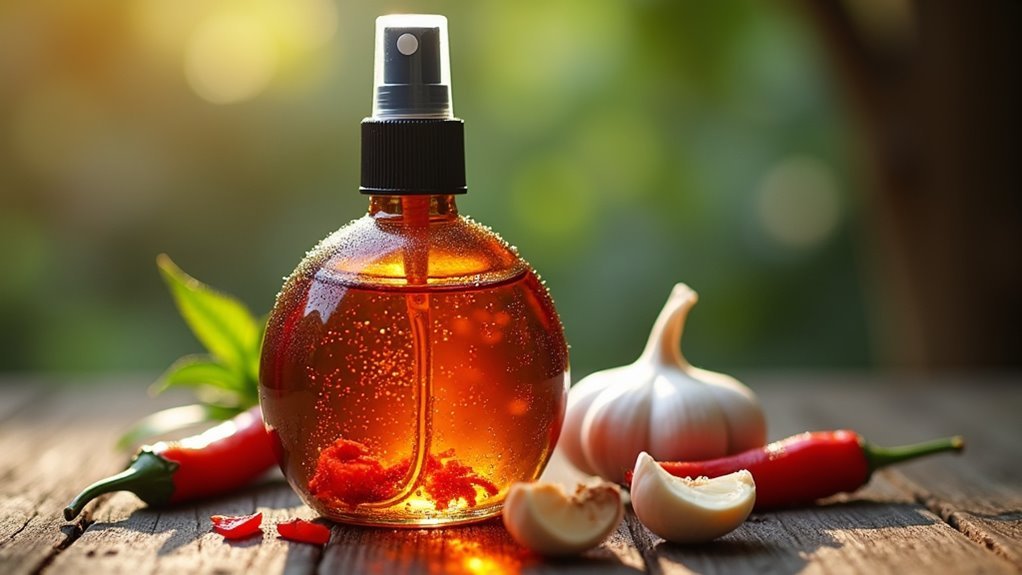
You can create garlic cayenne pepper pest spray by blending 10-12 garlic cloves and 4-6 hot peppers with water, then straining and adding soap. This natural deterrent combines allicin from garlic with capsaicin from peppers to repel aphids, spider mites, whiteflies, and small mammals like rabbits and squirrels. You’ll dilute the concentrate before spraying on plant surfaces every 3-5 days. This eco-friendly solution protects your garden without synthetic chemicals while preserving beneficial insects when applied properly.
Understanding the Natural Pest-Fighting Properties of Garlic and Cayenne
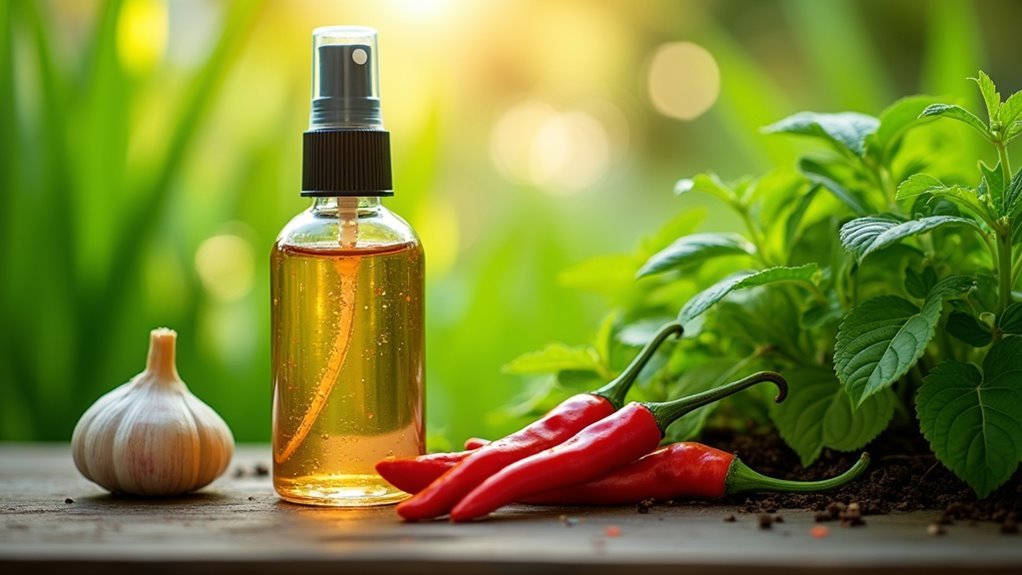
When you’re searching for an effective and natural way to protect your garden, garlic and cayenne pepper offer powerful pest-fighting properties that have been trusted by gardeners for generations.
Garlic contains allicin, a sulfur compound that acts as a natural irritant to insects while providing antibacterial and antifungal benefits. This makes your garlic spray incredibly versatile for garden protection.
Cayenne pepper brings capsaicin to the mix, creating an uncomfortable burning sensation that deters pests from treated areas. Together, these compounds form a potent defensive barrier against both small insects like aphids and beetles, and larger nuisances such as rabbits and squirrels.
The natural irritant properties of both ingredients work synergistically to create broad-spectrum protection for your plants.
Essential Ingredients for Making Effective Garlic Cayenne Spray
Creating a potent garlic cayenne spray requires just a handful of common ingredients that you likely already have in your kitchen.
You’ll need 10 to 12 large cloves of fresh garlic, which provide stronger sulfur compounds than garlic powder. Add 4 to 6 hot chile peppers, whether fresh or dried, for maximum capsaicin content.
You’ll also need 2 cups of water as your base liquid.
The final essential ingredient is 1 tablespoon of liquid castile soap or biodegradable dish soap, which helps the spray stick to plant surfaces and improves effectiveness.
These simple ingredients work together to create a powerful natural pest deterrent that’s both environmentally friendly and budget-conscious, giving you everything needed for effective garden protection.
Step-by-Step Recipe for Hot Pepper Garlic Concentrate

Follow these five straightforward steps to transform your basic ingredients into a powerful pest-fighting concentrate.
First, blend 10 to 12 large garlic cloves with 4 to 6 hot chile peppers and 2 cups of water until you’ve achieved a smooth puree. Let this mixture sit for at least 2 hours, though overnight steeping delivers maximum potency.
Next, strain the mixture through cheesecloth or a coffee filter to remove all solid particles. This prevents clogging your spray applicator.
Third, add 1 tablespoon of liquid castile soap or biodegradable dish soap to boost the concentrate’s pest-fighting effectiveness.
For application, dilute 2 tablespoons of concentrate with water in your spray bottle. Apply during late afternoon to prevent leaf burn.
Finally, store unused concentrate in a cool, dark location and use within several months.
Proper Mixing Ratios and Dilution Guidelines
You’ll achieve ideal pest control by mastering the precise ratios needed for both your base concentrate and final spray mixture.
Start with the standard concentrate recipe using 10-12 garlic cloves and 4-6 hot peppers per 2 cups of water, then dilute just 2 tablespoons of this concentrate per spray bottle for application.
Getting these measurements right guarantees you’re creating an effective deterrent without wasting ingredients or under-dosing your garden’s protection.
Base Concentrate Preparation Ratios
Proper ratios form the foundation of an effective garlic cayenne pest spray that won’t harm your plants while deterring unwanted insects.
You’ll need 10 to 12 large garlic cloves and 4 to 6 hot chile peppers blended with 2 cups of water for your base concentrate. The garlic and water mixture should sit for at least 2 hours, though overnight steeping produces stronger results.
After straining out solid particles, add 1 tablespoon of liquid castile soap or biodegradable dish soap to improve adherence and boost pest-fighting effectiveness. This concentrated solution becomes your stock ingredient for creating spray applications.
Store your base concentrate in the refrigerator for up to one week, ensuring you’ll have pest control ready whenever needed.
Spray Dilution Measurements
Once you’ve prepared your base concentrate, creating the right dilution determines whether your spray effectively repels pests without overwhelming your plants.
You’ll need precise measurements to achieve the proper potency for effective pest control.
Mix 2 tablespoons of your concentrated garlic cayenne mixture with 1 liter (or quart) of water in your spray bottle. This dilution ratio guarantees adequate coverage while preventing potential plant damage from overly concentrated solutions.
Before adding the concentrate to your spray bottle, strain the mixture thoroughly to prevent clogging your sprayer’s nozzle. This step assures smooth application and consistent results during treatment.
These exact measurements create an ideal balance between pest-repelling strength and plant safety, making your homemade spray both effective and gentle on your garden.
Application Volume Guidelines
Different garden sizes and pest pressure levels require specific mixing ratios to maximize your spray’s effectiveness while conserving ingredients.
When following application volume guidelines, you’ll need one gallon of water mixed with 10-12 chopped hot peppers and 10 garlic cloves for standard preparations.
For concentrated solutions, blend 10-12 garlic cloves with 4-6 chile peppers in just 2 cups of water, letting it sit overnight before straining. This concentrate requires diluting 2 tablespoons per spray bottle for proper application.
Your cayenne pepper and garlic mixture provides effective pest control when you apply it during early morning or late evening hours.
Reapply every 3-5 days or after rainfall to maintain consistent protection against garden pests.
Target Pests That Respond to Garlic Cayenne Treatment
You’ll find that garlic cayenne pepper spray targets three main categories of garden threats effectively.
Common garden insects like aphids, spider mites, and mealybugs can’t tolerate the burning sensation from capsaicin, while small mammals such as squirrels, rabbits, and deer avoid the pungent odor combination.
The spray’s antimicrobial properties also help prevent certain fungal diseases from taking hold on your plants.
Common Garden Insects
Several troublesome garden pests respond remarkably well to garlic cayenne pepper spray, making it an invaluable tool for organic pest management.
You’ll find this natural solution particularly effective against common garden insects that typically wreak havoc on your plants.
Aphids, those tiny green or black sap-suckers, can’t tolerate the pungent garlic odor and capsaicin’s burning sensation.
Mealybugs, with their cotton-like appearance, also retreat when faced with this spicy deterrent.
Whiteflies, which often cluster under leaves, find the spray’s intense aroma overwhelming and quickly relocate elsewhere.
The beauty of garlic cayenne pepper pest spray lies in its selective action – it repels harmful insects while preserving beneficial ones like ladybugs.
You won’t harm your garden’s natural predators while effectively controlling destructive pests.
Small Mammal Pests
Beyond insects, garlic cayenne pepper spray proves equally powerful against four-legged garden raiders that can devastate your carefully tended plants.
This natural deterrent effectively targets rabbits, squirrels, and chipmunks by leveraging capsaicin’s irritant properties and garlic’s pungent scent. When you spray this solution on plants and surrounding areas, it creates an unpleasant experience for these mammals, making treated zones unappealing for foraging or nesting.
The combination works by causing discomfort without harming the animals, keeping pests away through natural aversion rather than toxic chemicals.
You’ll need to reapply frequently, especially after rain, since initial deterrence may wear off and persistent mammals might return.
Always consider beneficial wildlife and pollinators when applying treatments.
Fungal Disease Prevention
While garlic cayenne pepper spray primarily targets visible pests, it simultaneously creates an inhospitable environment for fungal diseases that often follow in their wake.
The allicin in garlic delivers powerful antibacterial and antifungal properties that actively combat potential infections before they establish. You’ll find this particularly valuable since common pests like aphids, mealybugs, and white flies often serve as vectors for fungal diseases.
When you eliminate these pest populations, you’re removing the conditions that typically favor fungal growth. Damaged plant tissue from pest feeding creates entry points for infections.
The cayenne pepper’s deterrent effect keeps harmful insects away, while regular applications maintain your garden’s defensive barrier. This dual-action approach makes fungal disease prevention a natural byproduct of effective pest management.
Best Application Timing and Weather Conditions
Timing your garlic cayenne pepper spray application correctly can make the difference between effective pest control and potential plant damage.
Proper timing of garlic cayenne pepper spray application ensures maximum pest control effectiveness while preventing unnecessary plant damage.
The best application timing for garlic cayenne pepper pest spray is early morning or late evening when direct sunlight won’t cause leaf burn. You’ll achieve better results on cloudy days or during cooler temperatures, as these conditions enhance absorption and effectiveness.
Reapply every 3-5 days or immediately after rainfall to maintain the spray’s pest-fighting potency. Check for infestations mid-week following watering or rain to determine if you need additional treatments.
Avoid spraying during windy conditions, which can prevent even coverage and cause drift to plants you don’t want to treat.
Spraying Techniques for Maximum Coverage and Effectiveness
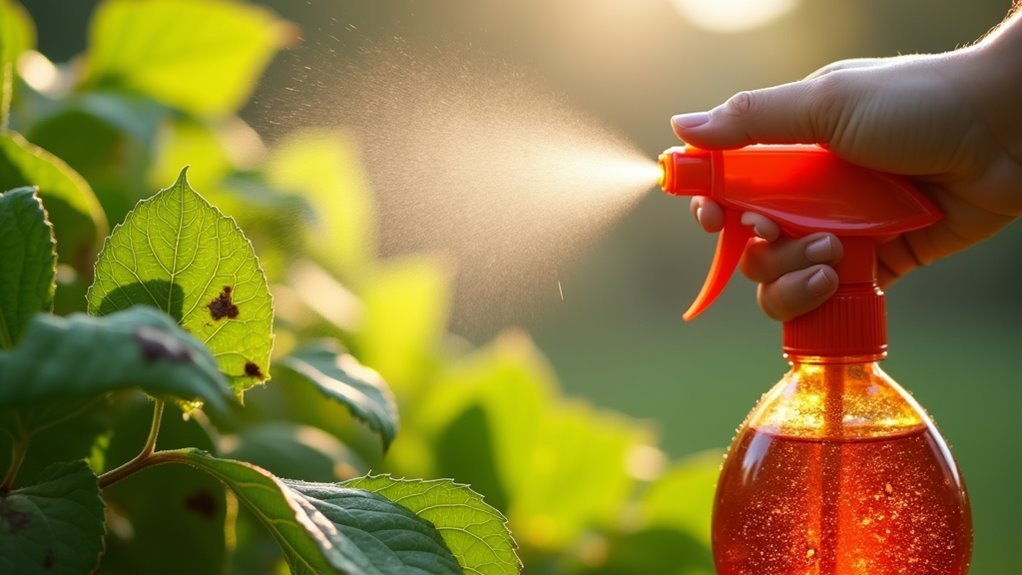
Once you’ve chosen the best timing for application, your spraying technique determines how effectively the garlic cayenne pepper solution reaches its intended targets.
Proper spraying techniques for maximum coverage and effectiveness guarantee your pepper spray works efficiently against garden pests.
Follow these essential application methods:
- Choose appropriate equipment – Use a handheld spray bottle for small areas or a pump sprayer for larger garden spaces, guaranteeing fine mist coverage.
- Target both leaf surfaces – Spray the top and bottom sides of leaves thoroughly, as pests often hide on undersides where they’re less exposed.
- Filter before spraying – Always strain your solution to prevent sprayer clogs and maintain consistent distribution.
- Maintain regular schedule – Reapply every 3-5 days or after rain to sustain effectiveness.
Safety Precautions When Handling Hot Pepper Ingredients
You’ll need proper protective gear when working with cayenne peppers to avoid painful skin burns and eye irritation from capsaicin oils.
Always wear gloves and eye protection, and never touch your face during preparation since even tiny amounts can cause severe discomfort.
Store your finished spray in a secure location away from children and pets to prevent dangerous accidental contact.
Protective Gear Requirements
Safety gear becomes your first line of defense when working with hot pepper ingredients for garlic cayenne pest spray. The capsaicin in hot peppers can cause serious skin and eye irritation, making proper protection crucial.
Don’t underestimate the potency of these ingredients – they’re designed to deter pests, and they’ll affect you too without adequate precautions.
Crucial protective gear requirements include:
- Gloves – Wear chemical-resistant gloves to prevent capsaicin from burning your skin and transferring to other surfaces you touch.
- Eye protection – Use safety goggles to shield against splashes during mixing and application.
- Face covering – Keep a cloth or mask nearby to cover your nose and mouth if needed.
- Proper ventilation – Maintain adequate airflow in your workspace to avoid inhaling concentrated pepper vapors.
Skin Contact Prevention
Beyond wearing the right protective equipment, preventing skin contact requires strategic handling techniques that keep capsaicin away from your body entirely.
You’ll want to minimize direct contact with hot peppers by using utensils like tongs, spoons, or forks when cutting and transferring them. Keep your workspace organized to avoid accidentally touching contaminated surfaces.
Don’t touch your face, eyes, or other sensitive areas during preparation, even with gloves on. Work in well-ventilated areas to prevent airborne capsaicin particles from irritating your respiratory system.
If you must handle hot peppers directly, wash your hands immediately afterward with dish soap, which cuts through oils better than regular soap. Consider using disposable gloves for easy cleanup.
Safe Storage Practices
Once you’ve prepared your garlic cayenne pepper pest spray, proper storage becomes essential for maintaining both its effectiveness and your family’s safety.
These safe storage practices will protect everyone in your household while preserving your homemade solution’s potency.
Follow these essential guidelines:
- Store in cool, dark locations away from direct sunlight to prevent degradation of active compounds and any added essential oil components.
- Label bottles clearly with contents and date to avoid accidental ingestion or confusion with other household products.
- Keep containers out of reach from children and pets, as ingestion can cause serious gastrointestinal distress.
- Dispose after two days to prevent spoilage and maintain effectiveness of your pepper-based solution.
Storage Methods for Homemade Pest Spray Concentrate
Proper storage determines whether your garlic cayenne pepper concentrate maintains its pest-fighting power or loses effectiveness over time.
You’ll want to store your homemade concentrate in a cool, dark place to preserve its potency against garden pests. The refrigerator works perfectly for short-term storage methods, keeping your spray effective for up to two weeks.
Always use tightly sealed containers to prevent contamination and evaporation that’ll degrade your spray’s quality.
For extended storage, freeze the concentrate in ice cube trays—this creates convenient portions while extending shelf life considerably.
Don’t forget to label each container with the preparation date. This simple step helps you track freshness and guarantees you’re replacing the concentrate when needed for ideal pest control results.
Reapplication Schedule and Frequency Recommendations
After storing your concentrate properly, you’ll need to establish a consistent reapplication schedule to keep pests at bay. Your spray’s effectiveness depends on regular applications since weather and time naturally break down the active compounds.
Here’s your ideal reapplication schedule:
- Standard maintenance: Apply every 3 to 5 days during normal pest activity periods.
- After water exposure: Reapply immediately following rainfall or watering sessions to restore protection.
- Heavy infestations: Increase frequency to every 2 to 3 days until you’ve controlled the pest problem.
- Timing matters: Schedule applications for early morning or late evening to prevent leaf burn from direct sunlight.
Monitor your plants weekly for pest activity and adjust your schedule accordingly. Serious infestations require more aggressive treatment intervals.
Plants That Benefit Most From Garlic Cayenne Protection
Certain plants respond exceptionally well to garlic cayenne pepper spray protection, making your pest control efforts more targeted and effective.
Annuals, perennials, and shrubs particularly benefit from this natural defense system, as they’re often vulnerable to various garden pests. Vegetables like tomatoes and peppers with delicate foliage show remarkable improvement when you apply this hot pepper solution regularly.
You’ll notice enhanced protection for your fruits, herbs, and vegetables against common invaders such as aphids and slugs.
Plants that benefit most from garlic cayenne protection include those frequently targeted by small mammals. The spray’s pungent aroma and spicy taste effectively deter rabbits, squirrels, and deer from damaging your garden.
This eco-friendly approach protects beneficial insects while maintaining healthier plants and improved yields.
Potential Effects on Beneficial Insects and Pollinators
While garlic cayenne pepper spray protects your plants from unwanted pests, you’ll need to contemplate its impact on the beneficial insects that keep your garden thriving.
The spray’s pungent ingredients don’t discriminate between harmful and helpful creatures. Here’s what you should know about its effects on beneficial bugs:
- Pollinators like bees may avoid treated areas, potentially reducing pollination rates and affecting your garden’s overall productivity.
- Natural predators such as ladybugs and beneficial caterpillars can be repelled, disrupting your garden’s natural pest control system.
- Frequent applications create ecosystem imbalances as beneficial insects abandon treated zones due to irritation.
- Strategic timing minimizes damage – apply during early morning or late evening when beneficial insects are less active.
Alternative Ingredient Variations and Recipe Modifications
Though the basic garlic cayenne pepper spray works effectively, you can customize the recipe to target specific pests and enhance its repelling power.
Customize your garlic cayenne spray recipe with different ingredients to target specific pests and boost repelling effectiveness.
You’ll find several alternative ingredient variations that boost effectiveness. Add essential oils like cinnamon or eucalyptus to repel a wider range of pests. Experiment with different hot peppers—jalapeños or serranos—to adjust spiciness for specific targets. Incorporate liquid castile soap to help the solution stick better to plant surfaces.
For milder versions, reduce cayenne pepper or use crushed red pepper flakes instead, protecting sensitive plants while maintaining pest control.
You can substitute garlic with onion or shallots, which contain similar sulfur compounds that deter pests but provide different scent profiles for varied effectiveness.
Frequently Asked Questions
How to Make Garlic Pepper Spray?
Blend twelve garlic cloves with six hot peppers and two cups water until pureed. Let it sit overnight, strain through cheesecloth, then add one tablespoon liquid soap for effectiveness.
What Pests Does Cayenne Pepper Keep Away?
Cayenne pepper keeps away aphids, beetles, slugs, squirrels, rabbits, and chipmunks from your garden. You’ll find it’s effective because capsaicin creates a burning sensation that these pests can’t tolerate, protecting your plants naturally.
What Pests Does Garlic Spray Repel?
You’ll find garlic spray repels aphids, ants, beetles, blackflies, borers, grasshoppers, mosquitoes, and slugs. It’s also effective against larger pests like mice, voles, deer, and rabbits that damage your garden plants.
How Do You Make Garlic Spray for Pest Control?
You’ll blend 10-12 large garlic cloves with 2 cups water until pureed, let it sit overnight, strain through cheesecloth, add liquid soap, then spray on plants every 3-5 days.
In Summary
You’ll find garlic cayenne pepper spray is an effective, eco-friendly solution for protecting your garden from common pests. By combining these natural ingredients, you’re creating a powerful deterrent that won’t harm beneficial insects when applied correctly. Remember to test on small plant areas first, reapply after rain, and adjust concentrations based on pest severity. With proper preparation and application, you’ll maintain a healthier garden while avoiding harsh chemical pesticides.


Leave a Reply