
You can create a potent garlic oil spray by crushing 2-3 fresh garlic cloves and infusing them in 500ml of oil for 24 hours, then diluting at a 1:10 ratio with water. Add liquid dish soap as a surfactant and apply during cooler morning or evening hours, targeting both leaf surfaces where pests hide. This natural pesticide matches synthetic alternatives in effectiveness against aphids, thrips, and spider mites while remaining safe for humans and pets. Discover advanced techniques to maximize your spray’s pest-fighting power.
Why Garlic Oil Works Against Garden Pests
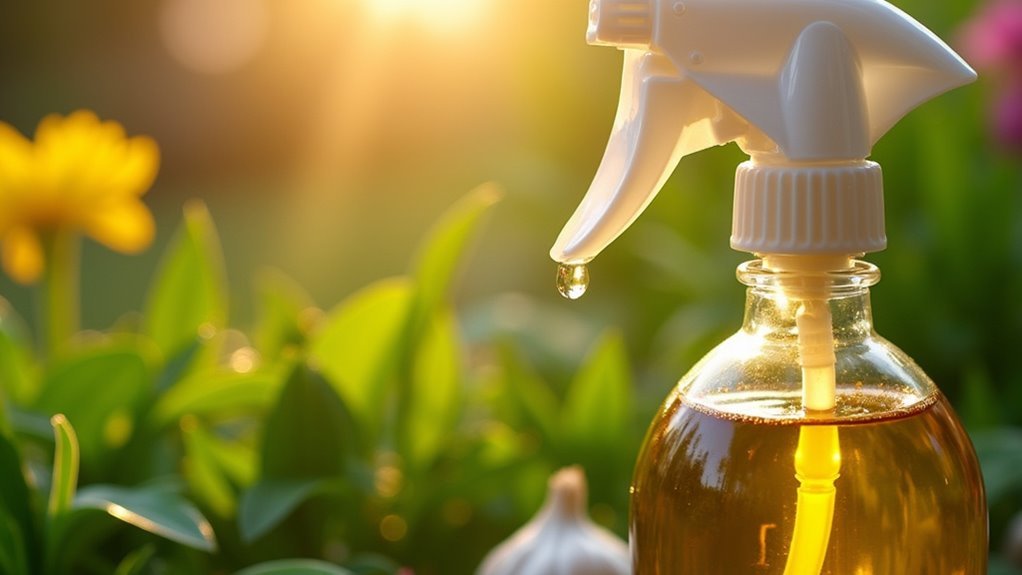
While many gardeners turn to harsh chemicals to combat pests, garlic oil offers a powerful natural alternative that works by disrupting insects’ biological processes.
When you apply garlic oil to your plants, its active compound allicin directly interferes with pest sensory receptors, confusing insects like aphids and thrips. The oil’s potent sulfur compounds don’t just repel—they kill pests on contact while providing ongoing systemic protection for your plants.
You’ll find that garlic oil’s strong odor creates an invisible barrier that naturally deters insects from approaching your garden.
Research demonstrates that this natural solution matches synthetic pesticides in effectiveness against common garden threats. By choosing garlic oil, you’re utilizing nature’s own pest control system while maintaining an environmentally responsible approach to gardening.
Essential Ingredients for Potent Garlic Spray
You’ll need just a few simple ingredients to create an effective garlic spray that’ll keep garden pests at bay. Fresh garlic cloves form the foundation of your spray, while water and soap work together to create a solution that sticks to plant surfaces. Proper straining and storage guarantee you’ll have a smooth, ready-to-use pest deterrent whenever your garden needs protection.
Fresh Garlic Cloves
The foundation of any effective garlic oil spray starts with selecting the freshest, highest-quality garlic cloves you can find. Fresh garlic cloves contain allicin, a powerful sulfur compound that naturally repels insects by disrupting their sensory receptors.
You’ll need 2-3 bulbs of fresh garlic to create a concentrated oil that’s potent enough for effective pest control. The freshness and quality of your garlic directly impacts your spray’s strength and effectiveness.
Choose firm, plump cloves without soft spots or sprouting. When you’re ready to prepare your spray, blend the fresh garlic cloves with water to release their potent oils and compounds before diluting for application.
This eco-friendly approach provides a sustainable alternative to synthetic pesticides, making it perfect for organic gardening.
Water and Soap
Once you’ve prepared your fresh garlic concentrate, water becomes your primary dilution agent to create a spray that’s both effective and safe for your plants.
You’ll need to maintain a one-to-ten ratio—one part garlic concentrate to ten parts water—for maximum effectiveness without plant damage.
Next, you’ll add liquid dishwashing soap as your surfactant. Use 4 to 5 drops per spray bottle to help the mixture adhere to plant surfaces.
This soap enhances the garlic’s pest-repelling properties by ensuring better coverage and preventing the spray from simply rolling off leaves.
Before application, you must strain your mixture thoroughly to remove any solid garlic particles.
This creates a smooth liquid that won’t clog your sprayer and provides consistent coverage across all treated surfaces.
Straining and Storage
After steeping your garlic mixture for the recommended 12 hours, proper straining becomes critical for creating a smooth, sprayable solution.
Use cheesecloth or a coffee filter to remove all solid garlic bits that can clog your spray nozzles. This straining step guarantees effortless application and prevents equipment damage.
Store your strained garlic spray in a reusable spray bottle inside the refrigerator to maintain potency and extend shelf life.
You’ll want to use it within a few weeks for maximum effectiveness. Label your bottle with the preparation date so you can track freshness, as garlic spray loses strength over time.
Before treating your entire garden, test the spray on a single leaf first to check for any adverse plant reactions.
Step-by-Step Garlic Oil Spray Recipe
Creating an effective garlic oil spray starts with crushing 2-3 fresh garlic cloves and combining them with 500 ml of food-grade oil in a clean container.
Let this mixture infuse for 24 hours to extract the garlic’s natural pest-repelling compounds. After the infusion period, add 1 teaspoon of fresh lemon juice to enhance the spray’s effectiveness.
Strain the mixture thoroughly to remove all garlic pieces, preventing clogs in your spray bottle. Transfer the strained oil to a clean spray bottle for easy application.
To make garlic spray even more potent, consider adding a few drops of eucalyptus or tea tree oil.
Store your finished spray in a cool place and shake well before each use to maintain peak potency.
Crushing and Preparing Fresh Garlic Cloves
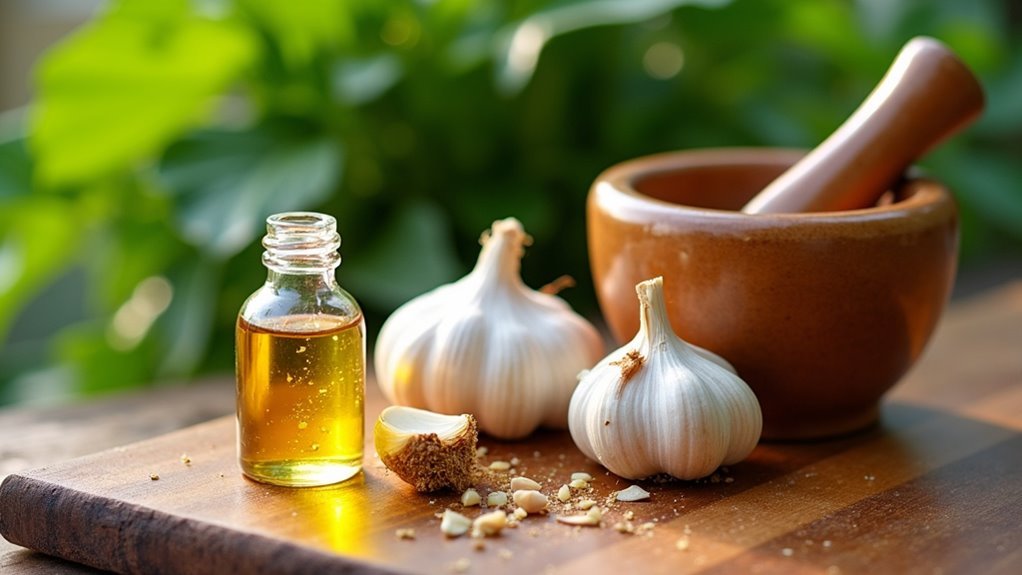
Break apart your garlic bulb into individual cloves, leaving the papery skins intact for now since you’ll discard them during the crushing process.
Use a garlic press, food processor, or mortar and pestle to crush the cloves thoroughly. This maximizes allicin release—the compound that gives your spray its pest-repelling power.
Blend your crushed garlic cloves with water to create a smooth purée. The finer consistency helps extract beneficial compounds more effectively.
Let this mixture steep for several hours to enhance the infusion of garlic’s natural properties into the water.
Always strain your mixture through cheesecloth or a coffee filter afterward. This removes solid pieces and creates the smooth liquid base you’ll need for an effective pest spray.
Proper Mixing Ratios for Maximum Effectiveness
One critical factor determines whether your garlic spray effectively repels pests or potentially harms your plants: the mixing ratio.
For homemade garlic sprays, you’ll want to dilute 1 part concentrated garlic mixture with 10 parts water. Commercial products require different ratios—BioRepel needs 1 part concentrate to 100 parts water, while Garlic Barrier uses 1 cup concentrate with 10 cups water.
| Product Type | Concentrate | Water |
|---|---|---|
| Homemade | 1 part | 10 parts |
| Commercial (BioRepel) | 1 part | 100 parts |
| Garlic Barrier | 1 cup | 10 cups |
Adjust ratios based on your garlic’s strength—stronger varieties need more dilution. Apply these garlic sprays every 7-14 days, particularly after rainfall, for sustained pest deterrence.
Straining Techniques for Smooth Application

After you’ve mixed your garlic spray to the proper ratio, straining becomes essential for smooth application and equipment protection.
You’ll want to strain your concentrated garlic mixture through multiple layers of cheesecloth to make sure no solid particles clog your spray bottle nozzles.
Let your garlic concentrate rest for twelve hours before straining – this maximizes compound extraction.
When you use garlic processed in a food processor, double strain with cheesecloth after using a fine mesh strainer first. This simple garlic preparation method prevents equipment damage while maintaining potency against powdery mildew and pests.
Always dilute the concentrate with water using proper parts of water ratios.
Store your strained spray in a cool location to preserve the garlic odor that deters harmful insects while protecting beneficial insects.
Keep Your Garden pest-free with properly strained applications that love garlic’s natural protective properties.
Storage Methods to Preserve Spray Potency
Proper storage directly impacts how long your freshly strained garlic spray remains effective against garden pests. Store your garlic oil spray in a cool, dark place, preferably in the refrigerator, to prevent degradation and maintain potency.
Keep your garlic spray potent by storing it in a cool, dark refrigerator to prevent degradation and maintain pest-fighting effectiveness.
Use dark-colored spray bottles to minimize light exposure, which breaks down the active compounds that make your spray effective. Keep the container tightly sealed to prevent contamination and evaporation of volatile components.
Your spray will remain most potent for 2-3 weeks after preparation, so don’t make large batches you can’t use quickly. Label your storage container with the preparation date to track freshness.
This simple practice guarantees you’ll use the spray while it’s still effective and replace it before potency diminishes considerably.
Target Pests That Respond to Garlic Treatment
You’ll find garlic oil spray particularly effective against common garden insects like aphids, thrips, spider mites, and cabbage flies that damage your plants through feeding and egg-laying.
The sulfur compounds in garlic disrupt these pests’ sensory receptors, causing confusion and repulsion that drives them away from treated areas.
Beyond small insects, garlic spray also deters larger pest animals such as slugs and other soft-bodied creatures that can wreak havoc on your garden beds.
Common Garden Insects
When you’re dealing with garden pests, garlic oil spray proves remarkably effective against several common insects that can wreak havoc on your plants.
Aphids, which feed on plant sap and cause stunted growth and leaf distortion, respond particularly well to garlic treatments. The spray’s strong sulfur compounds and allicin disrupt the sensory receptors of thrips, making it difficult for them to locate food sources.
You’ll also find garlic spray considerably reduces slug populations that damage seedlings and leafy greens.
Armyworms, notorious for feeding on corn, tomatoes, and peppers, can be managed through regular garlic oil applications.
Additionally, this natural treatment deters mosquitoes and other blood-sucking insects, creating a protective barrier while you work in your garden.
Larger Pest Animals
Beyond insects, garlic oil spray creates an effective barrier against larger pest animals that routinely damage garden crops.
The strong, pungent odor of garlic repels deer, rabbits, and raccoons effectively, making it a natural alternative to harsh chemical deterrents.
You’ll find that applying garlic spray around your garden’s perimeter creates an invisible fence these animals won’t cross.
For maximum effectiveness against larger pests:
- Reapply regularly – The garlic scent dissipates over time, requiring consistent application to maintain protection
- Target entry points – Focus spray application where animals typically enter your garden space
- Combine with hot pepper – Adding pepper extract enhances the deterrent effect, creating a more formidable barrier
This natural approach protects your plants while keeping wildlife safely away from your garden.
Optimal Application Timing and Weather Conditions
Since timing plays a crucial role in garlic oil spray effectiveness, you’ll want to apply it during the cooler parts of the day when your plants can absorb it without stress.
Target early morning hours between 7:30 AM and 11:00 AM, or early evening when temperatures drop. This prevents leaf burn and maximizes absorption.
Avoid spraying during high heat or direct sunlight, which can stress your plants.
Check the weather forecast before application—you’ll need at least 48 hours without rain for proper adhesion and effectiveness.
Reapply every 7 to 14 days to maintain pest-repelling properties, especially after rainfall washes away the protective coating.
Monitor pest activity regularly and apply proactively before infestations develop for ideal control results.
Coverage Techniques for Thorough Plant Protection
Proper spray coverage makes the difference between effective pest control and wasted effort.
Thorough spray coverage is the critical factor that separates successful pest management from ineffective treatment and wasted resources.
You’ll need to maintain the right distance and target specific areas where pests typically congregate.
Hold your spray bottle 15-30 cm away from the foliage to achieve even distribution. Focus on coating both the tops and undersides of leaves, since many pests like aphids and spider mites hide in these protected areas.
For maximum effectiveness, follow these key techniques:
- Test first – Always spray a single leaf before treating the entire plant to check for adverse reactions
- Evening application – Spray when plants are dry during evening hours to prevent leaf burn
- Regular reapplication – Repeat every 7-14 days or immediately after rainfall for continuous protection
Frequency Guidelines for Regular Treatments
Timing your garlic oil applications correctly guarantees maximum pest protection while avoiding plant stress.
Apply garlic oil spray every 7 to 14 days as a preventative measure before pest infestations occur. During active pest seasons or after rainfall, you’ll need to increase frequency to twice weekly for maintaining effective coverage.
Schedule applications during early morning or evening hours when temperatures are cooler and pests are most active. Avoid spraying during peak sunlight to prevent potential plant damage.
If you’re using homemade garlic spray, reapply weekly since it’s less stable than commercial versions.
Always test on a single leaf before treating entire plants. Regular monitoring of your plants helps determine when additional treatments are necessary, ensuring you respond quickly to emerging pest activity.
Safety Considerations for People and Pets
While garlic oil sprays offer a natural pest control solution, you’ll want to understand their safety profile before treating your garden.
These products are classified as non-toxic and safe for both humans and pets, making them an excellent alternative to harsh chemical pesticides.
However, you should exercise caution in certain situations:
Despite garlic oil’s natural safety profile, careful application remains essential to protect pets, beneficial insects, and sensitive plants in your garden.
- Pet sensitivity – Some animals may experience adverse reactions to garlic, so monitor pets closely after application.
- Beneficial insects – The strong odor can deter helpful pollinators and beneficial insects along with pests.
- Plant testing – Always test on a small area first to check for unexpected plant sensitivities.
The garlic scent dissipates quickly, but timing your applications when beneficial insects are less active helps protect your garden’s ecosystem.
Enhancing Effectiveness With Natural Additives
You can greatly boost your garlic spray’s pest-fighting power by incorporating natural additives that target different aspects of pest control.
Adding neem oil disrupts insect feeding and reproduction, while hot pepper extract creates a barrier that repels both insects and larger garden invaders like deer and rabbits.
Essential oil combinations with mint, eucalyptus, or tea tree oil provide additional repellent properties that complement garlic’s natural pest-deterrent qualities.
Neem Oil Benefits
When you combine neem oil with garlic spray, you’re creating a powerful pest control system that attacks garden invaders from multiple angles. Neem oil’s azadirachtin compound disrupts pest life cycles while garlic targets their sensory receptors, delivering devastating results against aphids, spider mites, and whiteflies.
This combination offers significant advantages:
- Dual-action protection – Targets both reproductive processes and sensory systems simultaneously
- Extended residual effectiveness – Fewer applications needed for lasting pest control
- Fungal disease prevention – Neem oil’s antifungal properties protect plants beyond pest management
You’ll appreciate that this enhanced formula remains safe for beneficial insects when applied correctly, maintaining your garden’s natural balance.
The improved staying power means you’re spending less time reapplying treatments while achieving superior protection against both pests and diseases.
Hot Pepper Additions
Adding hot pepper to your garlic oil spray transforms an already effective pest deterrent into a formidable multi-sensory barrier that insects and larger garden invaders simply can’t tolerate.
The capsaicin in peppers creates additional irritation that repels pests more aggressively than garlic alone.
Mix one tablespoon of crushed red pepper flakes or 1-2 fresh hot peppers with your garlic spray mixture for best results.
This combination effectively targets soft-bodied insects like aphids and slugs while disrupting their feeding and reproductive behaviors.
You’ll also deter larger animals such as deer and rabbits that threaten your garden.
Apply this enhanced spray weekly or after rainfall to maintain a consistent protective barrier.
The dual-action formula promotes a healthier garden ecosystem while providing superior pest control.
Essential Oil Combinations
While garlic oil spray proves effective on its own, incorporating essential oils can dramatically amplify its pest-fighting power and extend its protective benefits beyond simple deterrence.
You’ll discover that combining garlic oil with specific essential oils creates a multi-layered defense system. These natural additions work synergistically, targeting different pest vulnerabilities while providing additional plant health benefits.
Consider these powerful essential oil combinations:
- Eucalyptus or tea tree oil – Boosts repellent properties while delivering antibacterial and antifungal protection for overall plant health.
- Mint oil – Adds invigorating scent and specifically targets aphids and spider mites through proven pest-repelling qualities.
- Neem oil blend – Disrupts pest life cycles while providing extensive fungal disease protection.
You can customize these combinations based on your garden’s specific pest challenges, creating targeted solutions that protect plants more thoroughly than single-ingredient sprays.
Troubleshooting Common Application Problems
Although garlic oil spray is generally safe and effective, you’ll encounter common application issues that can reduce its pest-fighting power.
If you’re seeing plant damage, check your dilution ratio—you’ve likely used too strong a concentration. Always mix 1 part concentrate with 10 parts water to prevent leaf burn.
Timing matters too; avoid daytime applications when direct sunlight can scorch treated foliage. Apply during cooler evening hours instead.
Don’t forget the undersides of leaves where pests like aphids and spider mites hide.
If the spray seems ineffective, you’re probably not reapplying frequently enough. Expect to treat every 7 to 14 days, especially after rain washes away residue.
Frequently Asked Questions
How Do You Make Garlic Spray for Garden Pests?
You’ll blend 1/4 pound garlic with 1 quart water until liquefied, then strain through cheesecloth. Dilute the concentrate using 1 part mixture with 10 parts water before applying to plants.
What Pests Does Garlic Spray Repel?
You’ll find garlic spray effectively repels aphids, slugs, thrips, mosquitoes, cotton aphids, and cabbage flies. The sulfur compounds and allicin confuse insects’ sensory receptors, making it a versatile natural deterrent for various garden pests.
How to Use Garlic as an Insecticide?
You’ll blend garlic with water, strain it, then dilute before spraying. Apply in early evening, covering leaf tops and undersides completely. Reapply weekly and after rain for effective pest control.
What Is the Best Oil for Garden Pests?
You’ll find neem oil works best for garden pests since it disrupts their life cycles and targets aphids, spider mites, and whiteflies effectively. Horticultural oil’s also excellent for suffocating soft-bodied insects.
In Summary
You’ve now got a powerful, natural weapon against garden pests that won’t harm your family or beneficial insects. Remember to apply your garlic oil spray consistently, especially after rain, and don’t skip the safety precautions. With proper preparation and regular use, you’ll notice fewer aphids, caterpillars, and other unwanted visitors damaging your plants. Keep experimenting with natural additives to find the combination that works best for your specific garden’s needs.




Leave a Reply