
Garlic spray acts as a natural pesticide that’ll protect your roses from harmful pests like aphids and Japanese beetles while preserving beneficial insects. The allicin compounds in garlic create an invisible barrier that repels destructive bugs and provides antifungal protection against black spot and powdery mildew. These sulfur compounds are absorbed into your rose’s vascular system, strengthening the plant’s natural defenses and promoting healthier blooms throughout the growing season. Discover the complete application techniques below.
How Garlic Spray Protects Roses From Common Pests

While chemical pesticides can harm beneficial insects and contaminate your garden, garlic spray offers a natural solution that targets harmful pests without disrupting your garden’s ecosystem.
The spray’s active compounds make your roses unpalatable to common garden pests like aphids, Japanese beetles, and snails, greatly reducing infestations and plant damage.
Garlic spray’s natural compounds effectively repel aphids, Japanese beetles, and snails while significantly reducing pest damage to your roses.
When you apply garlic spray regularly, you’ll create a protective barrier that deters these destructive insects while preserving beneficial ones like bees and ladybugs.
This approach aligns perfectly with organic gardening principles, giving you an environmentally safe method to protect your roses.
You’ll find that this natural repellent effectively safeguards your plants without introducing harmful chemicals into your soil or affecting nearby wildlife.
The Science Behind Garlic’s Pest-Repelling Properties
When you crush garlic, you’re releasing allicin and other sulfur compounds that create a powerful chemical barrier against insects like aphids and caterpillars.
These same compounds don’t just repel pests—they also provide natural antifungal protection that helps prevent diseases like black spot from taking hold on your roses.
The garlic works systemically too, meaning it actually changes how your plants taste to feeding insects, making them less appealing targets overall.
Sulfur Compounds Repel Insects
Garlic’s remarkable pest-repelling abilities stem from powerful sulfur compounds like allicin that burst forth when you crush the cloves.
These potent chemicals create the distinctive odor that makes garlic such an effective natural deterrent against common rose pests.
When you apply garlic spray to your roses, the sulfur compounds work through multiple mechanisms:
- Direct repellence – The strong smell deters aphids, snails, and beetles from approaching your plants
- Systemic protection – Plant parts become unpalatable to feeding insects after treatment
- Pheromone disruption – Compounds interfere with pest communication signals, reducing attraction
- Ecosystem support – Creates a healthier environment for beneficial insects while targeting harmful ones
This multi-layered approach guarantees your roses receive thorough protection while maintaining environmental balance in your garden.
Natural Antifungal Properties
Beyond deterring insects, the same allicin compounds that make garlic such a powerful pest repellent also deliver potent antifungal protection for your roses.
These natural antifungal properties actively combat common fungal diseases like black spot and powdery mildew that can devastate rose gardens. When you apply garlic spray to your roses, it creates a protective barrier on the foliage that inhibits fungal growth before infections can take hold.
Research confirms that garlic extracts effectively suppress various fungi, making this spray an invaluable tool for organic rose gardening.
You’ll notice healthier, more resilient roses that can better withstand environmental stresses. By incorporating garlic spray into your routine, you’re promoting a balanced garden ecosystem while reducing dependence on chemical fungicides, perfectly aligning with organic gardening principles.
Systemic Plant Protection
Although garlic’s surface protection offers immediate benefits, the real magic happens when sulfur compounds like allicin penetrate deep into your rose plants’ vascular system.
When you use garlic spray, these compounds are absorbed through leaves and transported throughout the entire plant, creating thorough systemic protection that reaches every branch, bud, and bloom.
This internal defense system works differently than companion planting when you plant garlic nearby. The absorbed compounds circulate continuously, making your roses unpalatable to pests even in areas the spray didn’t directly contact:
- Aphids feeding on any part encounter deterrent compounds
- Japanese beetles find leaves consistently unappetizing
- Caterpillars abandon feeding attempts quickly
- Root-feeding insects encounter systemic barriers
This systemic approach guarantees thorough protection that surface treatments alone can’t provide.
Antifungal Benefits of Garlic for Rose Health
Beyond repelling pests, your garlic spray serves as a powerful antifungal shield for your roses.
The allicin compound in garlic actively fights fungal pathogens that cause devastating diseases like black spot and powdery mildew.
You’ll discover that this natural approach not only protects your roses but also reduces your dependence on harsh chemical treatments.
Garlic’s Fungal Fighting Properties
Fungal diseases pose one of the greatest threats to rose health, but garlic’s natural antifungal properties offer an effective defense against these persistent problems.
When you crush fresh garlic cloves, you release allicin, a powerful compound that actively inhibits fungal growth on your roses.
Creating your own antifungal treatment is straightforward. Blend food grade garlic with water, strain the mixture, and transfer it to a spray bottle for easy application.
This natural solution targets common rose afflictions effectively:
- Black spot prevention – Regular spraying creates hostile conditions for spore development
- Powdery mildew control – Garlic compounds disrupt fungal cell structure
- Enhanced plant immunity – Strengthens roses’ natural disease resistance
- Chemical-free protection – Eliminates need for harsh synthetic fungicides
Regular applications maintain your roses’ health naturally.
Preventing Rose Black Spot
When dark, circular spots begin appearing on your rose leaves, you’re likely witnessing black spot disease in action—one of the most destructive fungal infections that can devastate your garden.
Garlic spray offers an effective solution for preventing this common problem. The allicin compounds in garlic create an inhospitable environment on your rose foliage, making it difficult for black spot spores to establish themselves and spread.
Regular use of garlic spray strengthens your roses’ natural defenses against fungal infections. By applying this organic treatment consistently, you’re not only preventing black spot but also promoting overall plant health.
The antifungal properties work by inhibiting fungal growth before it becomes visible, keeping your roses vibrant and disease-free throughout the growing season.
Natural Disease Prevention Methods
Since garlic contains powerful sulfur compounds that naturally inhibit fungal growth, you’re fundamentally creating a protective shield around your roses with each application.
These natural disease prevention methods offer organic gardeners a sustainable alternative to chemical treatments.
Your garlic spray works by creating an inhospitable environment for common rose pathogens like black spot and powdery mildew. The sulfur compounds actively suppress fungal development before infections can establish themselves.
Consider these effective approaches:
- Apply garlic spray every 7-10 days during growing season for consistent protection
- Use companion planting garlic around rose beds for continuous antifungal benefits
- Spray early morning or evening to maximize absorption and effectiveness
- Combine with proper air circulation and watering practices for thorough prevention
This organic approach maintains your garden’s health while protecting beneficial insects and soil microorganisms.
Essential Ingredients for Making Garlic Rose Spray
Creating an effective garlic spray for your roses requires just three simple ingredients you likely already have at home.
You’ll need one teaspoon of garlic powder, one tablespoon of liquid hand soap, and one cup of hot water to create this powerful insect repellent for your rose plants.
These essential ingredients work together to form a natural pest deterrent that’s both safe and effective. The garlic powder provides the active repelling compound, while the liquid hand soap acts as an emulsifier, helping the mixture stick to plant surfaces.
Hot water guarantees proper dissolution of all components.
Once you’ve combined these basic ingredients, you’ll microwave the mixture for two minutes, then dilute it with one gallon of water before applying it to your roses.
Step-by-Step Garlic Spray Recipe for Rose Bushes
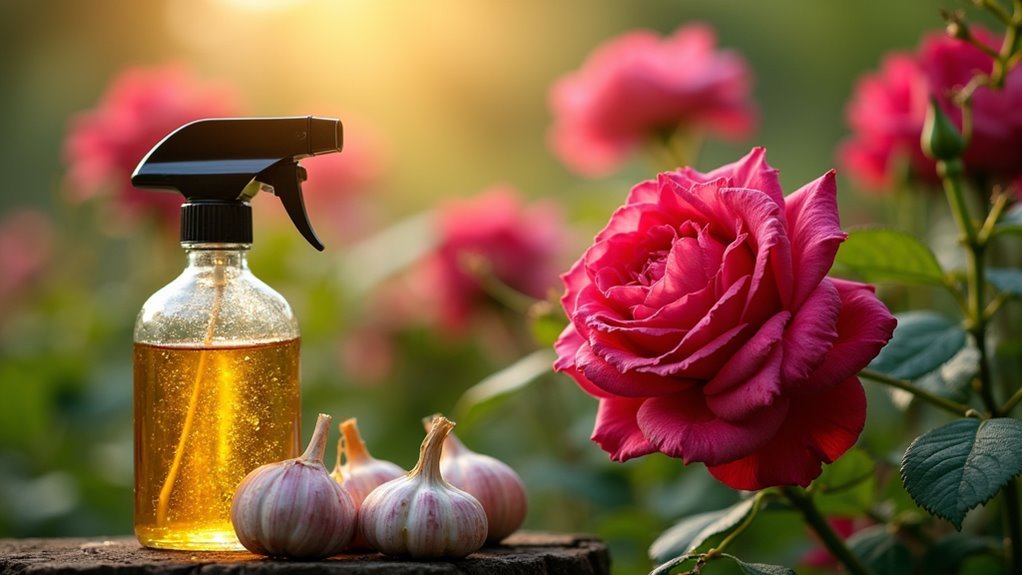
Five simple steps will transform fresh garlic cloves into a potent rose protection spray that outperforms the basic powder version.
You’ll create an effective deterrent that keeps harmful pests away from your rose bush while maintaining the plant’s health.
Follow this straightforward process:
- Finely chop 5 garlic cloves and soak them in half a liter of water for 12 hours.
- Add two teaspoons of dish soap to help the garlic spray adhere to leaves.
- Strain out garlic bits and dilute with another liter of water.
- Transfer to spray bottle and apply during evening hours.
Apply your garlic spray weekly or after rainfall for maximum effectiveness.
This natural solution works better than planting garlic nearby, directly targeting problem areas on your roses.
Proper Application Techniques for Maximum Effectiveness
You’ve prepared your garlic spray, but applying it correctly determines whether it’ll effectively protect your roses or potentially harm them.
The timing of when you spray and how often you reapply creates an essential barrier against pests that can make or break your pest control efforts.
Proper coverage and dilution ratios guarantee you’re targeting problem areas without damaging the delicate rose foliage you’re trying to protect.
Timing and Frequency
When evening shadows begin to fall across your garden, that’s your cue to reach for the garlic spray bottle.
Applying garlic spray during evening hours reduces the risk of leaf burn while maximizing effectiveness against rose pests. The frequency of application plays a vital role in maintaining consistent protection.
Follow this timing schedule for ideal results:
- Reapply every 7-10 days during regular conditions to maintain pest deterrence
- Spray immediately after rainfall since water washes away the protective coating
- Increase frequency during spring and early summer when rose pests are most active
- Test new formulations on single leaves first before widespread garden application
This consistent approach guarantees your roses receive continuous protection throughout the growing season without overwhelming the plants.
Coverage and Dilution
Three critical factors determine whether your garlic spray provides effective rose protection: proper dilution ratios, thorough coverage techniques, and strategic application methods.
You’ll need to dilute your garlic concentrate with water at a 1:10 ratio to prevent plant damage while maintaining pest-deterring properties. This balanced mixture guarantees your roses won’t suffer chemical burn while still repelling unwanted insects.
When you apply the solution, focus on achieving complete coverage of both leaf surfaces. Many gardeners make the mistake of only spraying the tops of leaves, but pests often hide underneath.
Use a fine mist setting and work systematically from bottom to top.
Before treating your entire rose garden, test a small section first. This precaution helps you identify any sensitivity issues before widespread application.
Best Timing for Spraying Roses With Garlic Solution

Timing your garlic spray application correctly makes all the difference in protecting your roses effectively while preventing damage to the delicate foliage.
You’ll want to apply garlic spray during early evening hours when the sun’s intensity has diminished, preventing potential leaf burn while allowing the garlic solution to work overnight against pests.
For ideal results, follow these timing guidelines:
- Test first – Apply garlic solution to a single leaf and wait 24 hours to check your plant’s reaction
- Pre-water roses – Hydrate plants before treatment to reduce stress and prevent foliage damage
- Reapply regularly – Schedule applications every few days or immediately after rainfall
- Focus on peak seasons – Increase frequency during high pest activity periods for continuous protection
Which Rose Pests Respond to Garlic Treatment
Although garlic spray won’t eliminate every garden pest, it’s remarkably effective against several common rose destroyers that can devastate your prized blooms.
Aphids top the list of rose pests that respond well to garlic treatment. These tiny insects cluster on stems and buds, sucking plant juices and weakening your roses considerably.
Japanese beetles also retreat from garlic’s pungent scent, abandoning their feast on your rose foliage and flowers.
You’ll find that snails avoid garlic-treated areas entirely, protecting your leaves and petals from their destructive feeding habits.
Caterpillars won’t tolerate the unpalatable environment that regular garlic applications create.
Additionally, garlic’s anti-fungal properties help prevent black spot disease, giving you thorough protection for healthier, more vibrant roses.
Companion Planting Garlic Around Rose Bushes
Beyond applying garlic spray treatments, you can establish a permanent pest-fighting system by planting actual garlic cloves directly around your rose bushes. This companion planting strategy creates a natural barrier that continuously repels aphids, snails, and Japanese beetles while supporting healthier roses.
Growing Garlic alongside roses offers multiple benefits:
- Plant cloves in fall, spacing them 4 inches apart and 1 foot from rose bases
- Garlic’s anti-fungal properties prevent black spot and other diseases
- Green shoots indicate successful growth and support rose blooming cycles
- Enhanced rose fragrance creates a more vibrant garden ecosystem
If you love garlic in your cooking, you’ll appreciate this dual-purpose approach that protects your roses while providing fresh garlic for harvest.
Storage and Shelf Life of Homemade Garlic Spray
Once you’ve prepared your homemade garlic spray, proper storage becomes crucial for maintaining its pest-fighting power. Store your spray in a cool, dark place or refrigerate it to preserve its potency.
Before storage, mix well to guarantee all components remain combined. If you’ve used a food processor to create your garlic base, transfer the finished spray to a clean, labeled container immediately after preparation.
Your garlic spray works best within a few days of making it, though proper storage can extend its life up to two weeks. Always label containers with preparation dates to track shelf life.
Check for changes in smell or appearance before each use, as these indicate spoilage or reduced effectiveness. For ideal results against rose pests, prepare fresh batches regularly.
Safety Considerations When Using Garlic on Roses
While proper storage keeps your garlic spray effective, using it safely protects both your roses and your family. This simple garlic solution offers natural pest control without harsh chemicals, making it safe around children, pets, and wildlife when applied correctly.
Follow these essential safety guidelines when you use the garlic spray:
- Dilute properly at 1:10 ratio with water to prevent leaf burn
- Pre-water your roses before application to reduce damage risk
- Test on a single leaf first to check for adverse reactions
- Apply only insecticidal soap before harvesting edible roses
Your simple garlic spray becomes most effective when you prioritize proper dilution and testing.
These precautions guarantee your roses stay healthy while maintaining a safe garden environment for everyone.
Combining Garlic With Other Natural Pest Control Methods
You’ll maximize your rose garden’s pest protection by combining garlic spray with other natural methods that work synergistically together.
Citrus and garlic blends create powerful deterrents, while oil-based combination sprays offer enhanced coverage and effectiveness against stubborn pests.
Strategic companion planting alongside your spray applications establishes an extensive defense system that keeps roses healthy year-round.
Citrus and Garlic Blends
When you’re ready to amplify your garlic spray’s effectiveness, citrus peels offer an excellent natural partner that creates a more powerful pest-deterrent formula.
The acidity in citrus breaks down pests’ waxy coating, allowing garlic compounds to penetrate more effectively and increase elimination rates.
To create this potent blend, boil citrus peels in water, then combine with your garlic mixture. This organic solution targets multiple rose threats while adding pleasant garden fragrance.
Your citrus-garlic spray delivers several key benefits:
- Broader pest control – effectively manages aphids, slugs, and various harmful insects
- Enhanced penetration – citrus acidity improves garlic’s pest-fighting capabilities
- Chemical-free protection – supports organic gardening while safeguarding children, pets, and beneficial wildlife
- Improved plant health – regular applications strengthen roses without synthetic pesticides
Oil-Based Combination Sprays
Since oil naturally adheres to plant surfaces longer than water-based solutions, incorporating vegetable oil into your garlic spray creates a dual-action defense system that both repels and eliminates garden pests.
You’ll suffocate soft-bodied insects like aphids while garlic’s natural compounds deter slugs and snails from approaching your roses.
Adding liquid soap to your oil-garlic mixture improves adhesion, ensuring the spray sticks to leaves longer for maximum effectiveness.
The oil barrier also prevents fungal diseases like powdery mildew from taking hold on your plants.
You can boost your spray’s potency by incorporating essential oils such as eucalyptus or tea tree oil, creating a multi-faceted deterrent against various pests.
Regular applications reduce your dependence on chemical pesticides while supporting beneficial insects in your garden ecosystem.
Companion Planting Strategies
Beyond spraying garlic on your roses, establishing live garlic plants nearby creates a permanent pest-deterrent system that works around the clock.
You’ll position garlic cloves about one foot from your rose bushes’ base to form an effective protective barrier against aphids, Japanese beetles, and snails.
This companion planting approach offers multiple advantages:
- Natural fungal protection – Garlic’s anti-fungal compounds help prevent black spot disease
- Extended pest control – Creates continuous deterrence without repeated spray applications
- Enhanced ecosystem diversity – Reduces chemical pesticide dependency while supporting beneficial insects
- Amplified benefits – Pairing garlic with chives strengthens disease resistance and plant health
You’re fundamentally building a living defense network that protects your roses while promoting healthier garden conditions year-round.
Signs Your Roses Are Responding to Garlic Treatment
The transformation in your roses after garlic spray treatment becomes evident through several key indicators that signal improved plant health. You’ll notice your leaves becoming greener and more robust, displaying increased vigor compared to untreated plants. Pest populations like aphids and snails will notably reduce, demonstrating garlic’s natural repellent effectiveness.
| Health Indicator | What You’ll See | Timeline |
|---|---|---|
| Leaf Vigor | Greener, more robust foliage | 1-2 weeks |
| Pest Reduction | Fewer aphids and snails | 3-7 days |
| Disease Prevention | Less black spot occurrence | 2-4 weeks |
| Enhanced Blooming | More/larger flowers | 4-6 weeks |
You’ll also observe enhanced blooming with more abundant or larger flowers, indicating improved health. Fungal diseases like black spot become less prevalent, showcasing garlic’s anti-fungal properties. Additionally, your roses will demonstrate increased resilience against environmental stressors.
Troubleshooting Common Garlic Spray Application Issues
Although garlic spray proves highly effective for rose care, you’ll occasionally encounter application challenges that can undermine your treatment’s success. When problems arise, you can quickly identify and resolve these common issues with proper troubleshooting techniques.
Successfully troubleshooting garlic spray applications ensures your roses receive maximum protection against pests and diseases.
- Leaf burn damage: You’ve applied spray during daylight hours or used an overly concentrated solution – switch to evening applications and verify you’re using the correct 1:10 dilution ratio.
- Ineffective pest control: Your spray’s potency has diminished from improper storage or age – prepare fresh batches and store unused portions in cool conditions.
- Plant stress symptoms: You skipped the leaf test or used incorrect concentrations – always test on single leaves first.
- Reduced effectiveness: Rain or watering has washed away treatment – reapply after moisture exposure.
Frequently Asked Questions
Is Garlic Spray Good for Roses?
Yes, you’ll find garlic spray excellent for roses. It’ll repel harmful pests like aphids and Japanese beetles while preventing fungal diseases. You’re using an environmentally safe solution that protects beneficial insects and promotes healthier growth.
What Does Garlic Do for Roses?
Garlic naturally repels harmful pests like aphids and beetles from your roses while preventing fungal diseases such as black spot. You’ll create a healthier garden ecosystem that promotes stronger, more resilient rose plants naturally.
What Pests Does Garlic Spray Repel?
You’ll repel aphids, Japanese beetles, snails, and caterpillars with garlic spray. The strong scent acts as a natural deterrent, making your roses less appealing to these harmful insects that commonly threaten rose bushes.
Does Garlic Stop Black Spots on Roses?
Yes, garlic spray can help prevent black spots on your roses. Its anti-fungal properties create an unfavorable environment for fungal spores, reducing black spot incidence and promoting healthier leaf surfaces.
In Summary
You’ve now got the knowledge to protect your roses naturally with garlic spray. Start with small test areas, apply consistently during peak growing season, and watch for positive changes in your plants’ health. Don’t forget to combine garlic treatments with other organic methods for maximum effectiveness. With patience and regular application, you’ll see fewer pests and healthier roses without relying on harsh chemicals.




Leave a Reply