
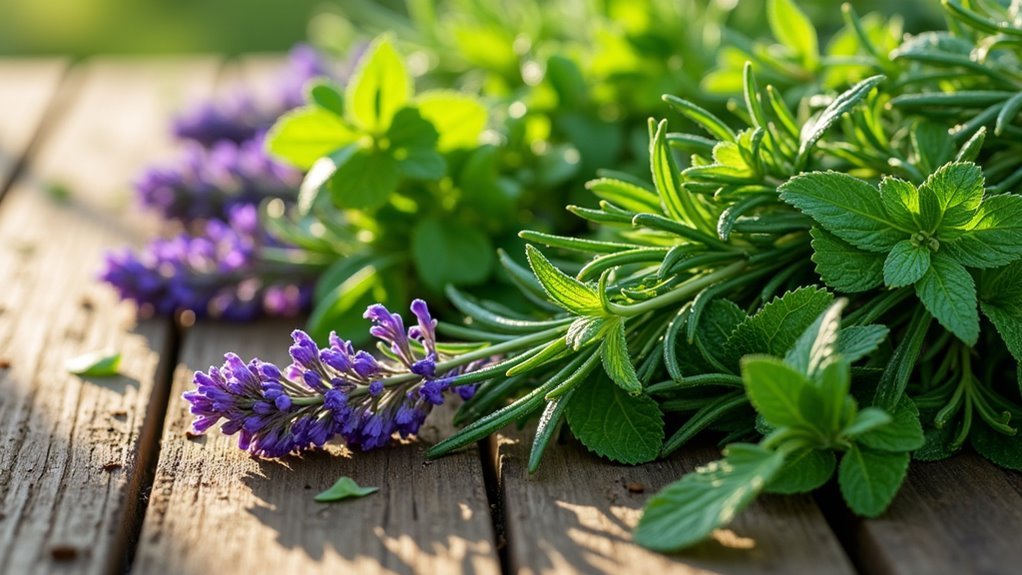
You can effectively repel fleas using powerful herbs like mint, lavender, rosemary, and catnip planted strategically around your home’s foundation and entry points. These natural deterrents thrive in well-drained soil with 6-8 hours of sunlight and create protective barriers where pets frequent. Mint’s aggressive growth and potent scent, lavender’s insect-disrupting compounds, and rosemary’s tick-and-flea repelling properties offer chemical-free protection. With proper placement and care, you’ll discover extensive strategies for creating natural flea treatment mixtures and ensuring safety around pets.
Why Fleas Are Attracted to Your Home and Yard
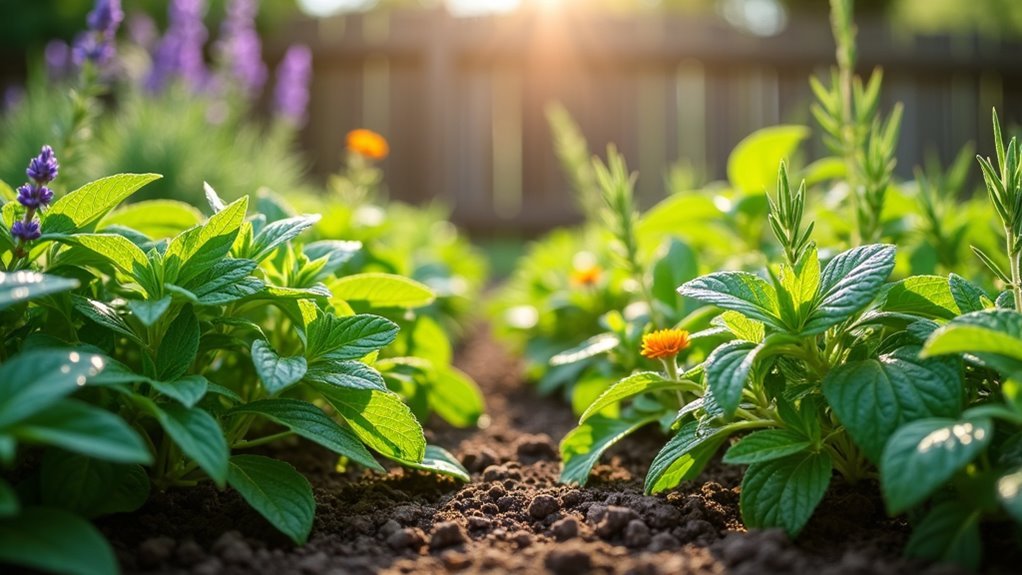
Several factors make your home and yard irresistible to fleas, turning your property into a breeding ground for these persistent pests.
Moist environments with high humidity create perfect conditions for flea reproduction and survival. Your overgrown grass, shaded areas, and debris piles provide ideal hiding spots that encourage flea infestation.
High humidity and overgrown vegetation create the perfect storm for flea infestations in your yard.
Wild animals like raccoons and squirrels introduce fleas into residential areas, dramatically increasing populations around your property.
Accessible food sources, including improperly stored pet food and garbage, sustain flea lifecycles near your home.
Additionally, warmth from pets and humans attracts these parasites seeking hosts for feeding.
Understanding these attraction factors in your home will also help you strategically place flea-repelling plants and implement other natural deterrents to effectively keep fleas away from your family and pets.
Most Effective Herbs for Natural Flea Repulsion
You’ll find that certain herbs pack a powerful punch against fleas, with their natural oils and compounds creating an effective barrier that keeps these pests away from your home.
The most potent flea-fighting herbs include mint, catnip, rosemary, lavender, and basil—each offering unique benefits and varying growth requirements.
Strategic placement of these herbs around your property’s entry points, pet areas, and sunny garden spots will maximize their repelling potential while creating a beautiful, functional landscape.
Top Repelling Herbs
When it comes to natural flea control, certain herbs stand out as powerhouse repellents that can transform your garden into a pest-free sanctuary.
Mint tops the list with its aggressive spreading nature and potent scent that fleas can’t tolerate. You’ll want to plant it in containers to control its growth while maximizing its repelling power.
Catnip delivers exceptional results, containing compounds that repel fleas and mosquitoes while remaining completely safe for your pets.
Lavender provides dual benefits—its relaxing fragrance creates a pleasant atmosphere while effectively deterring insects.
Rosemary thrives in dry conditions and requires minimal maintenance while repelling both fleas and ticks.
These herbs create natural barriers that protect your outdoor spaces without harsh chemicals.
Optimal Planting Locations
Where should you position these powerful herbs to maximize their flea-fighting potential? Start by planting these plants that repel fleas around your home’s foundation and entrance points to create an effective natural barrier.
You’ll want to focus on areas where pets frequent, such as under favorite shade trees, around dog runs, and near outdoor lounging spots.
For ideal growth, make sure these herbs receive 5-8 hours of direct sunlight daily. This sun exposure maximizes their pest-repelling properties while keeping the plants healthy and vigorous.
Consider using containers for invasive species like mint and pennyroyal. This approach lets you control their spread while strategically positioning them where they’re needed most.
You can easily move containerized herbs to follow seasonal sun patterns or relocate them as your pest control needs change.
Mint: The Sweet-Smelling Flea Deterrent
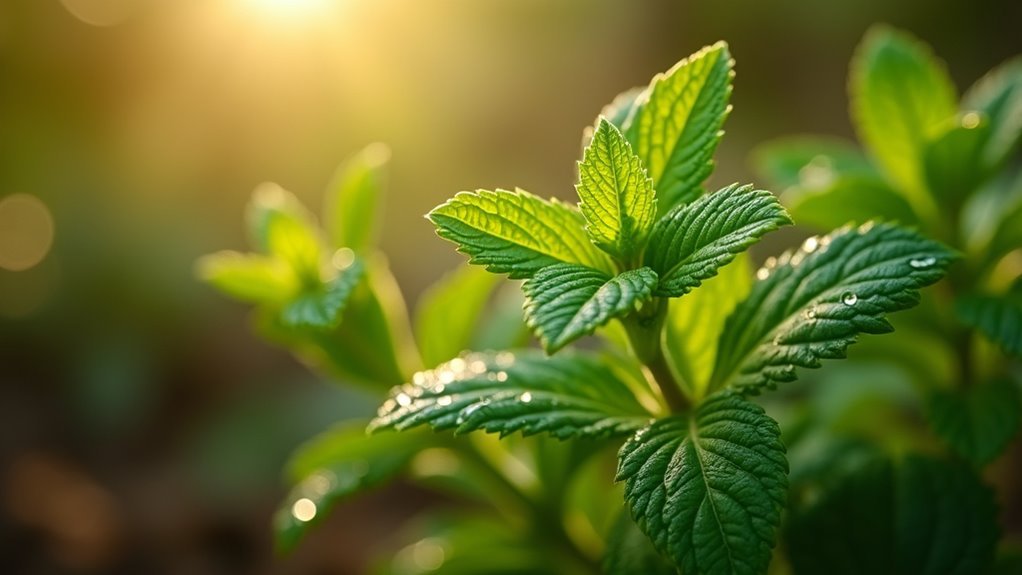
Mint stands out as one of nature’s most effective and aromatic flea deterrents, with spearmint and peppermint varieties offering particularly potent protection against these persistent pests. The strong scent that makes mint so appealing to humans acts as a powerful natural pest control method, effectively helping to repel fleas from your outdoor spaces.
You can extract essential oil from the leaves for additional applications.
You’ll find mint remarkably easy to grow, though its aggressive spreading nature means you should plant it in containers. Provide at least six hours of daily sunlight and well-drained, moist soil for ideal growth.
Your mint can reach three feet tall at maturity. Regular maintenance prevents unwanted spreading while maintaining this herb’s beneficial flea-fighting properties throughout your garden and patio areas.
Rosemary: A Mediterranean Solution for Tick and Flea Control
While mint offers excellent flea control through its spreading ground cover, rosemary provides a more structured approach to pest management with its upright Mediterranean charm.
You’ll find this hardy herb’s natural deterrent compounds effectively repel fleas and ticks when strategically planted around your property.
Rosemary thrives in warm, dry conditions with 6-8 hours of daily sunlight and well-drained sandy soil. The plant reaches 2-5 feet tall, creating an attractive barrier that combines aesthetic appeal with practical pest control.
Plant rosemary in sunny, well-drained spots where it grows 2-5 feet tall, forming beautiful pest-repelling barriers.
You must avoid overwatering since excess moisture reduces its insect-repelling properties.
Historically valued beyond culinary uses, rosemary’s pest-deterring abilities make it a versatile addition to your natural flea management strategy.
Its Mediterranean origins mean it’s perfectly suited for low-maintenance gardens requiring minimal water.
Lavender: Fragrant Protection Against Fleas
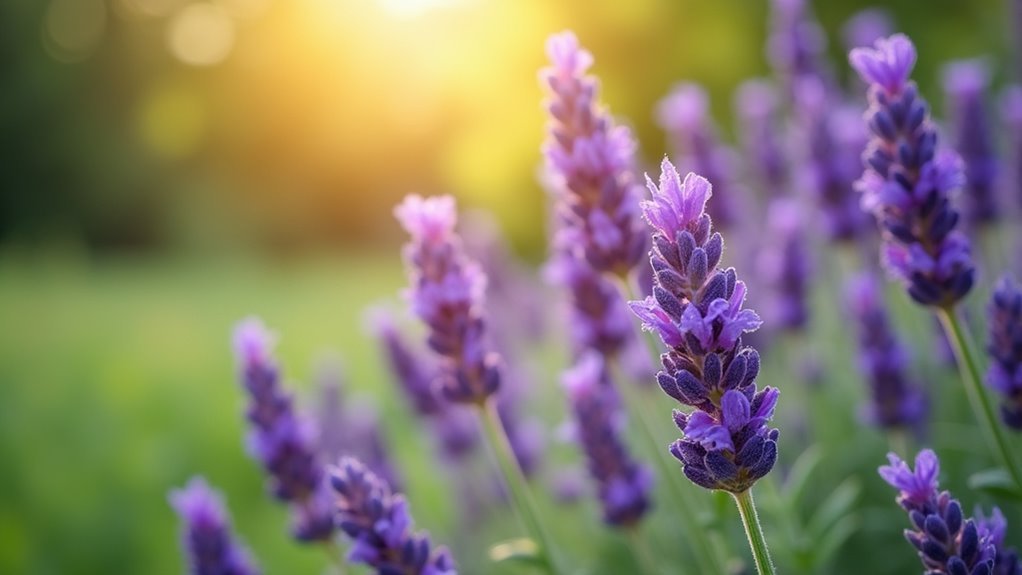
Lavender’s dual nature as a beautiful garden ornament and powerful flea deterrent makes it an exceptional choice for natural pest control. You’ll find that lavender’s pleasant fragrance calms you while effectively working to repel fleas from your property. The essential oils contain compounds that disrupt flea reproduction, providing long-lasting protection.
| Growing Conditions | Benefits |
|---|---|
| Well-drained soil, full sun to partial shade | Safe for pets in roaming areas |
| Easy cultivation in various garden settings | Disrupts flea reproduction cycles |
| Regular harvesting enhances potency | Creates multipurpose sachets and potpourri |
You can maximize lavender’s effectiveness by regularly harvesting and drying the flowers. Create sachets or potpourri for pet bedding and home placement, extending this natural pest control solution beyond your garden.
Pennyroyal: The Potent Spearmint-Scented Repellent
You’ll find pennyroyal’s strong spearmint-like scent makes it incredibly effective at repelling fleas and other insects from your garden.
Plant it around your lawn’s perimeter where it can receive several hours of sunlight daily, though it’ll tolerate some shade and produce attractive lavender flowers.
However, you must exercise caution since pennyroyal contains compounds that can harm children and pets if ingested.
Spearmint Scent Properties
When you encounter pennyroyal’s distinctive spearmint aroma, you’re experiencing one of nature’s most effective flea deterrents in action. This member of the mint family produces an intense fragrance that’ll naturally repel fleas and other unwanted insects from your property.
The secret behind pennyroyal’s powerful scent lies in its high concentration of aromatic compounds, particularly pulegone. This essential oil component creates the characteristic spearmint smell that’s pleasant to humans but overwhelming to fleas.
You’ll find this potent flea repellent works because insects can’t tolerate the strong menthol-like fragrance that emanates from the plant’s leaves and stems. The scent intensity makes pennyroyal particularly effective compared to other mint varieties, giving you a reliable natural defense against flea infestations around your home and garden.
Planting and Growth Requirements
Growing pennyroyal successfully requires attention to specific soil and sunlight conditions that maximize both its flea-repelling properties and overall plant health.
You’ll need well-drained soil and a location with full sun to partial shade for ideal growth requirements. Pennyroyal reaches 12-24 inches tall with weedy stalks that you can plant around your lawn’s perimeter for effective flea control.
Keep the soil consistently moist through regular watering, but avoid waterlogging.
To prevent this herb from becoming invasive, grow it in containers rather than directly planting in garden beds. This containment strategy helps you maintain control while still benefiting from pennyroyal’s strong spearmint scent that deters fleas effectively throughout your outdoor spaces.
Safety Concerns for Pets
While pennyroyal’s spearmint scent effectively repels fleas, this potent herb poses serious health risks to your pets that demand careful consideration.
The same compounds that make pennyroyal an effective repellent can cause severe toxicity in cats and dogs when ingested or applied directly to their skin. You’ll notice symptoms like vomiting and potentially dangerous liver damage if your pets consume this herb.
The plant’s appealing mint fragrance actually attracts many pets, making them more likely to chew on leaves and increase poisoning risks.
You should plant pennyroyal only in areas completely inaccessible to your animals. Before using this repellent around pets, consult your veterinarian about safe application methods and proper dosages.
Always monitor your pets closely for adverse reactions.
Creating Herbal Flea Treatment Mixtures
Since store-bought flea treatments often contain harsh chemicals that can irritate both pets and humans, you’ll find that creating your own herbal flea treatment mixtures offers a safer, more natural approach to pest control.
You can easily make effective herbal flea treatments using simple ingredients:
- Carpet Treatment Powder – Combine dried rosemary, lavender, and eucalyptus with baking soda, then sprinkle on carpets to help repel fleas while freshening your space.
- Pet-Safe Dusting Powder – Mix equal parts diatomaceous earth with powdered mint for a herbal flea treatment that’s safe when applied carefully to bedding areas.
- Natural Spray Solution – Blend peppermint, lavender, and cedarwood essential oils with water in a spray bottle for an effective deterrent throughout your home.
Best Locations to Plant Flea-Repelling Herbs
After creating your herbal flea treatment mixtures, you’ll want to strategically position live flea-repelling herbs around your property to create multiple layers of natural protection.
Start by planting mint, rosemary, and lavender around your home’s foundation to establish a natural barrier against flea entry. Focus on pet hangout areas like under trees or around dog runs where your pets spend considerable time. These locations need extra protection from potential infestations.
Consider planting catnip near entrances, as its potent scent effectively repels fleas while attracting cats positively.
Place potted flea-repelling herbs on porches and patios to combine functionality with beautiful flowers that enhance your outdoor aesthetics.
Finally, incorporate citronella and eucalyptus around windows and doors to prevent fleas from jumping inside through these common entry points.
Safety Considerations When Using Herbal Flea Remedies
Before implementing any herbal flea remedies around your property or directly on your pets, you must understand the potential risks that come with these natural treatments.
Safety considerations for pets should always be your top priority when exploring herbal remedies as flea control options.
Pet safety must remain your primary concern when considering any natural flea control methods for your beloved animals.
Key precautions include:
- Keep toxic herbs away – Place pennyroyal and citronella out of your pet’s reach, as ingestion can cause serious health problems.
- Test for sensitivities – Dilute essential oils and apply small amounts to check for allergic reactions before full use.
- Monitor for adverse reactions – Watch your pets closely when introducing new herbal treatments, as individual animals respond differently.
Pregnant pets and young animals require extra caution.
Always guarantee proper ventilation when using herbal solutions indoors.
Frequently Asked Questions
What Herb Do Fleas Hate?
You’ll find fleas hate several herbs including mint, catnip, rosemary, lavender, and lemongrass. These plants contain natural compounds that repel fleas effectively, making them excellent choices for your garden or home.
What Kills 100% of Fleas?
You can’t achieve 100% flea elimination with one method, but combining diatomaceous earth, essential oils, salt-baking soda mixtures, and dish soap traps targets all flea life stages for thorough eradication.
What Can I Put on My Humans to Keep Fleas Off?
You can apply diluted essential oils like rosemary or lavender to your skin. Spray apple cider vinegar mixed with water on clothing and exposed areas. Citrus-infused lemon sprays also effectively repel fleas naturally.
What Smell Do Fleas Absolutely Hate?
Fleas absolutely hate strong, pungent scents that overwhelm their sensitive receptors. You’ll find they’re most repelled by mint, citrus, lavender, rosemary, and lemongrass odors, which disrupt their ability to navigate effectively.
In Summary
You’ve discovered nature’s most powerful weapons against fleas. These herbs won’t just protect your home—they’ll transform it into a fragrant sanctuary that repels pests naturally. Start planting mint, rosemary, and lavender around your yard’s perimeter today. Create herbal sprays for indoor use, but remember to research safety guidelines first. With consistent application and strategic placement, you’ll maintain a flea-free environment while enjoying the beautiful aromas these herbs provide year-round.


Leave a Reply