
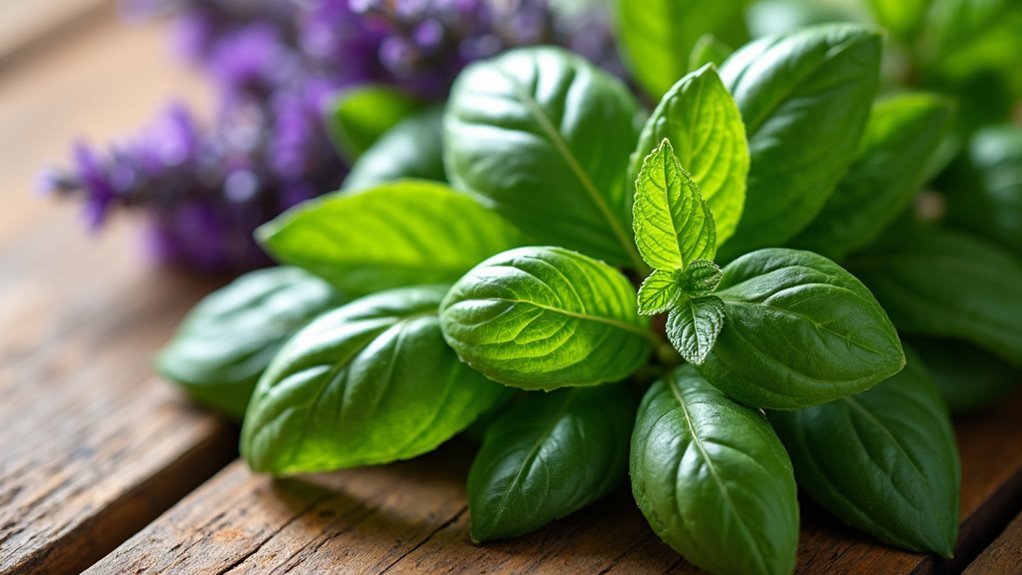
You can effectively repel spiders using common herbs like peppermint, basil, lavender, rosemary, and sage. These plants produce strong aromatic compounds that disrupt spider navigation and pheromones, creating natural barriers in your home. Peppermint’s menthol is particularly potent, while Genovese basil works best when placed near windows and doors. You can grow these herbs indoors year-round or create DIY sprays using their essential oils mixed with water for targeted application in spider-prone areas.
Essential Herbs That Naturally Deter Spiders
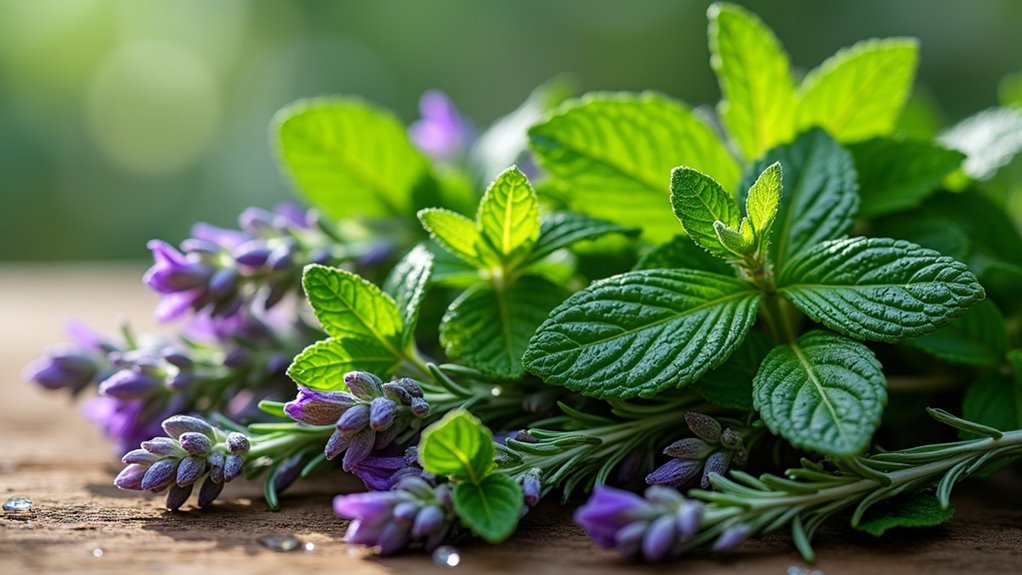
While commercial spider repellents flood the market with harsh chemicals, nature offers a gentler solution through aromatic herbs that naturally discourage these eight-legged visitors.
You’ll find that basil serves as an excellent natural spider repellent, emitting strong scents while thriving indoors as a perennial herb.
Lavender, particularly English varieties, combines visual appeal with spider-deterring aromatics, though scientific backing remains limited.
Peppermint delivers potent fragrance that’s proven effective against spiders, and you can maximize results using concentrated oil forms.
Rosemary provides dual benefits as both culinary herb and pest controller through its spider-repelling aroma.
Cleveland sage offers powerful deterrent properties, but you shouldn’t fertilize it to preserve its natural fragrant strength.
How Peppermint Oil Creates an Effective Spider Barrier
You can create a powerful spider deterrent by applying peppermint oil strategically throughout your home.
Research published in the Journal of Economic Entomology proves that peppermint oil’s menthol component effectively repels spiders through its potent aroma.
This natural solution works by masking spider pheromones and disrupting their ability to navigate toward food sources and shelter.
Peppermint Oil Application Methods
Three simple application methods can transform peppermint oil into a powerful spider deterrent that creates an invisible barrier around your home.
First, create a basic spray by mixing 10-15 drops of peppermint oil with water in a spray bottle, then apply it to corners, windowsills, and doorways where spiders typically hide.
Second, enhance the spider repellent’s effectiveness by combining peppermint with other essential oils like tea tree or lavender for broader protection.
Third, maintain consistent coverage by reapplying every few days or after cleaning, since the scent dissipates over time.
These methods work because peppermint oil disrupts spider behaviors and prevents egg sac production, effectively deterring spiders while keeping spiders away from your living spaces naturally.
Scientific Evidence Supporting Effectiveness
Research published in the Journal of Economic Entomology provides concrete evidence that peppermint oil’s strong scent creates an aversive environment for spiders, confirming what homeowners have observed for generations.
The study demonstrates how this natural spider repellent disrupts spiders’ sensory abilities, making it one of the most effective natural spider repellents available.
The science reveals peppermint oil’s effectiveness through several mechanisms:
- Menthol compounds create barriers that interfere with spiders’ prey detection systems
- Volatile compounds from fresh peppermint indoor plants emit continuous deterrent signals
- Diluted spray applications considerably reduce spider presence and web formation in treated areas
- Environmental disruption occurs as spiders dislike the overwhelming scent that masks their navigation cues
However, effectiveness varies based on climate conditions and plant health, requiring consistent maintenance for ideal results.
Lavender’s Dual Purpose as Aromatherapy and Spider Repellent
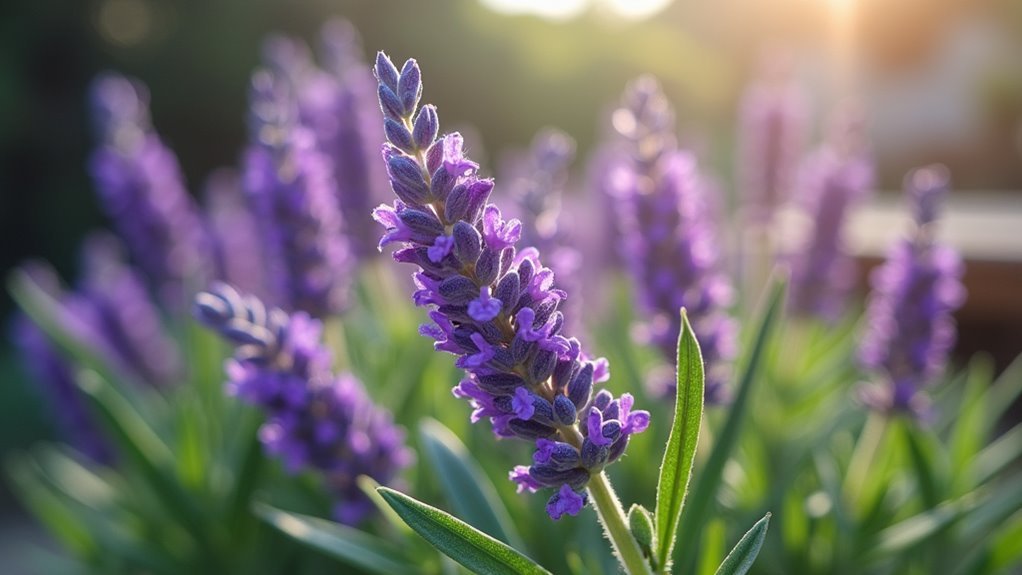
While most herbs serve a single purpose in natural pest control, lavender offers homeowners an elegant double benefit by simultaneously repelling spiders and creating a calming atmosphere. This fragrant herb’s strong scent naturally deters spiders while providing therapeutic aromatherapy benefits that’ve made it popular since the Middle Ages.
You can use lavender’s essential oils in diffusers to enhance your space’s aesthetic appeal while maintaining effective pest control. Though scientific studies specifically confirming lavender’s spider-repelling effectiveness are limited, many homeowners report successful results.
You’ll also appreciate lavender’s versatility – whether you’re using dried sachets or fresh plants, this perennial thrives in various climates and delivers dual functionality that transforms your home into a spider-free, relaxing sanctuary.
Basil Varieties and Their Spider-Repelling Properties
You’ll find that Genovese basil stands out as the most effective spider deterrent among all basil varieties, thanks to its exceptionally strong fragrance that spiders can’t tolerate.
Other aromatic varieties like cinnamon, lemon, and Thai basil also pack enough scent punch to keep these eight-legged visitors at bay.
When you’re growing basil indoors, you’ll want to position your plants strategically near windows and doors where spiders typically attempt entry.
Best Basil Types
Four distinct basil varieties offer exceptional spider-repelling capabilities, each bringing unique aromatic properties to your pest control arsenal.
These basil plants deliver powerful spider-repelling properties through their natural fragrances, making them excellent choices for your home and garden.
- Genovese basil – The most popular variety with an exceptionally strong scent that effectively deters spiders both indoors and outdoors
- Cinnamon basil – Produces a unique, potent fragrance specifically effective against spiders while adding an aromatic touch to your garden spaces
- Lemon basil – Features citrusy aromas that naturally repel spiders and other pests while enhancing your culinary options
- Thai basil – Offers distinctive spicy scents that keep spiders at bay while providing flavorful leaves for cooking dishes
Indoor Growing Tips
Since basil thrives as an indoor perennial when properly cared for, you can maintain year-round spider protection by growing these aromatic varieties in containers throughout your home.
Choose compact varieties like Genovese, cinnamon, or lemon basil that won’t outgrow your indoor spaces while delivering maximum spider-repelling properties through their strong scent.
Position your basil containers near entry points like windows and doors where spiders typically enter. These cold-sensitive herbs need plenty of sunlight, so place them on sunny windowsills or supplement with grow lights.
Maintain consistent regular watering without overwatering, as soggy soil damages roots. Prune your basil regularly to encourage bushy growth and intensify the aromatic oils that effectively deter spiders while providing fresh herbs for cooking.
Creating Rosemary-Based Spider Deterrent Solutions
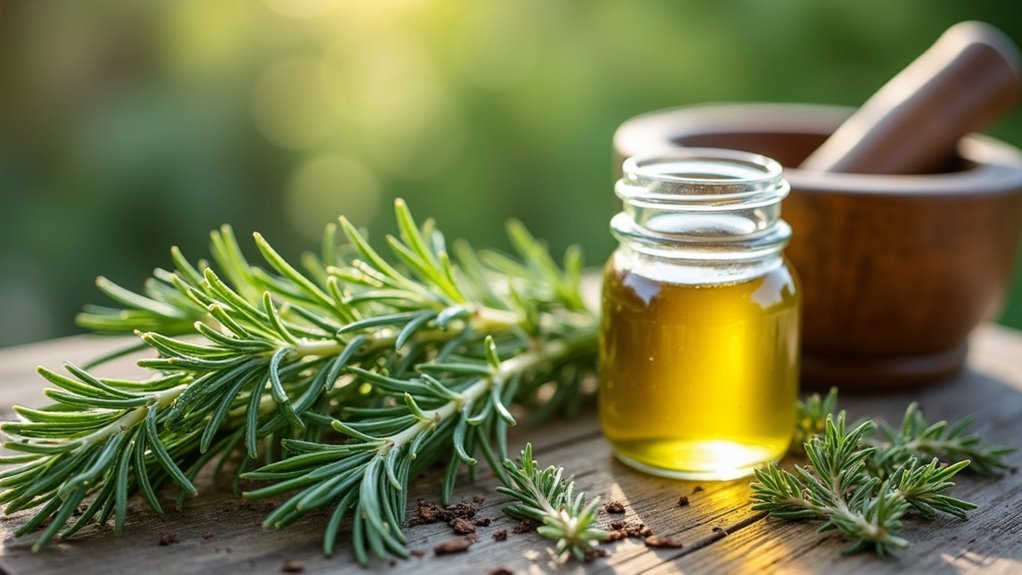
When you’re looking to harness rosemary’s natural spider-repelling properties, you can easily create effective deterrent solutions using either fresh leaves or essential oil.
Rosemary’s strong aroma makes it particularly effective at keeping spiders away from your home.
The potent, aromatic scent of rosemary naturally deters spiders from entering and settling in your living spaces.
Here are four methods to create your rosemary-based spider deterrent:
- Steep fresh rosemary leaves in boiling water, let cool, strain, and transfer to a spray bottle
- Mix rosemary essential oil with water in a spray bottle for concentrated spider-repelling power
- Apply solutions around entry points, windows, and other spider-prone areas
- Regularly prune your rosemary plants to enhance their aromatic properties
Remember to reapply your homemade solutions every few weeks or after cleaning surfaces to maintain their effectiveness against spiders.
Lemon Balm and Citrus Herbs for Natural Spider Control
You’ll find lemon balm’s strong citrus scent creates an effective spider barrier when you place these hardy perennial herbs near entry points and windows.
The plant’s natural oils contain compounds that spiders actively avoid, making it a reliable deterrent that grows 1.5-2 feet tall in most climates.
You can extract these powerful citrus oils from lemon balm and similar herbs to create homemade spider-repelling sprays for broader home protection.
Lemon Balm Properties
Although many commercial spider repellents contain harsh chemicals, lemon balm (Melissa officinalis) offers a natural and effective alternative that’ll keep these unwanted visitors at bay. This hardy perennial herb produces a strong lemon scent that effectively helps repel spiders while providing additional benefits for your home.
Understanding lemon balm’s key characteristics will help you maximize its pest-repelling properties:
- Size and Growth: Reaches up to 2 feet tall and 3 feet wide, perfect for garden beds or containers.
- Climate Tolerance: Thrives in USDA Hardiness Zones 3-7 with adequate sunlight requirements.
- Maintenance: Regular pruning enhances growth and strengthens the repelling scent.
- Dual Purpose: Offers cooking uses for drinks and desserts beyond pest control.
You’ll find this versatile herb provides long-term spider control while serving multiple household purposes.
Citrus Oil Applications
Several citrus-based solutions harness the natural spider-repelling power of aromatic oils found in lemon balm and other citrus herbs.
You can create effective spider repellents by diluting citrus essential oils like lemon and orange in water, then spraying the mixture directly into spider-prone areas around your home. These concentrated oils work because spiders find their strong scents unappealing and tend to avoid treated spaces.
When you regularly harvest your citrus herbs like lemon verbena or lemon-scented basil, you’re maximizing their repelling potential while encouraging healthy growth.
You can incorporate these fresh herbs into homemade essential oil sprays or simply place them strategically throughout your living space to establish a natural barrier that keeps spiders away effectively.
Sage and Its Powerful Anti-Spider Compounds
When it comes to natural spider deterrents, sage stands out as one of the most effective herbs you can grow. This aromatic powerhouse uses its potent scent to repel spiders and other pests naturally.
You’ll find sage thriving in USDA zones 4-8, reaching 2-2.5 feet tall with a 2-3 foot spread that’s perfect for any garden space.
Here’s how sage works as a spider deterrent:
- Strong aromatic compounds create an invisible barrier that spiders actively avoid
- Dense foliage structure prevents spiders from building webs in treated areas
- Full sun requirements maximize the plant’s natural oil production and scent intensity
- Low-maintenance care means you can skip fertilizers while regular pruning enhances effectiveness
You’ll maximize sage’s spider-repelling power by placing it strategically around entry points and spider-prone areas.
DIY Herbal Spray Recipes Using Multiple Spider-Repelling Herbs
Since individual herbs offer impressive spider-deterring properties, combining multiple herbs in DIY sprays amplifies their effectiveness exponentially.
You can create a powerful DIY herbal spray by mixing 10-15 drops of peppermint essential oil with 2 cups of water in a spray bottle. For enhanced protection, blend 1 cup distilled water, 1 cup vinegar, and 10-15 drops of lavender essential oil to harness these aromatic plants’ deterrent qualities.
You’ll achieve maximum results by steeping equal parts basil, rosemary, and mint leaves in boiling water, then straining the liquid for use.
Alternatively, crush fresh lemon balm leaves and boil them to create another effective spider repellent.
These plants that repel spiders work synergistically, creating potent natural barriers against unwanted arachnids throughout your home.
Indoor Herb Garden Setup for Year-Round Spider Prevention
Beyond creating effective sprays, you can establish a living defense system by cultivating an indoor herb garden specifically designed to repel spiders year-round.
Spider-repelling plants like basil, lavender, mint, rosemary, and sage produce strong scents that effectively prevent spiders while providing fresh herbs for cooking.
Dual-purpose herbs like basil, lavender, and mint naturally deter spiders while enhancing your culinary repertoire with fresh, aromatic ingredients.
To keep your home spider-free with your herb garden:
- Provide adequate lighting – Make sure your herbs receive 6-8 hours of sunlight daily for ideal growth and scent production.
- Maintain consistent watering – Keep soil moist but not waterlogged to promote healthy plant development.
- Contain aggressive spreaders – Grow mint in separate containers to prevent it from overtaking other plants.
- Harvest regularly – Prune and harvest herbs frequently to enhance their growth and strengthen their spider-repelling properties.
This natural approach creates a pleasant, aromatic environment while maintaining effective spider control.
Safety Precautions When Using Herbal Spider Repellents Around Pets and Children
While herbal spider repellents offer a natural alternative to chemical pesticides, they require careful handling to protect your family and pets from potential harm.
Many spider-repellent herbs like lavender and mint are toxic if consumed, making safety precautions vital when children and pets are present.
Always wear gloves when handling potentially irritating plants such as lemon balm and rosemary. Keep all herbs out of reach and educate household members about ingestion risks.
Store essential oils derived from these plants in secure, child-proof containers away from curious hands and paws.
Monitor your plants regularly, removing wilted or decaying parts that might attract pets or children.
These simple safety measures guarantee you can enjoy natural spider control without compromising your family’s wellbeing.
Frequently Asked Questions
What Herb Repels Spiders?
You can use basil, peppermint, lavender, rosemary, or sage to repel spiders effectively. These herbs emit strong scents that deter spiders while being completely safe for your home and family to enjoy.
What Smell Do Spiders Absolutely Hate?
You’ll find spiders absolutely hate peppermint oil’s potent aroma above all else. They can’t stand eucalyptus’s invigorating scent, lavender’s calming fragrance, citronella’s lemony smell, or basil’s robust aroma either.
What Is the Best Homemade Spider Repellent?
You’ll find peppermint oil mixed with water works best – combine one cup water with 10-15 drops of peppermint oil. Add dish soap to enhance effectiveness and spray regularly in corners and entryways.
What Do Spiders Hate the Most?
You’ll find spiders hate peppermint most, followed by citrus scents like lemon. They can’t stand eucalyptus, lavender, or basil either. These strong aromas overwhelm their senses, making them flee quickly from treated areas.
In Summary
You’ve got plenty of natural options to keep spiders at bay without harsh chemicals. Start with peppermint oil around entry points, plant lavender near windows, or create your own herbal spray blends. Remember to test any solution in small areas first and keep essential oils away from pets and young children. With consistent application and proper placement, you’ll maintain a spider-free home using nature’s own deterrents.




Leave a Reply