
You can drive attic pests away using peppermint oil, white vinegar, cedar shavings, and citrus peels that create powerful scent barriers. Mix 2 teaspoons of peppermint oil with 1 cup of water for an effective spray, or combine equal parts white vinegar and water for rodent deterrence. Cedar oils disrupt pest communication while citrus peels naturally repel mice and rats. For stubborn infestations, ammonia solutions provide immediate results when properly ventilated. These combined ingredients offer extensive protection strategies.
Essential Oils That Repel Common Attic Pests

While chemical pesticides might seem like the obvious solution, essential oils offer a natural and effective alternative for keeping common attic pests at bay. Peppermint, eucalyptus, and citronella essential oils are particularly effective against rodents and insects. Their strong scents disrupt pest navigation patterns and make your attic an unwelcoming environment for unwanted visitors.
You can create a simple spray by mixing 2 teaspoons of essential oil with 1 cup of water. Apply this mixture to areas where you’ve noticed pest activity.
For enhanced protection, soak cotton balls in essential oils and place them in corners and near entry points. Replace these every two weeks to maintain effectiveness.
Lavender offers another pleasant option that repels mice while providing a fresh fragrance throughout your home.
White Vinegar as a Natural Rodent Deterrent
Beyond essential oils, white vinegar stands as another powerful natural deterrent that effectively keeps rodents away from your attic space. This eco-friendly solution works because its strong odor repels mice and rats naturally.
You’ll find white vinegar particularly effective when combined with other rodent repellents and preventive strategies.
Here’s how to use white vinegar effectively:
- Mix equal parts white vinegar and water in a spray bottle for ideal concentration.
- Apply regularly in crawlspaces, attics, and near entry points since effectiveness diminishes over time.
- Combine with sealing entry points and eliminating food sources for maximum results.
- Choose this safe alternative to chemical rodenticides, especially in households with children and pets.
Peppermint Oil Spray Recipes for Mice and Rats
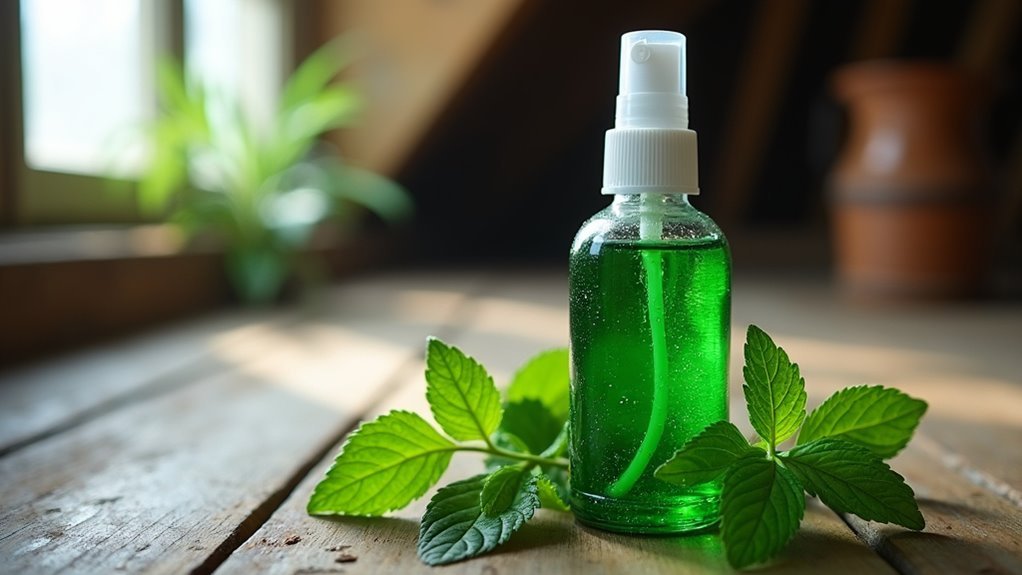
Continuing with natural deterrent options, peppermint oil offers one of the most effective and pleasant-smelling solutions for keeping mice and rats out of your attic.
Create your spray by mixing 2 teaspoons of peppermint oil with 1 cup of water or rubbing alcohol in a spray bottle. Apply this solution to areas showing rodent activity, including attics, basements, and entry points. You’ll need to reapply weekly for maximum effectiveness.
For additional protection, soak cotton balls in peppermint oil and place them in corners or near potential entry points. Replace these every two weeks.
While peppermint oil’s strong scent makes it an excellent natural alternative to chemical repellents, it won’t eliminate existing infestations entirely but creates an unwelcoming environment when used consistently.
Cedar-Based Repellents for Long-Term Protection
As you explore longer-lasting natural solutions, cedar-based repellents stand out as one of the most durable options for attic pest control.
These natural oils emit a strong aroma that effectively deters rodents and other unwanted visitors from your storage spaces.
Cedar’s scent disrupts pests’ pheromone communication, making navigation and establishment nearly impossible.
You’ll appreciate how cedar-based repellents offer dual benefits while remaining eco-friendly and safe around children and pets.
Strategic placement options include:
- Cedar blocks positioned near entry points and corners
- Cedar shavings scattered throughout problem areas
- Cedar sachets hung from rafters and beams
- Cedar planks installed along attic perimeters
Replace your cedar products every few months to maintain peak effectiveness and keep your attic pest-free.
Citrus Peels and Citronella Oil Applications

The citrus peels you’d normally toss in the garbage can become powerful pest deterrents when strategically placed throughout your attic.
Orange and lemon peels emit strong natural oils that effectively repel mice and other rodents from settling in your space. Simply scatter fresh peels near entry points, corners, and areas showing signs of activity.
Citronella oil provides another potent weapon against attic invaders.
Mix this lemongrass-derived oil with water to create an effective spray solution. Apply it around potential entry points, wall cracks, and gathering spots where pests typically congregate. The oil’s insect-repelling properties extend beyond just rodents, creating extensive protection.
Both citrus peels and citronella oil offer eco-friendly alternatives to harsh chemical repellents, delivering natural pest control without compromising your family’s safety or the environment.
Eucalyptus Oil Formulations for Insect Control
Eucalyptus oil’s potent antimicrobial compounds create an incredibly effective barrier against attic-dwelling insects and rodents. The oil’s natural insecticidal properties produce a strong scent that effectively deters various pests from establishing residence in your attic space.
Here’s how to maximize eucalyptus oil’s pest-repelling potential:
- Mix 10-20 drops with water in a spray bottle for easy application to entry points and high-activity areas.
- Reapply every 1-2 weeks to maintain the oil’s deterrent effectiveness against persistent pests.
- Combine with peppermint or tea tree oil to enhance repellent effects and target broader pest ranges.
- Conduct patch tests first on surfaces to prevent potential damage or discoloration before widespread use.
This natural solution provides consistent protection without harsh chemicals.
Garlic and Onion Solutions for Pest Prevention
When you’re seeking budget-friendly pest deterrents, garlic and onion solutions deliver powerful sulfur compounds that naturally repel rodents and insects from your attic space.
You’ll need to crush or chop these ingredients and strategically place them in areas showing pest activity, including crawlspaces and entry points.
The pungent odors effectively mask food scents that typically attract unwanted visitors, creating an inhospitable environment for infestations.
While garlic and onion solutions for pest prevention show varying effectiveness levels, they work well as natural deterrents alongside professional pest control services for thorough protection.
Remember to replace your garlic and onion placements regularly since their potency diminishes over time, potentially reducing their deterrent capabilities against persistent pests.
Bay Leaves and Dried Herb Sachets
You can harness bay leaves’ natural pest-repelling properties by strategically placing them throughout your attic space.
The strong aroma that makes bay leaves unappealing to rodents becomes even more effective when you combine them with other dried herbs like mint and rosemary in homemade sachets.
Proper placement of these herb sachets in key areas guarantees maximum coverage and creates an eco-friendly barrier against unwanted attic invaders.
Effective Bay Leaf Placement
Although many commercial pest control methods rely on harsh chemicals, bay leaves offer a natural and aromatic alternative that’s proven effective against attic invaders.
Strategic placement maximizes their pest-deterring potential throughout your storage space.
Position bay leaf sachets strategically to create an effective barrier:
- Entry points – Place sachets near vents, gaps, and openings where rodents typically enter your attic space.
- Corner areas – Position bags in all four corners since pests often travel along walls and establish nests in secluded spots.
- Storage zones – Scatter sachets around stored items, seasonal decorations, and boxes that attract nesting rodents.
- High-traffic paths – Install sachets along beams and pathways where you’ve noticed droppings or gnaw marks.
Replace sachets every three months to maintain potency and guarantee continuous protection against unwanted attic visitors.
Creating Herb Sachets
Creating your own herb sachets amplifies the natural pest-deterring power you’ve already established through strategic bay leaf placement.
You’ll enhance bay leaves’ effectiveness by combining them with complementary dried herbs like mint, lavender, and rosemary in small cloth bags or breathable containers.
Fill these herb sachets with your chosen mixture, then position them strategically throughout your attic. Focus on corners, entry points, and areas where you’ve noticed pest activity signs. This targeted placement maximizes their deterrent impact.
Don’t forget maintenance—replace your herb sachets every few months or whenever their scent weakens. Fresh, aromatic sachets guarantee continuous pest prevention.
The combination approach creates multiple scent barriers that rodents and other pests find particularly unpleasant, making your attic less appealing to unwanted visitors.
Soap-Based Deterrent Methods and Limitations
You’ve probably heard that Irish Spring soap can keep mice out of your attic, but this popular home remedy often falls short of expectations.
While you can place soap bars or shavings in strategic locations, the scented deterrent effect is inconsistent and may actually attract some rodents rather than repel them.
Understanding these limitations will help you make informed decisions about whether soap-based methods deserve a place in your pest prevention strategy.
Irish Spring Soap Effectiveness
While Irish Spring soap has gained popularity as a DIY rodent deterrent, its reputation exceeds its actual effectiveness in keeping mice and rats out of your attic.
Despite claims about Irish Spring soap effectiveness, scientific evidence doesn’t support its ability to deter rodents long-term.
You’ll face several challenges when relying on this method:
- Scent adaptation – Rodents quickly become accustomed to familiar smells, reducing any initial repellent effect.
- Attraction risk – Studies suggest the soap may actually attract mice instead of repelling them.
- Fading potency – You’ll need frequent replacements as the scent diminishes over time.
- Limited scope – Soap alone won’t keep rodents away without additional pest control measures.
Pest control professionals recommend using Irish Spring soap only as part of a thorough strategy, not as your primary defense against attic infestations.
Scented Soap Application Methods
If you decide to try scented soap despite its limitations, proper application methods can maximize whatever deterrent effect it might provide. Cut Irish Spring soap into small pieces and distribute them throughout areas showing rodent activity. Focus on corners, entry points, and suspected nesting locations in your attic or crawlspace.
Replace the soap pieces every few weeks to maintain their scent strength.
However, don’t rely solely on scented soap as your primary defense. Studies indicate inconsistent results, and some pests may actually be attracted to certain fragrances.
The soap’s smell temporarily masks odors but doesn’t eliminate root causes like food sources or shelter opportunities. Combine this method with proper sanitation, sealing entry points, and professional pest control strategies for thorough attic protection.
Soap Deterrent Limitations
Despite widespread claims about soap’s pest-repelling properties, scientific evidence reveals significant limitations that homeowners should understand before relying on this method.
Soap deterrent limitations become apparent when you examine the actual effectiveness of products like Irish Spring as a rodent repellent.
You’ll discover several critical issues:
- Attraction rather than repulsion – The scent may actually attract mice instead of deterring them.
- Short-lived effectiveness – Any potential benefits fade quickly, requiring constant replacement.
- Surface-level solution – Soap doesn’t eliminate food sources or nesting areas that draw pests.
- Inconsistent results – Natural deterrents like soap fail to produce reliable, repeatable outcomes.
You shouldn’t depend on soap as a standalone pest control solution since it won’t eliminate existing rodents or prevent new infestations.
Coffee Grounds and Spice Repellent Mixtures
When you’re looking for eco-friendly alternatives to chemical pesticides, coffee grounds and spice repellent mixtures offer powerful, natural solutions that’ll keep rodents and other pests out of your attic.
Coffee grounds work because their strong aroma creates an unpleasant environment for rodents. Similarly, spice mixtures containing cinnamon, pepper, and chili powder produce pungent scents that deter unwanted visitors.
| Application Method | Effectiveness Duration |
|---|---|
| Small breathable sachets | 2-3 weeks |
| Direct placement in corners | 1-2 weeks |
| Mixed with essential oils | 3-4 weeks |
| Combined with vinegar | 2-3 weeks |
Place these repellents in areas showing rodent activity for maximum impact. You’ll need to replace them regularly since air and moisture reduce their potency. Combining coffee grounds with essential oils or vinegar enhances their effectiveness greatly.
Ammonia Solutions for Stubborn Infestations
You’ll find ammonia’s powerful scent creates an effective barrier against persistent rodents that’ve resisted other deterrent methods.
When you apply ammonia-soaked materials strategically around entry points, you’re targeting rodents’ sensitive smell receptors to force them out of your attic space.
However, you must follow proper safety protocols during application since ammonia’s potent fumes can irritate your respiratory system and skin.
Ammonia’s Repellent Properties
Ammonia’s sharp, penetrating odor makes it one of the most effective natural deterrents against persistent rodent infestations in attic spaces.
This powerful chemical creates an unwelcoming environment that pests actively avoid, making it an excellent choice among natural repellents for your attic.
To maximize ammonia’s effectiveness against pests, follow these steps:
- Mix the solution – Combine ammonia with water in equal parts for ideal potency
- Strategic placement – Position open containers throughout your attic in areas where you’ve noticed pest activity
- Ensure ventilation – Always maintain proper airflow to protect yourself and pets from harmful fumes
- Regular maintenance – Reapply solutions weekly, as effectiveness decreases due to temperature changes and air circulation
This method provides long-lasting protection when properly maintained.
Safe Application Methods
While ammonia proves highly effective against stubborn attic infestations, proper application methods guarantee both your safety and maximum pest deterrent results. Mix one part ammonia with one part water in a spray bottle for safe application methods. Apply directly to areas showing pest activity.
| Safety Measure | Application Step | Frequency |
|---|---|---|
| Wear gloves and mask | Spray affected areas | Every few days |
| Maintain proper ventilation | Target pest entry points | Until activity decreases |
| Never mix with bleach | Focus on nesting spots | Reapply as needed |
| Open windows/doors | Allow solution to air dry | Monitor effectiveness |
Ammonia solutions require consistent reapplication since the scent dissipates quickly. Always prioritize ventilation to prevent harmful fume exposure, and never combine ammonia with other cleaning agents to avoid creating toxic gases.
Effectiveness Against Rodents
Beyond proper application techniques, understanding how ammonia performs specifically against rodents helps you gauge whether this method suits your particular infestation.
Ammonia’s pungent odor creates an environment that’s naturally repulsive to mice and rats, making it effective against rodents seeking shelter in your attic space.
Here’s what you can expect from ammonia solutions:
- Immediate deterrent effect – The strong smell drives rodents away from treated areas quickly
- Temporary protection – Effectiveness lasts several days to weeks depending on ventilation and concentration
- Adaptation concerns – Rodents may become accustomed to the scent over time, reducing long-term impact
- Supplementary role – Works best when combined with sealing entry points and removing food sources
Consider ammonia as one component of your extensive pest management approach.
Mothball Alternatives Using Natural Ingredients
Since traditional mothballs contain toxic chemicals that pose health risks to your family and pets, you’ll want to explore natural alternatives that effectively repel moths and other attic pests.
Essential oils like peppermint, lavender, and eucalyptus emit scents that deter insects without harsh chemicals. Cedar chips or blocks release natural oils that moths find repulsive while providing pleasant aromas.
Natural essential oils create protective barriers against moths while filling your space with refreshing, chemical-free fragrances that enhance your home’s atmosphere.
You can spray vinegar in problem areas since its strong scent keeps pests away naturally. Place bay leaves among stored items to ward off moths using their inherent insect-repelling properties.
For persistent infestations, sprinkle diatomaceous earth in affected areas—its abrasive texture damages insect exoskeletons.
These mothball alternatives protect your family’s health while maintaining effective pest control in your attic.
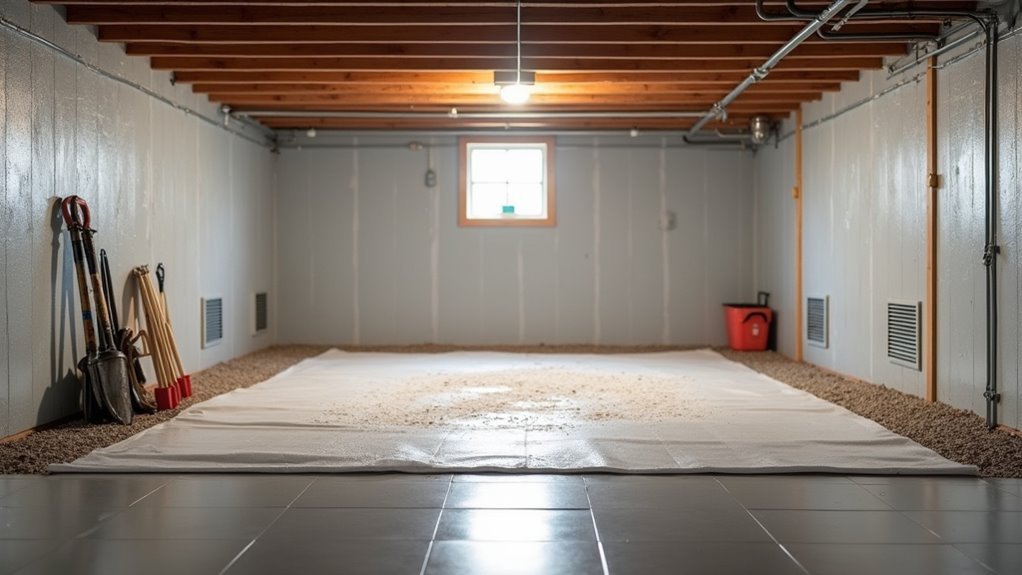
Diatomaceous Earth Applications in Attics
Diatomaceous earth stands out as one of the most effective natural pest control solutions for your attic space. This fossilized powder works by penetrating insect exoskeletons, causing dehydration and death within days.
You’ll find it particularly effective against cockroaches, ants, and bedbugs without exposing your family to harmful chemicals.
Here’s how to apply diatomaceous earth effectively:
- Spread thin layers along attic edges, corners, and pest entry points where insects commonly travel.
- Focus on problem areas where you’ve noticed pest activity or droppings previously.
- Reapply regularly in high humidity conditions since moisture reduces its effectiveness.
- Use food-grade quality to guarantee safety around humans and pets in enclosed spaces.
You’ll appreciate this safe, natural alternative that delivers results without toxic pesticide exposure.
Combined Ingredient Formulas for Maximum Effectiveness
While single ingredients offer solid pest control benefits, combining natural deterrents creates a powerful defense system that targets multiple pest behaviors simultaneously.
You’ll find that combined ingredient formulas mixing peppermint oil and vinegar deliver enhanced repellent effects by utilizing strong scents rodents and insects avoid.
Essential oils like eucalyptus and citronella alongside vinegar create potent barriers that disrupt pests’ sense of smell.
Strategic combinations of eucalyptus, citronella, and vinegar overwhelm pest sensory systems, creating impenetrable scent barriers that effectively discourage infestations.
You can achieve broader spectrum effectiveness since different pests respond variably to individual ingredients.
Rotate your combined ingredient formulas regularly to maintain effectiveness, as pests become desensitized to specific scents over time.
Incorporate garlic and bay leaves with essential oils for extensive attic infestation prevention that addresses multiple pest entry points.
Frequently Asked Questions
What Can I Put in My Attic to Keep Bugs Away?
You can spray peppermint or eucalyptus essential oils, place cedar blocks, sprinkle diatomaceous earth at entry points, add lavender sachets, or use Fresh Cab® pouches to naturally repel bugs effectively.
How Do I Make My Attic Rodent Proof?
Seal all cracks and openings with caulk or steel wool. Install metal mesh over vents and chimneys. Keep insulation intact, remove clutter, and regularly inspect for droppings or gnaw marks.
How Do You Get Rid of Pests in the Attic?
You’ll eliminate attic pests by sealing entry points, setting traps for existing rodents, using peppermint oil deterrents, maintaining cleanliness, and contacting professional pest control for severe infestations requiring specialized treatment.
What Scent Drives Rodents Away?
You can drive rodents away using peppermint, lemon, or eucalyptus essential oils. Garlic sprays, white vinegar, lavender, and mint plants also work effectively. Rotate these scents regularly since rodents adapt to familiar smells over time.
In Summary
You’ve got powerful natural options to reclaim your attic from unwanted pests. Whether you’re using peppermint oil sprays, cedar chips, or diatomaceous earth, these ingredients offer safe alternatives to harsh chemicals. Don’t rely on just one method—combine different approaches for the best results. Start with essential oils and vinegar solutions, then add cedar or citrus peels for long-term protection. Your pest-free attic is achievable with consistent application.


Leave a Reply