
Citrus peels repel garden pests through limonene, a potent compound that disrupts insects’ sensory systems and masks natural aromas they need for navigation. This volatile oil interferes with pests’ ability to process chemical signals, making it harder for them to locate food sources and navigate effectively. Limonene’s strong scent directly repels mosquitoes, ants, and fruit flies, while causing neurotoxic effects in soft-bodied insects like aphids and whiteflies. Understanding these mechanisms helps you maximize their garden protection potential.
The Science Behind Limonene and Pest Deterrence
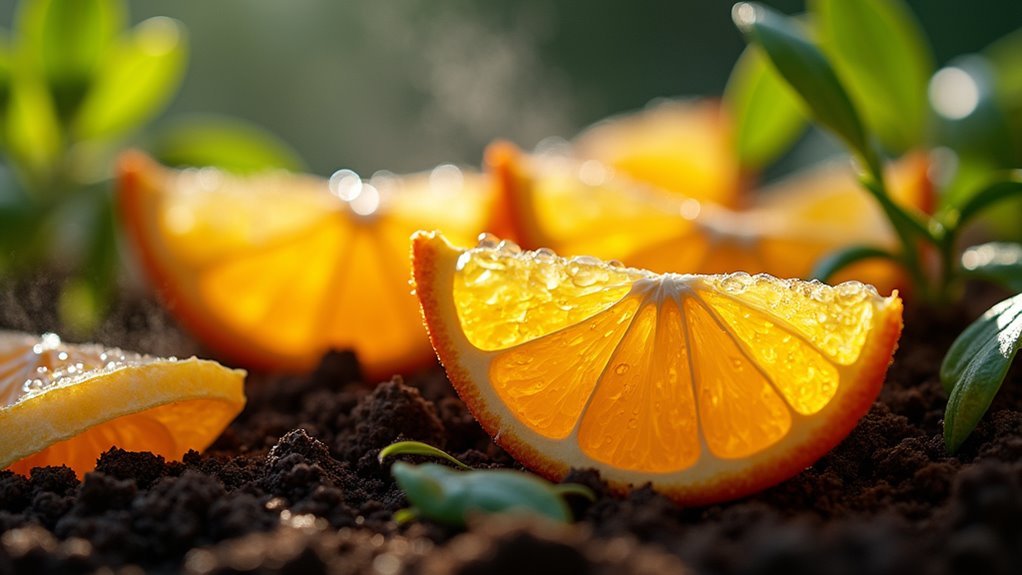
While many gardeners reach for chemical pesticides when pests invade their plants, citrus peels offer a natural alternative that’s both effective and safe. The secret lies in limonene, a powerful compound found in citrus rinds. This natural chemical possesses strong insecticidal properties that make it toxic to many common garden pests while remaining completely harmless to your plants and beneficial animals.
When you use fresh citrus peels in your garden, limonene works in two ways.
First, its potent citrus scent masks the natural aromas that typically attract unwanted visitors, disrupting their ability to locate food sources.
Second, the compound itself acts as a direct deterrent that can effectively repel mosquitoes, ants, fruit flies, and other troublesome pests through its overwhelming aroma.
How Citrus Oils Disrupt Insect Sensory Receptors
Citrus oils go beyond simple scent masking to create a more sophisticated defense against garden pests. When you use d-limonene and other citrus-based insect repellents, they actually disrupt your pests’ sensory receptors at a neurological level.
These oils interfere with insects’ ability to process chemical signals, fundamentally scrambling their navigation systems.
You’ll find that citrus oils mask the natural aromas insects depend on to locate food sources and hosts. Since insects rely heavily on smell for survival, this disruption severely impacts their feeding and breeding behaviors.
The oils create neurotoxic effects in certain pests, causing them to avoid treated areas entirely.
Which Garden Pests Are Most Affected by Citrus Peels
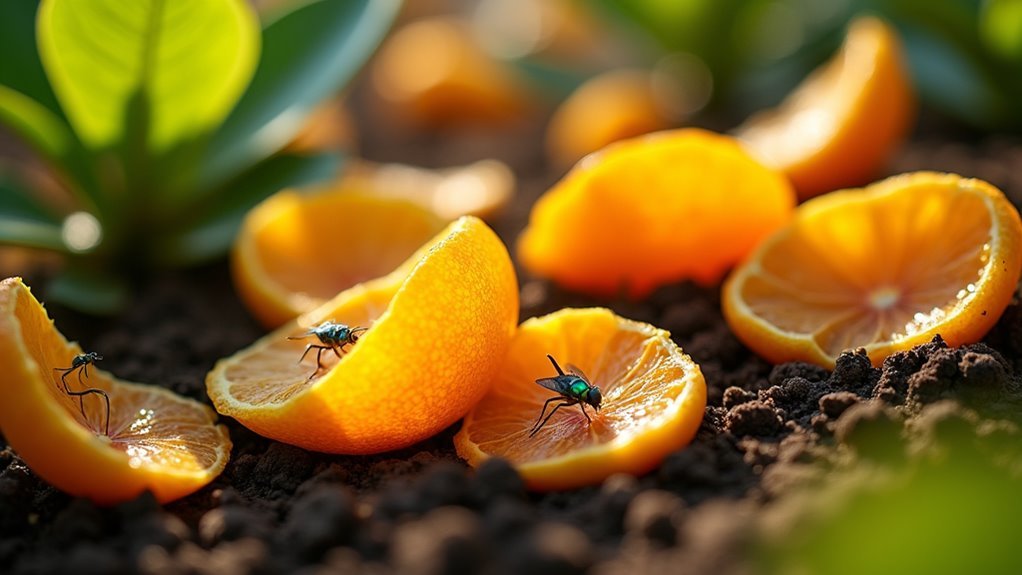
You’ll find that citrus peels work most effectively against soft-bodied insects like aphids, slugs, and whiteflies since d-limonene directly damages their delicate exterior.
The strong citrus scent also disrupts crawling pests such as ants by masking the chemical trails they use for navigation.
Flying bugs including fruit flies and gnats can’t tolerate the overwhelming aroma, making citrus peels particularly useful for reducing airborne garden invaders.
Soft-Bodied Insect Targets
The most vulnerable garden pests to citrus peel deterrents are soft-bodied insects that depend heavily on their sensory systems for survival.
When you place orange peels around your garden, you’re targeting aphids and whiteflies specifically because they can’t tolerate limonene, the natural chemical found in citrus peels. This compound makes areas treated with orange peels toxic and unappealing to these soft-bodied insects.
You’ll find that mosquitoes and fruit flies also struggle when you use citrus scent as a natural repellent.
The strong aroma disrupts their ability to detect food sources, leaving them confused and unable to locate their targets. Since these pests rely on smell to find hosts, fresh citrus peels effectively deter pests by overwhelming their sensory mechanisms.
Crawling Pest Deterrence
When dealing with ground-level garden invaders, you’ll discover that citrus peels create an effective barrier against several troublesome crawling pests. The limonene compound in citrus peels acts as a natural toxin that repels slugs, ants, and other crawling garden pests effectively.
You’ll find that the strong citrus scent disrupts these pests’ ability to detect food sources in your garden, making them less likely to establish themselves in treated areas.
Fresh citrus peels work best since their volatile compounds remain potent. You can scatter orange peels around vulnerable plants or create citrus-infused sprays for broader coverage.
Regular reapplication guarantees consistent protection, as the scent diminishes over time. This natural approach helps you maintain a pest-free garden environment without harmful chemicals.
Flying Bug Reduction
While ground pests pose one challenge, flying insects present an equally problematic threat to your garden’s health. Orange peels serve as an effective natural repellent against airborne invaders through their potent citrus scent and limonene content. The strong aroma masks attractant odors that draw mosquitoes, flies, and fruit flies to your plants.
| Flying Pest | Sensitivity Level |
|---|---|
| Aphids | High |
| Whiteflies | High |
| Fruit Flies | Moderate |
You’ll find that citrus peels disrupt insects’ scent detection abilities, preventing them from locating food sources effectively. The volatile compounds in fresh peels create an unwelcoming environment that’ll deter flying pests from establishing themselves in your garden. Regular application of fresh citrus peels maintains this protective barrier against aerial attacks.
Fresh vs. Dried Peels: Understanding Effectiveness Over Time

Understanding how citrus peels change over time reveals why timing matters so much in pest control.
Fresh citrus peels contain volatile organic compounds that create a strong scent, making them highly effective as a repellent against pests. However, this effectiveness diminishes rapidly once the peels begin drying out.
When citrus peels dry, the volatile oils that deter pests dissipate, considerably reducing their pest-fighting capabilities. You’ll get the best results by using peels shortly after cutting them, as their repellent properties weaken with time.
What’s worse, dried peels can actually attract larger pests instead of repelling them.
You must replace orange peels regularly to maintain their effectiveness, since fresh peels mask the natural aromas that draw pests to your garden.
Creating Your Own Citrus Pest Deterrent Spray
You can easily transform your leftover citrus peels into an effective pest deterrent by using a simple boiling method that extracts the natural compounds bugs hate.
Start by boiling a few fresh orange peels in a cup of water for about ten minutes, then strain the liquid into a spray bottle and let it cool completely.
You’ll need to reapply this homemade solution every 3-4 days to keep pests at bay, especially after rain washes it away.
Boiling Citrus Peel Method
One of the most effective ways to harness citrus peels for pest control involves creating a simple spray by boiling fresh orange peels in water. This method extracts the active compounds that repel common garden pests like aphids and ants.
You’ll need to boil a few fresh orange peels in one cup of water for approximately ten minutes to create an effective pest deterrent solution.
After boiling, let the mixture cool completely before straining it into a spray bottle for easy application on your plants.
- Use only fresh orange peels, as dried or old peels lose their pest-repelling properties
- Boil peels for exactly ten minutes to extract maximum active compounds
- Add a few drops of dish soap to help the solution stick to plant surfaces
- Spray every 3-4 days for ideal effectiveness
- Store in refrigerator between uses
Spray Application Frequency
Regular applications every 3-4 days will maintain your citrus spray’s effectiveness and keep garden pests at bay. You’ll need to spray your plants consistently to preserve the orange peels’ natural repelling properties that ward off unwanted insects.
Focus your spray bottle application on areas where pests typically gather, including leaf undersides and stem joints.
Both indoor and outdoor plants benefit from this treatment schedule, but you’ll need to increase frequency after rainfall or watering sessions since moisture dilutes the active compounds.
Don’t skip applications thinking once is enough – pests return quickly when the citrus scent fades. Mark your calendar or set phone reminders to maintain the 3-4 day schedule.
Consistent repelling action only occurs when you stay committed to regular treatments throughout the growing season.
Proper Application Techniques for Maximum Impact
While citrus peels offer natural pest-deterring properties, their effectiveness depends entirely on how you apply them in your garden. To achieve effective pest management, you’ll need to use fresh orange peels since dried peels lose their potent volatile compounds.
Chopped-up orange peels work better than whole pieces because they release more scent when placed near plant bases.
For enhanced protection, create a spray by boiling fresh peels for ten minutes, then strain and apply every few days.
Consider this strategic approach:
- Replace fresh peels regularly before they dry out completely
- Grind peels into small pieces for maximum surface area exposure
- Focus only on peels, avoiding flesh that attracts unwanted pests
- Soak peels in vinegar for 1-2 weeks to boost effectiveness
- Apply spray treatments consistently to deter pests long-term
Combining Citrus Peels With Other Natural Ingredients
Although citrus peels work well on their own, you’ll achieve far better pest control results by combining them with other natural ingredients that complement their repelling properties.
Mix citrus peels with vinegar to enhance effectiveness—the acetic acid disrupts insect scents more powerfully than peels alone. Essential oils like peppermint or eucalyptus create potent blends since they contain natural compounds that repel various insects.
Adding garlic infuses your mixture with sulfur compounds that insects hate. You can also incorporate crushed red pepper, as capsaicin irritates pests and makes areas less appealing.
For spray applications, add dish soap drops to help the mixture adhere to plant leaves, improving its pest-repelling action against aphids and spider mites.
Storage and Shelf Life of Homemade Citrus Sprays
Once you’ve made your homemade citrus spray, you’ll need to store it properly to maintain its pest-fighting power.
Your storage method directly affects how long the spray remains effective, with refrigeration extending its life compared to room temperature storage.
You’ll also want to recognize the warning signs that indicate your spray has deteriorated and needs replacing.
Proper Storage Methods
Three critical factors determine how long your homemade citrus spray remains effective: proper storage location, container choice, and freshness tracking.
You’ll maximize your spray’s shelf life by implementing these strategic storage methods.
Store your homemade citrus sprays in cool, dark locations since light and heat degrade active compounds. Always refrigerate your preparations to extend effectiveness up to 1-2 weeks. Choose a clean airtight spray bottle to prevent contamination and maintain potency.
Essential storage practices include:
- Label each batch with preparation dates for freshness tracking
- Prepare small quantities frequently rather than large batches
- Inspect regularly for off smells or unusual appearance changes
- Discard immediately if contamination signs appear
- Clean containers thoroughly before each new batch preparation
Refrigeration Vs Room Temperature
While refrigeration greatly extends your citrus spray’s lifespan, the temperature choice you make directly impacts both potency and effectiveness. Homemade citrus sprays stored in the refrigerator maintain their pest-repelling qualities for up to two weeks, while room temperature storage dramatically reduces this timeframe to just one week.
The key difference lies in volatile compounds preservation. These active ingredients that repel garden pests degrade faster at warmer temperatures, diminishing your spray’s power against unwanted insects.
| Storage Method | Shelf Life | Effectiveness |
|---|---|---|
| Refrigeration | Up to 2 weeks | Ideal potency retained |
| Room Temperature | 1 week maximum | Rapid compound degradation |
| Airtight Container | Essential for both | Preserves volatile compounds |
Regardless of your chosen storage method, always use airtight containers to minimize compound volatilization and maintain maximum effectiveness.
Signs of Spray Deterioration
Even with proper storage, your homemade citrus spray won’t maintain its effectiveness indefinitely, and recognizing deterioration signs helps you determine when it’s time for a fresh batch.
Your orange peels spray will show clear indicators when its pest-deterrent properties begin declining.
Watch for these deterioration signs:
- Color changes – Fresh citrus sprays appear vibrant, while deteriorated ones become cloudy or discolored
- Weakened aroma – Loss of that strong, citrusy scent indicates declining potency
- Separated ingredients – Oil and water layers that won’t remix suggest breakdown
- Off odors – Any sour, musty, or unpleasant smells signal spoilage
- Reduced effectiveness – Pests returning despite recent application means it’s replacement time
Plan reapplication every 3-4 days regardless, as proper storage extends homemade citrus sprays’ shelf life but doesn’t eliminate natural degradation of active compounds.
Best Citrus Types for Pest Control Applications
When selecting citrus peels for garden pest control, you’ll find that certain varieties outperform others due to their specific chemical compositions and oil concentrations.
Orange peels stand out as exceptional choices for pest control, containing high levels of limonene that creates a powerful natural insect repellent found in citrus fruits.
You’ll discover lemon peels work equally well, releasing volatile compounds that effectively repel garden pests like mosquitoes and ants.
Grapefruit peels offer strong aromatic properties that deter various garden invaders, while lime peels disrupt insects’ scent detection abilities through their potent citrus oils.
For maximum effectiveness, you should use fresh peels or create oil-based sprays, as dried peels lose their repelling power considerably.
When to Apply Citrus Sprays for Optimal Results
Timing your citrus spray applications correctly determines whether you’ll achieve maximum pest control effectiveness or waste your efforts on diminished results.
You’ll want to apply citrus sprays during cooler periods when volatile compounds won’t evaporate quickly. Monitor local pest activity and apply treatments proactively before infestations establish themselves, particularly during peak growing seasons.
Fresh citrus peels contain the most potent pest-repelling properties, so create your sprays immediately after obtaining peels.
Here’s your application timeline:
- Apply during early morning or late evening when temperatures are coolest
- Reapply every 3-4 days for ideal effectiveness
- Increase frequency after rainfall or heavy watering sessions
- Avoid midday applications when heat diminishes active compounds
- Time applications before anticipated pest population surges
Consistent timing guarantees your citrus-based pest control remains effective throughout the growing season.
Potential Drawbacks and Limitations of Citrus Deterrents
Although citrus peels offer natural pest control benefits, they’re not without significant limitations that can undermine your gardening efforts.
Orange peels lose their effectiveness as oils volatilize and peels dry out, requiring constant replacement to maintain any pest-deterring properties. This creates ongoing maintenance and potential waste issues in your garden.
More problematically, orange peels can attract pests rather than repel them. Snails, slugs, and raccoons are drawn to decaying citrus, potentially causing more damage than the original pests you’re targeting.
These limitations become even more pronounced when peels turn moldy, creating unpleasant odors and garden mess.
Over-relying on citrus deterrents without understanding these drawbacks can actually worsen pest problems, making traditional pest control methods more effective alternatives.
Alternative Uses for Leftover Citrus Peels in Gardens
Despite these pest control limitations, citrus peels offer several valuable applications that can enhance your garden’s health and sustainability.
Orange peels provide multiple benefits beyond their ability to deter pests, making them valuable additions to any sustainable gardening approach.
- Soil enrichment: Composted citrus peels enrich soil with nitrogen, phosphorus, and potassium for healthier plant growth.
- Natural deterrent placement: Fresh chopped orange peels around plant bases create effective pest barriers when replaced regularly.
- Biodegradable seed starters: Half orange peels function as nutrient-rich starter pots for seedlings until transplanting.
- Kitchen waste recycling: Using peels reduces household waste while supporting eco-friendly garden practices.
- Ant repellent: Dried, ground orange peels sprinkled throughout gardens naturally repel ants through citrus scenting.
Measuring the Effectiveness of Your Homemade Spray
How can you determine if your citrus peel spray actually works against garden pests? Start by observing pest populations before applying your orange peels spray, then monitor numbers afterward for significant reductions.
Create a controlled experiment by treating one garden section while leaving another untreated for direct comparison.
Record the spray’s effectiveness duration by checking pest presence at 1, 3, and 7-day intervals post-application. Use a tracking chart to log specific pests and their population changes, identifying which insects respond most to treatment.
Don’t forget to note external factors like weather conditions and plant health, as these variables influence your spray’s performance.
This systematic approach provides clear data about your homemade solution’s true pest-fighting capabilities.
Frequently Asked Questions
Do Citrus Peels Keep Bugs Away?
Yes, you’ll find citrus peels effectively repel bugs through limonene, a natural toxic compound, and strong scents that disrupt insects’ smell-based navigation. However, they’ll lose effectiveness once dried out completely.
Are Citrus Peels Good for the Garden?
You’ll find citrus peels beneficial for gardens as natural pest deterrents and compost enrichers. They’ll add nitrogen, phosphorus, and potassium to soil while repelling insects, though you’ll need fresh peels for effectiveness.
What Animals Do Citrus Peels Repel?
You’ll find citrus peels repel ants, aphids, mosquitoes, fruit flies, spiders, raccoons, and rodents. The strong citrus scent disrupts their senses, while d-limonene compounds prove toxic to many insects naturally.
Why Should You Place Orange Peels Around Your Patio?
You should place orange peels around your patio because they’ll naturally repel mosquitoes, flies, and ants through limonene compounds. This eco-friendly method creates a pleasant outdoor environment while recycling kitchen waste sustainably.
In Summary
You’ve now got the knowledge to harness citrus peels’ natural pest-fighting power in your garden. You’ll find that limonene-rich peels can effectively deter many common garden pests when applied correctly. Remember to refresh your citrus applications regularly since effectiveness decreases over time. While citrus deterrents aren’t a complete solution for every pest problem, they’re an excellent eco-friendly addition to your integrated pest management strategy that also reduces kitchen waste.



Leave a Reply