
You can effectively keep flies away using essential oils like peppermint, eucalyptus, lavender, lemongrass, and tea tree oil. These oils work by overwhelming flies’ sensitive smell receptors that they rely on for navigation and finding food sources. Mix 10-15 drops with water to create sprays, or use diffusers for continuous protection. You’ll need to reapply every 2-4 hours since these natural alternatives break down faster than chemical repellents. There’s much more to discover about proper dilution ratios and effective application techniques.
Why Flies Are Repelled by Essential Oils

Flies rely heavily on their keen sense of smell to locate food sources and breeding sites, but crucial oils disrupt this critical navigation system.
When you use crucial oils like lavender, eucalyptus, peppermint, or lemongrass, you’re creating an olfactory barrier that confuses flies and masks the scents that typically attract them, such as decaying food.
These oils contain powerful active compounds that flies find overwhelming. Citronellal in lemongrass and eucalyptol in eucalyptus create an unwelcoming environment with their strong smell.
This natural solution works by fundamentally jamming their sensory radar, making it difficult for flies to navigate effectively in treated areas.
Unlike harsh chemical repellents, crucial oils offer an effective, biodegradable alternative that’s safe for your family while successfully deterring these persistent pests.
Top 5 Essential Oils That Keep Flies Away
Five powerful essential oils stand out as nature’s most effective fly deterrents, each offering unique aromatic properties that’ll transform your home into a no-fly zone.
Lavender oil creates a dual-purpose solution—while its sweet, floral scent promotes relaxation for you and your family, flies find this same aroma completely repulsive and will avoid treated areas.
Eucalyptus oil delivers one of the strongest punches against flying pests with its intense, camphor-like fragrance that overwhelms their sensitive olfactory systems.
Peppermint oil’s sharp menthol kick cuts through the air like a natural barrier, creating an invisible shield that flies won’t cross.
Lemongrass oil brings citral and geraniol compounds to the fight, producing a fresh, lemony scent that’s pleasant to humans but acts like a “keep out” sign for unwanted insects.
Tea tree oil rounds out this natural fly repellent arsenal with its potent antibacterial aroma that insects simply can’t tolerate.
How to Dilute Essential Oils Safely for Fly Control

While essential oils pack incredible fly-fighting power, you’ll need to dilute them properly to guarantee both safety and effectiveness in your pest control efforts.
Here’s how to dilute essential oils safely for fly control:
- Use proper ratios – Mix 1-3 drops of essential oil per ounce of carrier oil for surface applications, or combine 10-15 drops with 2 ounces of water for an effective fly spray.
- Test before widespread use – Conduct a patch test on small areas before applying larger applications to check for adverse reactions.
- Shake water-based mixtures – When you mix essential oils with water, shake well before each use since they don’t naturally combine.
Remember that peppermint oil can help repel flies effectively when properly diluted. Apply it to areas where flies gather, and reapply every few hours as the scent diminishes over time.
Creating Effective Essential Oil Spray Recipes
Once you’ve mastered proper dilution techniques, you can craft powerful essential oil spray recipes that’ll send flies packing from your home.
Master these proven dilution methods to create potent essential oil sprays that effectively eliminate flies from every room in your house.
For a potent solution, combine 10-15 drops of peppermint essential oil with one cup of water in a spray bottle, targeting doorways and windows.
Create a soothing blend by mixing equal parts lavender and eucalyptus essential oils—about 10 drops each—with one cup of water.
For citrusy fly repellents, blend 15 drops of lemongrass essential oil with water, shaking before use.
Make a DIY fly spray using 10 drops tea tree oil, distilled water, and liquid soap.
Alternatively, combine clove and cinnamon oils for aromatic protection, keeping flies away effectively.
Using Diffusers to Disperse Fly-Repelling Scents
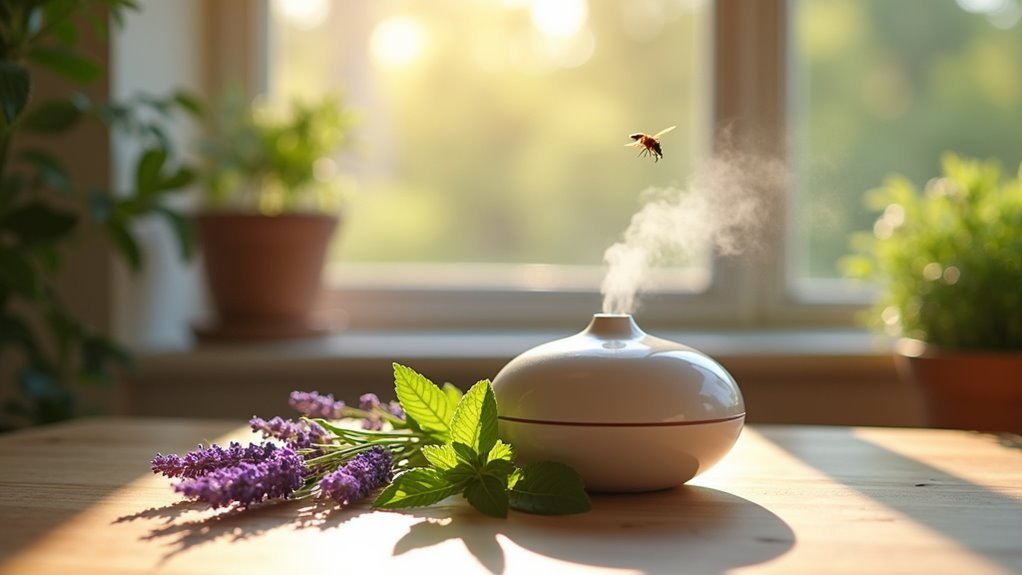
Diffusers offer a hands-free approach to maintaining fly-free spaces by continuously dispersing essential oil particles throughout your home.
These devices create a pleasant atmosphere while effectively repelling flies through consistent scent release. You’ll find diffusers particularly useful in enclosed areas where flies tend to congregate.
To maximize your diffuser’s effectiveness as fly repellents, follow these essential steps:
- Dilute properly – Mix essential oils with water or carrier oil before adding to your diffuser for safety and best dispersal.
- Refresh regularly – Change the water and oil mixture frequently to maintain potent scent strength.
- Combine oils – Blend lavender with eucalyptus or peppermint for enhanced repelling power.
The continuous release of these natural scents keeps flies away while creating an inviting environment for you and your family.
Combining Multiple Essential Oils for Maximum Effect
You’ll achieve better fly control by creating custom oil blends that work together rather than relying on single oils.
The key lies in finding the right ratios between complementary oils like lavender-eucalyptus or peppermint-lemongrass combinations that maximize their repellent properties.
Different application methods will determine how you mix and deploy these synergistic blends for ideal results in your specific environment.
Synergistic Oil Blends
While individual essential oils can effectively repel flies, combining them into synergistic blends greatly amplifies their pest-deterring power.
These strategic combinations create more potent fly repellents by utilizing each oil’s unique compounds to confuse and deter insects through stronger, more complex fragrances.
Effective synergistic blends you can create include:
- Equal parts peppermint oil and tea tree oil – This powerful combination confuses flies through intense, overlapping scents that amplify each oil’s natural repelling properties.
- Eucalyptus and lemongrass oil blend – Provides invigorating fragrance while maximizing deterrent effectiveness against flying pests through complementary aromatic compounds.
- Clove and cinnamon oil mixture – Particularly effective in kitchens and dining areas where flies commonly gather.
Always test custom essential oils blends in small areas first, as combined potency can vary considerably from individual applications.
Effective Combination Ratios
Precision in essential oil ratios transforms good fly repellents into exceptional ones. You’ll achieve maximum fly control by following proven combination ratios that amplify each oil’s natural properties.
The most effective approach uses a 3:1 ratio of peppermint to clove oil, creating potent fly repellents that flies find particularly unappealing. For balanced protection, you can combine multiple essential oils using these tested formulas:
| Oil Combination | Ratio | Base |
|---|---|---|
| Lavender + Eucalyptus + Peppermint | 10:5:5 drops | 2 oz water |
| Lemongrass + Tea Tree | 8:4 drops | 2 oz water |
| Cinnamon + Lavender | 15:10 drops | 1 oz carrier oil |
| Eucalyptus + Cinnamon + Citronella | 5:5:5 drops | Diffuser |
| Peppermint + Clove | 3:1 ratio | Any base |
These combination ratios guarantee you’re maximizing each oil’s fly-repelling potential.
Application Methods Comparison
Since different application methods deliver varying levels of effectiveness, choosing the right approach for your essential oils combinations determines whether you’ll achieve temporary relief or long-lasting fly control.
Here are three proven methods to apply your essential oil blends:
- Direct Spray Application – Mix essential oils with water in a spray bottle and apply natural sprays to doorways, windows, and high-traffic areas where flies congregate for immediate targeted protection.
- Diffuser Distribution – Use electric diffusers to continuously disperse oil blends throughout indoor spaces, creating ambient protection that covers larger areas effectively.
- Surface Treatment – Apply diluted oils directly to surfaces like countertops and tables, combining this with regularly cleaning to maintain effective results.
Each method offers distinct advantages for helping keep flies away from your living spaces.
Application Methods for Indoor Fly Deterrence
When dealing with indoor fly problems, you’ll find that essential oils offer several practical application methods that can effectively deter these pests from your living spaces.
Creating DIY fly repellents involves mixing lavender, eucalyptus, peppermint, or lemongrass with water in a spray bottle for direct surface treatment. You can also apply essential oils directly by combining drops with carrier oils for targeted areas where flies congregate.
For passive protection, use diffusers, potpourri, or cotton balls soaked in oils throughout your home. Homemade air fresheners combining cinnamon or clove oils with water prove highly effective for keeping flies away while maintaining fresh indoor air.
Regular cleaning and reapplication every few hours guarantees peak results, as essential oil scents fade over time and lose their deterrent properties.
Essential Oil Solutions for Outdoor Spaces
While indoor applications prove effective, outdoor spaces present unique challenges that require stronger, more sustained essential oil strategies to combat fly populations.
You’ll need robust natural fly repellents that withstand wind and weather while maintaining effectiveness against persistent fly activity.
Here are three proven outdoor essential oil solutions:
- Strategic Plant Placement – Plant lavender and rosemary around outdoor seating areas to create natural barriers that continuously deter flies through their aromatic properties.
- Citronella Candles and Diffusers – Position citronella candles throughout your patio or deck to establish fly-free zones during gatherings and meals.
- DIY Fly-Repellent Sprays – Create water-diluted essential oil mixtures using eucalyptus and lemongrass to spray on furniture and surfaces where flies congregate.
Regular maintenance combined with these essential oils creates pleasant, fly-free outdoor environments.
Safety Considerations When Using Essential Oils Around Pets and Children
Although vital oils offer natural fly control benefits, you must prioritize safety when using them around pets and children.
Essential oils require proper dilution—typically a few drops per ounce of carrier liquid—to prevent adverse reactions. Certain oils like tea tree and eucalyptus are toxic to cats and dogs, so research each oil’s safety profile before use.
When diffusing oils or using sprays, guarantee adequate ventilation to minimize respiratory irritation.
Always perform patch tests on small skin areas for children and fur areas for pets before full application. These safety considerations are essential since even natural substances can cause harm when misused.
Consult your veterinarian for pet-specific guidance, especially if your animal has pre-existing health conditions or sensitivities around essential oils.
How Often to Reapply Essential Oil Fly Repellents
The effectiveness of essential oil fly repellents depends heavily on consistent reapplication throughout the day. Since essential oils naturally evaporate and lose their potency, you’ll need to reapply every few hours to keep flies at bay. The frequency varies based on your environment, oil concentration, and fly activity levels.
Here’s your reapplication guide:
- Indoor spaces: Reapply every 2-3 hours since enclosed areas trap scents but also concentrate fly activity.
- Outdoor areas: Reapply every 3-4 hours as environmental factors like wind help disperse both oils and flies.
- High-activity zones: Monitor effectiveness and reapply as needed when flies return.
When using homemade water and spray mixtures with essential oils, always shake before each application to guarantee proper distribution.
This consistent approach keeps your repellent effective against flies.
Comparing Essential Oils to Chemical Fly Repellents
When you’re choosing between essential oils and chemical fly repellents, you’ll find significant differences in safety and toxicity levels.
Essential oils are classified as safer 25(b) products under FIFRA and don’t contain the harmful toxins found in many chemical alternatives that require EPA registration.
However, you’ll need to take into account that essential oils typically require more frequent reapplication since their effectiveness diminishes faster than chemical options.
Safety and Toxicity
Before choosing between essential oils and chemical fly repellents, you’ll want to understand their safety profiles and potential risks.
Essential oils offer considerably lower toxicity levels compared to synthetic chemical repellents, making them a safer choice for keeping flies away from your home.
When considering safety around children and pets, essential oils provide these key advantages:
- Natural composition – Plant-derived origins mean fewer harmful substances than synthetic alternatives
- Biodegradable properties – Break down naturally without contributing to environmental pollution
- Reduced regulatory requirements – Fall under 25(b) exemption with transparent ingredient disclosure
However, proper handling remains vital for effective pest control.
You’ll need to dilute essential oils appropriately, as concentrated forms can cause skin irritation or adverse reactions, especially around children and pets.
Duration and Effectiveness
Although essential oils provide a safer alternative to chemical repellents, they don’t match the longevity that synthetic products offer. You’ll need to reapply natural essential oils more frequently since UV light and oxygen break down their active compounds faster than chemical formulations.
While essential oils can effectively keep flies away temporarily, they’re better suited for short-term repellency rather than lasting protection.
Chemical repellents maintain their effectiveness longer due to their stability and resistance to environmental degradation. If you’re dealing with severe fly infestations, synthetic products typically deliver superior results.
However, essential oils excel at creating repellent zones around specific areas. Consider your tolerance for fly activity and local fly population when choosing between natural and chemical options for ideal repellent performance.
Frequently Asked Questions
What Is the Best Essential Oil to Repel Flies?
You’ll find lavender oil most effective for repelling flies since its intense aroma strongly deters them while remaining pleasant for you. It’s consistently rated as the top choice among natural fly repellents.
How to Make Fly Spray With Essential Oils?
Mix 10-15 drops of peppermint, eucalyptus, or lavender oil with 2 cups water and 1 tablespoon dish soap in a spray bottle. Shake well before using and spray around entry points.
Will Peppermint Oil Keep Flies Away?
Yes, you’ll find peppermint oil effectively keeps flies away. Its strong menthol scent disrupts flies’ olfactory senses, making them actively avoid areas where you’ve applied it, providing a natural alternative.
What Is the Best Homemade Fly Repellent?
You’ll get best results mixing eucalyptus, lavender, and peppermint oils with water in a spray bottle. Alternatively, combine apple cider vinegar with dish soap in a bowl for an effective trap.
In Summary
You’ve got powerful natural alternatives to chemical fly repellents right at your fingertips. Essential oils like peppermint, eucalyptus, and lavender won’t just keep flies away—they’ll make your space smell amazing too. Remember to dilute them properly, reapply regularly, and keep safety in mind around pets and kids. With consistent use and the right application methods, you’ll create a fly-free environment that’s both effective and naturally fresh.




Leave a Reply