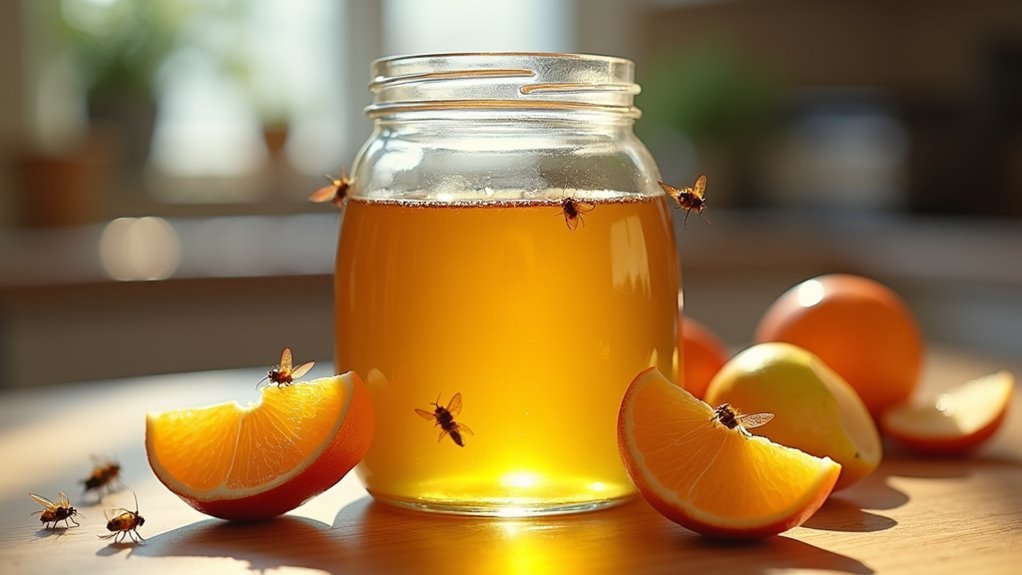
You’ll catch fruit flies fast by filling a jar with half an inch of apple cider vinegar and adding a few drops of dish soap. Cover tightly with plastic wrap, secure with a rubber band, then poke small holes in the top. The vinegar’s fermenting scent attracts flies while dish soap breaks surface tension, causing them to drown. Place near ripe fruit and refresh every 3-5 days for maximum effectiveness and long-term control.
What Makes Vinegar So Effective Against Fruit Flies
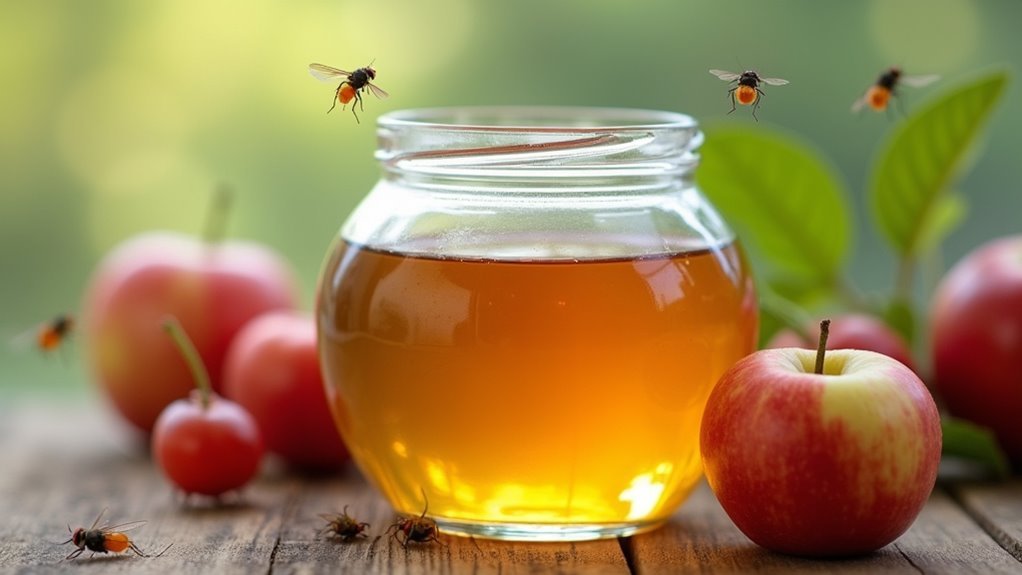
When you’re dealing with a fruit fly infestation, apple cider vinegar becomes your most powerful weapon because it perfectly mimics the fermenting fruit scents these pests can’t resist.
The acetic acid creates an irresistible aroma that fruit flies detect from across your kitchen, drawing them directly to your trap.
What makes this homemade fruit fly solution even more lethal is adding dish soap.
When you combine these ingredients, the soap reduces surface tension in the liquid, causing trapped flies to sink and drown instead of escaping.
The rapid fermentation process in vinegar releases volatile compounds that intensify its attractiveness, making it an effective method for capturing large numbers quickly.
This simple combination exploits fruit flies’ natural behavior while creating a deadly environment they can’t escape.
Essential Materials for Your DIY Vinegar Trap
Creating your vinegar trap requires just a few common household items that you likely already have in your kitchen.
You’ll need these essential materials to build an effective fruit fly solution:
- A jar or bowl – Your trap’s foundation that’ll become their final destination
- Apple cider vinegar (1/2 cup) – The irresistible attractant that draws them in
- Liquid dish soap (few drops) – The secret weapon that guarantees they drown
You’ll also need plastic wrap and a rubber band to seal your trap.
Once assembled, poke small holes about 1/8 inch in diameter through the plastic wrap. The apple cider vinegar’s scent acts as a powerful attractant, while the dish soap breaks surface tension, causing fruit flies to drown when they contact the liquid.
Step-by-Step Assembly Instructions
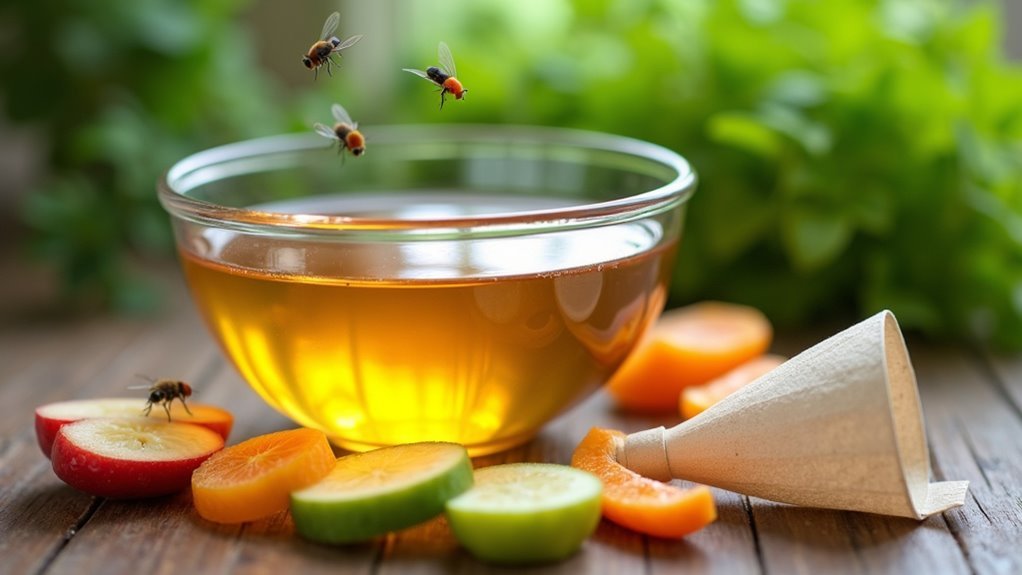
Building your vinegar trap takes just five simple steps that’ll have you catching fruit flies within minutes.
First, pour half an inch of apple cider vinegar into a jar or bowl. The vinegar’s scent attracts flies effectively.
Apple cider vinegar’s sweet, fermented aroma acts as an irresistible lure that draws fruit flies directly into your homemade trap.
Next, add drops of dish soap to break surface tension, ensuring flies sink and drown upon contact.
Third, cover your DIY fruit fly trap tightly with plastic wrap and secure with a rubber band.
Fourth, poke holes in the plastic using a toothpick, creating entry points while keeping flies trapped inside.
Finally, position your completed trap near ripe fruit or other areas where flies congregate. You’ll see results immediately as flies enter but can’t escape.
Apple Cider Vinegar Vs White Vinegar: Which Works Better
Now that you’ve mastered the assembly process, choosing the right vinegar makes all the difference in your trap’s success rate. Apple cider vinegar consistently outperforms white vinegar when targeting fruit flies. Its fruity scent and fermenting aroma naturally attract these pests more effectively than white vinegar’s sharper smell.
Here’s why apple cider vinegar dominates:
- Higher catch rates – Studies prove ACV traps capture considerably more fruit flies than white vinegar alternatives.
- Natural attraction – The fermenting scent mimics overripe fruit that fruit flies can’t resist.
- No extras needed – Unlike white vinegar, you won’t need additional sweeteners or fruit pieces.
While white vinegar can work with enhancements, apple cider vinegar delivers superior results.
Remember to add dish soap to either option for maximum effectiveness in your traps.
The Role of Dish Soap in Trapping Success
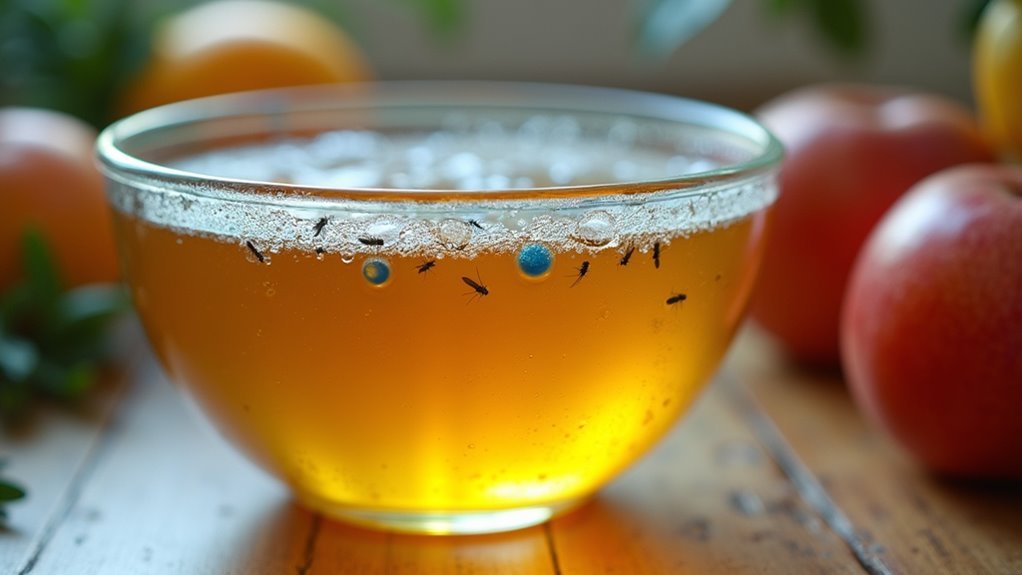
You’ll discover that dish soap transforms your vinegar trap from mediocre to highly effective by breaking the liquid’s surface tension.
The concentration of soap you add directly impacts how many fruit flies you’ll capture, so getting the right amount matters.
Different soap types perform differently in traps, and choosing the best one can greatly boost your success rate.
Breaking Surface Tension
While vinegar effectively lures fruit flies to your trap, adding a few drops of dish soap transforms it from a mere attractant into a deadly prison.
The soap molecules break down water’s surface tension in your vinegar trap, eliminating the invisible safety net that normally keeps fruit flies afloat.
Without dish soap, these pests can land on vinegar and escape unharmed.
Here’s what happens when you add soap to make your trap more effective:
- Destroys their lifeline – Surface tension disappears, leaving flies helpless
- Creates an inescapable death pool – No flotation means certain drowning
- Dramatically increases your kill count – More dead flies mean faster elimination
This simple addition turns your basic vinegar trap into a highly effective killing machine.
Soap Concentration Tips
Getting the soap concentration right makes the difference between a mediocre trap and a fruit fly massacre.
You’ll want just one to two drops of dish soap per half cup of apple cider vinegar. This precise ratio breaks surface tension without overwhelming the bait’s appeal to fruit flies.
Too much soap creates a thick film that’ll actually repel your targets before they enter the trap.
Too little won’t be effective enough to prevent escapes. Different dish soap brands have varying viscosities, so test small amounts first to find what works best.
Keep your trap topped up regularly since the soap’s effectiveness diminishes over time.
Fresh apple cider vinegar and properly concentrated dish soap maintain the trap’s deadly efficiency against fruit flies.
Best Soap Types
Most liquid dish soaps work effectively for fruit fly traps, but certain types deliver superior trapping power.
You’ll want to choose wisely to maximize your trap’s success rate.
When selecting dish soap for your apple cider vinegar solution, consider these top-performing options:
- Dawn Original – Its powerful formula breaks surface tension instantly, ensuring flies can’t escape once they touch your trap.
- Environmentally friendly brands – Biodegradable soaps work just as effectively while protecting your home’s ecosystem.
- Unscented varieties – These won’t compete with apple cider vinegar’s natural attractant properties.
Liquid dish soaps consistently outperform powdered alternatives because they dissolve completely and reduce surface tension more efficiently.
Optimal Placement Strategies for Maximum Results
Since fruit flies gravitate toward specific areas in your kitchen, you’ll need to position your vinegar trap strategically to maximize its effectiveness.
Place traps near ripe or overripe fruits and vegetables where fermentation scents naturally attract these pests. Position them on countertops or surfaces where you’ve spotted the most activity, ensuring they’re unobstructed and easily accessible.
Set up multiple traps throughout your kitchen for ideal placement coverage, especially in congregation spots.
Keep traps away from air vents or drafty areas since airflow disrupts scent trails and deters fruit flies from approaching.
Monitor your traps regularly and reposition them based on observed activity patterns. Move them closer to hotspots where fruit flies cluster for maximum capture rates.
How Long to Leave Your Trap Active
The timing of your vinegar trap’s deployment directly impacts its success rate, so you’ll want to leave it active for at least 24 to 48 hours initially. This timeframe gives fruit flies adequate opportunity to discover your bait and enter the trap.
Deploy your vinegar trap for 24-48 hours minimum to give fruit flies sufficient time to locate and enter the bait.
You’ll need to monitor your trap’s effectiveness and refresh the vinegar mixture every 3 to 5 days to maintain peak attraction.
Here’s what you should watch for:
- Trap overflow – Replace immediately when filled with fruit flies to prevent escapees
- Declining catch rates – Fresh bait restores maximum drawing power
- Persistent populations – After one week, relocate your vinegar trap or adjust the bait formula
If fruit flies continue appearing after a week of active trapping, reassess your trap’s placement near high-activity areas.
Signs Your Vinegar Trap Is Working
Within the first day of setting up your vinegar trap, you’ll start picking up on several telltale signs that confirm it’s working effectively.
The most obvious indicator is seeing more fruit flies trapped inside the container—this means your bait is successfully drawing them in. You’ll notice flies gathering around the entry holes, showing the vinegar trap continues to attract new victims.
Dead flies floating in the liquid provide clear evidence your trap is killing captured insects. If your apple cider vinegar level decreases over time, it indicates active fly activity within the trap.
Most importantly, you should observe fewer fruit flies buzzing around your kitchen overall. This reduction in the visible population confirms your trap is making a real dent in the infestation, proving effective pest control.
Common Mistakes That Reduce Trap Effectiveness
Although vinegar traps are simple to make, several common errors can greatly undermine their effectiveness and leave you wondering why fruit flies continue buzzing around your kitchen.
Even the simplest fruit fly traps can fail spectacularly when you make these basic setup mistakes.
The most frustrating mistakes that sabotage your DIY fruit fly traps include:
- Skipping dish soap – Without it, flies land on the apple cider vinegar surface and escape instead of drowning.
- Using stale vinegar – Old, weak vinegar won’t attract flies effectively during a fruit fly infestation.
- Creating oversized holes – Large openings let flies escape easily, defeating your trap’s purpose.
You’ll also reduce effectiveness by placing your trap fruit fly solution too far from activity zones or neglecting regular cleaning.
Dead flies create off-putting odors that deter new victims from entering your trap.
Maintaining and Refreshing Your Trap
Once you’ve set up your vinegar trap, consistent maintenance becomes essential for sustained fruit fly control.
Check your trap every few days to remove trapped fruit flies and maintain peak performance. Empty the trap when it becomes too full to prevent escapes and improve overall effectiveness.
Refresh the apple cider vinegar weekly to keep the scent appealing and continue attracting fruit flies.
After emptying, clean the jar thoroughly with warm, soapy water to eliminate lingering odors or residues that might deter future catches.
Don’t forget to replace the dish soap if it loses its effectiveness. A fresh drop maintains proper surface tension, ensuring fruit flies drown upon entry rather than escaping your vinegar trap.
Prevention Tips to Avoid Future Infestations
While vinegar traps effectively eliminate existing fruit flies, you’ll want to prevent future infestations by addressing their root causes.
You can greatly reduce fruit fly problems by storing your produce properly, maintaining a clean kitchen environment, and eliminating the food sources that attract them in the first place.
These preventive measures work together to create an inhospitable environment for fruit flies, keeping your kitchen pest-free long-term.
Store Produce Properly
Since proper produce storage prevents fruit flies from establishing colonies in your kitchen, you’ll need to adjust how you handle fresh fruits and vegetables.
When you store produce properly, you’re cutting off their food supply at the source.
Move overripe fruit to your refrigerator immediately to slow decomposition. Use airtight containers for all fresh produce – they’ll block access while keeping everything fresher longer. Wash everything right after purchase to eliminate any eggs already present.
Your clean kitchen strategy should include:
- Sealed garbage bins that trap those irresistible rotting odors
- Regular disposal of produce scraps before they ferment
- Immediate cleanup of spills and crumbs
These simple changes eliminate breeding grounds before fruit flies can multiply.
Clean Kitchen Regularly
Beyond proper storage, maintaining a spotless kitchen creates an environment where fruit flies can’t survive or reproduce. You’ll eliminate breeding grounds by taking out garbage frequently and wiping down surfaces after handling produce. Pay special attention to areas where fruit juices or alcohol might spill, as these substances strongly attract fruit flies.
| Cleaning Task | Frequency | Why It Prevents Infestation |
|---|---|---|
| Empty garbage | Daily | Removes fermenting organic matter |
| Clean drains | Weekly | Eliminates food particles and buildup |
| Wipe surfaces | After each use | Removes sticky residues that attract flies |
Don’t forget to wash fresh produce immediately after purchase to remove any existing eggs or larvae. Clean kitchen drains thoroughly using hot water and scrub brushes to dislodge trapped food particles that could fuel an infestation.
Eliminate Food Sources
Once you’ve established proper cleaning habits, removing potential food sources becomes your next line of defense against fruit fly invasions.
You’ll need to eliminate these breeding grounds before considering an apple cider vinegar trap as your ultimate solution.
Your most effective strategies include:
- Refrigerate ripe produce immediately – Don’t let bananas, tomatoes, or other fruit sit on counters where flies can detect their sweet aroma and lay hundreds of eggs.
- Wash purchased items thoroughly – Remove any existing larvae or eggs that hitchhiked home with your groceries.
- Empty trash bins frequently – Organic waste and food scraps create irresistible breeding environments.
Frequently Asked Questions
How Does Vinegar Get Rid of Fruit Flies Fast?
You’ll attract fruit flies with vinegar’s fermenting scent that mimics overripe fruit. When you add dish soap, it reduces surface tension, causing flies to drown upon landing on the liquid surface.
How to Catch Fruit Flies Fast?
You’ll catch fruit flies fast by filling a jar with apple cider vinegar and dish soap, covering it with punctured plastic wrap, then placing it near overripe fruit where they’re most active.
How Do You Get Rid of Fruit Flies in 5 Minutes?
You can’t completely eliminate fruit flies in five minutes, but you’ll start catching them immediately. Pour apple cider vinegar in a jar, add dish soap, cover with punctured plastic wrap, and place strategically.
Can I Use White Vinegar Instead of Apple Cider Vinegar for Flies?
You can use white vinegar instead of apple cider vinegar for fruit flies. It’s less effective but still works when you add dish soap. White vinegar’s scent attracts fewer flies initially than apple cider vinegar.
In Summary
You’ve now got everything you need to eliminate those pesky fruit flies quickly and effectively. Your vinegar trap will start working within hours, and you’ll see results in just a day or two. Remember to refresh the trap every few days and keep your kitchen clean to prevent future infestations. With these simple techniques, you’ll maintain a fruit fly-free home year-round without expensive commercial products.


Leave a Reply