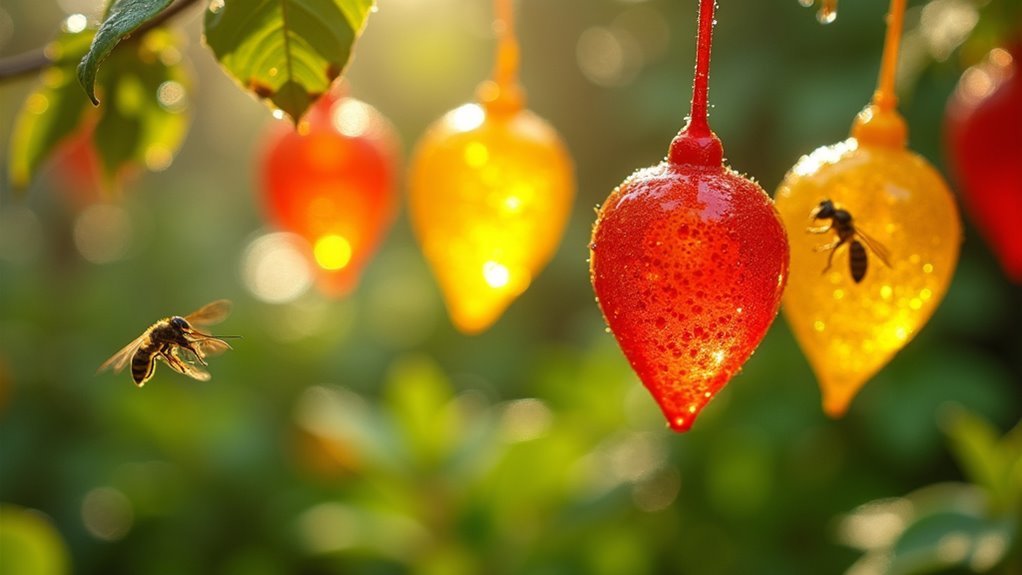
You’ll achieve the best wasp control using DIY bottle traps made from 2-liter containers with inverted funnel tops. Target queens in early spring with protein baits like raw meat, then switch to sweet liquid baits (vinegar, sugar, salt mixture) during late summer peak activity from August to October. Place traps 20-30 feet from gathering areas, 1.5-3 meters high in shaded spots. Effective traps capture 20-50+ wasps weekly, with early queen captures reducing populations by 90% by season’s end through strategic implementation.
Understanding Wasp Behavior and Peak Activity Periods
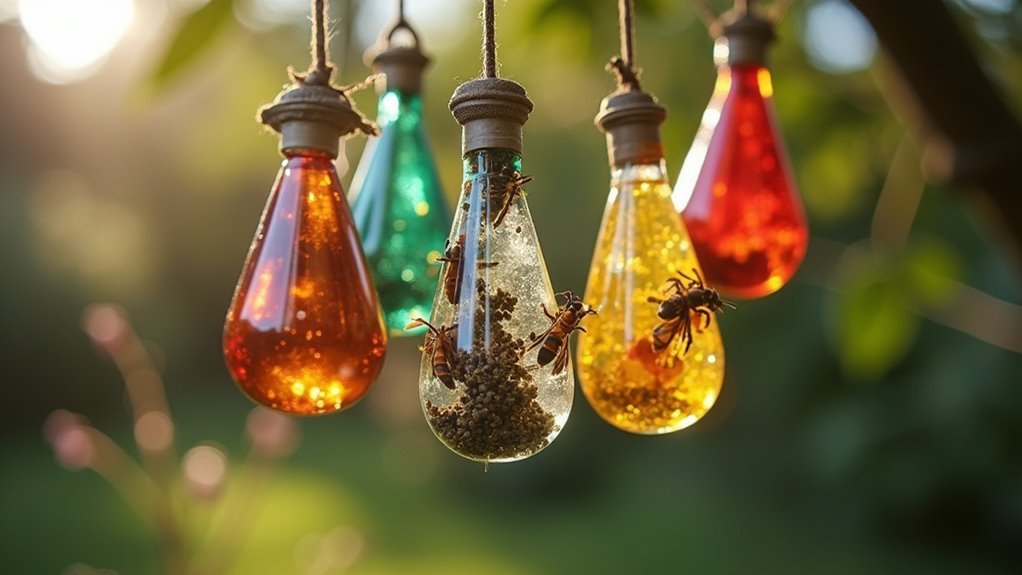
Success with wasp trapping hinges on understanding when these insects are most active and aggressive.
Timing your wasp trapping efforts around peak activity periods is the key to maximum effectiveness and colony control.
You’ll find wasps become increasingly problematic from August through October, when they’re frantically foraging for food to survive winter. This late-summer period represents your prime opportunity for effective trapping since populations peak and their behavior becomes more aggressive.
Don’t overlook early spring’s importance—trapping wasp queens during this season can dramatically reduce summer populations before they establish colonies.
Different species exhibit distinct behaviors that affect your trapping strategy. Yellow jackets gravitate toward protein-based baits and display heightened aggression, while paper wasps prefer sugary attractants.
Essential Materials for Building Effective DIY Wasp Traps
You’ll need just a few simple materials to build your own wasp trap that actually works.
The right plastic bottle, proven bait ingredients, and proper hanging hardware form the foundation of an effective DIY solution.
Let’s examine each component so you can construct a trap that’ll consistently capture wasps around your property.
Plastic Bottle Selection Tips
Why does bottle selection matter so much when building wasp traps? The right plastic bottle determines your trap’s success rate and effectiveness.
You’ll want to choose a 2-liter plastic bottle for ideal results, as its larger size accommodates more bait and captures considerably more wasps than smaller containers.
Before you begin construction, make certain your plastic bottle is completely clean and free from any residue left by previous contents. Even trace amounts of soda, juice, or other substances can deter wasps from entering your trap.
The bottle’s shape and size directly impact the funnel design you’ll create. A 2-liter bottle provides the perfect proportions for cutting and inverting the top third, creating an effective entry point that allows wasps in but makes escape nearly impossible.
Optimal Bait Ingredients Mix
Once you’ve selected the perfect bottle, creating the right bait mixture becomes your next critical step for trapping success.
The ideal bait ingredients mix changes with the season. During early spring, you’ll want protein-based baits like uncooked meat or ham since wasps are feeding their larvae. As summer progresses into fall, switch to sweet liquids for the best results.
A highly effective year-round recipe combines 3/4 cup white vinegar, 2 tablespoons sugar, and 1 teaspoon salt. This best liquid attracts wasps consistently while remaining simple to prepare.
You can enhance any mixture by adding apple juice, syrup, fruit juice, or beer. When using sugar water, dissolve the sugar completely to create a syrup solution that maximizes your trap’s effectiveness.
Hanging Hardware Requirements
Three essential hardware components will determine whether your DIY wasp trap stays functional throughout the season. Proper hanging hardware requirements guarantee your trap remains stable and effective while keeping wasps away from your outdoor activities.
- 18-inch nylon cord or string – Provides secure suspension in trees or on deck structures without degrading in weather conditions.
- Sturdy mounting base – Solid wood piece or metal clamp prevents wind damage and maintains trap stability.
- Weather-resistant fasteners – Stainless steel hooks or carabiners guarantee reliable attachment points that won’t rust or break.
- Protective covering – Small roof or shield guards bait from rain dilution while maintaining wasp access.
- Quick-release mechanism – Simple clasps allow easy trap removal for cleaning and bait replacement.
Position your completed trap 6-7 feet high and 20-30 feet from gathering areas.
Plastic Bottle Trap Construction With One-Way Entrance Design
You’ll start by cutting the top third of your 2-liter bottle just below the shoulder, creating two separate pieces for your trap.
Next, you’ll invert the top section and insert it into the bottom portion, forming a funnel that allows wasps to enter but prevents their escape.
Finally, you’ll secure these components together using tape or staples around the rim to guarantee the one-way entrance design remains intact.
Bottle Cutting Techniques
Creating an effective wasp trap starts with proper bottle preparation and cutting techniques that’ll guarantee your one-way entrance design works flawlessly.
The bottle cutting techniques require precision to create that essential funnel entrance. You’ll need to make a clean, straight cut around the 2-liter bottle’s upper third, then invert the top section into the base. This creates the narrow opening that allows wasps to enter but prevents escape.
- Cut approximately 4 inches from the bottle’s top using sharp scissors or utility knife
- Sand rough edges smooth to prevent gaps when inverting the funnel
- Remove the bottle cap completely before inverting to create the entrance hole
- Make sure the inverted funnel doesn’t touch the bottom, leaving space for bait mixture
- Test-fit the funnel piece snugly against the bottle walls for a secure seal
Funnel Entrance Assembly
Two critical steps will make or break your funnel entrance assembly: proper inversion and secure positioning.
After cutting your plastic bottle, flip the top section upside down and insert it into the bottom portion. The bottle’s neck creates your funnel entrance design, forming a one-way passage that traps wasps inside.
Ensure the funnel opening is wide enough for easy wasp entry but narrow enough to prevent escape. The inverted top should sit snugly without gaps that allow insects to crawl out. Secure the pieces with tape or staples around the rim.
Position your completed trap three meters above ground, away from human activity.
Add attractive bait like sugar water or meat scraps to maximize effectiveness.
Securing Trap Components
Strong attachment methods prevent your wasp trap from failing when you need it most. When securing trap components, you’ll create a reliable system that withstands outdoor conditions while maintaining the one-way entrance design that keeps wasps trapped inside.
Essential steps for securing trap components include:
- Tape the seam – Apply duct tape around the connection where the inverted top meets the bottle bottom to prevent separation.
- Create drainage holes – Punch small holes near the base to prevent overflow during rain while keeping wasps contained.
- Use strong hanging wire – Thread sturdy wire through reinforced holes for stable mounting.
- Position strategically – Mount 3 meters high and 20-30 feet from activity areas.
- Check stability regularly – Inspect connections weekly to guarantee continued effectiveness.
Optimal Bait Selection for Different Wasp Species
Why do some wasp traps succeed while others fail miserably? The secret lies in ideal bait selection tailored to specific wasp species and timing.
Yellow jackets crave protein-based baits like uncooked meat or ham during early season (March to June), then switch to sugary preferences in late summer. Target them with sugar water, fruit juice, or beer from August to October.
Paper wasps consistently prefer sweet solutions throughout the season. Sugar water and fruit juices work best for these species.
You’ll maximize success by combining both protein and sugar-based baits, appealing to different species’ changing dietary needs. This strategic approach captures more wasps while avoiding beneficial insects like honeybees.
Remember: timing matters as much as bait type for effective trapping results.
Early Season Protein-Based Bait Strategies
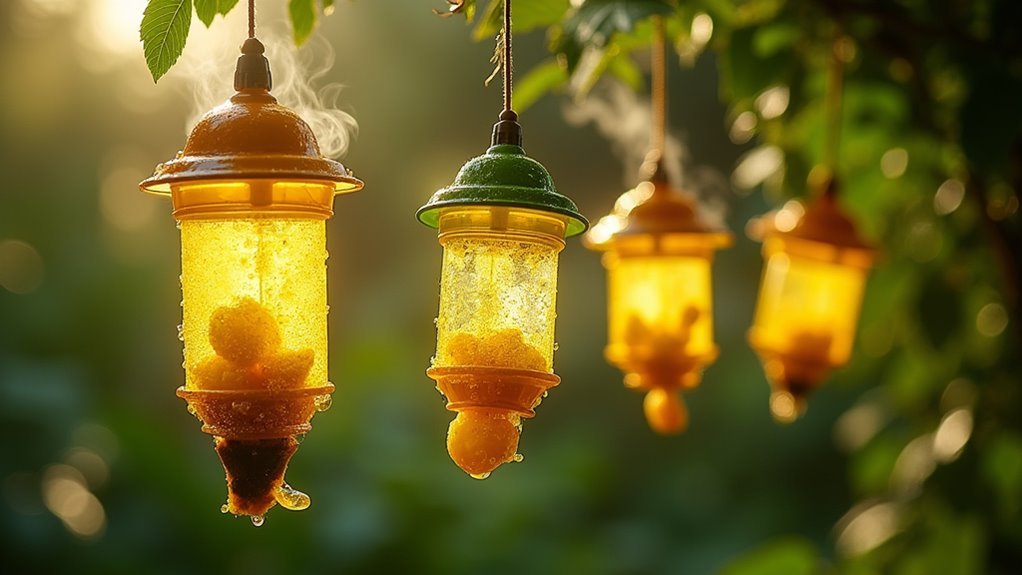
March through June presents your best opportunity to intercept yellow jacket queens before they establish thriving colonies.
During early season, yellow jackets crave protein over sugar, making meat-based baits incredibly effective for wasp traps.
Early spring yellow jackets prioritize protein-rich foods over sweet substances, making meat baits your most powerful weapon against emerging colonies.
You’ll achieve maximum success using these protein-rich attractants:
- Raw hamburger, chicken, or fish scraps
- Sliced ham or deli meats
- Tuna mixed with water for enhanced aroma
- Cat food (wet varieties work best)
- Liver or other organ meats
Position your wasp traps 6-7 meters from patios and gathering areas to protect family while maintaining effectiveness.
Choose brightly colored traps since yellow jackets are visually drawn to bold hues.
Capturing queens now prevents entire colonies from developing, dramatically reducing summer wasp populations around your property.
Late Season Sweet Liquid Bait Formulations
As summer shifts to fall, yellow jackets change their dietary preferences from protein to sugar, making sweet liquid baits your most effective weapon against late-season wasp activity.
The best wasp trap combines simple household ingredients: mix 3/4 cup white vinegar, 2 tablespoons sugar, and 1 teaspoon salt for proven results. You can also use sugar water, fruit juice, or beer as effective alternatives.
Position your traps 6-7 meters from outdoor activity areas to draw wasps away from people and ripe fruits they’re targeting.
For maximum effectiveness, combine sweet liquid baits with protein-based options since yellow jackets may still seek meat. This dual approach greatly reduces wasp populations around your property during their peak nuisance period.
Strategic Trap Placement Away From Human Activity Areas
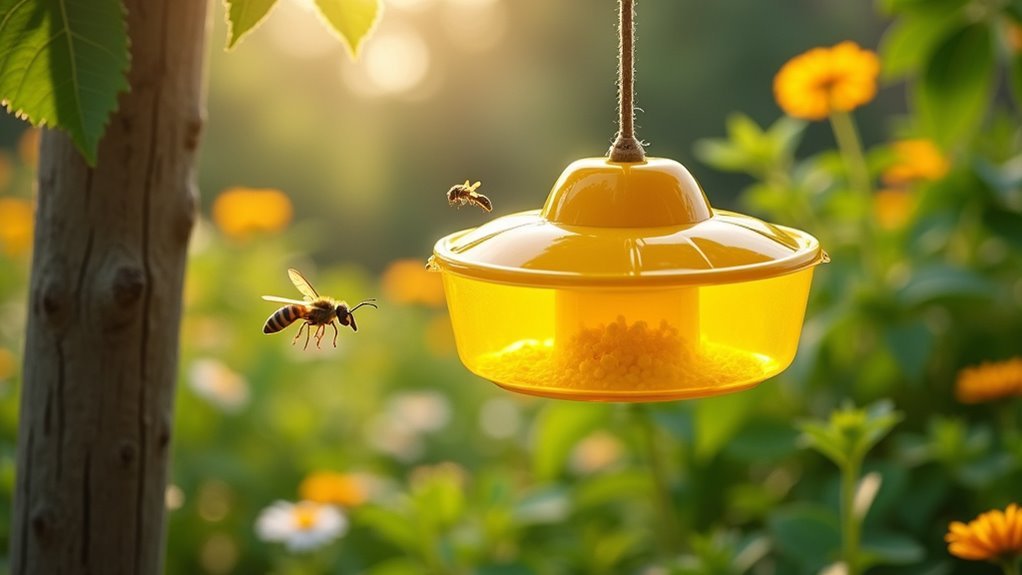
Proper placement determines your trap’s success while keeping you and your family safe from aggressive wasps drawn to the bait.
Strategic trap placement requires careful consideration of distance, height, and environmental factors to maximize capture rates while minimizing human exposure.
Strategic placement balances maximum wasp capture with minimum risk to your family’s safety and outdoor enjoyment.
Follow these guidelines for ideal positioning:
- Distance: Place traps 20-30 feet away from patios, decks, and gathering areas
- Height: Hang traps 1.5-3 meters above ground to mimic natural foraging patterns
- Shade: Position in shaded areas where wasps remain active during hot weather
- Food sources: Locate near fruit trees or compost areas while maintaining safe distance
- Trees: Utilize natural hanging points that appeal to wasp behavior
This approach draws wasps away from your living spaces while creating an effective capture zone.
Timing Your Trap Deployment for Maximum Effectiveness
When you deploy your wasp traps at the right time, you’ll greatly increase your success rate and reduce the overall wasp population around your property.
Timing your trap deployment for maximum effectiveness requires understanding two essential periods. First, set traps in early spring to capture queens before they establish nests, markedly reducing summer populations. However, trap effectiveness declines by June as wasp activity increases, making early placement vital.
Second, maintain traps from March through October, with peak effectiveness occurring from August to October when wasps are most active.
This dual approach maximizes your results: early spring deployment prevents nest establishment, while late summer deployment captures the highest number of wasps when populations peak.
Protecting Beneficial Bees While Targeting Wasps
While maximizing your trap effectiveness, you’ll want to secure your wasp control efforts don’t harm beneficial bees that pollinate your garden and surrounding ecosystem.
Strategic placement and selective baiting help you trap wasps while protecting valuable pollinators:
Smart trap positioning and targeted bait selection effectively eliminate wasps while safeguarding essential pollinating bees in your garden ecosystem.
- Position traps 20-30 feet from human activity areas and 6-7 meters from bee hives to minimize bee exposure.
- Use protein-based baits in early spring and sugary liquids later in the season to specifically target wasps.
- Install traps in trees or elevated positions, away from flowering plants that attract bees.
- Choose one-way entrance designs that prevent escape while reducing accidental bee captures.
- Monitor traps regularly and empty them frequently to maintain effectiveness.
This targeted approach secures you’ll eliminate aggressive wasps without disrupting the beneficial insects your garden depends on for pollination and natural pest control.
Maintenance and Cleaning of Reusable Trap Systems
Regular maintenance keeps your reusable wasp traps functioning at peak efficiency throughout the entire trapping season. You’ll need to clean your traps when they’re full or when liquid bait evaporates to prevent odors and maintain attractant potency.
| Maintenance Task | Frequency | Method |
|---|---|---|
| Clean trap components | When full/bait evaporated | Rinse with warm soapy water |
| Check for blockages | Weekly | Clear entry holes and chambers |
| Inspect for damage | Monthly | Look for cracks or wear signs |
Rinse all components with warm soapy water, removing trapped insects and residual bait. Clear entry holes and catch chambers of debris that could block wasp entry. Check for wear or damage during cleaning sessions. Allow traps to dry completely before refilling to prevent diluting fresh attractants and guarantee peak performance.
Combining Multiple Trap Types for Enhanced Results
You’ll maximize your wasp control success by deploying multiple trap types simultaneously rather than relying on a single approach.
Strategic placement at varying heights and distances from activity areas guarantees you’re capturing wasps across different flight patterns and territories.
Rotating your bait seasonally—from protein-based lures in early spring to sweet attractants later—targets both emerging queens and active worker populations throughout the year.
Strategic Trap Placement Methods
Where you position your wasp traps can make the difference between catching a few stragglers and dramatically reducing wasp activity around your property.
Strategic trap placement methods require careful consideration of distance, height, and target locations to maximize effectiveness while keeping your activity area safe.
Follow these proven placement guidelines:
- Distance from activity areas: Position traps 20-30 feet away from patios, decks, and outdoor dining spaces to minimize sting risks while intercepting wasps.
- Optimal height: Hang traps 6-7 meters high in trees or on poles for maximum visibility and accessibility to flying wasps.
- Target hotspots: Place near known nests and outdoor food areas to draw wasps away from high-traffic zones.
- Multiple locations: Spread traps around your property’s perimeter for extensive coverage.
- Visible positioning: Make sure traps are easily spotted by wasps approaching your property.
Seasonal Bait Rotation Strategy
Since wasps’ dietary preferences shift dramatically throughout the year, you’ll need to rotate your baits seasonally to maintain peak trap effectiveness.
Your seasonal bait rotation strategy should begin with protein-based baits like uncooked meat or ham during early spring when wasp and hornet colonies focus on feeding their developing larvae.
As summer progresses, change to sweet liquids such as sugar water or fruit juice to attract foraging workers seeking carbohydrates.
Replace bait every few days to prevent mold growth and maintain appeal.
Peak trapping occurs from August to October when populations surge.
Position traps 6-7 meters from activity areas and 1.5 meters above ground.
Combining commercial traps with homemade variations using different attractants targets multiple species simultaneously, greatly improving your overall capture rates throughout the season.
Safety Precautions When Handling Captured Wasps
Even though your wasp trap has successfully captured these stinging insects, you’re not out of danger yet. Taking proper safety precautions when handling captured wasps is essential to avoid painful stings and potential allergic reactions.
Successfully trapping wasps is only half the battle – proper handling requires vigilance and protective measures to prevent dangerous stings.
- Wear protective clothing including long sleeves and gloves to minimize sting risk when handling traps with live wasps.
- Approach slowly and calmly to avoid startling surviving wasps, as sudden movements can provoke aggressive behavior.
- Use tongs or similar tools to handle traps, keeping your hands safely away from entrance holes where wasps might escape.
- Work outdoors or in well-ventilated areas to prevent wasps from escaping into enclosed spaces.
- Apply wasp spray from a distance if you discover numerous live wasps before disposal.
Measuring Success Rates and Trap Performance
Most homeowners want concrete evidence that their wasp control efforts are working, and tracking your trap’s performance provides valuable insights into both effectiveness and areas for improvement.
You’ll measure success by counting captured wasps weekly. Effective traps consistently capture hundreds throughout the season, with one-way entry designs showing considerably higher retention rates than traditional models.
| Performance Factor | Good Results | Excellent Results |
|---|---|---|
| Weekly Captures | 20-50 wasps | 50+ wasps |
| Seasonal Total | 200-400 wasps | 400+ wasps |
| Queen Captures (Early Season) | 2-5 queens | 5+ queens |
Your trap performance peaks when you’re using sweet fruit juice baits, especially during late summer. Position traps 6-7 meters from activity areas and 1.5 meters high for ideal results. Early-season queen captures can reduce populations by 90% by summer’s end.
Frequently Asked Questions
Is There a Wasp Trap That Actually Works?
Yes, you’ll find effective wasp traps like the 3 Pack Wasp Trap with one-way entrance designs work well. You can also make homemade bottle traps with funnels that prevent escapes.
What Do Professionals Use to Get Rid of Wasps?
You’ll find professionals use concentrated wasp sprays for long-range nest elimination at night, liquid pump sprayer solutions for larger areas, and strategic one-way traps with protein or sugary baits depending on season.
Why Does Dawn Dish Soap Kill Wasps?
Dawn’s surfactants break down wasps’ protective oils and reduce water’s surface tension, allowing the soapy solution to penetrate their exoskeletons and clog their breathing pores, causing rapid suffocation.
What Do Wasps Hate the Most?
Wasps hate strong scents like peppermint oil, vinegar, and citrus most. You’ll find they also avoid garlic and cucumber peels. They’re territorial, so decoy nests work well to keep them away.
In Summary
You’ve learned the fundamentals of effective wasp control through proven trap designs and strategic placement. By understanding wasp behavior patterns and selecting appropriate baits for different seasons, you’ll dramatically improve your capture rates. Remember to maintain your traps regularly and always prioritize safety when handling captured insects. Combining multiple trap types and monitoring their performance will give you the best results in reducing wasp populations around your property.


Leave a Reply