
You’ll achieve effective chemical-free crawlspace pest control by installing polyethylene vapor barriers with Class 1 protection, sealing entry points with steel wool and copper mesh, and applying expandable foam sealants around pipes. Add hardware cloth with 1/4-inch openings, door sweeps, and fine-mesh window screens for thorough coverage. Create natural deterrent zones using diatomaceous earth around perimeters and essential oil barriers at access points. Proper drainage solutions and professional encapsulation materials complete your defense system against unwanted invaders.
Polyethylene Vapor Barriers With Class 1 Protection Rating
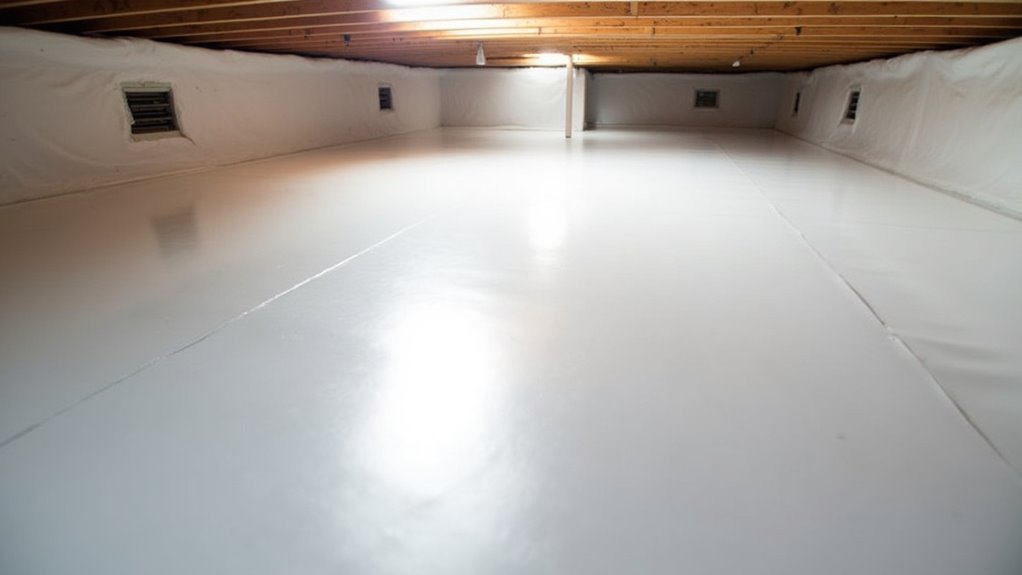
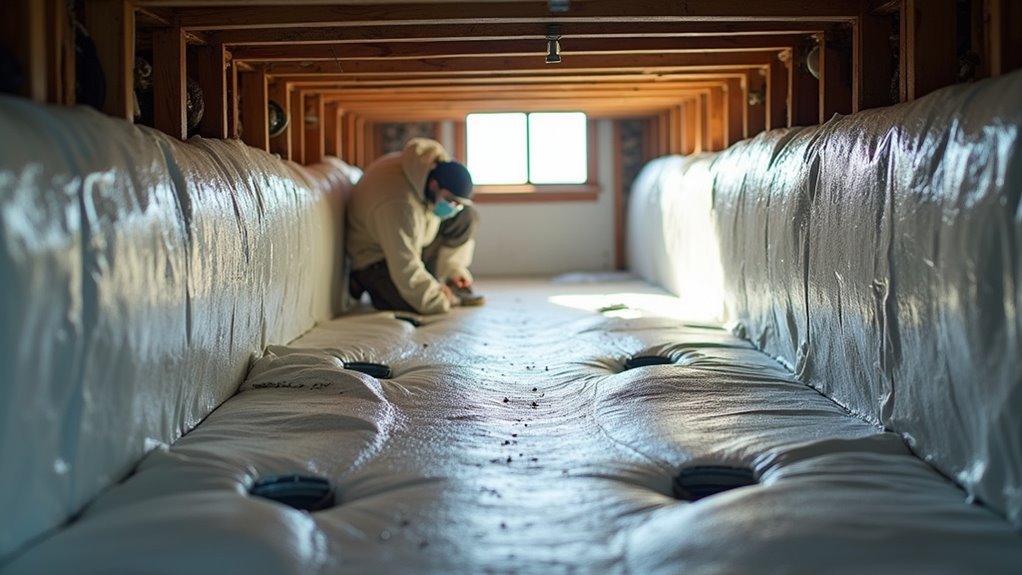
Moisture creates the perfect breeding ground for crawlspace pests, but polyethylene vapor barriers with Class 1 protection ratings effectively combat this problem by completely preventing vapor diffusion.
These puncture-resistant barriers don’t just block moisture—they’re your first line of defense against pest infestations by creating an inhospitable environment beneath your home.
Polyethylene vapor barriers transform your crawlspace into a hostile environment that pests can’t survive in.
When you install these vapor barriers properly, you’ll dramatically improve your indoor air quality while preventing water from creating the humid conditions pests love.
The 2021 International Residential Code requires you to seal and overlap these barriers by at least 6 inches for maximum effectiveness.
Steel Wool and Copper Mesh Entry Point Blockers
While vapor barriers control moisture that attracts pests, you’ll need to address the physical entry points where these unwanted visitors actually enter your crawlspace.
Steel wool and copper mesh provide effective, chemical-free pest control solutions that physically block these access points.
Steel wool’s dense structure makes it nearly impossible for rodents to gnaw through, while copper mesh offers rust-resistant protection that maintains its seal over time.
When you combine both materials, you create a formidable barrier against various pest sizes.
Key advantages of this approach include:
- Chemical-free safety – Safe for households with children and pets
- Versatile protection – Steel wool stops larger pests while copper mesh blocks smaller insects
- Strategic placement – Perfect for sealing around pipes, vents, and other vulnerable entry points
Regular inspection guarantees continued effectiveness as these materials may require occasional replacement or adjustment.
Door Sweeps and Window Screen Installation Systems
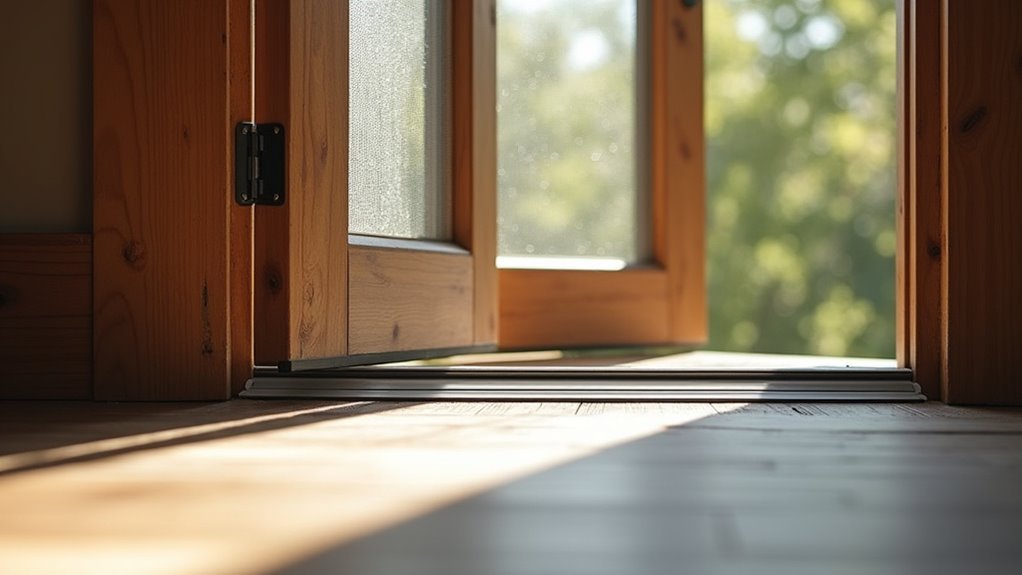
Door sweeps create an essential seal between your crawlspace access points and the outside world, forming the first line of defense against unwanted pests.
You’ll want brush sweeps for blocking crawling insects and vinyl or rubber options for deterring rodents. Proper installation requires aligning door sweeps flush with the floor and guaranteeing tight fitting to eliminate all potential entry points.
Choose brush sweeps for insects and vinyl or rubber sweeps for rodents, ensuring flush alignment with floors for complete seal coverage.
Window screens with fine mesh effectively protect against flying insects while maintaining proper ventilation in your crawlspace.
Install tension springs to enhance durability and guarantee automatic closure when windows are opened.
Regular maintenance and seasonal inspections of both door sweeps and window screens help you identify wear and tear early, maintaining continuous pest protection without relying on chemical solutions.
Caulking and Expandable Foam Sealant Applications
You’ll find that strategic gap sealing forms the backbone of effective crawl space pest prevention, targeting even the smallest entry points that pests exploit.
Your success depends on selecting the right materials for each specific application, whether you’re dealing with moisture-prone areas or exterior exposures.
The key is understanding which sealant works best for different gap sizes and environmental conditions in your crawl space.
Strategic Gap Sealing
Although gaps as small as 1/4 inch might seem insignificant, they’re actually superhighways for common crawlspace invaders like mice, insects, and spiders.
Strategic gap sealing using caulking and expandable foam creates an effective barrier to keep pests from establishing footholds in your crawlspace.
Target these critical areas for maximum protection:
- Foundation joints and cracks – Apply polyurethane sealants for exterior durability against weather and pest entry
- Pipe and utility penetrations – Use expandable foam to fill larger irregular gaps around plumbing and electrical lines
- Moisture-prone areas – Install silicone caulk near water sources for long-lasting water-resistant seals
Regular inspection guarantees your seals remain intact, as deteriorating materials create new entry points.
This approach also reduces humidity levels, making your crawlspace less attractive to moisture-loving pests.
Material Selection Guide
When selecting the right sealant for your crawlspace pest control project, you’ll need to match specific materials to their intended applications for maximum effectiveness.
Use silicone caulk for moisture-prone areas where your vapor barrier meets foundation walls, as it resists water damage and maintains flexibility.
Choose polyurethane sealants for exterior foundation cracks exposed to weather elements.
Expandable foam sealants excel at filling larger gaps around foundation penetrations, expanding to create solid barriers that effectively deter pests.
For thorough protection, combine both materials—caulk handles smaller cracks while foam tackles bigger openings.
Proper application requires cleaning surfaces thoroughly and allowing adequate curing time.
Even quarter-inch gaps compromise your pest barrier, so inspect and maintain sealed areas regularly to guarantee long-term effectiveness against unwanted crawlspace invaders.
Hardware Cloth and Wire Mesh Foundation Barriers
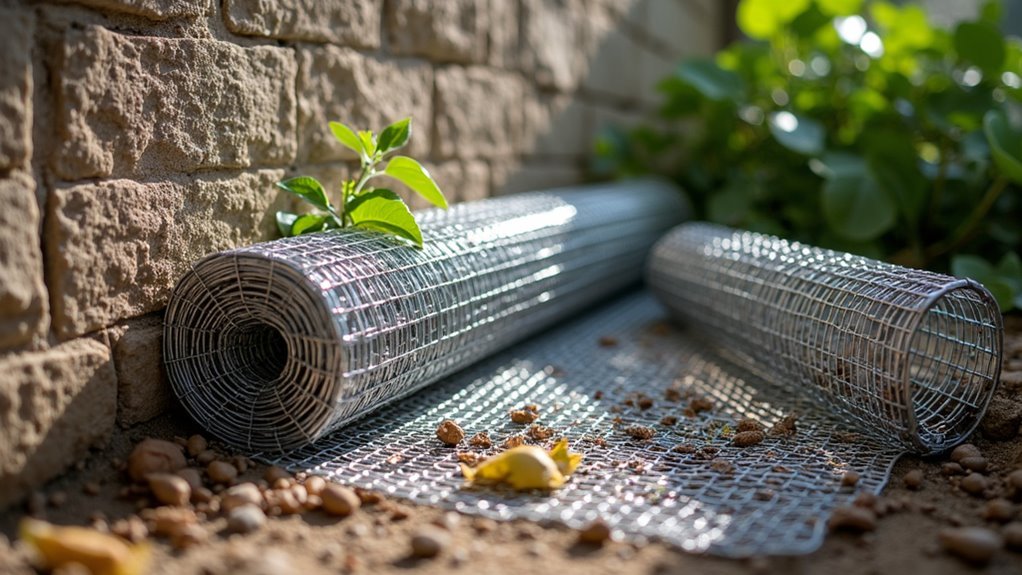
You’ll need to choose the right mesh size for your specific pest problems, with 1/4-inch openings being the standard for blocking most rodents while maintaining proper airflow.
Proper installation around your foundation’s perimeter requires burying edges several inches deep and securing the material tightly to prevent gaps.
Regular maintenance checks will help you spot wear, tears, or loose sections before they compromise your pest barrier’s effectiveness.
Mesh Size Selection Guide
How do you determine the right mesh size for maximum pest protection without compromising crawlspace ventilation? Your mesh size selection guide starts with identifying target pests. A 1/4-inch mesh effectively blocks rodents and small insects while maintaining proper airflow for your crawlspace. This physical barrier prevents most common crawlspace invaders from entering your home.
Consider these key factors when selecting mesh size:
- 1/4-inch mesh – Ideal for extensive protection against mice, rats, and small insects
- 1/2-inch mesh – Suitable for larger pests like rabbits but allows smaller rodents through
- Material choice – Galvanized or stainless steel guarantees long-term durability and corrosion resistance
Foundation Installation Methods
Installing hardware cloth and wire mesh around your foundation creates an impenetrable barrier that stops pests before they reach your crawlspace.
You’ll need to dig a trench at least 6 inches deep around your foundation’s perimeter to prevent rodents from tunneling underneath. Cut the galvanized steel mesh to fit your foundation’s specific design, carefully shaping it around corners and edges for complete coverage.
The 1/4-inch openings in hardware cloth effectively block small pests while maintaining proper air circulation to your crawl space. Secure the barrier against your foundation wall and backfill the trench, ensuring no gaps remain.
This durable, rust-resistant installation provides long-term protection when properly maintained through regular inspections.
Durability and Maintenance Tips
Galvanized steel hardware cloth and wire mesh barriers can last decades when you select the right materials and maintain them properly.
These physical barriers offer exceptional durability while serving as effective solutions for long-term pest prevention in your crawl space.
To maximize your barrier’s lifespan, focus on these key maintenance practices:
- Inspect quarterly for rust spots, tears, or loose fasteners that could compromise the barrier’s integrity
- Replace damaged sections immediately using galvanized or stainless steel mesh with 1/4-inch openings or smaller
- Reinforce attachment points with concrete anchors or heavy-duty fasteners to prevent pests from burrowing underneath
Choose 19 or 23-gauge wire mesh for ideal strength against rodents and larger insects.
Stainless steel options provide superior corrosion resistance compared to standard steel, ensuring your investment protects your home for years.
Ultrasonic and Electronic Pest Deterrent Devices
While traditional pest control methods often rely on harsh chemicals, ultrasonic and electronic pest deterrent devices offer you a clean alternative that harnesses high-frequency sound waves to protect your crawlspace.
These devices emit frequencies inaudible to humans but disrupt the auditory and nervous systems of unwanted pests like rodents and insects, effectively driving them away from your property.
You’ll appreciate their straightforward installation—simply plug them into an electrical outlet and position strategically for maximum coverage.
Within weeks, you’ll notice reduced pest activity without chemical residues or reapplication needs.
These ultrasonic repellers provide sustainable, eco-friendly pest management that covers large areas while maintaining a chemical-free environment beneath your home.
Diatomaceous Earth Perimeter Treatment Zones
Beyond electronic deterrents, diatomaceous earth (DE) creates one of nature’s most effective chemical-free barriers when strategically applied around your crawlspace perimeter.
Diatomaceous earth forms a powerful, natural pest barrier around crawlspaces without using harmful chemicals or toxins.
This fossilized algae powder damages insect exoskeletons on contact, causing dehydration and death without harming your family or pets.
You’ll maximize DE’s effectiveness by establishing proper perimeter treatment zones:
- Apply a thin 1/16-inch layer in completely dry conditions around entry points
- Focus on areas where pests typically enter crawl spaces, including foundation gaps and access doors
- Reapply after heavy rain or disturbances to maintain barrier integrity
Regular maintenance guarantees continuous protection against ants, cockroaches, and silverfish.
DE works long-term when you keep treated zones dry and undisturbed, making it an ideal sustainable solution for crawl spaces.
Essential Oil-Infused Repellent Barrier Systems
Natural essential oils offer another powerful approach to creating pest-free crawlspaces through aromatic barrier systems that repel rather than eliminate invaders.
You’ll find peppermint, tea tree, and eucalyptus oils particularly effective against ants, spiders, and rodents. These essential oil-infused solutions work by masking pheromone trails and disrupting pest communication patterns, making your crawlspace inhospitable for unwanted visitors.
You can apply these barriers directly around entry points and throughout your crawlspace perimeter. They’re completely safe for children and pets while maintaining excellent effectiveness.
Unlike chemical pesticides, pests won’t develop resistance to these natural compounds, ensuring long-term success in your management strategy.
You’ll need regular reapplication as environmental factors reduce potency over time, but maintenance remains minimal compared to traditional chemical treatments.
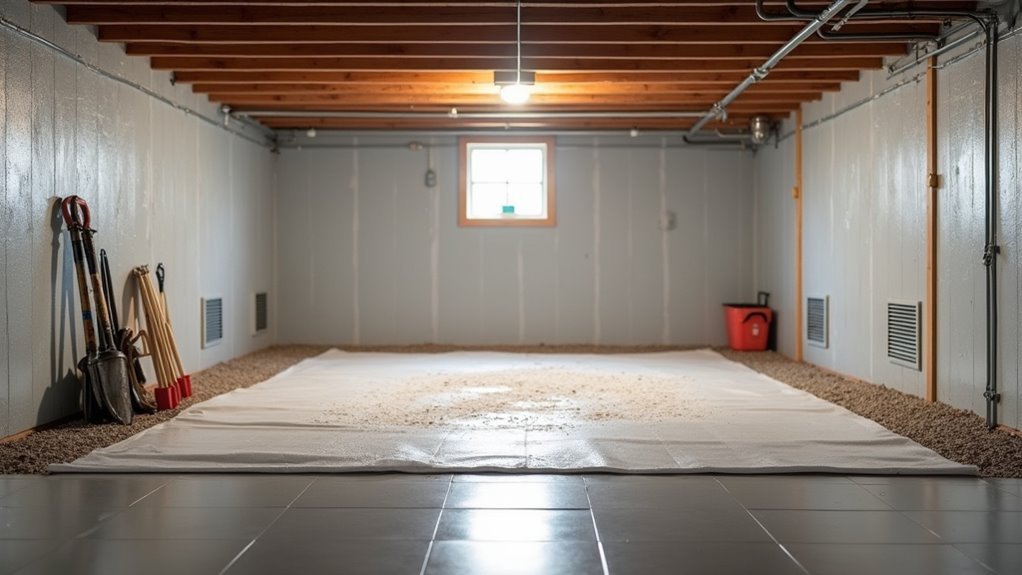
Gravel and Drainage Solutions for Moisture Control
Since moisture serves as the primary invitation for crawlspace pests, you’ll need effective gravel and drainage solutions to eliminate the damp conditions that attract unwanted invaders.
Moisture control is your first line of defense against crawlspace pests seeking damp, welcoming environments to infiltrate your home.
Installing a gravel layer enhances drainage by allowing excess moisture to flow away from your foundation, creating an inhospitable environment for pests.
Here’s how proper gravel and drainage systems provide superior moisture control:
- Install perforated pipes with gravel to create an effective drainage system that diverts water away from your foundation.
- Maintain a minimum 1% slope away from your home’s foundation to facilitate proper water runoff.
- Implement French drain systems filled with gravel to redirect groundwater away from crawl spaces.
Regular maintenance of gutters, downspouts, and drainage components guarantees your moisture control system remains effective long-term.
Professional-Grade Encapsulation Material Options
While drainage systems handle water management, professional-grade encapsulation materials provide the ultimate barrier against both moisture and pests in your crawlspace.
Products like Polyguard® Underslab TRM offer exceptional protection with 69-mil thickness and puncture resistance up to 224 pounds of force. These heavy-duty materials create a sealed environment that effectively lowers humidity levels, preventing pest infestations while improving your indoor air quality.
You’ll need thorough coverage of floors, walls, and posts to maximize effectiveness.
Professional-grade encapsulation materials don’t just keep pests out—they’ll also lower your energy bills by up to 18% through improved thermal regulation. The robust, puncture-resistant design guarantees long-term durability, making these materials a smart investment for extensive crawlspace protection without relying on harmful chemicals.
Frequently Asked Questions
What Is the Best Material for a Crawl Space Moisture Barrier?
You’ll want puncture-resistant, low-permeance Class 1 polyethylene vapor barrier that’s at least 20 mil thick. It’ll effectively prevent moisture diffusion while protecting your home from water damage and toxic gases.
How Do I Keep My Crawl Space Pest Free?
You’ll prevent crawl space pests by installing door sweeps, sealing gaps with caulking, using 20-mil vapor barriers, and keeping surrounding landscape trimmed. Regular inspections guarantee barriers stay effective without chemicals.
Do Crawl Space Vapor Barriers Work?
Yes, crawl space vapor barriers work effectively. You’ll block moisture that attracts pests, create physical barriers preventing entry, and reduce humidity levels. Proper installation with overlapping joints enhances their pest-deterring effectiveness considerably.
How to Bug Proof Crawl Space?
You’ll bug-proof your crawl space by installing door sweeps, weather stripping, and fine mesh screens. Seal gaps with caulk, add a vapor barrier, and keep the perimeter clear of debris and overgrown vegetation.
In Summary
You can protect your crawlspace from pests without harsh chemicals by implementing these proven barriers. Start with polyethylene vapor barriers for moisture control, then seal entry points using steel wool and caulking. Install proper drainage systems and consider diatomaceous earth for natural pest deterrence. Don’t forget door sweeps and hardware cloth for thorough protection. You’ll create an effective, eco-friendly defense system that keeps unwanted visitors out while maintaining your home’s structural integrity.

Leave a Reply