

Lemon juice and vinegar defeat fleas through their acidic properties that directly attack flea exoskeletons and create an environment fleas can’t tolerate. The citric acid in lemon juice disrupts their protective outer shells, while vinegar’s low pH of 2.5 causes mortality in adult fleas with prolonged exposure. You’ll find these acids also interfere with flea reproduction cycles, preventing breeding and offering temporary deterrence against infestations. There’s much more to discover about optimizing these natural solutions.
Understanding How Lemon and Vinegar Target Fleas

When you’re dealing with a flea infestation, lemon juice and vinegar offer natural alternatives that work through their acidic properties to combat these persistent pests.
The citric acid in lemon juice disrupts the flea’s exoskeleton while creating an inhospitable environment that forces them to relocate. Vinegar, especially apple cider vinegar, produces a strong odor that fleas find repulsive, making treated areas unattractive for habitation.
Both substances function as effective natural repellent options because their acidic nature irritates fleas upon contact. You can combine these ingredients in spray solutions to enhance their ability to repel fleas from surfaces and pets.
While this flea control method provides temporary deterrence against adult fleas, you’ll achieve better results when using these solutions alongside commercial treatments for thorough management.
The Science Behind Acidic Ph and Flea Elimination
The acidic environment created by lemon juice and vinegar fundamentally alters the chemical conditions that fleas need to survive and reproduce.
When you use vinegar to kill fleas, its pH of 2.5 irritates their exoskeletons, making survival difficult. The acetic acid in vinegar achieves 100% mortality in adult fleas with extended exposure, though it’s less effective against flea eggs and larvae.
Lemon juice’s citric acid disrupts flea reproduction cycles, preventing effective breeding. However, you’ll need continuous application since acidic solutions lose potency over time.
To create a more effective flea treatment, combine vinegar with diatomaceous earth, which greatly increases mortality rates in flea larvae and creates a thorough approach to elimination.
Creating Effective Lemon-Vinegar Spray Solutions
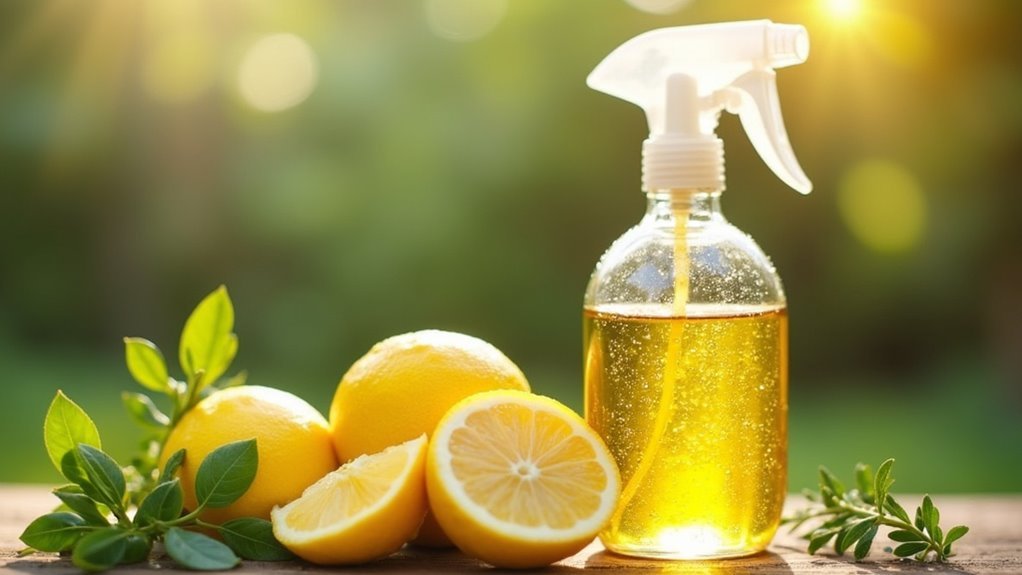
Since both lemon juice and vinegar work as natural flea deterrents, combining them creates a more potent solution than using either ingredient alone.
To create your lemon-vinegar spray, mix equal parts freshly squeezed lemon juice and white vinegar with water in a spray bottle. This combination utilizes their repellent properties effectively against fleas.
The acidic nature irritates fleas’ exoskeletons, making it an excellent natural deterrent.
Apply this solution regularly on pet bedding, carpets, and furniture to reduce the flea population. For enhanced results, add a few drops of essential oils like lavender or eucalyptus, known for their flea-repelling qualities.
Always shake well before use and reapply frequently to maintain effectiveness.
Application Methods for Maximum Flea Control
Proper application techniques determine how effectively your lemon-vinegar solution controls fleas in your home and on your pets.
Apply to your pet’s fur by spraying the lemon and vinegar mixture evenly, ensuring complete coverage while avoiding sensitive areas like eyes and nose. Always perform a patch test first to check for skin reactions.
For thorough flea control, create a carpet spray by adding water and salt to your mixture, then treat affected areas throughout your home.
Follow up with a flea comb for physical removal of fleas that survive the treatment. Reapply every few days to maintain effectiveness, as these home remedies require consistent use to prevent flea populations from rebounding quickly.
Safety Precautions When Using Citrus and Vinegar on Pets
Before you apply lemon or vinegar treatments to your pet, you’ll need to understand proper dilution ratios to prevent skin irritation.
Never use these solutions at full strength—always mix them with water according to safe guidelines.
You’ll also want to closely watch your pet’s reaction during and after treatment to catch any signs of discomfort or allergic responses.
Proper Dilution Ratios
When using vinegar and lemon for flea control, you’ll need to dilute these acidic substances properly to protect your pet’s sensitive skin. The recommended dilution ratios involve mixing equal parts vinegar or lemon juice with water. This 1:1 ratio minimizes irritation while maintaining effectiveness in flea treatments.
Always test the diluted solution on a small skin area first to check for adverse reactions before broader application.
Never apply undiluted vinegar or lemon juice directly, as these concentrated acids cause significant discomfort and skin damage.
When mixing your solution, verify it’s thoroughly combined before use and keep it away from your pet’s face, especially their eyes and mouth, to prevent irritation and accidental ingestion that could compromise pet health.
Monitoring Pet Reactions
After applying any citrus or vinegar solution to your pet, you’ll need to watch closely for signs of adverse reactions that could indicate skin sensitivity or allergic responses.
| Warning Signs | Action Required |
|---|---|
| Excessive scratching | Remove solution immediately |
| Redness or swelling | Rinse with cool water |
| Behavioral changes | Contact veterinarian |
| Gastrointestinal upset | Seek professional help |
Monitoring your pet’s skin for irritation becomes essential during the first 24 hours after treatment. Watch for unusual scratching patterns, as vinegar reactions can manifest differently in each animal. If you notice any concerning symptoms, discontinue use and rinse the treated area thoroughly. Document any adverse reactions to discuss with your veterinarian, ensuring future treatments remain safe and effective for your pet’s specific needs.
Combining Lemon and Vinegar With Other Natural Ingredients
While lemon and vinegar create an effective flea deterrent on their own, you’ll discover that combining them with other natural ingredients amplifies their pest-control power greatly.
Adding salt to your lemon juice and vinegar solution creates a drying effect that targets flea larvae and eggs in carpets and upholstery. You’ll achieve even better results by incorporating diatomaceous earth into your natural flea mixture, which markedly increases mortality rates among flea larvae for thorough flea control.
When you create these enhanced solutions, apply them regularly alongside thorough cleaning and vacuuming. This multi-ingredient approach disrupts the entire flea life cycle more effectively than single-component treatments.
Your combined natural arsenal provides sustained protection while maintaining a safer environment for your family and pets compared to chemical alternatives.
Timeline and Frequency for Optimal Results
You’ll need to establish a consistent application schedule to maximize the effectiveness of your lemon and vinegar flea treatments.
Your initial applications should occur every 3-5 days during the first few weeks, then shift to weekly maintenance treatments once you’ve gained control over the infestation.
Following a structured timeline that extends 4-6 weeks will give you the best chance of achieving significant flea population reduction through these natural methods.
Initial Treatment Application Schedule
The success of lemon and vinegar flea treatment depends heavily on following a strategic application schedule during the initial phase.
You’ll need to apply the mixture directly to your pets and their bedding every 3-5 days for the first two weeks to effectively disrupt the flea life cycle. This frequent initial treatment targets adult fleas before they can reproduce and establish larger flea infestations.
After completing the two-week intensive phase, you should monitor pets closely for any skin irritation and adjust application frequency accordingly.
Shift to weekly applications for up to a month to maintain deterrent effects. Once you’ve achieved control, move to bi-weekly applications as a maintenance routine to prevent reinfestation and sustain long-term flea control.
Weekly Maintenance Frequency Guidelines
Once you’ve established initial control, maintaining flea-free conditions requires consistent weekly interventions across multiple fronts. Your home becomes a battlefield where systematic treatments prevent reinfestation.
- Reapply your lemon and vinegar flea spray weekly – The natural repellent properties diminish over time, requiring fresh application to maintain effectiveness against adult fleas.
- Wash all pet bedding in hot water exceeding 95°F – This temperature kills fleas and their eggs, eliminating breeding grounds throughout your home.
- Vacuum carpets and upholstery thoroughly – Weekly removal of larvae and eggs disrupts the flea life cycle before they mature.
- Combine multiple flea remedies for thorough flea treatment – Use topical preventatives alongside natural solutions to target all developmental stages simultaneously.
Long-term Prevention Timeline
While weekly maintenance handles immediate concerns, sustainable flea prevention demands a strategic long-term approach spanning several months. Your home and yard require consistent treatment cycles to break flea reproduction patterns effectively.
| Timeline | Action Required |
|---|---|
| Weekly | Monitor pets for flea signs and vacuum carpets |
| Every 1-2 weeks | Apply lemon and apple cider vinegar (ACV) spray solutions |
| Every 2-4 weeks | Conduct thorough home treatment during peak seasons |
| Monthly | Wash all pet bedding in hot water |
| Twice yearly | Schedule professional pest control services |
This long-term prevention strategy guarantees you’ll disrupt flea life cycles before they establish strongholds. Combining natural remedies with professional treatments creates multiple defense layers, making your property inhospitable to fleas year-round.
Limitations and When to Consider Professional Treatment
Although lemon and vinegar solutions might provide temporary relief from adult fleas through their strong odors, they won’t eliminate entire infestations or effectively target flea eggs and larvae hiding in your carpets, upholstery, and pet bedding.
These home remedies have significant limitations that you should recognize:
- Incomplete lifecycle coverage – Lemon and vinegar don’t kill flea eggs or pupae, allowing infestations to persist and regenerate.
- Frequent reapplication required – You’ll need constant treatments to maintain any deterrent effects, making long-term control impractical.
- Skin irritation risk – Undiluted vinegar can cause painful irritation on your pet’s sensitive skin.
- Persistent infestations signal serious problems – When flea infestations continue despite treatment attempts, professional pest control services become essential.
Professional pest control targets all flea life stages with tailored solutions, providing thorough management that home remedies simply can’t match.
Frequently Asked Questions
Will Lemon Juice and Vinegar Kill Fleas?
You’ll find that lemon juice and vinegar can repel fleas temporarily and may kill some adults, but they won’t eliminate eggs or larvae, making them unreliable for complete flea control.
How Long Does It Take for Lemon to Kill Fleas?
You’ll find that lemon doesn’t actually kill fleas quickly. It primarily repels them through its acidic scent, requiring multiple applications over several days to weeks for noticeable effectiveness in controlling populations.
What Kills 100% of Fleas?
You’ll achieve 100% flea elimination with commercial topical treatments and oral medications that kill adult fleas within hours. Professional pest control services also guarantee complete eradication by targeting all flea life stages effectively.
What Do Fleas Hate the Most on Humans?
Fleas hate strong scents on you most, particularly citrus oils, vinegar, and essential oils like peppermint or eucalyptus. They’ll also avoid areas where you’ve applied cedar oil or lavender scents regularly.
In Summary
You’ve learned how lemon and vinegar’s acidic properties create an inhospitable environment for fleas while remaining safe for your family. When you apply these natural solutions consistently and follow proper safety guidelines, you’ll see significant flea reduction within days. Remember that severe infestations may require professional intervention, but for mild to moderate problems, you can’t go wrong with this affordable, chemical-free approach that’s been trusted for generations.


Leave a Reply