You can create five effective neem soap sprays using simple ingredients like neem oil, dish soap, and warm water. Mix basic ratios of 1-2 teaspoons soap with 1-2 tablespoons neem oil per gallon for common pests, or concentrate stronger solutions for heavy infestations. Apply preventative weekly treatments, target fungal diseases with specialized formulas, or whip up quick pint-sized batches for small gardens. These natural solutions disrupt pest lifecycles and prevent powdery mildew when applied properly to all plant surfaces, especially undersides, and there’s much more to discover about maximizing their garden-protecting potential.
Basic Neem Soap Spray Recipe for Common Garden Pests
When dealing with soft-bodied garden pests like aphids, spider mites, and mealybugs, you’ll find that a simple neem soap spray offers an effective, natural solution.
Mix 1-2 teaspoons of gentle dish soap with one gallon of warm water first. Gradually add 1-2 tablespoons of 100% pure neem oil to create your pest control mixture.
Start with gentle dish soap dissolved in warm water, then slowly incorporate pure neem oil for maximum effectiveness.
This combination works by disrupting feeding and reproductive cycles while also preventing powdery mildew. When applying neem oil, coat all plant surfaces thoroughly, including leaf undersides.
Neem oil works best on plants that need treatment when you notice signs of stress or infestations. Using neem oil spray every seven days guarantees ideal results, though severe cases may require more frequent neem application.
Avoid direct sunlight during treatment.
Concentrated Neem Treatment for Heavy Infestations
For severe pest problems that resist basic treatments, you’ll need a more powerful concentrated neem soap spray that delivers stronger pest control action.
This enhanced neem soap spray tackles heavy infestations by disrupting the life cycle of pests and reducing their feeding capabilities.
Create your concentrated neem treatment using this formula:
- Mix 6.5 ounces of neem oil with 4 teaspoons of insecticidal soap in 4 gallons of warm water
- Test on a small plant area first to check for adverse reactions
- Apply thoroughly to all plant surfaces, especially leaf undersides where pests hide
- Schedule reapplication every 7 days until pest control is achieved
This method requires patience, as significant results take time to develop through consistent treatment cycles.
Preventative Weekly Neem Soap Application
Three key advantages make preventative weekly neem soap applications your best defense against garden pest problems before they escalate into serious infestations.
This preventative measure disrupts pest lifecycles before colonies establish themselves on your plants. When applying neem soap weekly, you’ll maintain consistent plant protection while simultaneously addressing potential plant disease issues.
Mix small batches using 1 teaspoon neem oil and 1/3 teaspoon insecticidal soap per quart of warm water. Apply during morning or evening hours to protect beneficial insects from harm. Guarantee thorough coverage by spraying leaf tops, undersides, stems, and plant crevices.
Test on small plant areas first to check for sensitivity. Maintain your weekly application schedule, extending to every 14 days during low-risk periods for peak garden health.
Fungal Disease Control Neem Soap Formula
Beyond protecting against insects, neem soap sprays deliver powerful antifungal properties that’ll help you combat common plant diseases like powdery mildew and blackspot.
This targeted formula combines neem oil’s disease-fighting compounds with insecticidal soap’s surface-penetrating abilities.
Here’s your fungal disease control recipe:
- Mix 1 teaspoon neem oil with 1/3 teaspoon insecticidal soap in 1 quart warm water
- Blend thoroughly for maximum effectiveness
- Spray directly onto affected plant surfaces, including leaf undersides
- Apply every seven days for ideal fungal diseases management
Before widespread application, test the spray on a small plant area first.
Monitor for adverse reactions, as some plants show sensitivity to neem oil.
Regular weekly treatments not only suppress existing fungal growth but also provide ongoing protection against future pest infestations.
Quick-Mix Pint-Size Neem Spray for Small Gardens
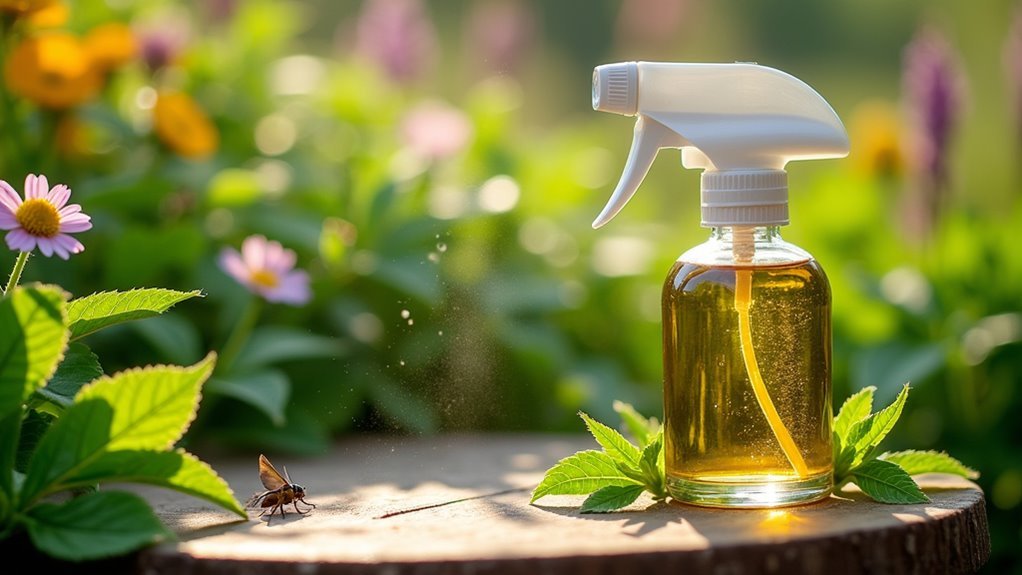
When you’re managing a smaller garden space or need to treat just a few plants, this quick-mix pint-size neem spray offers the perfect solution without creating excess product that’ll lose potency.
Combine 1 teaspoon of pure neem oil with 1/4 teaspoon of gentle dish soap as your emulsifying agent, then fill with purified water to create an effective pest control solution for small gardens.
You’ll need to apply immediately after mixing since neem oil degrades rapidly in water. Shake thoroughly to guarantee proper distribution, then spray during early morning or evening hours to protect beneficial insects.
This targeted approach works exceptionally well against soft-bodied pests like aphids and mealybugs while preventing waste from unused neem spray.
Frequently Asked Questions
How Do You Make Neem Garden Spray?
You’ll mix 1-2 tablespoons of pure neem oil with 1 gallon warm water and 1-2 teaspoons dish soap. Shake well before spraying all plant parts including leaves’ undersides.
What Is the Ratio of Neem Oil to Soap?
You’ll use 1-2 tablespoons of neem oil with 1-2 teaspoons of dish soap per gallon of water. For smaller batches, mix 1 teaspoon neem oil with 0.5 teaspoon soap per quart.
How Do You Make Soap Spray for Garden Pests?
You’ll mix 1-2 teaspoons of gentle dish soap with 1 gallon of warm water. Add 1-2 tablespoons of neem oil, combine well, then spray all plant surfaces including leaf undersides for effective pest control.
Is Dawn Dish Soap an Insecticidal Soap?
Dawn dish soap isn’t technically an insecticidal soap, but you can use it as one. It’ll suffocate soft-bodied pests like aphids when diluted properly, though commercial insecticidal soaps work more effectively.
In Summary
You’ve got five proven neem soap spray recipes that’ll tackle any pest problem in your garden. Whether you’re dealing with aphids, fungal diseases, or heavy infestations, there’s a formula here that’ll work for you. Start with the basic recipe and adjust as needed. Remember to spray during cooler parts of the day and reapply after rain. Your plants will thank you for choosing this natural, effective pest control method.


Leave a Reply