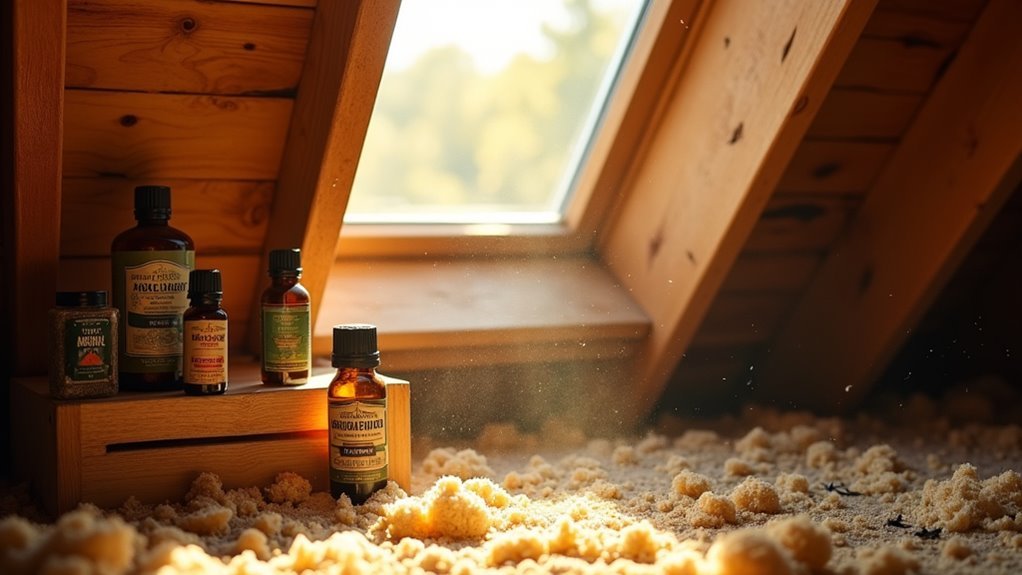
You can eliminate attic pests safely by first identifying activity signs like droppings and chew marks, then sealing entry points with steel mesh and caulking. Remove food sources by storing items in airtight containers and eliminate water attractions through proper drainage. Apply natural repellents like peppermint oil, install humane one-way exclusion devices, and maintain proper ventilation to control moisture. Encourage natural predators by installing owl boxes and planting native vegetation that supports beneficial species for long-term control.
Identify Signs of Pest Activity Early
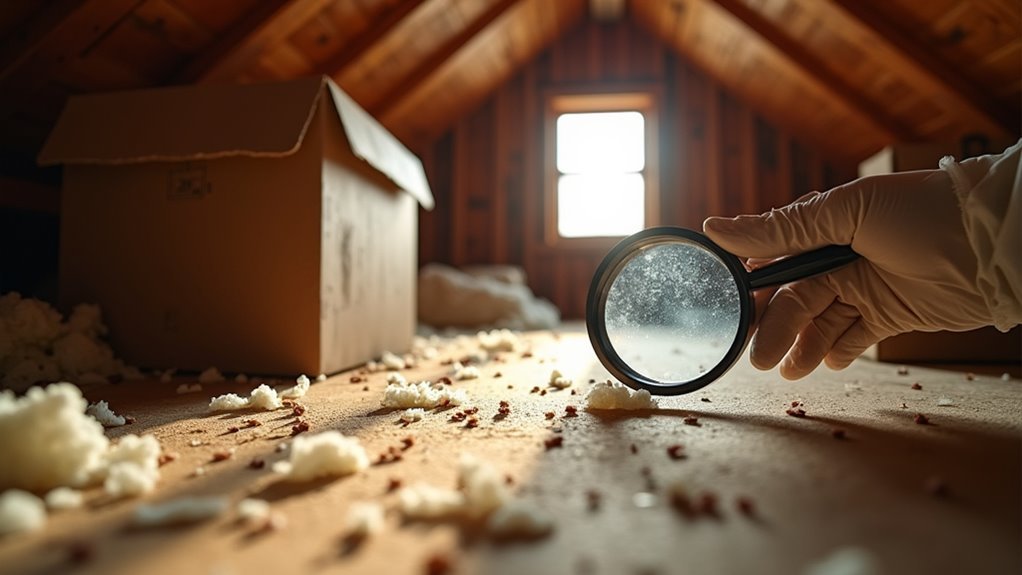
Why wait until pests have established themselves in your attic when you can catch them early?
You’ll hear scurrying noises at night when rodents are most active. Check for droppings—rat waste appears brown, sausage-shaped, and curved.
Nighttime scratching sounds and curved, brown droppings are telltale signs that rodents have invaded your attic space.
Inspect your insulation for disturbances that indicate nesting by squirrels or raccoons. Look for ripped ducts, which often signal raccoon intrusion and compromise your HVAC system.
Examine wires and wood surfaces for chew marks, as rodent activity creates serious safety hazards and expensive repairs. Document any urine stains you discover, as they’re clear indicators of pest activity.
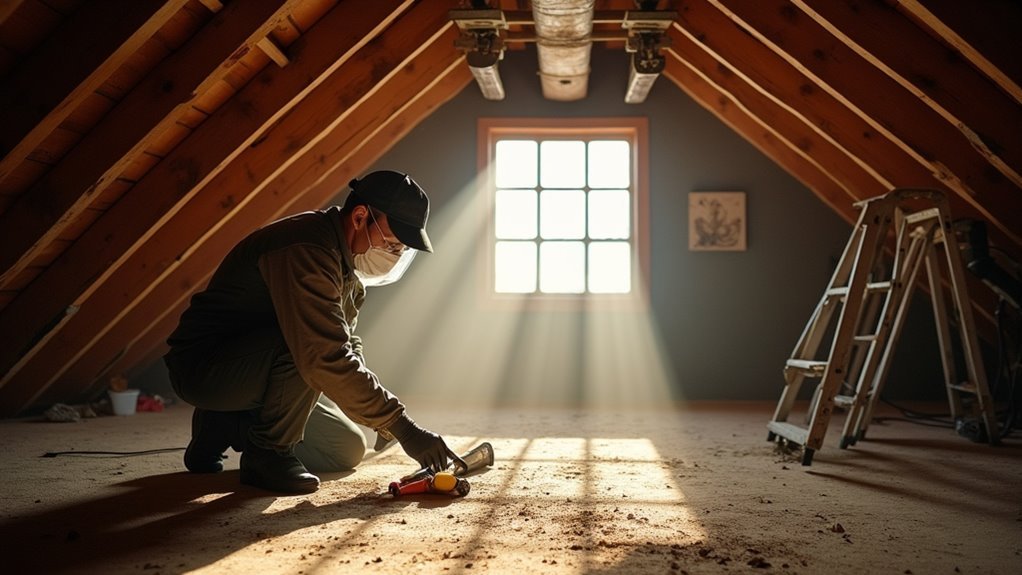
Search for potential access points around your attic’s perimeter. Early detection prevents extensive damage and saves you from costly remediation later.
Seal Entry Points and Potential Access Routes
You’ll need to systematically inspect your home’s exterior to find gaps, cracks, and holes that pests use as entry points into your attic.
Once you’ve identified these access routes around vents, chimneys, utility lines, and damaged roof areas, you can choose the most effective sealing methods for each situation.
Steel mesh, caulking, and proper shingle repairs will block these pathways and prevent future infestations.
Identify Common Entry Points
Before you can effectively eliminate attic pests, you must locate and seal their entry points throughout your home’s exterior. Common entry points include gaps or cracks around windows and doors as small as a quarter-inch for rodents. Inspect your roof carefully for damaged roof shingles and compromised vents or roof components that allow raccoons and squirrels access to your attic.
| Entry Point | Pest Type | Potential Damage |
|---|---|---|
| Damaged shingles | Raccoons, squirrels | Destroy structure, damage insulation |
| Window/door gaps | Rodents, insects | Contaminate food, spread disease |
| Foundation cracks | Mice, rats | Chew wiring, create fire hazards |
| Chimney caps | Bats, birds | Block ventilation, create nests |
Conduct periodic inspections around utility lines and pipes. Seal entry points using steel mesh or caulk to effectively block pest access routes and protect your home.
Effective Sealing Methods
Once you’ve identified entry points, selecting the right sealing materials becomes essential for long-term pest prevention.
When you inspect your attic, focus on entry holes larger than a quarter-inch that provide pest access. Steel mesh and hardware cloth work exceptionally well because they’re durable materials that resist gnawing by rodents. You’ll want to seal openings around vents and chimneys with caulk or expandable foam for maximum effectiveness.
- Use steel mesh or hardware cloth for gaps that animals might chew through
- Apply caulk or expandable foam around electrical wires and pipe penetrations
- Install door sweeps and weather stripping on attic access points
- Check foundation vents for proper screening installation
Regularly check your seals and conduct seasonal inspections to catch new vulnerabilities before pests exploit them.
Remove Food Sources and Water Attractions
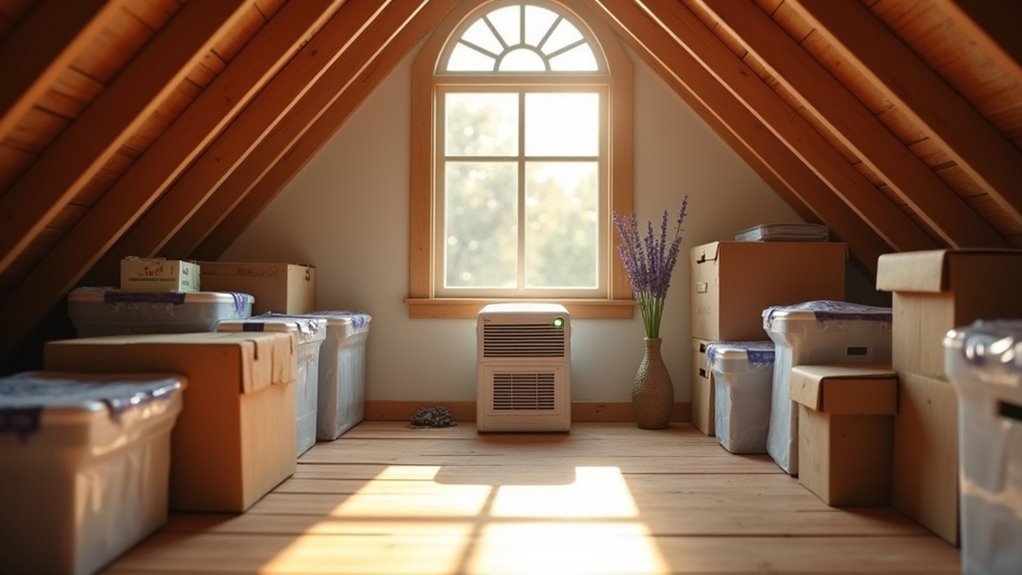
Two fundamental steps will dramatically reduce your attic’s appeal to unwanted pests: eliminating food sources and controlling moisture levels.
You’ll need to guarantee all pet food, grains, and snacks are securely stored in airtight containers to prevent attracting rodents and insects. Clean up spills immediately and remove any crumbs that accumulate in your attic space.
Moisture control is equally critical for deterring pests in your attic.
Install a dehumidifier to reduce humidity levels that attract moisture-loving insects. Regularly inspect for standing water both inside your attic and around your home’s exterior. Remove any water sources you discover, as they’ll eliminate the hydration pests need to survive and thrive in your space.
Use Natural Repellents and Deterrents
You can harness the power of natural repellents to drive pests from your attic without resorting to harsh chemicals.
Essential oils like peppermint, eucalyptus, and lavender create an unwelcoming environment that disrupts rodents’ ability to navigate and locate food sources.
Additionally, you’ll want to establish physical barriers using natural materials that prevent pests from accessing your attic space in the first place.
Essential Oil Solutions
Although chemical pesticides remain popular, essential oils offer a safer, more natural approach to repelling attic pests without compromising your family’s health.
These natural deterrent solutions effectively disrupt pests’ sensory perception, making your attic uninhabitable for unwanted invaders.
Peppermint oil proves particularly effective against rodents, with University of Florida research confirming its ability to inhibit movement around entry points and nesting areas.
You’ll find eucalyptus and citronella equally powerful against spiders and other common attic pests.
- Mix 10-15 drops of essential oils with water in a spray bottle
- Apply regularly to suspected pest areas and access points
- Safe for humans and pets, unlike chemical alternatives
- Environmentally friendly solution that maintains a pest-free environment
These natural repellents work best when combined with proper sealing and regular cleaning practices.
Physical Barrier Methods
While essential oils create an invisible deterrent shield, physical barriers provide the most reliable long-term protection against persistent attic invaders.
Steel mesh and hardware cloth offer superior defense compared to natural repellents alone. You’ll want to inspect your attic thoroughly to identify all entry points where pests that might infiltrate could gain access to your attic.
Install barriers using steel mesh over vents, gaps, and openings larger than a quarter-inch. This prevents rodents, squirrels, and raccoons from entering.
Before sealing entry points, safely remove any existing pests in the attic to avoid trapping them inside. Pest control experts recommend combining physical barriers with natural deterrents for maximum effectiveness.
Hardware cloth works exceptionally well around roof edges and eaves where larger animals typically breach.
Install Humane Exclusion Devices

One-way doors and other humane exclusion devices offer the most ethical approach to removing larger attic pests like squirrels, raccoons, and bats from your home.
These passive exclusion methods guarantee safe removal while complying with wildlife protection laws through ethical practices that don’t harm animals.
Install these devices directly over entry points, allowing pests to exit naturally while blocking their return. Before sealing any openings, confirm all animals have left to prevent accidental trapping.
- Position one-way doors at main access points like roof vents, eaves, and damaged soffits
- Wait 3-7 days after installation before permanently sealing entry points
- Conduct regular inspections to verify device functionality and structural integrity
- Monitor pest activity through visual checks and listening for movement sounds
Schedule follow-up inspections to prevent return visits and guarantee long-term effectiveness.
Maintain Proper Ventilation and Moisture Control
Since moisture creates the perfect breeding ground for countless pests, controlling your attic’s ventilation and humidity levels serves as one of your most powerful preventative measures.
Install ridge vents and soffit vents to enhance airflow throughout your roof system, allowing trapped moisture to escape before it attracts rodents and insects.
You’ll want to maintain humidity below 50% using dehumidifiers when necessary, as this deters moisture-loving pests like termites.
Regular inspection of your gutters prevents water accumulation that creates damp attic conditions.
Make sure your attic insulation stays dry and undisturbed to maintain proper ventilation effectiveness.
This all-encompassing approach to humidity control creates an inhospitable environment for pests while protecting your home’s structural integrity.
Encourage Natural Predators Around Your Property
Nature provides you with powerful allies in your fight against attic pests, and encouraging natural predators around your property creates an effective, chemical-free defense system.
Installing owl boxes attracts owls and hawks, giving these raptors nesting sites while they naturally reduce rodent populations. You’ll want to maintain a diverse habitat with native plants that supports various predator species and creates a balanced ecosystem.
- Install owl boxes strategically around your property to attract raptors for rodent control
- Plant native vegetation to support beneficial insect species like ladybugs and lacewings
- Avoid harmful pesticides that disrupt natural pest control systems
- Create habitat diversity to attract beneficial insects and maintain ecological balance
This approach transforms your property into a natural pest control zone where predators handle the work for you.
Frequently Asked Questions
What Can You Put in Your Attic to Keep Pests Away?
You can place cedar chips, spray peppermint oil or vinegar around entry points, install dehumidifiers to reduce moisture, set up ultrasonic repellents, and maintain cleanliness by removing food sources and clutter.
How Do You Get Rid of Pests in the Attic?
You’ll need to seal entry points first, then set appropriate traps for specific pests. Remove food sources and clutter, maintain cleanliness, and call professionals for protected species like bats.
How Do I Make My Attic Rodent Proof?
You’ll need to seal all entry points using steel mesh or caulk, even quarter-sized gaps. Keep your attic clean, trim nearby tree branches, and install door sweeps on access points.
How to Get Rid of Rodents in Attic Naturally?
You can eliminate attic rodents naturally by placing peppermint oil-soaked cotton balls around activity areas, setting wooden snap traps with peanut butter, and introducing cats to control populations effectively.
In Summary
You’ll protect your attic from unwanted pests by staying vigilant and taking proactive steps. Don’t wait until you’ve got a full-blown infestation—act quickly when you notice early warning signs. By sealing entry points, removing attractions, and using safe deterrent methods, you’ll create an environment that’s uninviting to pests. Remember, consistent maintenance and natural prevention strategies will keep your attic pest-free without compromising your family’s safety or the environment.

Leave a Reply