
You can eliminate fleas naturally using proven household methods that target every stage of their lifecycle. Start with thorough vacuuming of carpets and pet bedding, then apply food-grade diatomaceous earth in flea-prone areas for 48 hours before vacuuming. Create vinegar sprays with equal parts water and white vinegar, sprinkle salt or baking soda as desiccants, and use diluted essential oils like lavender or peppermint. Steam cleaning and dish soap traps provide additional effective solutions that’ll help you reclaim your home.
Deep Cleaning and Vacuuming
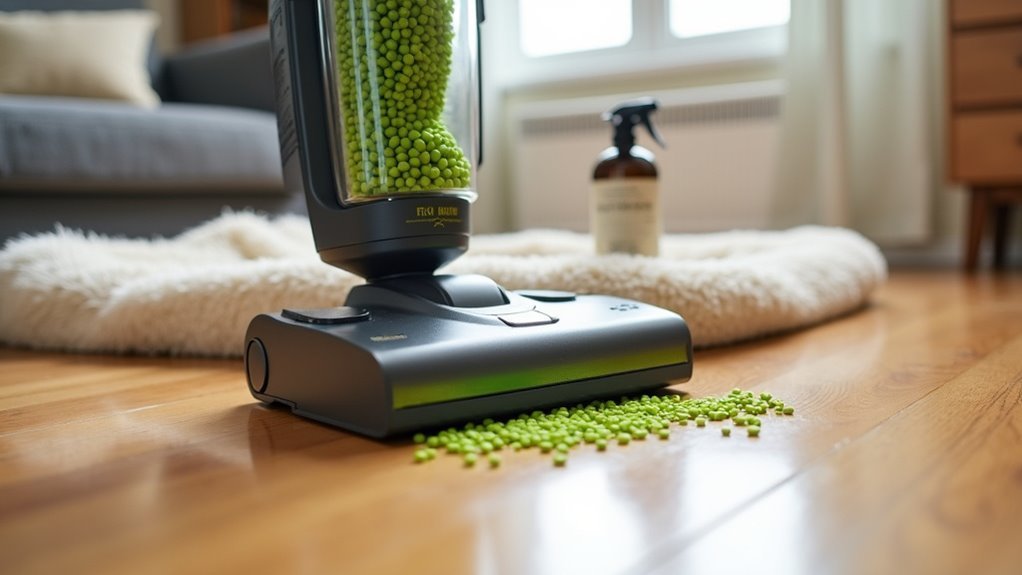
When fleas invade your home, thorough vacuuming becomes your first line of defense against these persistent pests.
You’ll need to vacuum carpets, furniture, and all areas where your pets spend time to remove flea eggs, larvae, and adult fleas effectively.
Don’t forget to target pet bedding, as it’s a prime breeding ground for these unwanted guests.
After vacuuming, immediately empty the dirt reservoir or dispose of bags in an outside trash can to prevent re-infestation.
For deeper results, follow up with steam cleaning your carpets and upholstered furniture. The high temperatures will kill remaining fleas and eggs that vacuuming might’ve missed.
Wash pet bedding weekly in hot, soapy water, and maintain this deep cleaning routine consistently to disrupt the flea lifecycle permanently.
Diatomaceous Earth Application
You’ll want to start with food-grade diatomaceous earth since it’s safe for both you and your pets, unlike the pool-grade variety that can be harmful.
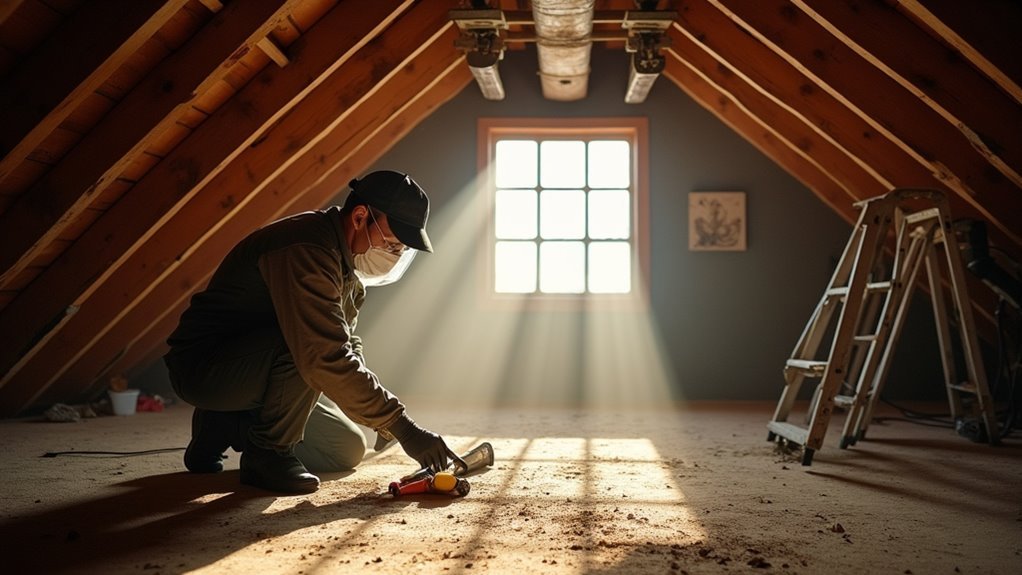
Apply a thin layer in areas where fleas hide—carpets, pet bedding, and cracks—while wearing a mask to avoid inhaling the fine particles.
The key is ensuring even coverage without over-applying, as too much DE can actually reduce its effectiveness.
Food Grade Safety
Although diatomaceous earth offers an effective natural solution for flea control, you must choose food grade DE to confirm safety for your family and pets.
Industrial-grade diatomaceous earth contains harmful chemicals and additives that pose serious health risks, making it unsuitable for household use. Food grade diatomaceous earth provides one of the most reliable non-toxic ways to protect your home from fleas without compromising your family’s wellbeing.
When selecting natural pest control products, always verify the packaging clearly states “food grade” before purchasing. This designation confirms the DE has been purified and meets safety standards for human and pet exposure.
You’ll find food grade diatomaceous earth at health stores, online retailers, and some garden centers. Never substitute industrial-grade DE for food grade varieties.
Proper Application Techniques
Knowing you’ve selected food grade diatomaceous earth sets the foundation for safe flea elimination, but proper application techniques determine your success in breaking the flea lifecycle.
Among natural remedies, diatomaceous earth works best when you sprinkle a light, even layer across carpets, pet bedding, and floor cracks where fleas hide. You’ll need to wear a mask during application to prevent respiratory irritation from fine dust particles.
Leave the diatomaceous earth undisturbed for at least 48 hours before vacuuming. This waiting period allows it to dehydrate and kill fleas and their eggs effectively.
For persistent flea infestations, reapply every few weeks or after each vacuuming session. These application techniques guarantee you’re maximizing diatomaceous earth’s effectiveness while maintaining safety.
Vinegar Spray Solutions
You’ll find vinegar spray solutions offer an effective, natural approach to flea control that works through scent and taste deterrence.
Creating the right mixture requires understanding proper ratios to maximize repellent properties without damaging surfaces or irritating pets.
We’ll explore how vinegar repels these pests, the correct mixing proportions, and strategic application methods for your home and pet areas.
How Vinegar Repels Fleas
When fleas detect vinegar’s sharp scent and acidic taste, they’ll quickly retreat from treated areas, making both distilled white vinegar and apple cider vinegar powerful natural deterrents.
This natural flea remedy works by creating an inhospitable environment that disrupts fleas’ normal behavior patterns.
Vinegar’s acidity transforms your pet’s skin pH, making it less attractive to fleas and reducing the likelihood of a flea infestation taking hold.
When you spray vinegar solutions on carpets, furniture, and pet bedding, you’re fundamentally creating invisible barriers that fleas won’t cross.
The acidic properties don’t just repel fleas temporarily—they actively discourage these pests from establishing colonies in treated spaces.
Regular application guarantees surfaces remain unwelcoming to fleas, making vinegar a crucial component of effective natural flea remedies for long-term pest management.
Proper Mixing Ratios
Three simple ingredients form the foundation of an effective vinegar flea spray that’ll protect your home without harsh chemicals.
Mix equal parts distilled white vinegar of your choice and water in a spray bottle to create your base solution. This 1:1 ratio provides peak effectiveness while remaining safe for household use.
Enhance your natural flea and tick repellent by adding 3-5 drops of essential oils like lavender or peppermint. These oils boost the solution’s effectiveness and mask vinegar’s strong scent.
Always test your mixture on a small, hidden area first to prevent discoloration.
Apply this solution weekly on pet bedding, carpets, and flea-prone areas. Avoid spraying directly on your pet’s skin to prevent irritation while maintaining effective flea prevention.
Application Methods and Areas
Strategic application of your vinegar spray solution targets the areas where fleas congregate and multiply most frequently.
Whether you’re using apple cider vinegar or distilled white vinegar, focus on high-traffic zones where your pets spend time.
Apply the vinegar solution effectively with these methods:
- Direct spraying – Mist pet bedding, carpets, and upholstered furniture thoroughly
- Surface wiping – Use a cloth soaked in vinegar solution for detailed coverage on hard surfaces
- Fabric treatment – Saturate curtains, rugs, and cushions where fleas might hide
- Regular reapplication – Repeat weekly for sustained flea control
This non-toxic option safely treats all surfaces around pets without harmful chemicals.
Combined with consistent cleaning practices, your targeted application approach creates an inhospitable environment for fleas.
Salt and Baking Soda Treatment
Although chemical flea treatments dominate store shelves, salt and baking soda offer a powerful, non-toxic alternative that’s both effective and safe for your family.
These common household items work as desiccants, dehydrating fleas and their eggs on contact. For best flea control, sprinkle both salt and baking soda liberally in areas where fleas are active, including carpets, pet bedding, and upholstery.
Leave the treatment undisturbed for at least 24 hours to guarantee maximum effectiveness. During this time, the desiccants will work continuously to eliminate fleas at all life stages.
After the waiting period, simply vacuum the treated areas thoroughly. This non-toxic approach provides peace of mind around children and pets while delivering results comparable to chemical alternatives.
Essential Oil Repellents
You’ll find that certain essential oils like lavender, rosemary, and peppermint naturally repel fleas while keeping your home smelling fresh.
These oils work by disrupting flea life cycles, offering a safer alternative to harsh chemical treatments.
However, you must dilute them properly with carrier oils and consult your vet before application, especially since some oils can be toxic to cats.
Safe Oil Options
When you’re seeking natural alternatives to chemical treatments, essential oils offer a gentle yet effective approach to flea control.
These natural pet solutions provide nontoxic ways to protect your furry companions without harsh chemicals.
Several essential oils work effectively as flea treatments for dogs:
- Rosemary oil – Creates a protective barrier that fleas naturally avoid
- Lavender oil – Offers dual benefits of flea repelling and calming properties
- Peppermint oil – Provides strong deterrent effects with invigorating scent
- Cedarwood oil – Disrupts flea life cycles while being gentle on skin
Always dilute these oils properly using 1-2 drops per teaspoon of carrier oil.
If you have cats, consult your veterinarian first, as some oils can be toxic to felines.
Monitor your pets for any allergic reactions during initial applications.
Proper Application Methods
Knowing which oils work best means nothing without proper application techniques that guarantee safety and effectiveness.
You’ll need to dilute essential oils with carrier oils before applying them to your dog’s coat or bedding. Use 3-5 drops per tablespoon of carrier oil for safe concentrations.
For spray applications, mix oils with water in a spray bottle, shaking well before each use to distribute evenly. Target areas where fleas typically hide, including pet bedding and carpeted zones.
Always perform patch tests on small skin areas first, as pets can develop sensitivities.
These natural solutions work effectively for pets and humans when applied correctly.
Never use essential oils on cats, as many oils prove toxic to felines.
Citrus-Based Flea Sprays
One of nature’s most accessible flea deterrents sits right in your kitchen fruit bowl.
Citrus-based flea sprays harness the power of acidic citrus to repel fleas and disrupt their lifecycle. The strong scent naturally deters these pests while being safe for most households.
Creating your own spray is simple: mix 1/4 cup fresh lemon juice with 2 cups water.
Here’s how to maximize effectiveness:
- Apply to pet bedding, carpets, and furniture where fleas congregate
- Avoid spraying directly on pets, especially cats who’re sensitive to citrus oils
- Reapply regularly for consistent flea control
- Combine with other non-toxic methods for thorough pest management
This natural approach complements your overall flea control strategy without introducing harsh chemicals into your home environment.
Dish Soap Flea Traps
While citrus sprays work to repel fleas, dish soap traps take a different approach by actively capturing adult fleas that are already present in your home.
Unlike citrus sprays that simply repel, dish soap traps actively capture and eliminate adult fleas already living in your home.
This homemade flea control method works because dish soap reduces water’s surface tension, causing fleas to sink and drown when they jump into the bowl.
You’ll need just 1/4 cup of dish soap mixed with warm water in a shallow bowl. Place these traps near areas where fleas are most active, particularly overnight when they’re hunting for hosts.
The minimal investment makes this an extremely cost-effective solution.
Check and replace the mixture regularly to maintain effectiveness. While these traps primarily capture adults, they’ll help reduce your overall flea population when combined with other preventative measures.
Boric Acid Dusting
Boric acid offers another powerful weapon in your non-toxic flea fighting arsenal by acting as a natural desiccant that dehydrates these pests on contact.
This fine powder damages flea exoskeletons while remaining safe for pets and humans when used properly, making it an excellent alternative to harsh chemical insecticides.
For effective flea control, follow these application guidelines:
- Dust carpets, cracks, and crevices where fleas commonly crawl
- Leave undisturbed for several hours to maximize contact time
- Combine with regular vacuuming to remove fleas and their eggs
- Avoid kitchen counters and food preparation areas
The key to success lies in targeting high-traffic flea areas and maintaining consistent cleaning routines alongside boric acid treatment for thorough pest elimination.
Steam Cleaning Method
Steam cleaning harnesses the lethal power of high temperatures between 160°F to 220°F to eliminate fleas at every stage of their lifecycle, from stubborn eggs to adult pests.
High-temperature steam between 160°F to 220°F destroys fleas at every lifecycle stage, from eggs to adults.
This method effectively penetrates carpet fibers, rugs, and upholstered furniture where fleas and ticks hide and reproduce.
You’ll want to focus steam cleaning on areas where your pets spend the most time, including their pet beds and favorite lounging spots.
The high-temperature steam doesn’t just kill fleas—it sanitizes surfaces by removing allergens and bacteria, creating a healthier environment for your family.
For maximum effectiveness, combine steam cleaning with other non-toxic methods like regular vacuuming and washing fabrics in hot water.
This thorough approach disrupts the flea lifecycle and prevents reinfestation without exposing your household to harmful chemicals.
Regular Pet Grooming With Natural Products
Beyond treating your home environment, maintaining a consistent grooming routine with natural products creates a powerful defense against fleas directly on your pet.
Regular grooming with soap and water effectively kills adult fleas while controlling populations. Natural grooming products containing essential oils like lavender or rosemary repel fleas while keeping your pet’s coat healthy.
Here’s your effective flea management approach:
- Bathe weekly using organic shampoos infused with essential oils
- Create vinegar solutions (equal parts water and vinegar) to balance skin pH
- Brush frequently to remove fleas, eggs, and detect infestations early
- Maintain consistent weekly grooming schedules for ideal results
This natural approach eliminates harsh chemicals while promoting overall pet hygiene.
You’ll notice fewer fleas and healthier skin when you stick to this routine consistently.
Frequently Asked Questions
What Is the Least Harmful Flea Treatment?
You’ll find oral flea treatments containing s-methoprene or pyriproxyfen are least harmful since they’re safer than topical options. You can also use diatomaceous earth, which dehydrates fleas naturally without toxic chemicals.
How Can I Get Rid of Fleas Without Using Chemicals?
You can eliminate fleas naturally by vacuuming regularly, washing bedding in hot water weekly, sprinkling diatomaceous earth in infested areas, using vinegar solutions, and applying diluted essential oils like lavender.
What Kills 100% of Fleas?
You can’t achieve 100% flea elimination with a single treatment. You’ll need multiple approaches: diatomaceous earth, salt treatments, vinegar solutions, essential oils, and soap traps used consistently over several weeks.
Is There a Flea Treatment That Actually Works?
You’ll find several flea treatments that work effectively. Diatomaceous earth kills fleas through dehydration, while essential oils like cedarwood repel them. Combine regular vacuuming with vinegar solutions for thorough control.
In Summary
You’ve now got nine proven methods to eliminate fleas without exposing your family or pets to harmful chemicals. Remember, consistency’s key—you’ll need to repeat these treatments every few days for several weeks to break the flea lifecycle completely. Don’t skip areas like cracks, baseboards, and your pet’s favorite spots. With patience and persistence, you’ll reclaim your home from these unwanted pests using safe, natural solutions that actually work.

Leave a Reply