
You’ll need four simple ingredients to create an effective organic garlic bug spray: four minced garlic cloves as the primary pest deterrent, one tablespoon of vegetable oil to extract garlic’s active compounds, one pint of water as your solution base, and a small amount of liquid dish soap that acts as an emulsifier. This chemical-free mixture provides broad-spectrum pest control while protecting your family, pets, and soil from harmful chemicals. The combination creates a concentrated solution that repels garden pests naturally and supports sustainable gardening practices that won’t harm beneficial insects when applied correctly.
Essential Ingredients for Homemade Garlic Pest Control
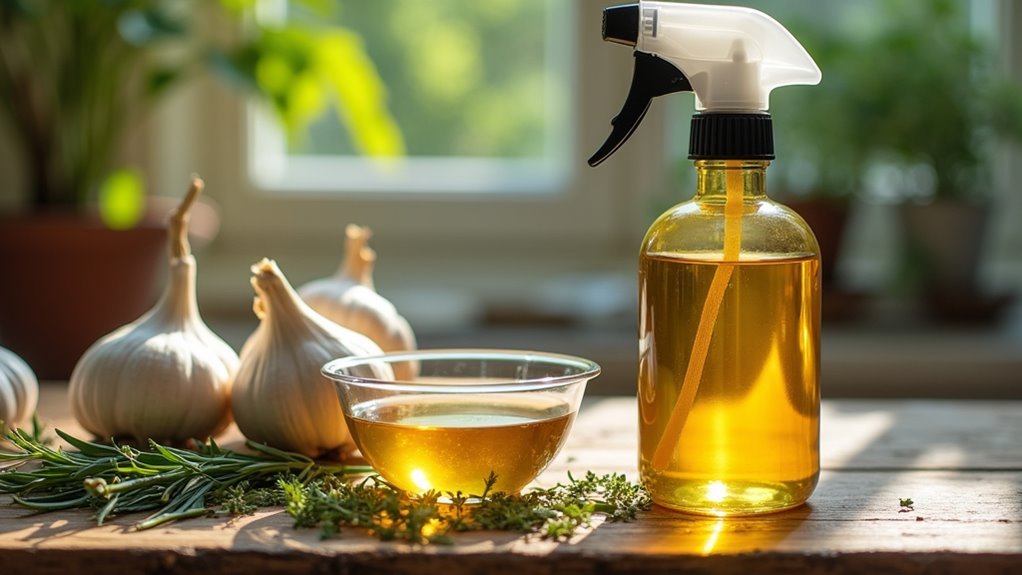
Creating an effective garlic bug spray starts with gathering just a few simple ingredients you likely already have in your kitchen.
You’ll need four cloves of minced garlic as your primary pest-deterrent component. Add one tablespoon of vegetable oil, which helps extract garlic’s active compounds and aids in adherence to plant surfaces.
Include one pint of water to create the base solution for your garlic spray. Finally, you’ll want a small amount of liquid dish soap, which acts as an emulsifier to help disperse the mixture evenly and guarantees it sticks to leaves effectively.
These basic ingredients work together to create a concentrated solution that naturally repels various garden pests without harsh chemicals.
Benefits of Using Garlic as a Natural Pesticide
When you choose garlic as your natural pesticide, you’re tapping into sulfur compounds that effectively repel and eliminate common garden threats like aphids, slugs, and beetles.
This versatile solution delivers multiple benefits for your organic gardening approach.
Your garlic spray provides these key advantages:
Your garlic spray provides these key advantages: chemical-free protection, disease prevention, broad-spectrum control, and enhanced plant health for sustainable gardening.
- Chemical-free protection – You’ll safeguard your family, pets, and soil from synthetic toxins.
- Disease prevention – Antifungal properties combat powdery mildew and other plant diseases.
- Broad-spectrum control – One solution targets multiple pest types simultaneously.
- Enhanced plant health – Regular applications strengthen overall plant robustness.
You’ll maintain a pest-free garden while promoting healthier growth patterns.
Unlike synthetic alternatives, garlic spray won’t harm beneficial insects or contaminate your harvest, making it perfect for sustainable gardening practices.
Step-by-Step Preparation Instructions

You’ll need just five simple ingredients to create your powerful garlic bug spray. Start by crushing 4 cloves of garlic and combining them with 1 tablespoon of mineral oil. Let this mixture soak overnight for ideal infusion.
After soaking, strain the garlic from the oil to create your concentrated solution.
Next, grab a spray bottle and mix 1 pint of water with 2 tablespoons of your strained garlic oil. Add 1 teaspoon of liquid dish soap to help the mixture stick to plant surfaces.
Before widespread application, test your garlic spray on a small, hidden plant area to check for adverse reactions. Apply weekly to leaf tops and undersides, ensuring thorough coverage for maximum pest control effectiveness.
Proper Dilution Ratios for Plant Safety
Getting your dilution ratios right makes the difference between effective pest control and potential plant damage.
You’ll want to follow these proven ratios when mixing your garlic spray:
- Standard mixture: Use 1 part concentrated garlic to 10 parts water for most applications.
- Stronger concentrate: Mix 2 tablespoons per pint of water, but test on small plant areas first.
- Weaker solutions: Avoid diluting beyond 1:10 ratios as this reduces pest-fighting effectiveness.
- Pre-harvest timing: Skip spraying edible crops close to harvest time to prevent potential harm.
After applying garlic spray, you’ll need to monitor your plants regularly.
Watch for any adverse reactions and adjust your dilution strength or application frequency based on how your plants respond and current pest activity levels.
Target Pests That Garlic Spray Effectively Deters
You’ll find garlic spray works exceptionally well against common garden aphids that cluster on your plant stems and leaves.
The pungent odor also repels mosquitoes and other blood-sucking insects that make outdoor gardening unpleasant.
Additionally, garlic’s natural compounds help prevent fungal diseases like powdery mildew from taking hold on your plants.
Common Garden Aphids
Tiny green, black, or brown invaders known as common garden aphids pose one of the most persistent threats to your garden’s health.
These soft-bodied insects cluster beneath leaves, draining essential sap and weakening your plants while reproducing at alarming rates—a single female produces up to 80 offspring weekly.
Garlic spray disrupts their feeding patterns and reproduction cycles, offering you a powerful organic defense.
When you apply this natural repellent regularly, you’ll witness significant population reductions without harsh chemicals.
Picture garlic spray’s effectiveness through these scenarios:
- Aphid colonies abandoning their favorite feeding spots
- Stunted reproduction cycles breaking infestation patterns
- Weakened plants regaining strength and vibrant color
- Your garden thriving without toxic pesticide residues
This sustainable approach protects both plant health and environmental balance.
Mosquitoes and Blood-Suckers
While aphids threaten your garden plants, mosquitoes and other blood-sucking pests turn your outdoor spaces into uncomfortable battlegrounds.
Garlic spray offers an effective organic solution against these persistent invaders. The spray’s strong odor masks the scents that typically attract mosquitoes, gnats, ticks, and fleas to their human targets.
When you apply garlic spray, you’re utilizing allicin and other active compounds that create a natural barrier against blood-sucking insects. This versatile repellent provides up to two weeks of protection with a single application, considerably reducing mosquito populations in treated areas.
Regular use of garlic spray establishes an inhospitable environment for these pests, transforming your outdoor spaces from battlegrounds back into enjoyable areas where you can relax without constant harassment from biting insects.
Fungal Disease Prevention
Beyond repelling blood-sucking insects, garlic spray serves as a powerful preventive tool against fungal diseases that can devastate your garden.
The allicin in garlic creates a protective barrier that blocks harmful bacteria and fungi from establishing themselves on your plants.
Regular garlic spray applications effectively combat powdery mildew, one of gardening’s most persistent fungal threats.
By eliminating pests like aphids and whiteflies that weaken plant defenses, you’re preventing the stress conditions that make fungal infections worse.
Here’s what garlic spray targets for disease prevention:
- Powdery mildew spores seeking damp leaf surfaces
- Bacterial infections entering through pest-damaged tissue
- Root rot fungi thriving around stressed plants
- Secondary infections following insect feeding damage
Incorporating garlic spray into your integrated pest management strategy strengthens your plants’ natural resilience against multiple threats simultaneously.
Application Techniques for Maximum Coverage
Successful garlic bug spray application depends on proper timing and technique to achieve maximum pest control.
Apply your garlic spray during evening hours when pests are most active and you’ll minimize leaf burn while maximizing effectiveness. These application techniques require maintaining a 15-30 cm distance from foliage to guarantee even coating without plant damage.
Focus on thorough coverage by spraying both leaf tops and undersides, where many pests hide.
Before treating entire plants, conduct a test application on a single leaf to check for adverse reactions. You’ll need to reapply every few days or after rainfall to maintain the spray’s pest-fighting power during infestations.
Proper technique transforms your homemade garlic spray into a formidable organic pest control solution.
Storage Guidelines and Shelf Life Considerations
Once you’ve mastered application techniques, proper storage becomes essential for maintaining your garlic spray’s effectiveness and safety.
Mastering garlic spray application is only half the battle—proper storage techniques determine whether your natural pest deterrent remains potent and safe.
You’ll want to store your homemade garlic spray in a reusable spray bottle in the refrigerator for ideal freshness. Regular garlic-infused mixtures should be used within a few weeks, as their potency diminishes over time without refrigeration.
For maximum longevity, follow these storage guidelines:
- Strain thoroughly – Remove all garlic bits to prevent nozzle clogging during application and storage.
- Refrigerate immediately – Cool storage extends shelf life from weeks to months.
- Check regularly – Inspect for spoilage, separation, or off-smells before each use.
- Label clearly – Mark preparation dates to track freshness and replacement schedules.
Concentrated garlic spray mixtures can last up to two years in cool, dry places, or three years refrigerated.
Testing Methods Before Full Garden Application
After storing your garlic spray properly, you’ll need to verify it won’t harm your plants before treating your entire garden.
Choose a small, inconspicuous area on each plant type you plan to treat and apply your garlic mixture. This test spot shouldn’t be visible from your main viewing areas.
Wait 1-2 days after application to monitor for adverse reactions. Look for leaf yellowing, browning, or wilting, which signals your spray needs further dilution.
If you notice damage, dilute the mixture with more water before proceeding.
When no negative effects appear, apply the garlic spray to affected areas. Cover both leaf surfaces thoroughly.
Document your concentration and application frequency to establish the most effective formula for your specific plants and pest problems.
Timing Recommendations for Optimal Results
While your garlic spray’s effectiveness depends heavily on proper application techniques, timing plays an equally essential role in achieving peak pest control. Following these timing recommendations for best results will guarantee your DIY garlic spray delivers consistent protection throughout the growing season.
- Evening applications – Apply during sunset hours to prevent sunlight degradation and minimize leaf burn risks.
- Weekly maintenance schedule – Spray plants consistently during active growing season, increasing to twice weekly after heavy rainfall.
- Post-rain reapplication – Monitor weather patterns and reapply within 24-48 hours after storms wash away protective barriers.
- Pre-harvest timing – Stop applications one to two weeks before harvesting to avoid garlic flavoring your produce.
Monitor plants regularly for pest activity to adjust application frequency during peak infestation periods.
Precautions When Using Garlic Spray Around Beneficial Insects
You’ll need to protect beneficial insects like bees and ladybugs when using garlic spray, as it can harm these valuable garden allies.
Focus your application on pest-infested areas during evening hours when beneficial insects are less active.
Monitor your garden regularly to track both harmful pests and helpful insect populations before and after treatment.
Targeted Application Methods
Since garlic spray can affect both harmful pests and beneficial insects, you’ll need to take specific precautions to protect the helpful creatures in your garden.
Strategic application methods guarantee you target problem areas while preserving your garden’s natural balance.
Follow these targeted application techniques:
- Evening application – Apply garlic spray after sunset when beneficial insects like bees and butterflies are less active, reducing their exposure to the treatment.
- Spot testing – Test the spray on a small plant section first to verify it won’t harm beneficial insects in that area.
- Focused targeting – Spray only areas with visible pest activity, avoiding flowering plants where pollinators feed.
- Regular monitoring – Watch for beneficial insect activity and adjust spray frequency to maintain ecosystem balance while controlling pests effectively.
Timing Spray Applications
Proper timing transforms your garlic spray from a potential threat to beneficial insects into a targeted pest control solution.
When timing spray applications, apply garlic spray during evening or early morning hours to minimize exposure to beneficial insects that remain most active during daylight. You’ll want to avoid spraying during peak pollination periods when bees and other pollinators visit flowering plants.
After rainfall, don’t immediately reapply your garlic spray. Instead, wait until beneficial insects have returned to the treated areas.
Monitor your garden before and after each application to assess any impact on helpful species. Apply garlic spray selectively to heavily infested areas while avoiding direct contact with flowers or plants that typically attract beneficial insects.
Monitoring Beneficial Populations
Establishing baseline counts of beneficial insects before applying garlic spray helps you track population changes and adjust your pest control strategy accordingly.
Monitoring beneficial populations requires systematic observation to protect these valuable garden allies.
Document your findings using these essential steps:
- Count ladybugs on plant stems during early morning hours when they’re most visible.
- Record bee activity levels around flowering plants throughout different times of day.
- Photograph beneficial insect locations to track movement patterns and preferred habitats.
- Note any dead or disoriented insects after spray applications to assess immediate impact.
Check your garden weekly after garlic spray treatments. If you notice significant population declines, reduce application frequency or switch to targeted spot treatments.
This proactive approach guarantees your pest control efforts don’t inadvertently harm the insects that naturally manage garden pests.
Enhancing Effectiveness With Additional Natural Ingredients
While garlic alone creates an effective pest deterrent, you can greatly boost your spray’s power by incorporating additional natural ingredients that complement and amplify its repelling properties.
| Ingredient | Primary Benefit | Additional Effect |
|---|---|---|
| Peppermint/Eucalyptus Oil | Enhanced pest repelling | Pleasant aroma |
| Cayenne Pepper | Spicy irritant to insects | More potent deterrent |
| Neem Oil | Systemic pest protection | Antifungal properties |
| Liquid Soap | Better surface adhesion | Breaks down insect exoskeletons |
Your simple garlic spray becomes considerably more powerful when you add these natural enhancers. Tea tree oil brings natural insecticidal properties that repel broader pest ranges. Hot pepper flakes create irritating compounds that many insects find unbearable. These combinations transform basic garlic spray into a thorough organic pest management solution that’s both effective and environmentally friendly.
Frequently Asked Questions
What Are the Ingredients in Garlic Spray?
You’ll need crushed garlic cloves as the main ingredient, plus mineral oil, liquid dish soap, and water for dilution. You can add vegetable oil or essential oils to boost effectiveness.
What Are the Ingredients in Garlic Barrier?
You’ll find Garlic Barrier contains three key ingredients: garlic juice as the active pest-repelling component, citric acid for preservation and pH balance, and potassium sorbate as a natural preservative.
How to Use Garlic as an Insecticide?
You’ll blend garlic with water, steep overnight, then add soap. Apply evenings to leaf surfaces, retest small areas first, and reapply after rain for effective pest control.
Does Garlic Really Keep Mosquitoes Away?
Yes, garlic really keeps mosquitoes away. You’ll find that allicin compounds create strong odors mosquitoes can’t tolerate. When you apply garlic-based sprays, you’re creating an effective natural barrier that repels these blood-sucking insects.
In Summary
You’ve now got everything you need to create powerful organic garlic bug spray that’ll protect your garden naturally. Remember to test on a small area first, apply during cooler parts of the day, and reapply after rain. With proper dilution and timing, you’ll effectively deter harmful pests while keeping beneficial insects safe. Start brewing your garlic spray today and watch your plants thrive without harsh chemicals.




Leave a Reply